I am honored and humbled to be writing this reflection at the start of my tenure as Executive Director of The Covenant Foundation. I am also deeply aware of the responsibility I hold-- to the Foundation, its work, and to all those engaged in the field of Jewish education.
Our world is in a very fragile place, and we send this volume of Sight Line out knowing that many of us are preoccupied with political and social unrest. My hope is that by sharing the inspiring work of our newest cohort of grantees, as well as the teachings of several other educators and writers that you will find in these pages, we can foster hope both within the field, and our community at large.
One way that we attempt to foster hope at the Foundation is through an ongoing commitment to nurture and support our grantees, Award recipients, Pomegranate Prize recipients and colleagues. Through our Project Directors Meetings, Pomegranate Prize Seminars, and other learning opportunities, we engage with each member of our community and attempt to provide emotional sustenance through meaningful conversation, professional development, engagement with the arts and much needed sharing and reflecting. We believe this helps to create the conditions necessary for professionals to take risks and seize opportunities – to dream audacious dreams.
As you peruse this volume, you’ll see the fruition of this kind of dreaming. Each new grant in this cycle creates a space where Jews of all backgrounds will feel welcome. Some grantees use the arts and Jewish wisdom texts as vehicles for healing, while others concentrate on personal and communal renewal. Several of our new grantees are creating community where none existed before.
Inside these pages you will also find an extensive interview with science writer Annie Murphy Paul, whose latest book, The Extended Mind, explores teachings about how we can embody intelligence more fully by joining together for productive, meaningful experiences. There’s a new podcast to check out, book recommendations from our friends at The Jewish Book Council, stories from the archives, and more.
Find yourself a quiet spot and take your time reading through this volume of Sight Line. We hope in some small way, it nurtures your spirit.
And please join me in praying for the healing of our world-- and most specifically to all the families in harm’s way in Ukraine.
By Joni Blinderman, for The Covenant Foundation
When I was graduating from college almost 15 years ago, I erroneously added “Community Organizer” to my resume, thinking that my role at Hillel–where I assigned service leaders, planned programs, made sure Shabbat meals went smoothly, and so on—fit the bill.
Today, I understand the term quite differently.
In fact, in my five years of working as a rabbi at T’ruah: The Rabbinic Call for Human Rights, I’ve gotten a whole new education in what it means to organize a community, in the way that Saul Alinsky used the term. Today, I understand that community organizing is both a powerful force for social change and an essential tool in building a thriving Jewish community.
Alinksy, the grandfather of community organizing, worked for years with poor communities in Chicago, building their collective capacity to assert their rights against powerful government and business interests.
He identified potential community leaders and trained them to conduct focused one-on-one conversations with other potential members, addressing their common interests and bringing them in to take collective action. As this cycle of recruiting and training continues, people build community and power simultaneously. Today, Alinsky’s organization, the Industrial Areas Foundation, is a national network.
I recently had the opportunity to learn with Mike Gecan, a veteran organizer with the IAF. Gecan explained that in order to succeed, community organizations (of any sort) must bring people together for three purposes: relating, learning, and effective action.
Relating means people have real relationships with each other;. learning is self-evident, and action means doing something public, together, in the world.
Then Gecan asked us to name types of groups that do all three. After a few moments’ silence, the group began to offer examples:
Sports teams. Dance or drama groups. Military units.
Summer camp was my contribution, based on the formative years I spent working at URJ Eisner Camp.
If you think about any of these examples, you’ll see that they’re all built around relating, learning, and action. What’s more, none are necessarily political.
While organizing is most often found on the political left, there is nothing inherently liberal about organizing. In fact, the Tea Party has used Alinsky’s techniques. The approach itself is politically neutral.
This is why I think community organizing can be used to reinvigorate Jewish communities regardless of how (or if) they identify themselves politically.
The idea of congregation-based community organizing has taken off in some sectors of the Jewish world. Rabbi Rachel Timoner, of Congregation Beth Elohim in Park Slope, Brooklyn, says there is no question that the process has created deep community for the 50 people on her “dismantling racism” leadership team.
Jews for Racial and Economic Justice (JFREJ), in New York City, is primarily an Alinsky-style organizing “shop.” But it also has come to serve as a primary Jewish community for many Jews who feel disaffected from more institutional Jewish organizations, especially Jews of color. Politics aside, one of the reasons this community is vibrant is action; its members know there is a purpose for their being together besides just being together.
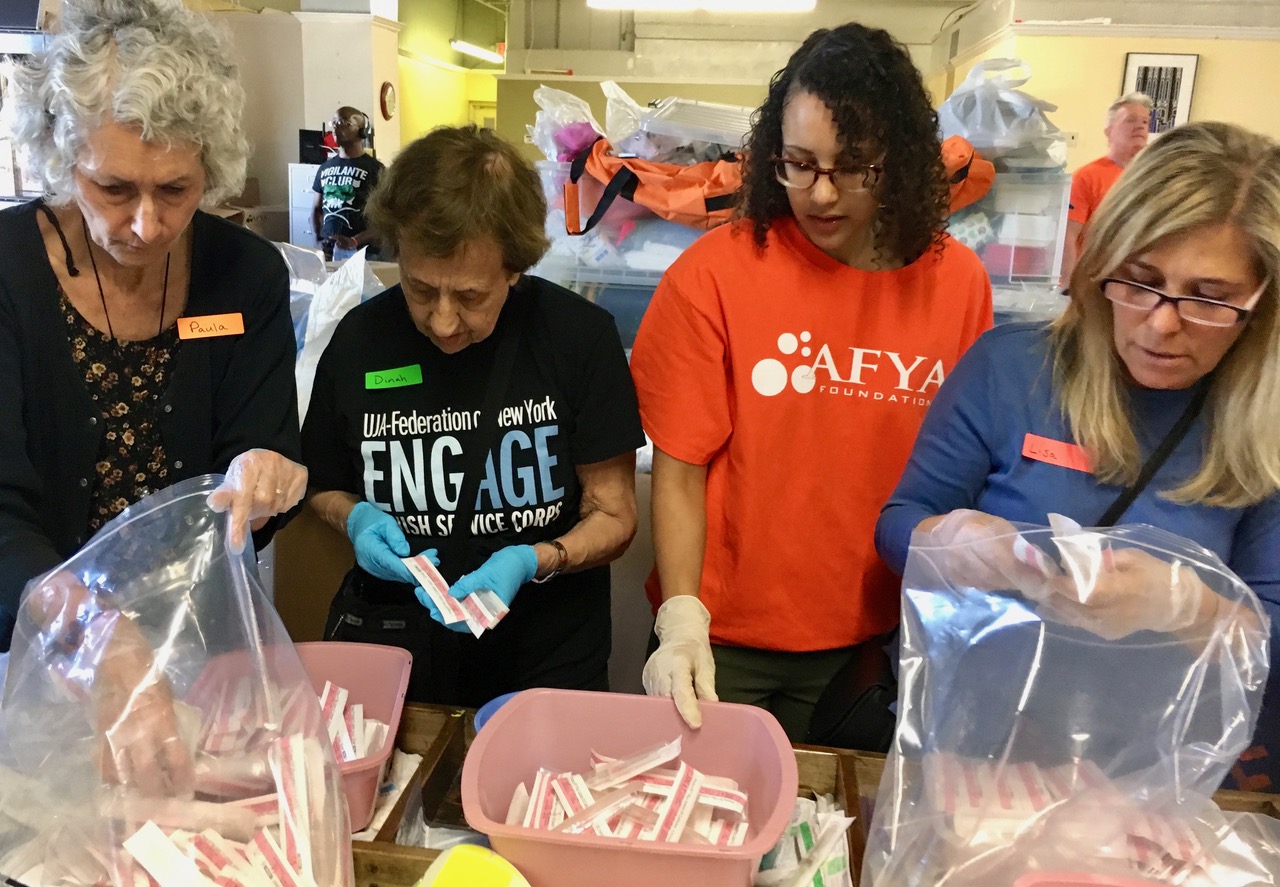
Rabbi Brian Fink runs a volunteer program for retirees, UJA Federation of New York’s Engage Jewish Service Corps, based at the Marlene Meyerson JCC Manhattan. But it’s much more than a volunteer matching service. The goal is to provide meaningful community for people who may be downsizing and relocating to the city or who lost a major social network when they retired.
And peer mentoring, one-to-one engagement, and volunteer leadership make the program happen—“by design as well as by necessity,” Rabbi Fink adds. It’s not only because of a dearth of staffing—it’s because of the impact that volunteer leadership has on the leaders themselves and the community they are able to nourish. It’s no coincidence that he brings this approach to Engage having previously worked in Hillel, which has embraced organizing (calling it “engagement”) in the last ten-plus years.
Organizers—paid staff—see themselves as teachers, coaches, and talent-scouts. Their job is to invest constantly in developing their leaders, both quantity and quality, so that leadership gives as much to the leader as it does to the community. The skills they gain are transferrable. The action they’re able to take injects meaning into their lives, in a way that should nourish them and keep them coming back for more.
Recruitment should not just be about what new members can do for the organization but also what the organization can do for them. Just think of how much more effective lay leadership boards would be (at synagogues, or other such community-based Jewish organizations) if their members had received extensive training over several years in what it takes to lead a community.
Because as I learned from Gecan, “If you think your organization is all built, you’re on your way to dying.”
An ongoing process of reaching out to potential new members keeps us open. Helping them plug into roles for relating, learning, and taking meaningful action makes us grow. Building their skills so they can move up a ladder of engagement and contribute in new, more significant ways keeps up the influx of fresh ideas and new energy.
Relational, personal recruiting is more than the glue holding a community together; it’s like a shining beacon that makes the community ever-attractive to newcomers, and ever more effective for all.
2017 Pomegranate Prize recipient, Director of Education, T’ruah: The Rabbinic Call for Human Rights
Author’s Note: I would like to thank Professor Janice Fine, from whom I learned so much about organizing, and without whom this article would not have been possible.
By Lev Meirowitz Nelson, for The Covenant Foundation
At Jewish Book Council, we see hundreds of new Jewish titles each year and, unfailingly, these books explore a wide spectrum of ideas about Jewish life, identity, practice, community, and history.
And as we consider each book that lands on our collective desks, we imagine the conversations it might spark and how a particular book might strengthen the Jewish community and provide guidance for how we think about and shape our future.
When considering book recommendations for Sight Line readers, I wanted to make sure to highlight titles that focused on inclusivity, expanding access to Jewish community, digital learning, using the past to guide us into the present, and how the pandemic has impacted, and perhaps forever changed, how we think about Jewish life and practice in the twenty-first century.
With all of that in mind, here are my personal picks for Jewish educators, Jewish learners, and anyone concerned with where the Jewish community is headed.
Published in late 2021, the essay collection Warm and Welcoming: How the Jewish Community Can Become Truly Diverse and Inclusive in the 21st Century (edited by Warren Hoffman of Association for Jewish Studies and Miriam Steinberg-Egeth of Hadar) is an inspiring, important, and instructive addition to the bookshelves of those looking to rethink how Jewish institutions create spaces of inclusion for diverse populations. The book features essays by individuals who themselves were turned away from Jewish community, each one seeking to answer questions about how leaders in the community–and the community itself–can learn from these experiences to create a more welcoming and inclusive community moving into 2022 and beyond.
Two additional resources for educators looking to specifically examine the role of the pandemic on our community include the 2020 publication When We Turned Within: Reflections on COVID-19, edited by Rabbi Menachem Creditor and Sarah Tuttle-Singer, and the 2021 winner of the National Jewish Book Award for Modern Jewish Thought and Experience, Torah in a Time of Plague: Historical and Contemporary Jewish Responses, edited by Erin Leib Smokler.
Learn more about these three titles over at Jewish Book Council:
- Warm and Welcoming: How the Jewish Community Can Become Truly Diverse and Inclusive in the 21st Century (Warren Hoffman and Miriam Steinberg-Egeth, eds.)
- When We Turned Within: Reflections on COVID-19 (Rabbi Menachem Creditor and Sarah Tuttle-Singer, eds.)
- Torah in a Time of Plague: Historical and Contemporary Jewish Responses (Erin Leib Smokler, ed.)
By Naomi Firestone-Teeter, Executive Director, The Jewish Book Council, for The Covenant Foundation
In recent months, the country has erupted with marches, rallies, and social media outcry around the brutal murders of George Floyd, Ahmaud Arbery, Breonna Taylor, and many other innocent Black men, women, and children. Following the uproar, like so many other faith communities, the Jewish community committed anew to making antiracism a priority. But Jewish allies needed guidance—in the form of diversity training—to learn how to actively engage in conversations about race, ethnicity, and identity, and so much more.
Enter Be’chol Lashon, an organization that has been engaged in racial justice work within the Jewish community for two decades. Committed to tackling difficult conversations about race and justice both within and outside of the Jewish community, Be’chol Lashon’s platform has understandably been elevated in recent months.
Following the death of George Floyd, the organization released a statement acknowledging both the pain of America’s broader Black community as well as the specific pain of Black Jews. The Be’chol Lashon team was particularly concerned about making sure that Black people within the Jewish community were seen and heard and supported.
“We have to make it clear and make it a priority to celebrate all of the identities that exist within the Jewish community as well as recognize when parts of our community are in pain,” said Lindsey Newman, the Director of Community Engagement for the organization and herself a Jew of color.
“When parts of our community need love and support—and in this moment, Black people and Black Jews need both—we see that as very central to our mission,” Newman said. “The Black community is not separate from the Jewish community, but rather, it is intertwined through the intersections of all Black, Jewish identities.”
As Jewish teens of color, we can speak to issues of identity. Throughout our lives, mainstream Jewish spaces often made us feel like exceptions to an “all Jews are white” rule instead of including us in the definition of who is a Jew and what that person looks like. Jewish American spaces must be inclusive of Jews of color. This means abolishing phrases like “well you’re Jewish, you’re not really Asian,” a sentiment that so often follows a racist comment.
Both Newman and Rabbi Ruth Abusch-Magder, the Educator Director and Rabbi-in-Residence at Be’chol Lashon, speak frequently about how essential it is that the Jewish community celebrate and recognize diversity not only because it is the right thing to do, but because it is integral to the Jewish people and our survival.
We have heard phrases like “so...were you adopted?” too many times. We have been quizzed by our doubting peers to “name one Jewish holiday.” We are consistently asked to prove our Judaism—as if our color disproves it.
With this lack of awareness in mind, Be’chol Lashon created a program called “Passport to Peoplehood,” a curriculum-based initiative that aims to further their mission to celebrate Jewish diversity in all Jewish spaces, by helping Jewish organizations understand, include, and celebrate diversity through the lens of different races, cultures, and ethnicities. The organization received a Covenant Foundation Signature Grant to fund the program in 2018.
“We need to approach this kind of learning as a long-term problem, not as a ‘one and done,’” said Abusch-Magder. “Racism will not change by hosting one program. It requires a shifting of culture and society.”
Part of that shifting requires that, as a community, we accept that the task of transformation is not up to Jews of color alone. This can be difficult to contemplate but, as Newman attests, “Often there's a learning curve of being comfortable with discomfort.”
For those of us who care deeply about our Jewishness, it is confusing and frustrating to frequently feel excluded and apart from our Jewish communities. These are places where we should always feel comfortable and supported and whole. Being Jewish is only one slice of our identities, and it is important that the Jewish community celebrates the many other identities that make us the people we are today.
We cannot exclude the marginalized groups that are not reflected in our mirrors. We must include everyone, regardless of race, religion, ethnicity, gender, or sexual orientation. We need to fight for each other because in our nuanced world, we know that every identity has a place in the global Jewish community. Supporting Jews means supporting all of us.
By Naomi Kitchen and Makeda Zabot-Hall, for The Covenant Foundation
Naomi Kitchen is a high school senior from Pittsburgh, Pennsylvania. Two years ago, she attended Alexander Muss High School in Israel for two months. She attended Jewish day school until eighth grade and then attended an intercity public high school. A hockey player and participant in many school organizations, she also attends Hebrew and Judaism classes each week. She is passionate about her local community, traveling and exploring different cultures, Israel, and fighting human and sex trafficking.
Makeda Zabot-Hall is a freshman at Brandeis University. In past summers, she traveled to Israel and Jamaica where she had the opportunity to experience both sides of her roots. These experiences helped her understand more about her family and background, and connected her more with Judaism and her Jamaican roots. In her free time, she enjoys spending time with my family, traveling, and writing poetry and nonfiction.
More to Consider
- 4 Lessons on Anti-Racism from Brené Brown and Ibram X. Kendi
- A Call for Action: Jewish Day Schools address Racism by being Multi-Cultural
- Black Jewish Educator Advocates for More Inclusive Classrooms
- US Jewish recognition of Jews of color took decades of sweat, blood and tears
- Using Mindfulness to Break Racial Bias
- What Anti-racist Teachers Do Differently
Other pieces by and about Naomi
- Raised to Be Independent, Bold, Strong, Wild and Free
- The Cruel Case Of Katie Hill
- Thoughts And Information On Title IV
- Big Tech
- ‘Our Boys’ Review
Other pieces by and about Makeda
Science writer and researcher Annie Murphy Paul recently published The Extended Mind: The Power of Thinking Outside the Brain, which explores how we can move beyond the traditional modes of thinking, and begin to explore other aspects to the thinking process, like movement and gesture.
At a time when we’re ready to break away from screens and gather once again, this conversation offers ideas for how we can begin to incorporate some of the most basic aspects of our innately social nature into our thinking, to the betterment of our teaching, our learning, and our living.
In the prologue to this book, you write that you’ve never encountered an idea “that changed so much” about how you work and live. In what ways did thinking ‘outside’ the brain change your life and work?
Before doing the research and reporting for The Extended Mind, I was very much what philosopher Andy Clark calls a “brainbound” person. That is: someone who lives a lot in her head, who sees the brain as the place where thinking happens, who believes that the way to best and maybe only way to work well is to sit still and labor with one's brain until the task is done.
In the process of writing the book, I came to see how limited that perspective is. I was really persuaded by the studies I read showing that bodily movement and gesture, spending time outside, arranging our workspaces in particular ways, engaging in social interactions with other people—all of these things can make our thinking better, and in fact actually partially constitute the thinking process. I began to think in terms of using these “extra-neural” resources in a more intentional, and hopefully skillful, way.
In practical terms, this has meant regularly performing a body-scan meditation, so that I can better tune in to my internal signals and cues (a capacity known as “enteroception”); giving myself permission to gesture freely, and paying more attention to other people’s gestures; and incorporating brief movement breaks into my workday, instead of saving physical activity for an end-of-day workout. It has meant making time to get outside, and even to gaze out the window for a few minutes when I’m not able to get outdoors; rearranging my home office so that it features “cues of identity” and “cues of belonging”; and trying to offload the contents of my brain onto physical space whenever possible (I’ve become big fan of Post-It Notes). And it has meant exchanging my solitary writer ways for more social activity—whether that’s meeting my writers’ group, a walk-and-talk with a friend, or a fitness class, where I can engage in synchronized movement.
I really have come to feel that my previous emphasis on the brain as the sole locus of thinking was way too limiting.
In Chapter 8, Thinking with Peers, you write about how teaching is a “deeply social act” and that teaching can initiate a set of processes in the brain that ultimately change the way a teacher thinks. Can you share more about this idea?
In our culture, we tend to treat social life, on the one hand, and mental or intellectual life, on the other, as separate and almost opposed. We think it’s OK for students to be social when they are in the lunchroom or on the playground, but then we want them to set that aside when it’s time to do “real” academic work.
The thing is, human beings are social all the time. We have these powerful social brains that are always operating, always on, and so what we want to do is harness a social brain and the service of learning and working. One of the most effective ways to do this is to teach someone else.
Anyone who has taught knows that you learn more about a subject by teaching it than by having someone teach it to you. There are a bunch of reasons for this. One is that we tend to review the material more intensively and organize it more thoroughly in our own minds when we know that we’re going to be teaching it to someone else. While we’re actually doing the teaching, we experience a state of physiological arousal that enhances our own learning. The fact that we’re interacting with another person generates a state of energized alertness that sharpens our attention and reinforces our memory, much more so than simply sitting alone and reviewing the same material. Also, when we’re explaining material to someone else, the gaps in our own knowledge become more visible. When we draw connections for the person that we're teaching, that leads us to engage in a deeper level of mental processing for ourselves. And, finally, when we play the role of teacher, we adopt what’s known as a metacognitive stance towards the material, because we’re keeping track of what the student knows and what we ourselves know. This leads us to develop a deeper and more sophisticated understanding of the material.
In that same chapter, you write about using stories to enhance our thinking, and you use an example of how students who were taught material through the form of a story, understood that material more accurately. How is this concept related to “thinking with peers” and more broadly, thinking beyond our normal pathways?
The act of storytelling is related to “thinking with peers“ because, when we humans are with our peers, we so readily and automatically put information into the form of stories. Cognitive scientists refer to stories as “psychologically privileged,” meaning that stories are granted special treatment by our brains.
Compared to other formats, we attend to stories more closely, we understand them more readily, and we remember them more accurately. The problem in many schools and workplaces is that we drain information of the vitality that a story naturally imparts. Instead of telling stories, we reduce information to dry lists or abstract points. The very same information would hold so much more interest for those receiving it if it were put in the form of a story. Likewise, people share information with each other in the form of stories when they are left to their own devices.
In some ways, the best thing for teachers and managers to do is to get out of the way of people and their storytelling impulse; as long as space and time is provided for people to talk with one another informally, they will tell each other stories. And stories are full of the kind of tacit, situated detail that really helps people learn their way around a new situation or a new subject.
Sitting around exchanging stories is not wasting time! It’s actually the best way to bring classmates or coworkers up to speed on what’s going on.
I’m interested in how educators can apply the idea of Thinking in Groups to their work. In particular, in Chapter 9, you write about how “when we are carried along by the social eddy, cooperation with others feels smooth, almost effortless.” Can you share more about this idea of synchronicity with our readers, and how it can apply to education?
One of the big lessons that I came away from after doing research and reporting for this book is that human beings are really animals. We are not computers. Many of the mechanisms by which we form ourselves into groups are primitive and visceral and biological. One of these is synchronous movement. When we move in the same way at the same time as other people, it has the effect of blurring the boundaries between self and other. We feel more positively towards others, and cooperate more easily with them, once we have engaged in synchronous movement with them.
The same is true for having a strong emotional experience in the same place at the same time as other people, or engaging in rituals with people in the same place at the same time. All of these things are challenging to do while we’re still grappling with the limitations of a pandemic, but I think the research supports the idea that the more we can interact with each other in person, face-to-face, the more we can generate the benefits of a group mind, or what psychologists call “collective intelligence.” Certainly teachers and school leaders have lots of opportunities to create shared experiences among students that make them feel part of a larger entity.
How can we understand all of the learnings of your research, through the lens of the pandemic?
There’s no doubt that COVID has made it harder for us to access some of the mental extensions that help us think better, such as in-person interaction, or travel to new and stimulating places. At the same time, I think the limitations imposed by the pandemic have opened our eyes to just how important these mental extensions are.
Many of us have spent the past two years as brains in front of screens—not moving our bodies all that much, not leaving the house very often, not interacting with other people in person—and we can feel the negative effects of these changes on our thinking processes. The pandemic has reminded us that we are more than brains on legs; we have bodies, we’re embedded in physical spaces, and we’re woven into a web of social relationships.
I think the pandemic, awful as it is, offers us an opportunity to rethink our school and work practices in a way that makes them richer and more in tune with our nature as human beings.
What else would you like to add to this conversation?
One thing that really struck me as I was writing The Extended Mind was a concept that I came to call “extension inequality.” If we come to understand the process of thinking as a process of assembling bits and pieces from our environment, then it becomes obvious that the raw materials available in our environment really matter.
Are people in a given situation free to move their bodies? Do they have access to green spaces and the outdoors? Do they have a sense of ownership and control over the interior spaces in which they learn and work? In those spaces, do they see cues around them that remind them of their own identities and of their membership in valued groups? Do they have relationships with skilled teachers, motivated peers, caring mentors?
All of these things really matter for how well people can think; all of these things determine, in a sense, how intelligent they're able to be. This is a very different perspective from the conventional view that says that intelligence is a lump of stuff, fixed in size, sealed inside each individual’s head.
Once we recognize that we are, actually, “creatures of the world,” as philosophers Andy Clark and David Chalmers put it, then the imperative to improve our world, and to make the distribution of mental extensions more equitable, becomes impossible to ignore.
ANNIE MURPHY PAUL is an acclaimed science writer whose work has appeared in the New York Times Magazine, Scientific American, and The Best American Science Writing, among many other publications. Her latest book is The Extended Mind: The Power of Thinking Outside the Brain. Published in June of 2021, it was selected as Amazon Editors' Pick for Best Nonfiction; as one of 50 Notable Works of Nonfiction by the Washington Post; and as one of 100 Notable Books by the New York Times. She is the author of Origins, also named by the New York Times as a “Notable Book,” and The Cult of Personality, hailed by Malcolm Gladwell in the New Yorker as a “fascinating new book.” Her TED Talk has been viewed more than 2.6 million times. Paul is a recipient of the Rosalynn Carter Mental Health Journalism Fellowship, the Spencer Education Journalism Fellowship, and the Bernard L. Schwartz Fellowship at New America. A graduate of Yale University and Columbia University Graduate School of Journalism, she is currently a Learning Sciences Exchange Fellow at New America.
By Adina Kay-Gross, for The Covenant Foundation
Spirit in Nature is a DOING podcast: an interactive audio guide you take with you on walks - it’s nature and spirituality through a Jewish lens (but fun and full of meaning for all!)
Hosted by Rabbi Deborah Newbrun, who's also a naturalist and outdoor Jewish educator, and produced by Sarah Lefton, media creator and founder of BimBam, the podcast brings you the best of Jewish outdoor education and a new way to connect with Jewish life. Each episode has been designed to take along with you to a specific place - say, a beach or a forest - or at a specific time, like a new moon.
Browse the directory and choose the walk that works for you! Each will lead you on an experience that's about a half hour long, and leave you with new insights and connections to nature and spirituality.
Click here for a listen to Episode 2, Earth and the Divine.
Click here to access all of the Spirit in Nature episodes.
By Sarah Lefton, Deborah Newbrun
Each year, The Covenant Foundation gives grants to Jewish educators, to fund the most creative, promising and exciting ideas in the field. Since the Foundation’s inception in 1991, we have shared details about those grant projects on our website and in select articles right here in Sight Line, Covenant’s online journal.
But now, for the first time, we’re taking an even deeper look at every 2021 grantee at the very start of their grant cycle. This article will share details about the inspired ideas that led to the idea behind each project, and the hopes and dreams of our 2021 project directors. You’ll also find links to learn more. We hope this collection of interviews inspires you, motivates you and maybe even leads you to dream up your own project. Read on!
Interviews conducted and edited by Adina Kay-Gross and Yonah Kirschner
Signature Grants
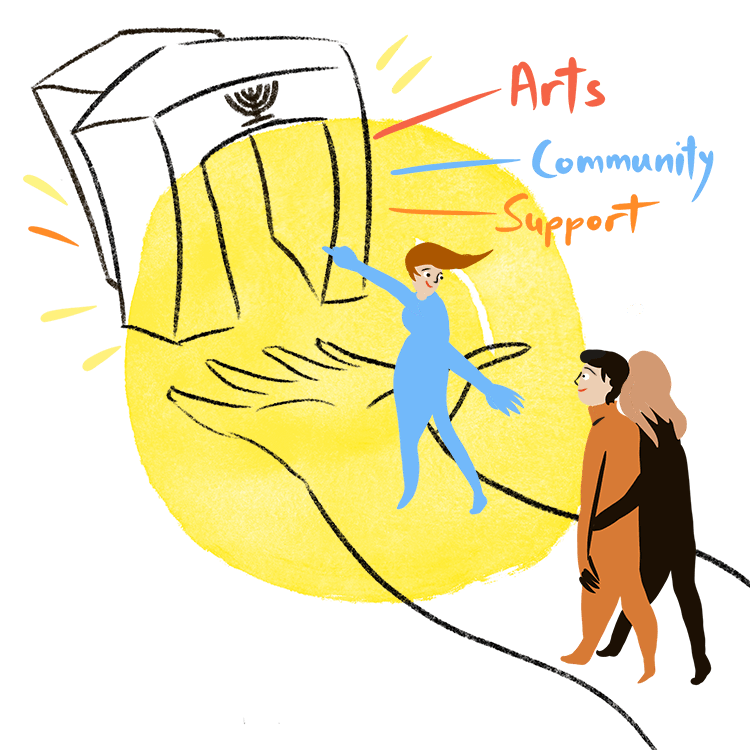
Adas Israel Congregation Stepping Back In

American Jewish University Mikvah L’Amcha: Mikvah for the People
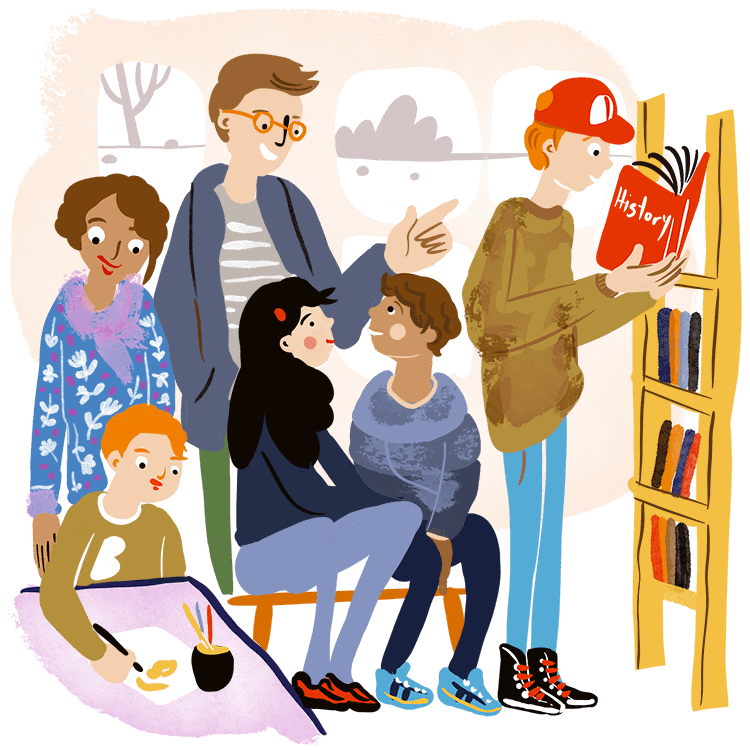
The Brandeis School of San Francisco Encountering Democracy: The מפגש (Mifgash) Project
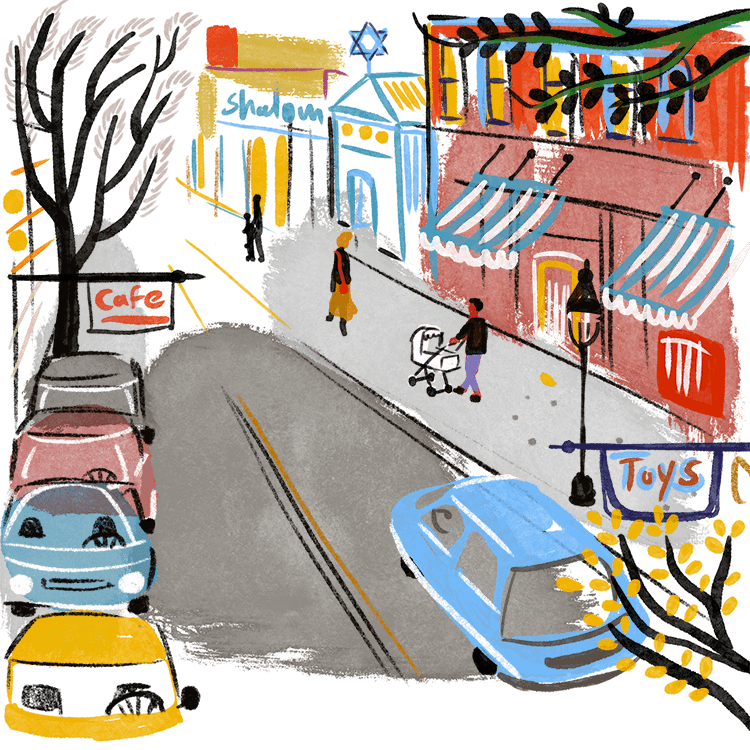
The Center for Small Town Jewish Life at Colby College The Makom Fellowship Program
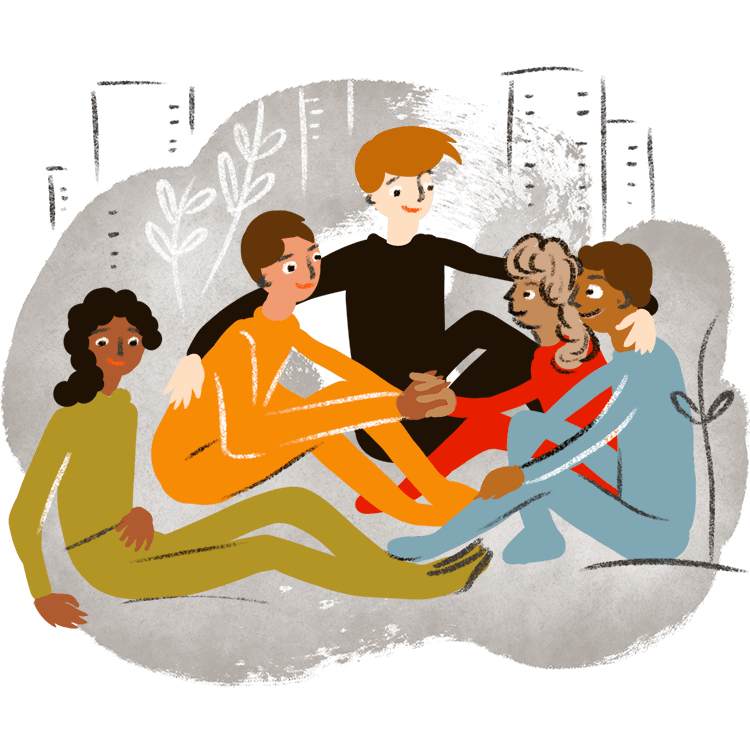
Hannah Senesh Community Day School Jews of Color (JOC) Engagement, Within and Beyond Our Walls
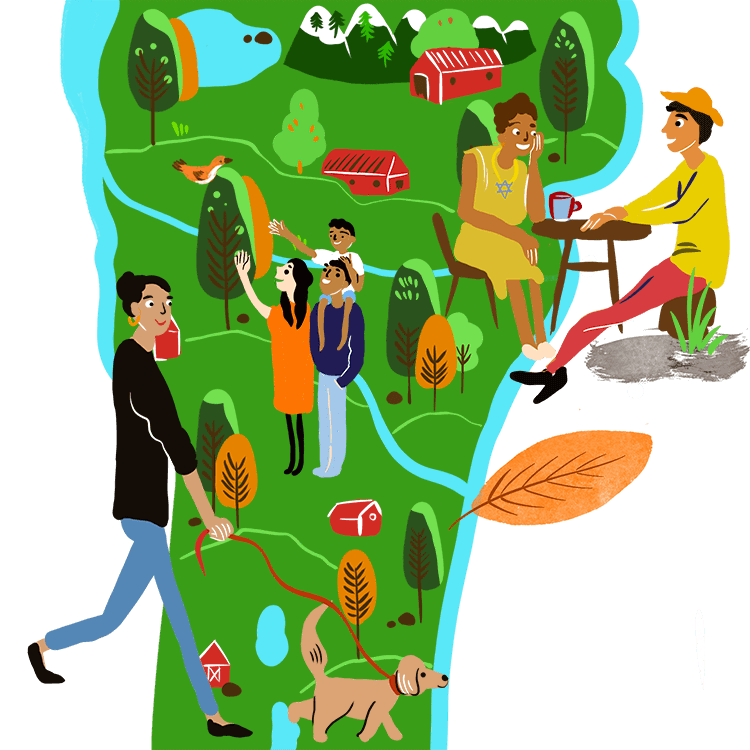
Jewish Communities of Vermont Shmita Statewide
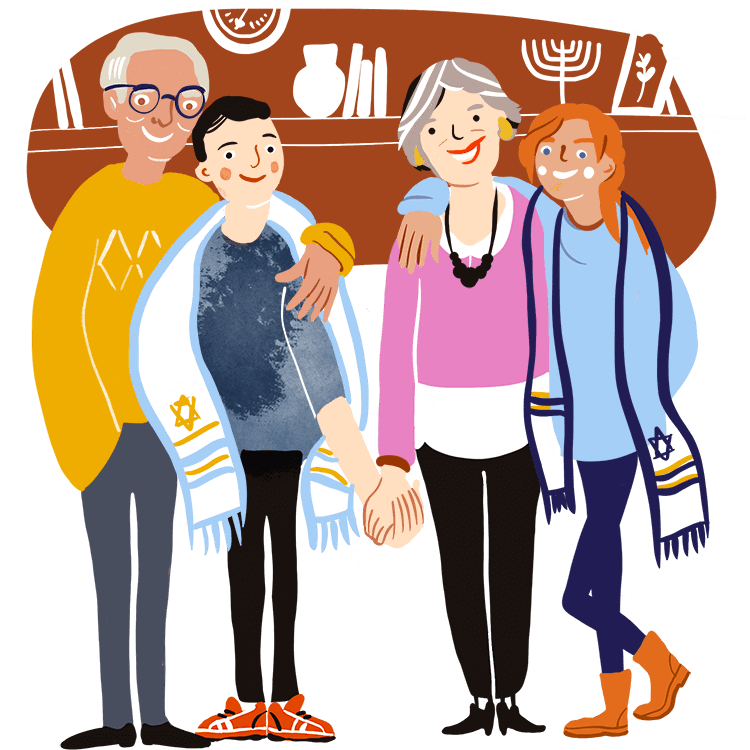
Jewish Grandparents Network “To Every Thing There Is a Season”: Life Stages Curriculum for Grandparents and Grandchildren
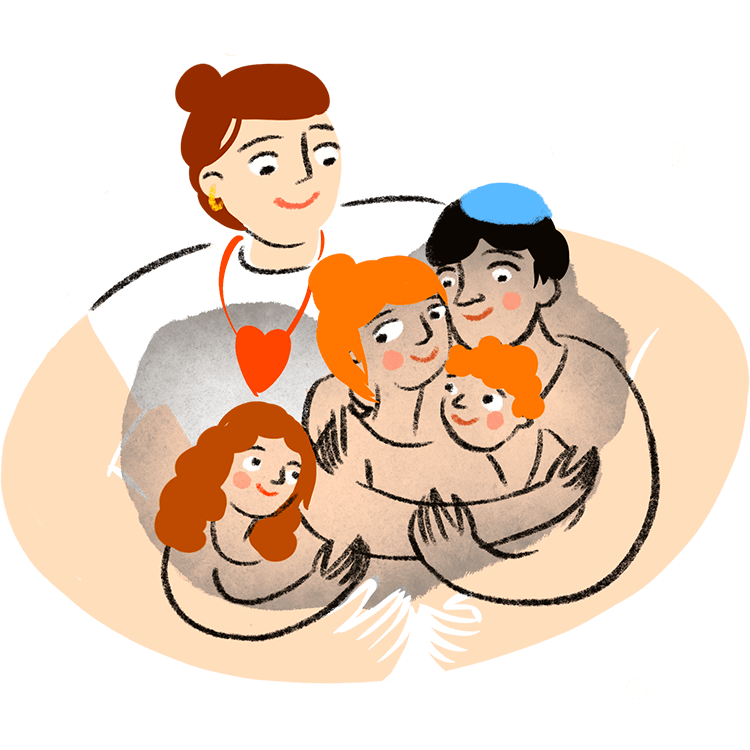
Jewish Learning Venture jkidACCESS Guides
jGirls Magazine Learn Together
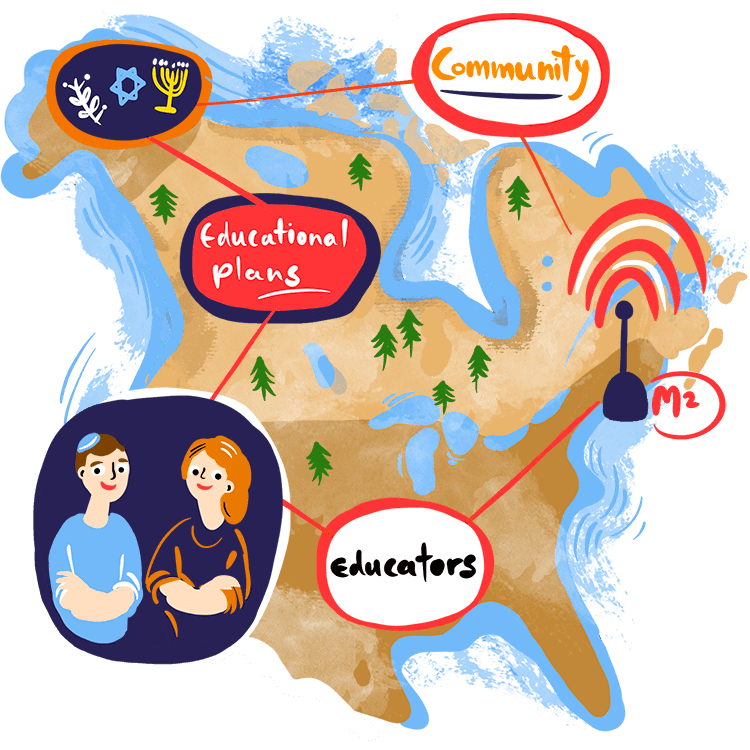
M²: The Institute for Experiential Jewish Education M² Research Fellowships
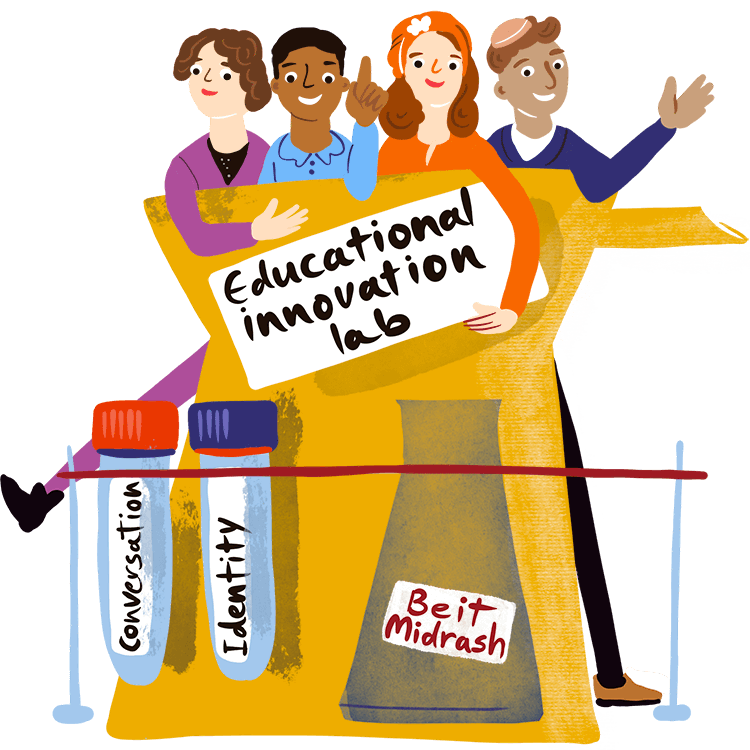
Machon Siach at SAR High School Faculty Beit Midrash Innovation Lab
OneTable The 25th Hour
Sacred Spaces Respect and Responsibility
South Philadelphia Shtiebel Cultivating Communities of Care: The Shtiebel Adult Learning Initiative

theatre dybbuk The Dybbukast Live
Theater J at the Edlavitch DC JCC Expanding the Canon
Ignition Grants
The Greensboro Contemporary Jewish Museum Social Practice Institute
Hebrew College Spiritual Formation in Rabbinic Education
Jewish Farmer Network Farmer Torah Initiative
Modern JewISH Couples Modern JewISH Couples
Shutaf Inclusion Programs Shutaf Inclusion Guide and Staff Training for Inclusion Success
Zamir Choral Foundation Shir Connection
Mayim, the elementary learning program at Temple Beth Shalom in Needham, MA, welcomes the majority of its students once a week for two or three hours. But despite the limited contact time, Mayim programming empowers students to build deep relationships, engage in deep learning, and foster Jewish communal connectedness.
“We really see Mayim as part of the congregational community,” said Rachel Happel, Senior Director of Learning and Engagement. “Rather than thinking of it as a separate school or a program, Mayim is the way children learn within the context of their broader community.”
The significance of community is infused at every level in Mayim, including educators’ practices of greeting each student by name when they arrive; establishing a sense of belonging through a family photo wall and dedicated places for personal items; and engaging in kibbud (communal snack), mifgash (a Jewish twist on the Responsive Classroom learning approach popular in local public schools), hafsakah (unstructured, self-directed play), and t’filah (prayer—which parents are always welcome to join).
Guiding Mayim’s learners to become contributors to their community includes centering the congregation as the “audience” for student projects. One year, students created outdoor murals to transform their playground into a wisdom garden, engaging with Jewish themes from Pirkei Avot—“being for myself,” “being for others,” and “acting now”—to express the ways in which they take care of each other and share ideas with the larger community.
Another culminating project asked students to contemplate what it would mean to help their community engage with Torah. In what ways could the students become Torah experts, and how could they share their insights with their congregation?
“Our two core values are depth of relationship and depth of learning, and these are inextricable,” Happel explained. “In order to go deep, the kids have to be ready and interested. The goal is to tie into their own growth and development.”
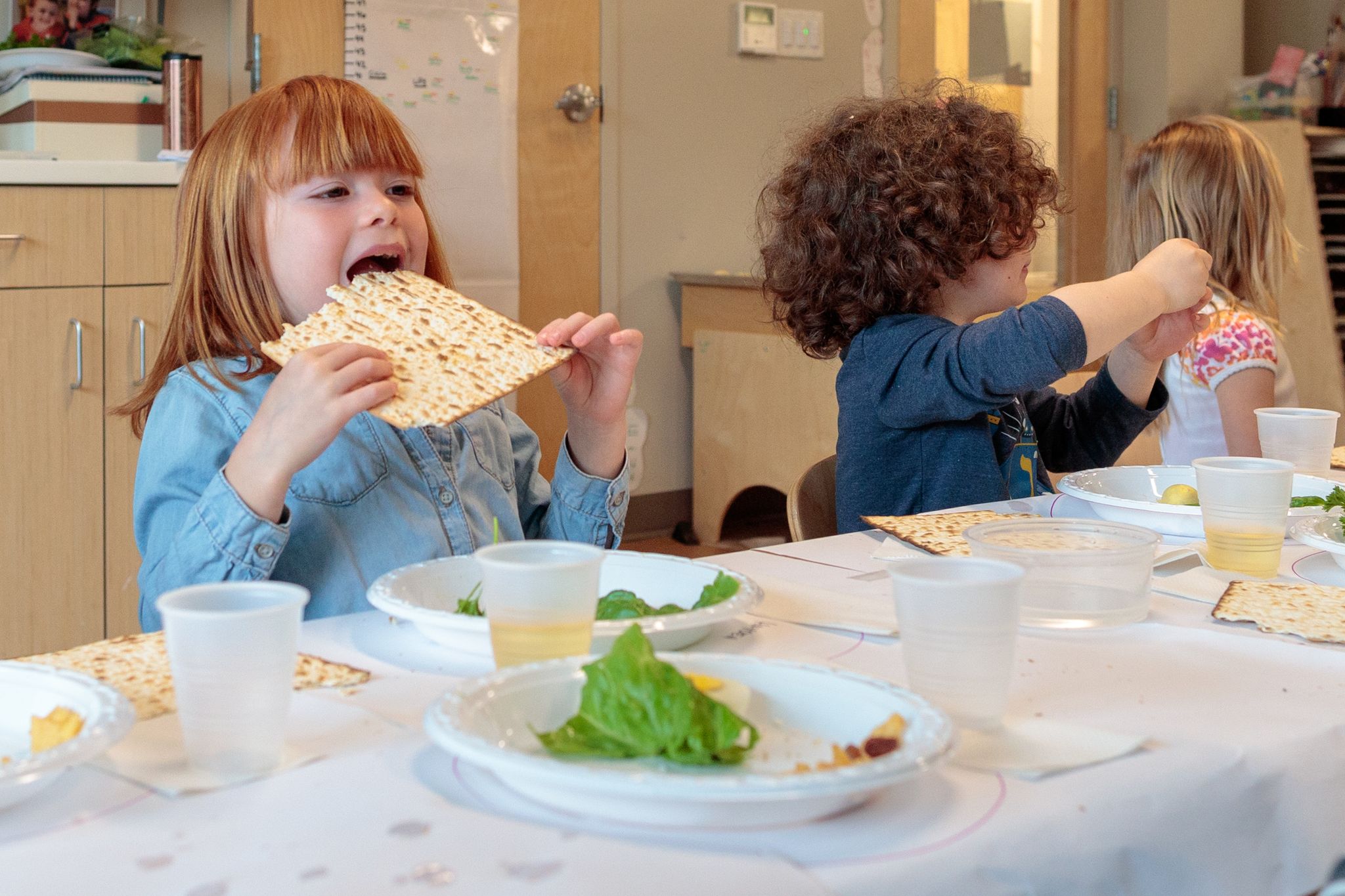
Mayim takes into account students’ ages and developmental stages, and considers how to build on the particular skills that students are developing in their public-school classrooms. Third graders in the Mayim program, for example, take on “The Wisdom of Our Ancestors,” a theme that is grounded in Pirkei Avot. They start the year by considering the very definition of wisdom and the ways in which it is passed from generation to generation. The students are prompted to realize that they themselves are the ones who will now receive the wisdom of our shared Jewish ancestors. It is up to them to decide how to hold and uphold these teachings. Among the goals of “The Wisdom of Our Ancestors” is to speak to third-grade-appropriate challenges.
“Around the age of eight is when kids get really interested in the concept of fairness. It’s when friends start to get exclusive, or when kids might feel uncomfortable about who they are in a group. The Jewish wisdom ties into social-emotional skills that the kids need and develop. At the same time, it really hits home for them that they are Jewish wherever they go,” said Happel.
Rather than being an isolated after-school experience, Mayim becomes an integral and uniquely Jewish part of students’ lives. The Mayim Tamid spin-off—a multi-day program that offers not only after-school care, but also Jewish learning and community-building—and other initiatives are designed to meet the real needs of families. When these needs changed with the onset of COVID-19, Mayim adapted. It introduced an online and subscription box program for remote learning; expanded Mayim Tamid to provide a rich learning center for children (and help with childcare); and created Mayim Outdoors, which continues to evolve. With space rented from a local summer camp, Mayim was able to bring its Jewish curriculum outdoors for September, October, May, and June—with animal habitats as shelters of peace, outdoor play as community-building, and t’filah in an outdoor amphitheater.
Mayim regularly flexes its creativity and adaptability to meaningfully welcome diverse learners as well. Mayim’s Director of K-12 Learning and Inclusion, Sara Berk, strives to help all students in the program successfully access Jewish learning. This entails forming relationships with families to determine particular learning needs and goals. It also includes coordinating with Mayim’s educators, whose status as full-time educators allows them to undertake important planning and professional development activities.
In the Mayim program, educators strive not only to welcome all learners, but also to represent the diversity of Jewish experience and community. Books and materials used in this program represent a range of family configurations, including interfaith or multiracial families, and families with LGBTQ parents or children. Mayim educators have also opted to use nonbinary Hebrew words to practice inclusion: The group of high school students who assist the young learners are madrichimot.
“Listen to what families really need and find ways to connect to that, Jewishly. The world of Jewish learning and tradition is so vast; there’s no way you could cover it all. You have to make choices, and you can do that in ways that are responsive to the community’s needs and relevant to families’ lives,” Happel said.
By Miriam R. Haier, for The Covenant Foundation
More to Consider
- “These Jewish schools are getting it right” (Brandeis Now)
- “This Isn’t Your Parents’ Hebrew School” (Jewish Boston)
- “Multi-aged, Project-Based, Experiential Learning: Mayim” (The Jewish Education Project)
- Webinar in which Mayim is presented as part of a series on Thriving in Jewish Education
- Chapter on Mayim Tamid (Portraits of Jewish Learning)
When Helene Drobenare-Horwitz, Executive Director of Young Judaea Sprout Camps, opened Sprout Westchester in 2016, she was fairly certain that she could successfully take what had been a Jewish day camp in decline, and turn it into a vibrant and flourishing summer day camp community.
But what Drobenare-Horwitz didn’t know for certain was that, six years later, the site would also prove to be a hub for inclusive Jewish life in Northern Westchester.
“Northern Westchester is underserved, in terms of Jewish opportunities,” Drobenare-Horwitz said. “And because of the flexibility of the campus in Westchester [think manicured sports fields, indoor air conditioned spaces, a cooking studio, a dance studio, and much more] the idea to build a center for Jewish life, and not just a camp, was obvious to us,” she added.
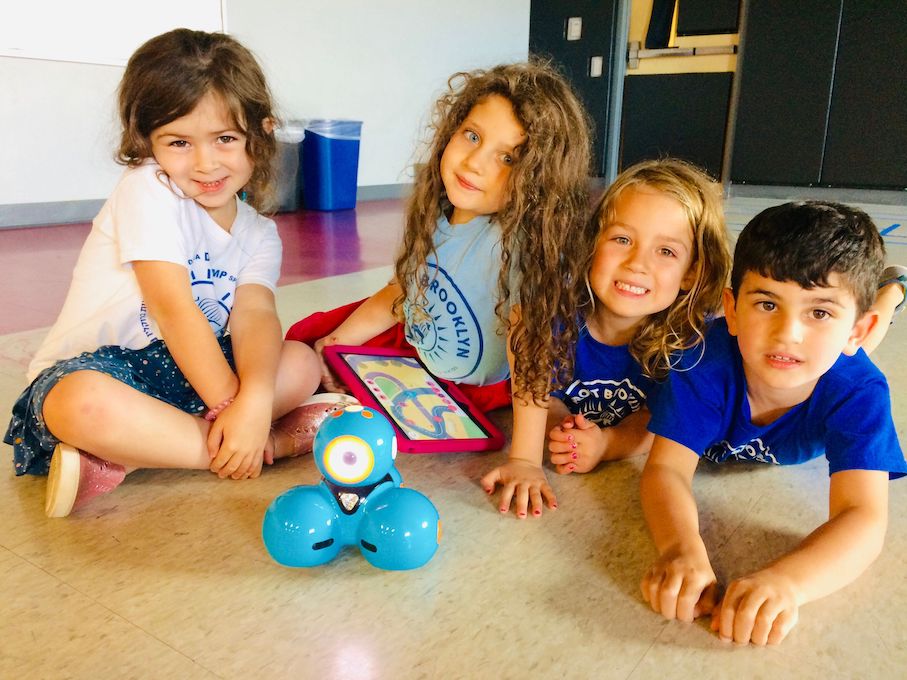
In addition to Sprout Westchester, Drobenare-Horwitz, who is also a 2021 Covenant Award recipient, oversees Sprout Brooklyn, a day camp that opened in 2015. (She also directs Camp Young Judaea Sprout Lake, a Jewish overnight camp in the Hudson Valley). The Brooklyn site, which currently enrolls 200 campers, is the first pluralistic experiential Hebrew language day camp for pre-K through Grade 6 to incorporate an intentional Jewish and Israel education curriculum. Like Sprout Westchester, Brooklyn also hosts year-round Jewish events and opportunities for children and their families, focusing on pluralism and tikkun olam.
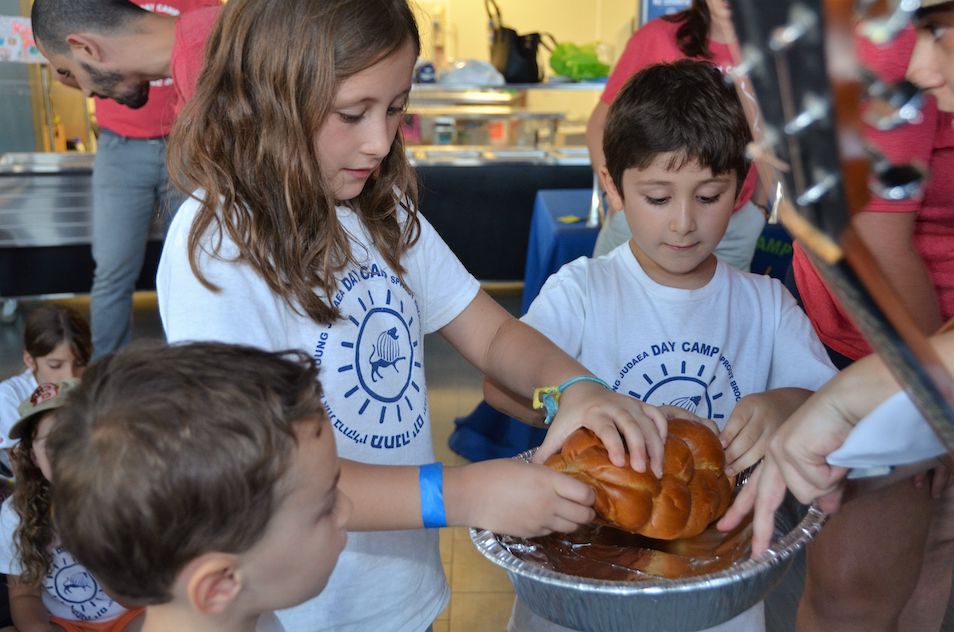
At Sprout Westchester, programming often features fall festivals during Sukkot, Jewish nature clubs, Havdalot in the snow, and wine, cheese, and art afternoons for adults.
“We are proud that this has become a Jewish pluralist space where kids can come with their families, and engage Jewishly, however they want,” Drobenare-Horwitz said.
“Whether that means coming to camp, taking a class, or attending a one-time event, Sprout Westchester is a warm, fuzzy, and welcoming place, where events have that ‘camp vibe,’ in the best possible way,” she added.
Figuring out how to maintain that vibe and support the community they’ve built, while also maintaining Covid-safe practices, has proven understandably challenging for Drobenare-Horwitz and her staff. But in some ways, the needs of the community, especially during the early months of the pandemic last year, have brought to light just how important a place like Sprout Westchester is. For example, when synagogues could not open safely for Rosh Hashanah in the fall of 2020, Drobenare-Horwitz and her colleagues partnered with the local community to facilitate an outdoor holiday service.
She makes it clear that the Sprout Westchester community and its offerings were never intended as competition to other Jewish venues, nor to take the place of what a synagogue or JCC could offer. Rather, this is meant to be a place that exists to enrich Jewish cultural life in the region.
“We normally we would never have hosted a holiday service, simply because that’s not our niche, it’s not who we are,” Drobenare-Horwitz said. “But to partner and enhance Jewish life? That’s exactly who we are.”
It remains to be seen what the schedule of school-year content will look like for both Sprout Westchester and Sprout Brooklyn, as concerns about the spread of Covid-19 are still high. But Drobenare-Horwitz is optimistic.
“After the summer of 2021, we understand better than ever how much kids and families need camp and a camp environment—with everything that entails—and not just in the summer, but all year long,” Drobenare-Horwitz said.
“And despite the odds, there is no challenge that camps can’t meet,” she added. “So when the time is right, we will be ready and waiting for our community, and we will welcome them back with open arms.”
By Adina Kay-Gross, for The Covenant Foundation
More to Consider:
- Camp Works: The Longterm Impact of Jewish Overnight Camp (JewishCamp.org)
- Supporting Wellness: Lessons Learned from Camp Colleagues (The Jewish Education Project, September 2021)
These days, you don’t have to look far to find a mindfulness meditation class or a weekend retreat offering spiritual guidance, organic food, and long rural hikes. Authors make millions writing books about how to think your way toward happiness, podcast hosts espouse the virtues of silence, and our nursery schools teach yoga to toddlers.
hese are great developments. Study after study shows that slowing down, breathing deep, and clearing the mind has myriad benefits for our health and well-being.
And yet, for as long as there have been teenagers, there has been tension, anxiety, and isolation--the opposite of inner peace. The news is filled with stories about teenagers arriving on university campuses distressingly unprepared for the pressures of college life. Issues of gender and sexuality, now more public than ever before, remain uncharted territory in most classrooms and homes.
How can Judaism help? How can we reach the post-Bar Mitzvah pre-college cohort, in such a crucial developmental moment, but so often closed to more conventional modes of engagement? What is the gateway through which we can draw teens into a safe space, keep them there as they find their footing, and send them out into the world more confident, grounded, happy and free?
“I think we have to first ask ourselves: What helps us connect to that still small voice within us—kol dmama daka?” says Deborah Meyer, Co-Founder and Executive Director of Moving Traditions, a Jenkinstown, Pennsylvania-based organization that works to help Jewish teens explore and connect to their identity and society, through the nationally recognized Rosh Hodesh: It's a Girl Thing! and Shevet Achim: The Brotherhood programs. “Is it a question of setting, or is it the focus of the setting? What helps us feel prepared and receptive, what helps us share ourselves?”
Sharing is key to the success of both of Moving Tradition’s cornerstone programs. In Rosh Hodesh: It’s a Girl Thing!, over the course of a 5-year curricular cycle, in monthly meeting groups for girls ages 11-18, participants are given space to meet and “articulate their deepest concerns, consider the impact of gender on their daily lives, have fun, and be ‘real’ with their peers.” The lesson plans touch on a bunch of different modalities—cognitive, emotional, physical and spiritual. “As girls come up on adolescence,” Meyer explains, “they also come up against a wall of anxiety about what it means to be female. In the Rosh Hodeshcurriculum, we draw on Judaism and Jewish life to try and help our kids stay healthy and whole.”
And while they differ for the girls and the boys, ultimately, the curricula for both groups are meant as “building blocks” for the group leaders upon which they can erect a structure that’s right for their particular cohort. “[The mentors] are the chefs for a group whose palates they know well,” Meyer says.
Meyer and her colleagues understand that so much rides on selecting a mentor who connects with his or her mentees. Such a mentor will aid in setting the right tone and intention within any group, and help create an environment of trust where there’s no fear of ridicule.
“Our mentors have an understanding of who teens are and what the issues are in their lives; they have a deep respect for the teen experience; in their groups, they expect the teens to have the capability to have conversations with depth, and they give them the opportunity to puzzle things out. They don’t patronize or spoon feed them,” Meyer says as she explains the mentor training process.
Initially funded by a Covenant Foundation grant in 2002, Moving Traditions now trains mentors at several conferences held across the country each year (this year, there’s one in Chicago in July, LA in August and Philly in October).
Moving Traditions also employs 6 regional directors who work with the Jewish education community partners in their areas to share learning about the Moving Traditions model and help local Jewish educators more effectively relate to teens and replicate the Moving Traditions programs.
One of the main things the regional directors look for when identifying potential partner institutions is a place where there are enough kids to help position the programs within those communities effectively.
“Ours is not a classroom program,” Meyer explains. “Our preferred way of situating our program is on Sunday evenings, as an opt-in, not a required thing. It’s best to have plus or minus 10 kids; a minyan is a good amount.”
For the group to really connect and have fun and useful experiences, it’s suggested that they meet once a month. That’s enough time in which to form bonds, but not so much of a requirement that the schedule further weighs on teens with an already-heavy extracurricular life. Groups generally meet for two hours, and the bar is very low. “We like Sunday evenings,” Meyer says, “because it allows the kids to sleep late, and come to the group in their sweatpants. For the girls, this can mean ponytails and no makeup. We want them to feel as comfortable as possible.”
Many Rosh Hodesh groups ultimately meet for multiple years, and the curriculum is designed so that once the girls begin to understand how the group is structured, they can take on the responsibility of forming their own groups in college and even graduate school.
“Something I’m continually struck by,” Meyer shares, “is how touched the girls are to be in community together and how much they value this time. They tell us, ‘this is the place I can really be myself, this group helped me get through high school, and I can count on my friends in this community to be there for me.’ And to provide this kind of touchstone, to extend that support from the Jewish community to our teenage girls and boys, means we are more likely to see them remain connected, and to see them grow into healthy young women and men.”
And what about the young men? “Many Jews boys feel very positively about being Jewish,” Meyer says, citing research that Moving Traditions has done to this end. “They are proud of having had a Bar Mitzvah, but they don’t like Jewish programming, necessarily. There’s a huge drop off of boys involved in Jewish programming after their Bar Mitzvah, around age 14.”
In fact, statistics show that fewer that 20% of boys are connected to the Jewish community in any significant way. “We understand that for many boys, they reject and resent what they see as preachy, dogmatic, parent-adult centered programming,” Meyer says. “But if you begin to think about what’s going on with them, and work to encourage them that there is a place for them in the Jewish community, you can address a “problem” that otherwise will continue in their lives.”
So lets say you get a group of 15-year-old boys assembled. It’s a Sunday evening, they shuffle into the room. What happens? Where’s the magic? How do you keep them coming back?
“It’s not about teaching kids Judaism,” Meyer says. “It’s about having conversations about meaning. What it means to be a human being and what it means to be an adult. What it means to live within a community. What it means to invest in ourselves and the wider world. This is what kids want. These group sessions are all about self-discovery, asking fundamental questions about identity and society.” And it all comes back to having the right mentor in place.
“Mentors need to be excited about their work, and understand that the conversation in these groups will not be linear and there will be some noise; they should have a sense of play,” Meyer says, citing some of the critical ingredients for a successful mentor-mentee relationship. To this end, one of the things Meyer and her colleagues have found is that group leaders remain in touch with their mentees five years later.
“When you look at research about boys’ development,” she explains, “and about how they learn, you understand that it’s critical for them to have a mentor.” Meyer also says that for many boys, if you approach them and present yourself to them authentically, they will open up and connect to you. But if you’re not authentic, they will shut down, unwilling to say the things one might want them to say, or to repeat things by rote.
“As a mentor, you have to have a sense of boundaries,” she says. “To understand, ‘I’m the adult, they’re the kids, and kids are going to say inappropriate things and try to push my emotional buttons and really, they’re just trying to understand their limits and they’re testing me.’ A successful mentor has to be mature enough to understand where these kids are coming from.”
And it seems that they do. According to data collected by the organization, in the 2014-2015 academic year, Moving Traditions partnered with over 100 Jewish institutions and reached more than 1300 boys with the Shevet Achim program. This is more than twice number of post-Bar Mitzvah aged boys who were reached when the program first launched in 2011.
Given the success of Rosh Hodesh and Shevet Achim, it is heartening to know that Meyer is looking forward, and thinking about other ways in which Moving Traditions can create targeted Jewish programming to address the myriad issues teens face.
“Right now, we’re piloting some programming that will aim to help girls of all faiths fight sexualization,” Meyer shares. “Seeing yourself as a sex object takes away agency, it’s disempowering, and yet, kids today are under tremendous pressure to see the world in a sexualized way, in large part thanks to targeted advertising and online pornography. We’re looking to address issues of sexuality, consent, intimacy and relationships with kids in high school who are already experiencing or at least thinking about these things, and prepare them to have a healthy sexual ethic.” She adds that in their curricular development, Moving Traditions staff and educators are also thinking a lot about trans and gender queer kids, and how they can meet the needs of those cohorts, beyond single-sex programs, and what Jewish educators need to be thinking about in those areas.
“Judaism has excellent content to draw from on these topics,” she adds.
In fact, Meyer notes, not incidentally, the basic building blocks of Judaism give us so many opportunities to find moments of intention, and we don’t have to wait until the teen years to implement them with our kids, either. As parents, in the home, we can easily find ways to make space to listen to our kids.
“It doesn’t have to start with teens,” Meyer urges. “The great thing about Judaism is that it gives us ready-made moments; as we leave the work week and move into Shabbat—you can find still small moments to connect to your kids in safe and loving way.”
“Kol d’mama daka,” she repeats, once again invoking the biblical quote. “It’s where it all starts.”