In a special guest post for Covenant Classroom, Covenant Award recipient and Director of the National Ramah Tikvah Network Howard Blas shares some of the latest and greatest creative and original educational programming from Israel and reminds us yet again how the land of our ancestors is truly the original Covenant classroom.
Making the Most of Any Ability and Increasing Self-Confidence, too
At Kibbutz Tzuba in the Judean Hills, 15 minutes from the center of Jerusalem, teens who are struggling academically can now participate in a farming program where they learn skills and enjoy the feeling of success beyond the classroom walls. The founder of the program, Alon Greenboim (everyone calls him “Jumba,”) knows first-hand how traditional classrooms may not the learning environment of choice for everyone--but that everyone can learn by doing.
When he was a young boy, Jumba was assigned to work in the kibbutz apple orchard. There, he needed a ladder to reach the apples. He told himself then that if he were ever in charge, he would figure out a way to get the trees to grow horizontally so that shorter people would not need to climb a ladder to pick apples off the trees. Sure enough, today the entire apple orchard at Kibbutz Tzuba is made up of trees that grow out, not up.
It is this type of ingenuity that has allowed Jumba to grow a multi-million dollar agricultural business and also help young people who haven’t found their footing in traditional school, to accomplish and achieve in ways they never thought possible.
Thanks to a new program, Gdolim Bemadim, Special in Uniform, people with a wide range of disabilities can now serve in the IDF. In areas such as logistics, printing, supply rooms, food service, computers and more, this program allows soldiers with disabilities to build self-esteem, and the typical soldiers benefit as well. Yossi Kahana, Director of JNF (Jewish National Fund) Task Force on Disabilities and co-founder of the program, believes strongly that “if every soldier in the IDF had the opportunity to work side by side with people with disabilities, the potential to change attitudes in Israeli society [would be] tremendous.”
Learning Sensitivity and Compassion in the Dark
It is hard to give people a sense of what it might be like to experience life with a disability. But now, thanks to the Dialogue in the Dark program at the Israel Children’s Museum in Holon, visitors can experience a taste of what it’s like to be blind. Guides who are either visually impaired or blind lead visitors through the exhibit (which includes a port, market, pub and noisy pedestrian crossing)--and engage them in conversation about disability, coping and life in general. To cap off the experience, Na Lagaat Blackout Restaurant (at The Na Laga’at Center, Ratzif HaAliya Hashnia, Jaffa Port), a short 3.5 miles (6 km) away, offers an opportunity to experience and enjoy a delicious kosher dinner in total darkness, served and guided by blind wait staff.
Teaching Peace…One Serve at a Time
Can coexistence be taught on the tennis court? Since the 1970’s, the Israel Tennis Center has been doing just that, through its Israel Tennis Centers (ITC) Coexistence Tennis Programs. The ITC aims to alter negative perceptions while instilling positive ones, through joint sporting activities held for Jewish, Arab, Druze and Bedouin children. Twinned kindergarten classes organized through the ITC bring together 60 children from an Arab kindergarten and a Jewish kindergarten weekly on one court, where they learn motor skills development and participate in sports activities at the ITC centers in Jerusalem, Jaffa and Akko.
Another ITC program, called “Doubles Coexistence,” pairs Arab and Jewish children as partners on the tennis court and encourages them to interact on and off the court, thereby building a bridge between the different cultures.
During the past 25 years, interest and investment in Jewish social justice, service learning, and environmental action has increased throughout the American Jewish community. Organizations such as Hazon, AVODAH, Repair the World and Bend the Arc have helped lead this surge through innovative programming that engages Jews of multiple ages and backgrounds (including particularly hard-to-reach Jewish millennials). In their 2008 report “Visioning Justice and the American Jewish Community,” Shifra Bronznik and Didi Goldenhar expressed excitement and optimism about the state of the field at that time. They found that “the growth of Jewish social justice organizations – locally, regionally and nationally – has infused the field with greater vitality.” These organizations were succeeding in “attracting diverse groups of Jews and increasing the numbers of engaged activists” and “becoming more visible, domestically and internationally, as they demonstrate their capacity to effect tangible change – from advocacy for hotel workers’ rights in California, to healthcare legislation in Massachusetts, from mobilization around the genocide in Darfur to the response to Hurricane Katrina.” All indications are that the visibility, effectiveness and impact of Jewish social justice and environmental organizations has only continued to grow in the six years since this pivotal study.
“Visioning Justice” also described the challenges faced by the field and its constituents, such as the need for additional resources, minimal leadership training, lack of networking and connections between organizations, and “knowledge gaps” due to limited research and evaluation. In the years since the report, many of these challenges have been addressed through the investment of funders such as The Covenant Foundation. Since its first grants were awarded in 1991, The Covenant Foundation has supported twenty-four organizations (and six Covenant Award winners) in strengthening social justice work and environmental action within the Jewish community. The documentation from these grants helps to close the “knowledge gap” that Bronznik and Goldenhar identified, offering insights into effective approaches and strategies and the impacts that have been achieved. This report highlights a selection of Covenant grantees to explore three critical “lessons learned” about maximizing the impact of social justice, service learning, and environmental programming: 1) connecting universal and Jewish values leads to Jewish engagement and meaning; 2) educators need training and support to successfully integrate social justice and Jewish values; and 3) partnerships and collaboration expand organizational impact and strengthen the field.
Lesson One: Bridging the Universal and Particular is a Valuable Path to Jewish Engagement and Meaning
In “Visioning Justice,” Bronznik and Goldenhar emphasize the potential of Jewish social justice work to engage contemporary Jews by linking the particularism of Jewish concerns with the universalism of caring for the larger world:
For post-modern Jews, Jewish social justice is the bridge between universalism and particularism. If I am not for myself, who is for me? If I am only for myself, what am I? Jewish social justice offers a profound way to resolve this binary relationship between commitment to the Jewish people and commitment to the people of the world. Through Jewish social justice, these commitments are woven together with new strength and meaning. Jews of every generation and affiliation – from Jews active in secular social change to Jews devoted to their federations and synagogues – live in multiple worlds. The Visioning Justice inquiry has revealed the extraordinary opportunities to engage people in all their complexity, as Jews and as global citizens.
This path to Jewish engagement and meaning has defined the work of many of the Covenant Foundation grants devoted to environmentalism and social justice. One such organization is Hazon, whose work to promote environmental awareness, sustainability, and healthy food choices, is grounded in Jewish values and community. In 2007, Hazon received a Signature Grant to create “Tuv Ha’aretz,” a multi-faceted initiative that included CSA (community-sponsored agriculture) networks through synagogues and other Jewish centers, a day school curriculum on Jewish approaches to food, the Food for Thought sourcebook, the Jew in the Carrot blog, and an annual Food Conference. Together, these programs and resources were designed to “support the Jewish environmental movement in North America and in Israel…foster an increased interest in Jewish communal life among currently affiliated Jews, and to ‘open the door into Jewish life’ for those who are not directly engaged in the Jewish community.”
By linking Jewish teachings and dedication to environmental sustainability such that each set of values enhanced the other, these initiatives succeeded in engaging Jews from a range of backgrounds and deepening their connections to both aspects of their identities. As described in the quotes below from Hazon CSA members and Food Conference participants, Hazon’s programs created ties between Jews who shared environmental passions, enlightened people about the authentic links between Jewish and environmental values, and helped develop and strengthen a network of Jewish food activists who could spread Hazon’s message to others throughout the Jewish (and non-Jewish) world:
- “My Jewish self and my food love are two of my most important identities. Now I see that they are so closely related. I'm a Jewish food lover, and there are traditions, ethics and wonderful stories to be told about all of this.”
- “Being part of the CSA has put us into more frequent contact w/other Jews who have interests similar to our own. It has helped us to feel… more connected to our Jewish community. As a result, we find ourselves more interested in attending services at our shul and participating in other communal events (including those that aren't related to the CSA).”
- “I have struggled connecting with the Jewish community because I have not found myself in it. Joining a Jewish CSA was a great way for me to connect my Jewish identity with things I am passionate about, such as food politics and sustainable living. I am glad that the Jewish community recognizes that food issues are Jewish issues. Thank you for creating a space in which people like me who struggle with connecting to the Jewish community can feel welcome and invited.”
- “The Hazon Food Conference experience was an incredible way for me to culminate a year of learning and studying about food policy, industrial food production, and nutrition. Before Hazon, I had not considered these issues in a Jewish Context and was not aware of a "New Jewish Food Movement." I have now tapped into a network of incredible people who are addressing important issues of environment, consumption, and agriculture through a Jewish lens, relying on the strength of the Jewish Community to support their causes and initiatives. I have connected with several leaders that I plan to work with in pursuit of a more perfect food future.”
The Kayam Jewish Gardening Collective at the Pearlstone Center in Maryland, launched with a 2010 Signature Grant, had similar impacts on a more local scale. The grant supported Pearlstone in helping Baltimore-area synagogues, Hillels and community centers create Jewish-themed gardens and integrate them into their educational programming. The resource guide developed for the Gardening Collective described the multiple ways in which the experience of gardening could be used to communicate Jewish values and teachings, while also deepening communal connections:
Gardening is a distinctly Jewish act. The echoes of God’s command to Adam (Gen. 2:15) “l’shomrah u’lovdah” (to guard/till and work/tend) resound through the generations as a call to remember that adam is inextricably linked to adamah. Through gardening, we learn to care for God’s planet, to recognize that Creation is a gift to be blessed and shared. Jewish community gardening is the marriage of the universal and unique aspects of tending a piece of land. A garden is a gathering place, a home for community-building, and an expression of our deepest values. A Jewish community garden is a hands-on classroom to teach about Judaism’s relationship to Creation. The education may consist of lessons on tzedakah, brachot, t’filah, bal tashchit, or the agricultural roots of the Hebrew calendar. A Jewish community garden is a laboratory, an experimental, experiential testing ground for Jewish engagement, identity building, and relationship forming.
A number of the organizations quoted or described in Kayam Farm’s grant reports explained how their gardens had successfully reached new participants and/or provided a path to deeper learning and engagement for community members. One rabbi had heard from a number of new members that they had been attracted to the community in part because of their garden. Another synagogue’s Education Director developed a curriculum for the religious school that link the garden’s plantings to Jewish holidays throughout the year: “We had pumpkins that would be used for the celebration of Sukkot and parsley for the celebration of Passover. It was decided that herbs would be planted for the spice box used during havdalah, horseradish for Passover, blueberries for hamentashen for Purim and flowers for the bimah on Shavuot.” Johns Hopkins Hillel transformed a vacant lot into a “vibrant community garden” that helped them tap into a growing interest in “green” living among Jewish college students:
The primary goal of the garden was to provide Jewish students on campus a new platform for engaging with Judaism and their community, as issues of sustainability and food justice are increasingly relevant and of interest to college students. As the Assistant Director noted, “Being ‘green’ or sustainable is becoming more popular and if you’re trying to get people who aren’t already involved, telling them that there’s a garden to use will get them more involved in the community.”
Finally, IKAR, a progressive Jewish congregation and community in Los Angeles and Covenant grantee, similarly viewed its dedication to social justice as a way for members to merge their Jewish and universalist commitments and concerns. The “Minyan Tzedek” initiative, supported by a 2009 Signature Grant, sought to organize and expand IKAR’s social justice activities by encouraging members to choose one of six “minyanim,” (later consolidated into four “paths”) each built around a social justice project rooted in Jewish learning. The four paths active at the end of the grant were Organizing (incorporating the former “Immigration” and “Food Justice” minyanim), Green Action, Global Partnership, and Feeding Our Neighbors. Minyan Tzedek’s many programs and activities included an annual Purim “Justice Carnival” highlighting the work of each Path and the traditions of giving Mishloah Manot (gifts to neighbors) and Matanot l’Evyonim (aid to the poor); service opportunities on Thanksgiving and Christmas; volunteer opportunities with children and adults in need of tutoring and other educational services; a community garden producing food for donation; and partnerships with global service organizations to contribute to international aid initiatives.
As described in the the grant evaluation, IKAR’s primary reason for creating “Minyan Tzedek” was to “improve upon…typical congregation-based social justice work, which ‘only touches a small percentage of the community’ and is ‘rarely grounded in Jewish ritual and textual traditions.’” In a grant report, IKAR leadership expressed the additional goal that “this initiative would serve as an entry point for unaffiliated, disinterested and disaffected Jews into Jewish life and religious practice.” The evaluation found that for many congregants, IKAR’s approach succeeded in both increasing their engagement with social justice and making the links between their social justice work and their Jewish values more meaningful and explicit:
Minyan Tzedek is a powerful way for members to put their ideals into action. When asked what they value most about MT, most survey respondents wrote about their appreciation for the opportunity to enact their Jewish values through social justice work. For example, a respondent who is “not as involved as [she] would like to be” in MT said she valued: “linking Jewish spiritual and justice commitments and doing so as part of a community, as an expression of our Jewish identity, values, and commitments.” Another respondent said he appreciated the “hands on social justice work” that enabled members to take “Torah to the streets.” Almost half of respondents each year (48%) credited their participation in MT with enhancing their understanding of the relationship between Judaism and social justice to a great or moderate extent.
One IKAR member quoted in the evaluation spoke emphatically about how the focus on social justice had renewed congregants interest in “dusty old Torah” by making it meaningful and relevant for contemporary Jews:
Wedding what I facetiously call “dusty old Torah” learning with real social action I think is an inspired thing! It makes both the Torah, and Jewish identity – and compassion and understanding – hugely relevant in a very complex, sometimes overwhelming modern world. I think IKAR is successfully bringing Jewish observance into the 21st century. The growing numbers speak for themselves.
As the evaluation concluded: “Participation [in Minyan Tzedek] helps congregants feel more connected to IKAR, bolsters their interest in social justice, and positively influences their sense of Jewish peoplehood and their ideas about Judaism.
Lesson Two: Educators Need Training and Support to Successfully Integrate Social Justice and Jewish Values
Even for organizations and professionals who seek to integrate Jewish values and teachings with social justice ideals, the ability to do so is often not instinctive, but rather requires thoughtful curricular planning and educator training and support. One of the first Covenant grantees to recognize and address this challenge was the BJE of Los Angeles, which in 2004 received a grant to create Sulam: The Center for Jewish Service Learning. As the grant evaluation explained, the concept of integrating service and social action with Jewish learning was then new and unfamiliar for many educators:
The architects of Sulam posit that while community service activities for Jewish youth have proliferated in recent years, these programs lack opportunities for the concurrent Jewish study and personal reflection necessary to produce genuine impact on learners. Sulam's service learning program is based in an experience/reflection or learning/action model of education. Sulam's mission is to share and teach its vision and understanding of its three-pronged approach to Jewish service learning: Jewish learning, acts of service to others, and personal reflection.
To implement this “three-pronged approach,” Sulam developed a website cataloguing service opportunities and related Jewish pedagogic resources; a Resource Library housed at the BJE with “a valuable trove of books, videos, curricular units, lesson plans, and related materials relevant to Jewish service learning;” consultations to help educators, schools, and organizations do service learning in their classes and youth group programs; and a Service Learning Council for Jewish educators to “learn from each other and from nationally-recognized leaders in the field.”
Findings from the grant evaluation demonstrated both the need for and the success of Sulam’s strategies to help educators move beyond service “projects” to meaningful service learning grounded in Jewish values and texts. In interviews with educators at the beginning of their work with Sulam, “more than half of respondents said they believe they are doing a good job with the ‘service’ component of their service learning programs. Just over one-third were confident they were doing well in terms of the education/learning component, but only two perceived that they were successful with regard to the reflection piece.” After engaging with Sulam’s professionals and resources, “with the exception of one respondent, all of the educators articulated different ways in which Sulam has opened, extended, and/or expanded their understanding of Jewish service learning.” Educators reported that Sulam had “encouraged them to think more about the difference between a community service project and service learning…connected them with resources in the community for doing service learning…[and] demonstrated that Jewish service learning is an integrated model.” One educator candidly described how her understanding of effectively service learning had expanded because of Sulam:
I didn't know what service learning was. I had no idea it was good to connect service to Jewish sources. I had no idea that before you go do a service, you should probably have a plan, or the whole concept of service learning and importance of research before and reflection after. I would not have known that and I would not have been able to introduce it to the school were it not for Sulam. Now that someone told me, it is obvious that if you spend 10 hours of one day doing community service it will NOT be as meaningful as if you spend time before and spend time after analyzing what I did and how I made a difference. It is so obvious it would mean more, but it doesn't mean people think about that.
Along with teaching how to use framing and reflection to make service projects Jewishly meaningful, Sulam inspired educators to “refocus their energies toward Jewish service learning” through “interaction with others, networking, and workshops…that motivated them to focus more deeply and more frequently on Jewish service learning in their work.” Some educators were even able to use Sulam’s tools and resources to enact larger change in their institutions by educating their colleagues: “For some, this change was demonstrated by a shift in the language used to discuss service learning. In the words of one educator, ‘We don’t ever say mitzvah project, we say Jewish service learning project.’” Ultimately, the evaluation report concluded, Sulam could inspire a cultural shift within the field to make substantive and meaningful service learning an educational priority, if enough other organizations and communities adopted the same intentional approach: “As experts in a variety of fields (especially in education) know all too well, planting the seeds of cultural change is not enough. Sulam's approach to Jewish service learning must be carefully tended among educators and their work settings if the model is to take root and flourish.”
Another Covenant grantee whose work helped Jewish educators integrate social justice with Jewish texts and teachings was Jewish Women’s Archive (JWA), through the “Living the Legacy” initiative. Launched in 2010 though a Signature Grant, Living the Legacy immerses middle and high-school students in the history of Jewish American activism in the Labor and Civil Rights Movements using personal narratives of key historical figures, role-playing scenarios based on critical events, and “connecting traditional Jewish texts and contemporary primary source documents, through pairings and accompanying questions that reveal thematic links and bring new layers of meaning to both sources.” As JWA wrote in their grant proposal: “We believe that the opportunity to engage with the stories of Jewish social justice activists will help young Jews find a place for themselves on the continuum of Jewish activism. The result will be a stronger connection to the Jewish community, greater pride in their heritage, and an explicitly Jewish context for their own interest in, and commitment to, social justice.”
Like Sulam, JWA recognized that even talented Jewish educators might not instinctively grasp how to integrate Jewish values with Jewish social justice ideals and history. As they wrote in their final grant report, one of the key lessons learned from the initiative was to “meet teachers where they are:”
We were reminded throughout the process that teachers are able to make the most of LTL resources when we give them exactly what they need. Therefore, we developed an array of complementary materials, including background essays, tips for using primary sources, alternative and extension activities, and suggested ways to group lessons.
JWA complemented this support with training Institutes for Jewish educators using Living the Legacy in classrooms and informal educational settings. The grant evaluation found that the Institutes enhanced participants’ understanding of the curriculum and its goals, comfort with using primary source materials and online resources, ability to adapt the curriculum to their settings, and creativity in using the curriculum with a wider range of audiences. Comments from Institute participants further illustrate the importance of providing educators with support and guidance, particularly when they are experimenting with topics and approaches that are not as familiar as more “mainstream” Jewish learning:
- “I was extremely impacted by the JWA training, I learned a lot about using primary source material as well as how to electronically enliven my teaching! I and my students THANK YOU.”
- “I learned how to use the online resources (!!!!) 2. I got to truly, deeply focus on the curriculum and how to use it in my setting -- no distractions, just the JWA resources. It was amazing to have that time to do the work. 3. I really liked being able to meet other educators from all over with similar interests in Jewish education and this historical period of social activism. 4. Being in-person made the online resources "real" and brought them to life for me.”
- “It definitely gave me broader exposure to the curriculum -- I'm not sure I would have looked at every lesson if I'd been on my own. It also provided excellent context for the lessons -- the film, interviews, and other background information we were exposed to during the training has been very helpful in broadening my own understanding of the history, as well as the experiences of people who lived it.”
- “I am not sure that I would have thought of the variety of environments that the curriculum would have been appropriate had I not attended the JWA Institute. Having the opportunity to work with the material and the individuals who wrote the curriculum was invaluable. In addition, being in a room with teachers from so many different disciplines and work environments challenged me to think outside of the classroom for ways in which this curriculum could be taught.”
The impact of the Institute and the training and support it provided is encapsulated in the finding that “100% of the Institute respondents said they plan to teach the Living the Legacy curriculum again, compared to 79% of the non-Institute respondents.”
AVODAH: The Jewish Service Corps similarly recognized the need to train and support its professionals and Corps members in infusing their social justice work with Jewish values and teachings. A 2007 Signature Grant allowed the organization to hire its first Director of Education, Rabbi Stephanie Ruskay. As the grant progressed, it became clear that Rabbi Ruskay’s role as a “resource, coach, and guide” to AVODAH staff and Fellows was essential for ensuring that the educational materials being developed could succeed at “demonstrating and exploring Jewish values, texts, and traditions and the intersection of Judaism and social action.” The grant evaluation detailed the critical role that Rabbi Ruskay enacted for her colleagues, both creating valuable resources and providing the necessary training and guidance to allow them to actually make use of them:
While the resource bank of materials is deeply appreciated and frequently employed in the course of AVODAH’s work, the materials on their own cannot meet the needs of internal and external audiences. In fact, having materials “for the sake of materials” was not an express goal for the interviewees. Their focus was on the importance of Rabbi Ruskay’s experience and presence to help them access, negotiate, understand, and engage with the materials. They did not want a resource book (or only a resource book). They were looking to engage with Jewish texts and traditions and to explore where those intersected with social justice. Rabbi Ruskay helped them accomplish these goals by putting Jewish texts in front of them, bringing them into discussion, and challenging them. The resources, coupled with Rabbi Ruskay’s presence and engagement, opened the door to meaningful learning and effective application of that learning in the field.
Like the educators who participated in Sulam, many of the AVODAH staff acknowledged that integrating Jewish learning with social justice was not something they had been able to do particularly well (further illustrating the prevalence of this challenge). Having a professional dedicated to enhancing their knowledge and skills in this area helped them by “diffusing anxiety and instilling self-confidence…and creating a setting in which social justice and Judaism are being talked about on a regular basis.” The grant evaluation concluded that creating a role dedicated to professional development had substantially increased AVODAH’s ability to carry out its social justice work:
AVODAH staff and Corps members…are making better connections between Jewish sources and social justice with a dedicated person to provide materials and training about this critical issue. There is clear evidence that Rabbi Ruskay is filling an important gap in AVODAH’s mission to deliver excellent resources internally and externally. Interviewees were clear that they cannot imagine her not in the position.
Lesson Three: Partnerships and Collaboration Expand Organizational Impact and Strengthen the Field
For a number of Covenant grantees, partnerships and collaborations – both within and outside of the Jewish world – have played a significant role in how they define and enact social justice within and beyond the Jewish community. IKAR, in particular, has made partnerships with local and global community organizations a centerpiece of its social justice work. In their final Minyan Tzedek grant report, IKAR leadership explained that these partnerships had not only enriched and expanded congregants’ opportunities to have an impact, but had raised the visibility of both IKAR and Jewish social justice values in the larger community:
Minyan Tzedek has taught us that the only way to accomplish meaningful change is through partnership. Our paths have benefited inestimably from our partnerships with other justice organizations like the Community Redevelopment Agency, People Assisting the Homeless, the Greater West Hollywood Food Coalition, Netiya, and Innovation: Africa. In particular, we continue to grow from our association with the powerful LA Voice/PICO network and believe that by organizing collectively with other faith communities we magnify our ability to do justice in the world…All of our partnerships allow us to accomplish more than we ever could alone and give us the opportunity to share our Jewish values of service and Tikkun with many who may never before have encountered Jews.
AVODAH has focused on partnerships within the Jewish community as a way of strengthening the Jewish social justice field. In addition to her work with AVODAH staff and fellows described above, Rabbi Stephanie Ruskay brought her educational expertise to numerous other Jewish organizations and professionals. This collaborative work included: providing resources and consulting to Jews United for Justice to help them create a year-long leadership training program in social justice; working with the American Jewish World Service to develop a curriculum for the Day of Service at the 2010 JFNA General Assembly; working with the List College of Jewish Studies at JTS to create a Jewish social entrepreneurship fellowship; and facilitating trainings and workshops at numerous organizations, including the Jewish Funders Network, Repair the World, the Educational Alliance, and camp professionals at JCCA and Young Judea. Through these partnerships and collaborations – some lasting years, others for a single session – AVODAH was able to improve the work of Jewish professionals, students and educators across multiple organizations. In addition, as the grant evaluation noted, Rabbi Ruskay’s connections with those in similar positions in other Jewish service organizations helped create a sense of shared mission and goals across organizations, which also served to strengthen the field as a whole:
AVODAH’s former executive director shared his thoughts about where Rabbi Ruskay sits within the bigger picture of the burgeoning field of Jewish service programs (e.g., Jewish Funds for Justice, AJWS, PANIM, and other Jewish organizational initiatives linked to social justice). He notes that there is an evolving group of educators who have senior positions in these organizations. He perceives that one benefit of this trend is that Rabbi Ruskay not only is able to engage in this educational work for AVODAH, but also has a peer group that is doing something very similar in other places. He reported that these professional educators have begun organizing themselves periodically for discussions. In his opinion, having a staff person who not only is involved in cooperative learning and discussion, but also plays a convening role among her peers is “good for AVODAH and for Jewish service learning.”
Repair the World –recipient of a 2010 Signature Grant to develop the “Jewish Service Learning Pedagogy Project” – has similarly sought to impact and strengthen the broader field of Jewish service learning through partnerships and collaboration. In their final grant report, Repair the World cited the “strong field” theory to illustrate how their work had helped connect disparate professionals and organizations, creating a more cohesive field grounded in shared knowledge, practices and goals:
As noted in the James Irvine Foundation’s and the Bridgespan Group’s seminal 2009 report, “The Strong Field Framework,” a strong program field is characterized by shared identity, standards of practice, a knowledge base, leadership and grassroots support, and funding and supporting policy. At the time of Repair’s proposal submission, the pedagogy and field of Jewish Service Learning was in its infancy, with “impressionistic” practices and a wide range of practitioners, many of whom did not consider themselves part of a JSL field. Over the course of the past three-plus years, Repair’s work through the Pedagogy Project has had direct and meaningful impact on the first three of the Strong Field Framework’s elements:
- Through its collaborative work with hundreds of educators and practitioners and dozens of organizations and programs, Repair has helped to create a sense of shared identity among those who practice JSL
- Repair has created, refined, and disseminated JSL standards of practice
- Through its seminal research projects and educator curriculum development efforts, Repair has both expanded and deepened the knowledge baseof JSL pedagogy and program effectiveness.
- Through this work with a wide array of institutions and professionals – including Hillel International, graduate and rabbinical schools, social across denominations justice organizations like American Jewish World Service and Bend the Arc, Central Agencies, day schools, and synagogues – as a “convener, funder, researcher, disseminator, trainer and network hub,” Repair the World was able to impact “hundreds of Jewish educators, graduate students, and leaders – many of whom will in turn influence the work of different organizations as they move through their careers.”
Conclusion
In 2002, Covenant Award Winner Sidney Schwarz described how he founded PANIM: The Institute for Jewish Leadership and Values to involve teens in the “Jewish story” of balancing our communal self-interest with care for others, and Jewish learning with active engagement in the world:
What is the goal of Jewish civic education? It is the task of telling the Jewish story. This amounts to much more than teaching Jewish history. It is the story of Jewish commitment to the well-being of fellow Jews around the world and of the Jewish commitment to social justice for all of humanity. A people which understands the significance of the teaching that human beings are created b’tzelem elohim, in the image of God, cannot function in the political realm with a sole focus on group self-interest and self-preservation. My main objective in launching PANIM was both to teach young Jews to appreciate the Jewish story of survival, chesed, and justice and to challenge them to live up to that legacy.
Since Rabbi Schwarz wrote these inspiring words, he has been joined in the mission of helping Jews “live up to the legacy” of “chesed and justice” by numerous other Covenant Foundation grantees and Award winners, along with the many others working to advance Jewish service learning and social action. In the decades since Covenant and others began investing in the field, it has grown from a small number of disparate organizations and individuals to a robust network of institutions, professionals, educators and volunteers. As this network continues to grow, foundations like Covenant can play a critical role not only through providing additional resources, but by capturing and disseminating valuable knowledge about how social justice and environmental action can most effectively educate, inspire and engage the Jewish community.
How does one engage with Jewish identity?
The answer is likely as different as each Jewish individual on the planet. Jewish identity is personal. It’s political. It’s rooted in family, in history, in education, in experience. Does our identity change as we age? As we move from our families of origin to our chosen families? Is it dependent on geography?
Yes, yes and yes.
And what about generational ideals? Does Jewish identity change with the times?
Absolutely. “We’re at this point now in the Jewish community where it’s pretty clear that social justice is the way many people--especially young people--engage with their Jewish identity,” said Abby Levine, Director of the Jewish Social Justice Roundtable. “When I meet Jewish professionals who work at organizations with a broad mission, they are clear about this: Social justice is a primary way that young Jews today are choosing to express their Jewishness; this is not a debate.”
Since assuming the position as Director of the Roundtable, which self-describes as “52 organizations pursuing social justice from a Jewish perspective,” Levine has doubled the membership and works to build and support collaboration between member organizations and within the field of social justice at large.
Currently, she is focused on a civic engagement effort, supporting about 20 organizations in getting the Jewish community involved in those justice issues of our current election cycle.
“Voting rights are under attack,” she said, “and while this is true of every election cycle, with presidential elections in particular, there’s confusion in certain communities about the simple mechanics behind voting. Educating the broader society and helping our leaders be clear is a huge justice issue.”
Levine explained that this work also involves having member organizations work to educate the Jewish community on different ballot measures. In particular, this work is happening in California, where there are between 15-20 measures on the ballot currently which concern topics including education, healthcare, and minimum wage.
But surely, with Roundtable member organization affiliations ranging across the Jewish spectrum (from Keshet to Eshel) there are sure to be differences of opinion on which social justice issues deserve attention with the Jewish community. So how does this work?
“What unites us all is the commitment to mobilizing American Jews around justice issues,” Levine said. “Within our network are representatives from the Reconstructionist, Reform and Conservative movements, and we also partner with three organizations that work exclusively within the Orthodox community. But despite any religious differences, she explained, “all of the member organizations are working to educate the Jewish community to take action for positive social change, especially for and with those less empowered in our society.”
“There is not a single Jewish activist who takes any action without first being educated and asking questions about the issues that they’re working on,” she added.
What matters to the members of the Roundtable, Levine continued, is the articulation to society at large that this field—social justice—exists, and that it’s a direct reflection of how our world has paid increasing attention to how communities express their values.
“If we look at the world we live in, in 2016,” she said, “we are seeing a shift toward a broader sense of issues that fall under the social justice umbrella. Today, this term encompasses not just issues of race or religion, but also a broad definition of inclusion, gender, sexuality and much more.”
Member organizations work on human issues, not partisan ones, Levine explained. These are causes that are (or should be) concerns for all Jews, regardless of political or religious leanings.
For example, Levine shared, “AJWS just released a video about Sunita Jaiswal, an Indian woman who learned to drive through a program run by an AJWS grantee, the Azad Foundation.” Azad trains low-income women to become professional drivers with the goal of helping them find jobs and earn independence and freedom.
“In the U.S., we get out of our Uber cars, or pull into our driveways, and don’t have a clue what it takes to teach someone so far outside of our culture to drive a car. That’s not partisan.”
Levine went on and cited how last spring T’ruah, an organization that mobilizes rabbis to protect human rights, released a handbook on mass incarceration, which offers background information on various aspects of mass incarceration, Jewish texts that relate these issues, action steps communities can take, and more.
“It’s so easy for us to not think about people in our society who are in jail, because we never see them,” Levine said. But it’s precisely this type of education that Roundtable member organizations provide.
And there are so many other examples, too. “The Reconstructionist Rabbinical College just wrote a green paper on economic inequality,” Levine listed. “And Keshet and the RAC just created an inclusion guide together, called ‘Made in God’s Image,’ which offers suggestions to help Jewish congregations become more inclusive for transgender and gender expansive individuals.”
Perhaps one of the biggest benefits of membership in the Jewish Social Justice Roundtable are the opportunities for community building, for building the field of social justice, and for raising the visibility of Jewish social justice causes more broadly. Last year, at an annual training, members came together to learn how to fundraise, manage staff, and think about grassroots organizing. Looking forward to 2017, Levine is beginning to think about planning a big network gathering and another chance for people to convene.
“I’m a network weaver,” she said.
To this end, it’s no surprise that a constant theme for Levine is the importance of relationships in her work. “I learned so much from Daniel Sokatch,” Levine shared. “Ten years ago, when I worked for him in the Bay Area office of the Progressive Jewish Alliance,” she said, “he taught me the power of relationships and how important that piece is in our work. He taught me that it’s essential to always be as thoughtful as possible in how you say things—especially things that can be hard to hear.”
In a field where saying what needs to be said is of central import, this lesson isn’t lost on Levine. “We’re kind of like a drumbeat,” she added, speaking of the whole of the 52 Jewish member organizations that comprise the Roundtable.
“We keep the conversation going on issues that might not be easy to talk about, but we’re still drumming for justice all the same.”
When Jews for Racial & Economic Justice created a Black Lives Matter haggadah supplement last year, written by Jews of color, Dove Kent, the group’s executive director, hoped it might reach a couple thousand people. It was downloaded more than 10,000 times, sparking conversation among perhaps tens of thousands of people gathered at seder tables across the country.
“What we saw is that people are hungry for this, and people are ready for it,” Kent said. “There have been so many Jews who have been really impacted by the movement for black lives and have been looking for a place to enter and be part of this movement. JFREJ has provided an opportunity for Jews of all races to engage in the movement for black lives in a collective and powerful way.”
As the Black Lives Matter movement has focused attention on America’s persistent, painful racial divides, the work that Jews for Racial & Economic Justice (or JFREJ, pronounced j-fridge) has pursued for a quarter century is suddenly at the center of the national conversation. Kent, who sharpened her change-making skills organizing for affordable housing and Jewish-Muslim solidarity, has found herself steering a growing organization at an exciting, pivotal time.
In the past year, JFREJ membership has nearly doubled, from 900 dues-paying members to about 1,600. New member orientations are now held eight times a year instead of two, to keep up with the surge in demand. Interest in JFREJ-led workshops and speaking engagements has picked up in New York City, where the group is based, and beyond.
“JFREJ has been working against racism for 25 years, in deep partnership with organizations led by communities of color,” Kent said. “That positions us in this moment to be really responsive to what’s happening. We are trying to use this opportunity to be in partnership with other Jewish organizations and to be a resource for the Jewish community.”
For Kent, the connection between Jewish community and social justice work has always felt natural. Her mother and both of her grandmothers were deeply involved in the Jewish community, and growing up in the Washington, D.C., suburbs, she acquired an early taste for activism while joining her mother at pro-choice rallies and marches on the Capitol.
“It was really formative for me to be exposed to activism, and exposed to the kind of collective power that can be built by people taking to the streets for themselves and their loved ones,” she said, adding, “Seeing women’s strong leadership in building and keeping a thriving, robust Jewish communal life really influenced my own trajectory, both towards doing justice work and doing work in service of Jewish community.”
As an undergrad at Washington University in St. Louis, Kent joined a group called Black Women, Jewish Women, in which participants discussed their experiences, histories and cultures. (Now, Kent cringes at the group’s name, which implies that women may be either black or Jewish, but not both.)
“That started to open me up to understanding anti-racism work, and thinking and learning about the role of white people in anti-racism work,” she said. It also taught her about the importance of mentorship and role models. It was through the group that Kent met Yavilah McCoy, an African American Jew who founded Ayecha, a non-profit (now closed) dedicated to promoting Jewish diversity and advocating for Jews of color.
“Here was this powerful Jewish woman with such vision around anti-racism and the kind of changes that need to happen,” Kent recalled. “There was something very powerful about being exposed to role models, and there was also something very powerful about being in relationship with peers.”
Kent sees an essential part of her mission, and that of JFREJ, as nurturing a “pipeline” of new and emerging leaders, particularly among Jews of color, Mizrahi Jews, poor and working class Jews, and young people and senior citizens.
“More and more, we are seeing that our role is one of training and leadership development, especially for emerging cohorts of activists,” she said.
Through the Grace Paley Organizing Fellowship, a dozen emerging leaders in their 20s and 30s hone their skills through in-depth training in organizational and political analysis, as well as hands-on work leading JFREJ campaigns. Their experiences echo Kent’s own, after she was chosen for the JOIN for Justice Jewish Organizing Fellowship, in Boston, a year after graduating from college.
“That’s when I moved from being an activist to being an organizer, and really learned how to be effective in the work,” she said. “It was transformative for me to learn the art and science of organizing. The protests and the marches and the demonstrations are, like, five percent of the work. That’s the public part of the work. Ninety-five percent of the work is the planning and the one on one conversations and the phone calls and the emails and the press and the meeting facilitation and the writing.”
Through the new JFREJ Youth Brigade, Jewish high school students develop leadership skills, participate in JFREJ initiatives like the Campaign for Police Accountability and learn about oppression in a program that infuses activism with culture and creativity. In language crafted to appeal to the target audience, a call for Youth Brigade applicants beckons, “Become a Jewish activist: build puppets, write songs, create theater, and rally the people for justice and liberation!”
In 2014, JFREJ created Jews of Color, Mizrahi and Poor and Working Class “caucuses,” enabling those who identify with those groups to strengthen their leadership skills, drive the agenda and connect over Shabbat dinners. There are now about 40 members of the Jews of Color Caucus.
“It’s turning JFREJ’s model inside out, in a sense,” Kent said. “All of our work is done with the communities directly impacted at the forefront of decision-making and leadership.”
JFREJ (with help from the Covenant Foundation) has also begun paying its interns, after determining that the common practice of offering unpaid internships “meant we were only offering leadership development to people who could afford to work for free,” Kent said.
Now, JFREJ, along with the Jewish Multiracial Network, is busy organizing the first Jews of Color National Convening, to take place in New York City in early May. Organizers are planning for 100 participants but may have to make room for more; 24 hours after a pre-registration email was sent, 150 people had signed up to indicate interest.
“We are at a crossroads, where the Jewish community is changing,” Kent said. “There is an opportunity for Jews of color to step into greater leadership within the community than ever before. But there are all of these hurdles in the way, including racism within the Jewish community.”
“There is a way in which the Jewish community has shifted right over the last generation, and I think that’s meant that a lot of young Jews feel that either they’re part of their Jewish community or they’re part of their social justice work,” Kent said. “We want to be part of the larger force that is pushing the Jewish community left and is creating opportunities for people to engage in social movements through the Jewish community.”
One obvious opportunity is Passover, with its powerful story of exile and liberation. This year, those who are interested can download not only last year’s haggadah supplement but another JFREJ project, assembled by a diverse group of Jews: a full-fledged haggadah centered on the theme of racial justice. It will explore not only the traditional Passover questions but some new ones, like “What does it take to be free?” and “What does freedom look like now, in the context of black liberation?”
The idea is “to have the Jewish community be a vehicle for change,” Kent said. “I think that young Jews are wanting that more and more, and they need more and more opportunities.”
An image of Martin Luther King, Jr. leading a march through the South occupies a prominent place on the Facebook page of Seattle Against Slavery.
“Our lives begin to end the day we become silent about things that matter,” the image reads, echoing a famous line of the civil rights leader.
The picture was supposed to be up only in February, for Black History Month. But no one can quite take it down and so it might be permanent after all.
Fitting anyway, because its message – one inextricably and inherently linked to core Jewish imperatives to repair the world and advance justice - is the driver for an organization dedicated to the eradication of slave trafficking in Seattle and beyond.
“We are creating righteousness,” said Robert Beiser, the executive director of Seattle Against Slavery (SAS) and recipient of the Covenant Foundation’s Pomegranate Prize in 2011.
This organization is enmeshed in society’s dark underbelly, populated as it is by human stories that are hard to fathom and often ignored by a mainstream population blinded by its horrors or oblivious to its proximity.
But human slavery is undeniably present, taking many forms and shapes: trafficking of young boys and girls in the sexual trade, exploitation of refugees and immigrants in the service sector, economic manipulation of homeless veterans on the streets. And the list goes on, scorching dignity, hope and justness.
SAS was not deliberately founded on core Jewish values, but the very mission of the organization reflects and enlarges them. And the very fact that its executive director is a Jew who has fully embraced such Jewish imperatives gives SAS such grounding.
“There is really no idea for the physical reality of human beings on earth outside of their relationship with God other than to create justice in the world,” Beiser said. “The lessons we learn from Talmud and Torah bend us toward doing that work, to keep people safe.”
“Judaism functions as a training regime to create greater justness and kindness in the world. It is fundamental and intrinsic.”
On both the macro and micro levels, SAS is making a discernable impact on human slavery in the Seattle area, focusing as it does on educating the public, government officials, and victims themselves; mobilizing volunteers to create awareness; and working on prevention, intervention and services to those being exploited.
There have been significant advances and victories recently. A multi-language public awareness campaign, called “No One Should be Forced,” featured billboards and ads on public transportation throughout King County, Washington, beginning in 2013. Calls to the state’s trafficking hotline multiplied exponentially as a result.
And just last fall, public employees in Seattle – health inspectors and others on the frontlines in the field – began training to recognize clues of human trafficking and to learn how to report it to the proper authorities. SAS and a consortium of other human rights organizations lobbied and advocated for the new policy, which puts more eyes and ears on city streets.
“Many people think of human trafficking and modern slavery as something that happens far away in the world,” Beiser said. “It’s something they hear about on the international news. They don’t know that it’s right here, like someone trapped in a home and forced to work as a nanny under threat of violence against them or their family members.”
“It’s beyond the scope of what most people are aware of or recognize. So much of our work is by necessity putting the word out there, making people realize it exists, and getting them invested in the issue.”
In an attempt to address larger, more macro societal forces that create climates in which forms of human slavery can be seeded and take root, SAS has adopted a program active in Chicago to teach high school students about violence prevention and personal and social responsibility. The program, which has already reached almost 1,000 students in King County, aims to create allies in the fight against human trafficking.
To be sure, human slavery and trafficking is not a Seattle-only issue. Exploitation of workers halfway around the world, for instance, can bleed into the Seattle area - or any other city or town for that matter - by way of unfair trade products or environmental degradation. Recognizing this, SAS is fighting against these forces by raising awareness of product origins.
Right now, in fact, SAS is supporting a boycott called by The Coalition of Immokalee Workers against the Wendy’s fast-food chain for its use of tomatoes grown in unregulated farms with evidence of human trafficking.
The far-reaching work of SAS is done on a shoestring budget and staff. Beiser, plus one half-time employee, coordinate the direction and programs of the organization, but rely on a pantheon of volunteers to do the legwork.
Volunteer recruitment is critical, and winds back to public awareness campaigns that get people so outraged by human slavery that they are moved to do something about it, whether it is educating others at a Passover Seder on one end, to reporting suspicions or instances of the trade on the other.
“We rely on people doing what they can,” Beiser said. “People develop an identity, a connection with a cause or injustice, and naturally feel compelled to fight cynicism and hopelessness. There are gradations of the work, from volunteering, to getting a degree in human rights and international law. We need and try to build a broad-based pyramid of support and action.”
Beiser himself has headed SAS since 2012. Although he was raised as a secular Jew, his consciousness and passions have landed him squarely in the realm of Jewish social justice causes and work.
Consequently, he readily views the work and impact of SAS through a Jewish lens, and in presentations to synagogues and other Jewish groups, the fit is natural.
“Jewish history and wisdom can be very purposeful,” he said, “and can solve some of the world’s problems. If we tap into that, we can serve others and the world in very meaningful ways.”
“I connect to the prophetic traditions and teachings of Judaism that says you call people out when they are doing something that is wrong, and you have to call people to serve justice and righteousness,” he said. “Ours is not to complete the task necessarily, but we must engage in it and not desist in trying.”
Social Justice may be understood through the many lenses found in Jewish texts, but perhaps none as foundational as “love thy neighbor as thyself” (Leviticus 19:18). In an interview conducted by Covenant Award Recipient and Director of National Ramah Tikvah Network Howard Blas, Shutaf Inclusion Programs Founder and Executive Director Beth Steinberg explores how, from a Jewish perspective, “disabilities is a Jewish peoplehood issue.”
Q: Tell us about Shutaf
Shutaf was born out of parental need. Miriam Avraham (my co-founder) and I are both parents of children with disabilities who are now teenagers. We were tired of people saying, “No, there isn’t a program for your kid and no, we don’t want your kid.”
When we started, Shutaf was a summer program; we quickly realized how great camp was and that there was a significant need in Israel for programs for people with disabilities.
Since Shutaf was born in 2007, we’ve grown tremendously. Shutaf Inclusion Programs in Jerusalem now offers year-round activities for children, teens and young people, with and without disabilities. Our programs include day camps during the Passover and August vacations; afterschool youth groups; a Young Leadership Program for teens and young adults; Inclusion-Accelerator Workshops and parent gatherings.
Shutaf is a place of complete acceptance and inclusion for all kids of all abilities; religious and secular, rich and poor, from all cultural backgrounds.
Q: How can we understand inclusion as a social justice issue?
Including people into the larger Jewish community is a critical social justice issue. In fact, the word “inclusion” itself implies ex-clusion, and therefore warrants a social justice approach. Allowing every member of the community--especially those with disabilities--a way in means equal opportunities for all. That’s a good thing to work towards. That’s a good thing to believe in.
We need to X-out the word inclusion and come up with a better word. (The URJ (Union for Reform Judaism) is using a new term; “audacious hospitality.”) I recently taught at a synagogue in Philadelphia and people said, “Let’s just call it “welcoming!”
In the end, all words have limits and the issue is big—so many people are still marginalized. The bottom line: these are Jews who shouldn’t be left out of the conversation.
Q: What would an ideal inclusive world look like?
Inclusion is where everyone finds their place. It is a world where fewer limits are placed on people with disabilities. It is less about trying to include those with differences into our pre-existing settings (meaning, those settings that were built for people without disabilities).
In an ideal world, we would eliminate terms like “high functioning” and “low functioning” since they create divisions. It is not for any of us to say what a person is allowed to do and not allowed to do!
Q: What other programs in Israel are doing important social justice and inclusion work?
There are so many people in Israel doing great work in this arena. Here are just a few programs to check out:
- Shai Asher (Milton's Gift) is a non-profit career-training program for people with special needs, run by Menachem Stoplner, a social worker who lives on Kibbutz Shluchot:
- Revital Lan Cohen is an elected government official (member of the Meretz party) and the parent of child with autism spectrum disorder. She has built a very impressive parent coalition which you can read about on her Facebook page:
- HaBayit Shel Ronit runs a social program for adults with disabilities.
- Bizchut is the Israel Human Rights Center for People with Disabilities.
- Kaleidoscope promotes understanding between all populations by fostering the development of the social skills such as self-awareness and collaboration that form the foundation for respect for diversity and appreciation of multiculturalism. As a research-based educational approach, Kaleidoscope begins its process with skill-building workshops that emphasize reflection for educators, students and parents within Israel’s Jewish and Arab sectors.
In the late 1960’s, Herb and Barbara Greenberg, two teachers working in the field of special education, approached several Jewish summer camps with a novel idea: why not include children with disabilities at camp?
At the time, this was an unheard-of idea, and the Greenbergs encountered a lot of pushback and opposition.
“People worried it would cost too much, disrupt the order of camp, lower the level of Hebrew, and that the [neuro] typical children would leave,” they reflected, years later.
But Donny Adelman z”l, the camp director who was running a Camp Ramah program in Glen Spey, New York (the camp later moved to a New England site), responded enthusiastically. As Barbara Greenberg explained in The Jerusalem Post last year, Ramah recognized the Jewish moral imperative that this initiative signified.
It was that recognition, and a willingness to move the needle on Jewish camping, which ultimately led to the establishment of the first Ramah Tikvah program in 1970.
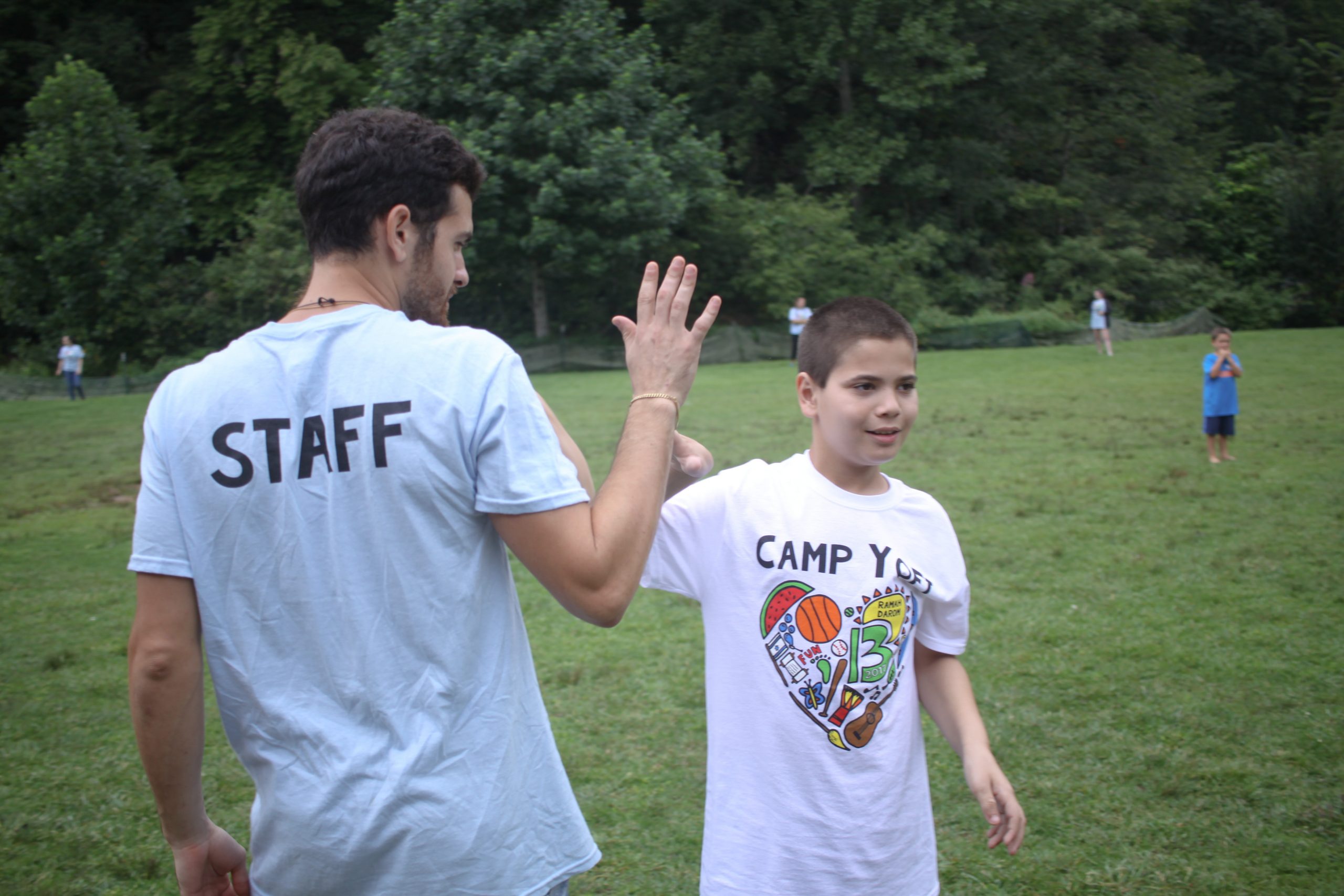
Identifying and recruiting campers that first summer wasn’t easy. Jewish communal professionals were not yet engaged in or thinking much about how to include Jewish children with disabilities in Jewish camping life, and it would be many years before inclusion became a buzzword. But that summer, Herb and Barbara managed to recruit eight campers, and the first Tikvah program was born.
It wasn’t smooth sailing at first. In fact, that inaugural summer, the Greenbergs spent a great deal of time serving as diplomats within the camp community, advocating for their ideal of inclusive camping, and reassuring people at camp who didn’t understand at first how a model like this could work.
But their dedication paid off. Over several years, Tikvah programs began to spring up in Ramah overnight camps across North America, and in dozens of other Jewish summer camps as well (Today, all Ramah overnight camps and day camps serve campers with disabilities, with offerings including camping and vocational training experiences, salaried employment for adults with disabilities, Israel programs, weekly video meetings, and occasional reunions and get-togethers for participants and alumni.)
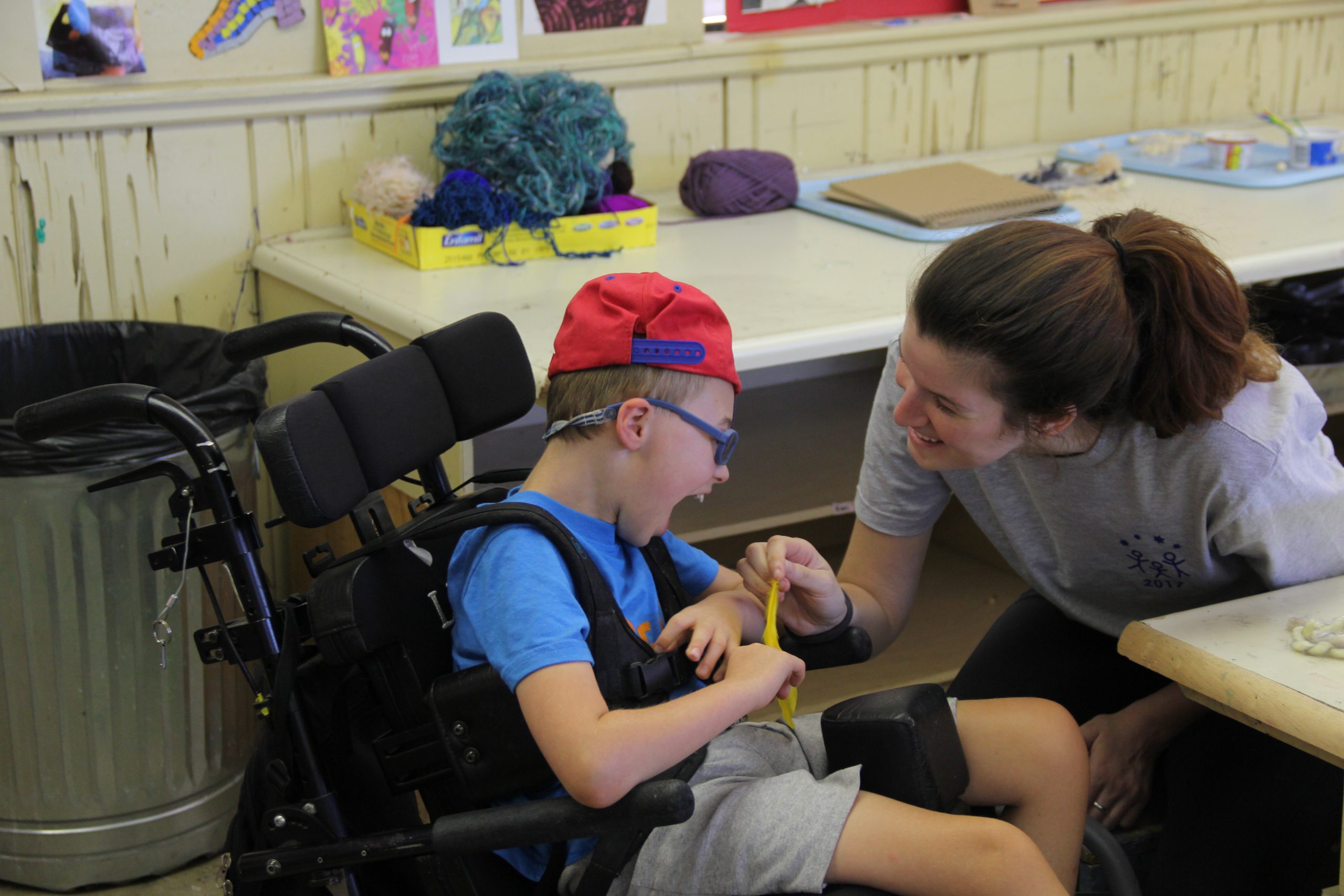
This model of inclusion was so successful, in fact, that it has begun to serve as an “industry standard” for how Jewish communal spaces welcome children with disabilities into their programming.
While summer programs for campers with disabilities were much needed, there was more to be done. Families still felt there were not enough opportunities for their children to experience Jewish learning during the calendar year and for programming that included the whole family. In addition, accommodations for children with disabilities still weren’t quite meeting the standards necessary for true inclusion (which include, among other things, accommodating for sensory and behavioral needs during prayer services and community-wide events).
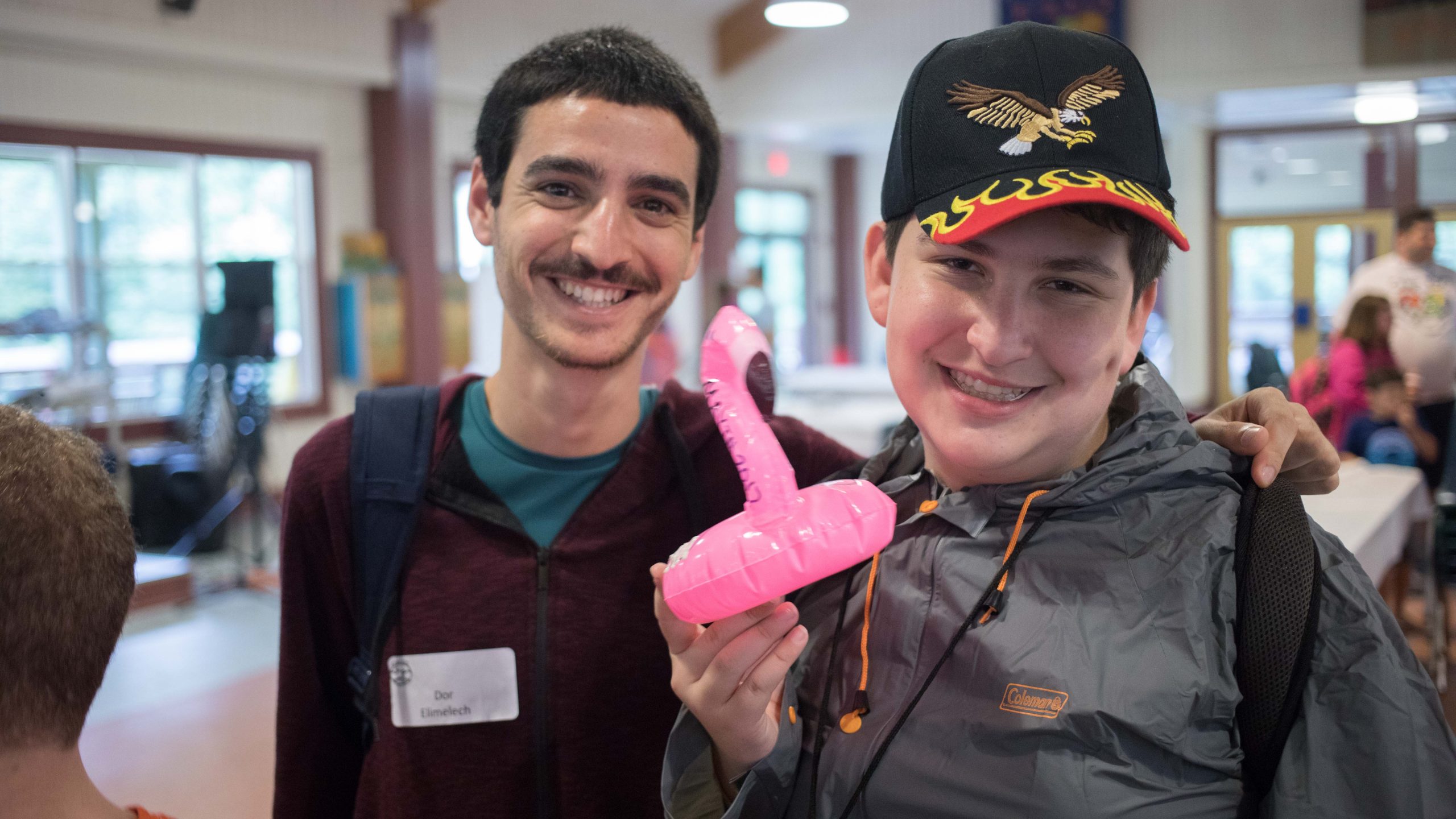
Families longed for a place where they could attend a Shabbat service with their child, knowing that a child’s different behavior (loud noises, or an outburst) wouldn’t be deemed a disruption. They desired an environment of acceptance as well as camaraderie with other families.
Rabbi Loren Sykes, a veteran Camp Ramah director and a 2006 Covenant Award recipient, was listening. In 2004, he launched Camp Yofi, a Jewish family camp experience for children with autism, their parents, and their siblings. (Camp Yofi received a Signature Grant from The Covenant Foundation in 2005.)
“We created Camp Yofi out of a desire to establish sacred space for and warmly welcome back Jewish families who were being excluded, actively and passively, from the Jewish community,” Rabbi Sykes shared.
Family camps for children with disabilities take place at Camp Ramah sites once or twice per year in California, the Poconos, and New England.
While inclusive camping clearly benefits people with disabilities and is praised by their parents, the impact on the rest of the camp community is also worth noting. For nearly 50 years, Ramah campers and staff members have been returning home to their synagogues and Jewish communities with a greater awareness of and comfort with people with disabilities. Each camper, staff member, mishlachat (Israeli delegation) member—the entire Ramah community—interacts with people with disabilities in a very natural way—through Shabbat programming, camp-wide field trips, meals in the chadar ochel, special events, free swim, barbecues, and special buddy and peer mentoring programs for campers and staff.
And this bears out in reflections from campers who experience the enrichment of Tikvah firsthand.
“Inclusion has taught me many lessons including patience, tolerance, and acceptance,” said Julia Wolf, a 21-year-old veteran Ramah camper. “These are qualities I take with me in my life, everyday.”
Campers at Ramah who are between the ages of 13-16 also have opportunities across the camp sites to be peer mentors, and often chose to work as inclusion or Tikvah counselors when they return as staff members at age 18. This helps assure a steady pipeline of sensitive, qualified staff.
The Jewish camping community has come a long way since the days of Herb and Barbara Greenberg’s foundational work. Today, many Jewish summer camps offer inclusive programs and the Jewish community as a whole has become far more attentive to the needs of people with disabilities.
But it’s the effect that Tikvah has had on families that is the most resonant of all.
“The Tikvah program at Camp Ramah in New England is Molly’s happy place,” said Hannah Jacobs, the parent of a long-time Tikvah camper.
“It’s more than just a second [summer] home for Molly,” Hannah continued. “It’s also the only place that allows her the freedom to be her true self.”
By Howard Blas, for The Covenant Foundation
More to Consider
- A Ramah Tikvah Counselor Shares How His Summer Changed the Way that He Understands Kids With Disabilities and Himself (Jeducation World)
- My Journey from Tikvah to Executive Director at Gateways: Access to Jewish Education (Reshet Ramah Blog)
- On a Mission of Hope (The Jerusalem Post)
- The Month That Changed My Life (The Jewish Week)
- This Jewish Camp Is Teaching Teens With Special Needs How To Be Independent (The Forward)
- The Impact of Family Camp (The Jewish Week)
- Tikvah Connects Spring 2017
- Tikvah Connects Fall 2017
Throughout the country, Jewish day schools have struggled with the question of how to incorporate children who have learning differences, ranging from dyslexia and dysgraphia to autism to social and emotional issues, into their classrooms. In many cases, heartbroken principals end up counseling such children out of day schools and into more specialized learning environments, acknowledging that they simply aren’t equipped to serve a wide range of learners. And in some cases, that is the necessary step.
But an inclusion model is thriving at Luria Academy of Brooklyn, where children with special needs comprise as much as a third of each classroom.
“Every child learns differently,” said Amanda Pogany, Luria’s head of school, And at Luria, we differentiate how we teach each child based on how they learn,” she said. “Our teachers are differentiating every single one of their lessons, so whether a child is considered to have special needs or not, teachers are thinking about how that child learns and what that child needs and ways to support that child.”
At Luria, a Jewish day school with 250 students in preschool through eighth grade, inclusion is built into the fabric of the school. Its Montessori-inspired classrooms consist of mixed-age groupings, in which students spend their days learning in small, fluid clusters and pairings, guided by the three or four teachers (plus a designated “tone keeper”) who are assigned to each room. At any given moment, one teacher may pull aside a handful of children who are struggling to understand a math concept, while another teacher works with a group of students who were so captivated by the weekly Torah portion that they have decided to write a play about it.
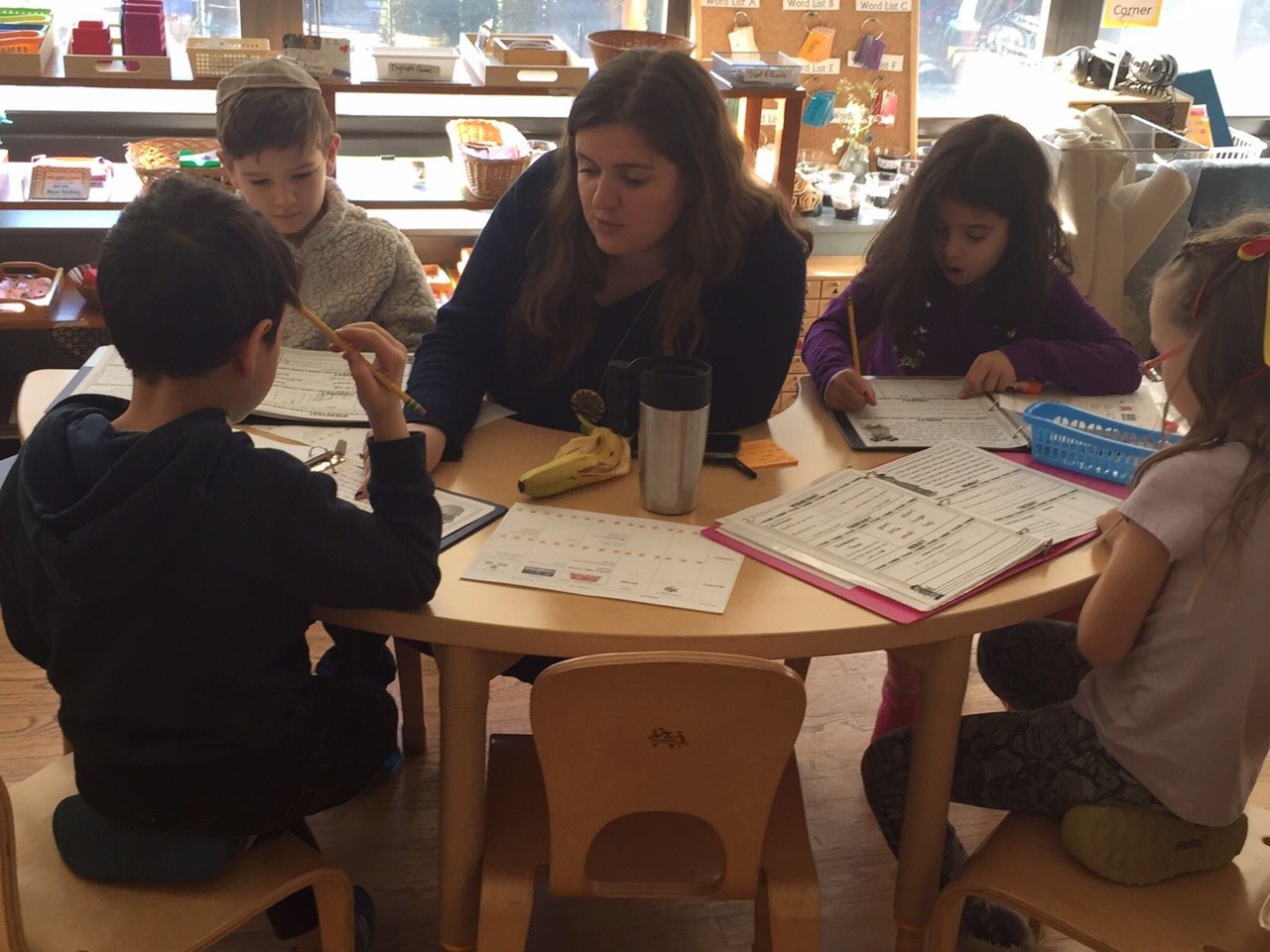
Teachers are encouraged to consider themselves “facilitators of learning.” Because all children receive differentiated instruction all day long, incorporating those whose needs may be very different is not as much of a stretch. And when a speech therapist or reading specialist “pushes in” to a classroom to work with a student as part of their Individualized Education Plan, or IEP (a document outlining services that children require and are entitled to by law), it feels like a natural extension of what’s going on elsewhere.
Luria has earned a reputation for the success of its inclusion model, for both accepting and embracing students with special needs, and the school has become something of a laboratory for day schools across the country. More than a dozen schools have sent teachers and staff to observe Luria’s program in action, and to identify ways they can replicate its successes back home.
Special needs inclusion is part of the bigger picture of Luria’s mission: Creating a Jewish community that is fully, deeply pluralistic, on all levels — where children can recognize one another’s differences and approach them with curiosity, not judgment.
“For us, this is part of the larger picture of diversity,” Pogany said. “The other piece that’s so valuable is that students with special needs can have neurotypical peers. They can be fully integrated, but also get support in the way they need.”
The emphasis on inclusion also benefits students who are not classified as having special needs. First, neurotypical students learn patience, compassion and empathy in a meaningful, organic way. Second, staff members often find that decisions they make to create a positive learning environment for children with special needs end up benefiting everyone. When they designed classrooms to create plenty of nooks where children with attention disorders could retreat for some peace and solitude, that benefited everyone. And tactile, hands-on materials and lessons that teachers create in an effort to reach students with cognitive impairments often end up resonating with their classmates in powerful ways.
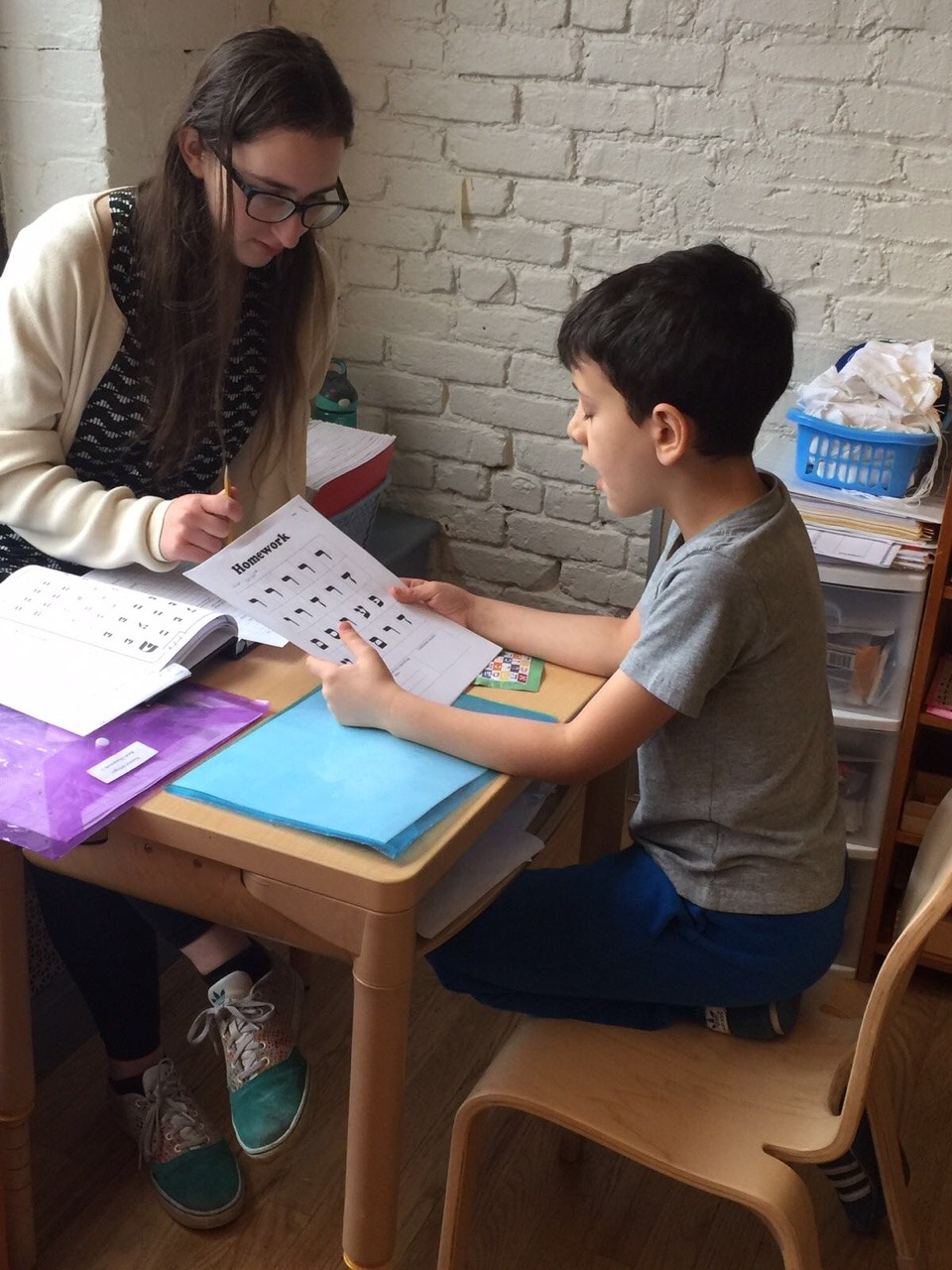
Plus, children who have deficits in certain areas show themselves to be fabulous role models in other areas.
Luria has honed its approach to inclusion over the years, learning from experience what’s effective and what falls flat, what can be tweaked and what must be rethought entirely.
“We are constantly evaluating ourselves and seeing what’s working and what’s not working, and how can we do this better,” said Channah Lepkivker, Luria’s director of support services.
Luria has grown from the ground up, so some of its first classes had fewer children and a larger share of children with special needs. In the younger grades, where classes are full and the school has a growing wait list, students with special needs make up about a third of the classroom —which administrators have found to be the right number.
“It really depends on the dynamics of the classroom,” Lepkivker said. “Some of the questions we think a lot about are, ‘Who can be this child’s friend? Who can be partners for them in learning?’”
The school has also learned to work closely with parents to evaluate, on a regular basis, whether the Luria environment continues to make sense — as their own children’s needs evolve, and as the environment in the classroom shifts with the development of their neurotypical peers. For example, a child with dyslexia may thrive until middle school, when the reading workload becomes more intense. And a child on the autism spectrum may blend in socially when children are younger, but struggle when kids get older and the social dynamics change.
“Something we’re talking a lot about now is having that conversation with parents at every single cycle,” Lepkivker said. “In fourth to fifth grade, or sixth to seventh grade, there may be some social-emotional challenges there, with children wanting to connect with peers. Sometimes it’s a matter of having the parents be aware that there may be more challenges ahead for a child.”
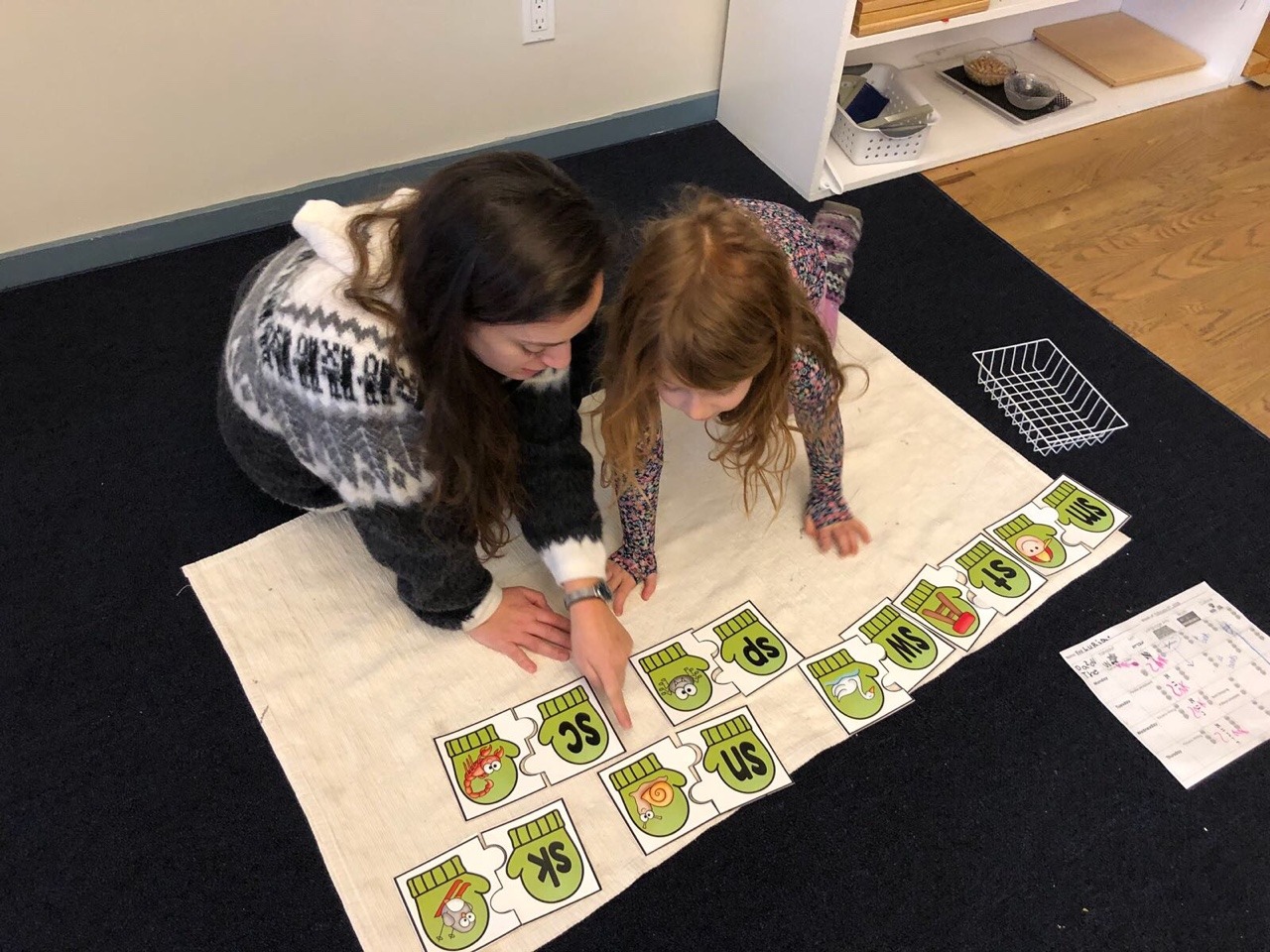
In some cases, parents choose to keep their children at Luria, where they are part of a diverse Jewish community. In other cases, they may decide that it’s time for a different setting.
Then there are moments that highlight the inclusion model at its best, benefiting the entire school community in extraordinary ways.
One middle school student with a range of issues (including autism, obsessive compulsive disorder and academic delays) had for years sat in a special chair, not allowing anyone to come within a foot of him. After he was at the school for several years, staff members noticed that he had begun sitting in different chairs — a huge development.
One day, the student was walking in the hallway and passed a peer, unexpectedly calling out, “Hey, high five!” and lifting up his hand. The peer stopped and did a double take, surprised that his longtime classmate was initiating physical contact. “Wait, are you OK with having high-fives?” the peer asked. “In that case, my hand is always available for a high-five.”
For Pogany, that anecdote crystallizes the power and promise of inclusion.
“We are raising a generation of Jewish children that approaches the Jewish community and the world with open minds and open hearts,” she said. “We’re sending the message that students with special needs belong in our communities and our classrooms, and also on our playdates and at our birthday parties.”
More to Consider
- Luria Academy Inclusion Guide
- An Educator Ambivalent About A Separate Special Needs School (The Jewish Week)
- Our Equation for Successful Day School Education (Jeducation)
- Teaching the Whole Child (Jeducation)
Elana Naftalin-Kelman has been working at the intersection of special education and Jewish education for over 15 years. She directs the Tikvah program for kids with disabilities at Camp Ramah in Ojai, California, which includes a camper program, a vocational program for young adults, and a camp for families that have children with disabilities. Elana also consults with multiple Jewish institutions to aid them in thinking about how to be more inclusive of Jews of all abilities. She has taught professional development courses in differentiated instruction, behavior management, and teaching Hebrew. She lives in Berkeley, California with her husband and three sons.
In the following interview, we chat with Elana about the importance of starting with a conversation when engaging in professional development, the small changes every school can make right now to create a more inclusive space and the need to get everyone on board, to make true change. And, as a special added bonus, Elana interviews her mom, 2003 Covenant Award Recipient Vicky Kelman, on her work at the Ohr Lanu special needs family camp at Ramah. Don’t miss it!
Making Space for Jewish Family Life at Ohr Lanu
***
What does professional development for educators in synagogue schools generally look like?
Whenever I begin working with any new community, I start by having a conversation with members of all parts of that community: lay leaders, professionals, parents and teachers. I like to get a full picture of what’s going on in that particular space. There’s no way to understand the practices of a school or synagogue by reading a mission statement—everyone has good intentions and likes to think of their school or community as inclusive, but what that actually looks like in practice, varies widely. Often, it’s easy to say, but not so easy to do.
What we tend to find when we interview teachers and directors of religious schools or synagogue school communities, is that Jewish institutions are very good reactively. However, what we are working toward in the inclusion space, is teaching the Jewish communal world how to be proactive: how to identify — in advance — those adjustments that would make a school, a synagogue, a community center more inclusive, without waiting for a particular kind of student to walk through the door.
It’s important for a school to be able to anticipate the kinds of students that will walk through their doors and my role is to give teachers and administrators the general tools to meet the needs of all students, to figure out how our classrooms can be ready for each and every learner.
Are there challenges that are particular to educators working in supplementary school settings, when it comes to making their schools more inclusive?
First, as we know, there’s a high level of teacher turnover at both religious schools and preschools. And because of this, when offering professional development, there’s a need to repeatedly re-teach techniques. It’s hard to institute long-lasting change when there isn’t much institutional memory in any given place.
Also, a religious school classroom is busy. There’s so much to do in such a short amount of time. But one easy change: take breaks. For kids to truly absorb what they’re learning, they need to stop and reflect every so often. And by the way, this isn’t something that just benefits a student with a disability. This kind of attention to quiet space and reflection will benefit all students. And this is essential to keep in mind, because we don’t always know if there’s a student in our classroom who has a diagnosis. Often, especially in a religious school setting, teachers don’t have this information. So why not adjust the classroom for all students?
Another simple change that every school can make to benefit all students: be sure that there’s a quiet space somewhere in the school building where a child can go to calm down. Put some pillows, books, coloring books and play dough in the room. Make it open and available to any student who needs to take a few minutes to breathe and relax. That’s one small step toward inclusion right there.
It’s also important to remember that predictability in the classroom is key. Keeping to a schedule helps all students. Kids like to know what’s going to happen next. Often, for children not knowing the routine leads to anxiety and negative behavior. But if you set expectations at the start, this can help calm and center a room full of anxious and rowdy kids.
Another great idea: remind your students of the class contract. Talk about best practices. Teachers often do this at the beginning of the year, but then might not go back to it. But it’s important to keep reminding students of behavioral expectations, and of class goals.
These are all relatively simple ways that a busy school can make immediate changes to benefit not just students with disabilities, but all students. I tell everyone I work with: if you have a team of really great educators, you can meet all kinds of students at the door.
What are some of the unique aspects of working to make a Jewish preschool more inclusive?
For most of our Jewish families, preschool is their first foray into Jewish life, their first look into what it means to live within a Jewish community. For families that have children that are either about to be diagnosed or have already been diagnosed with some kind of disability, its essential for them to feel supported by their preschool community. In most cases, this will determine whether the family remains a part of that Jewish community or not. If a school tells a parent that they cannot offer the kind of support that child needs, that family will understandably look elsewhere, and often elsewhere will not exist within a Jewish space, and that’s unfortunate.
We know from the research that early intervention is so important. Preschool is much more than just childcare. It’s the start of an incredibly important and formative journey for any child. As such, preschool teachers and directors need appropriate training and support so that they are fully equipped to accommodate a classroom of diverse learners and learning styles.
How does your Judaic knowledge inform your work?
I can uniquely understand the needs of a Jewish preschool and help a preschool staff balance both the Jewish content piece along with the needs of an inclusive early childhood center.
For example: I recently observed a Shabbat morning service at a preschool. The service lasted a half hour. The four year olds were restless. A half hour is too long for 4 year olds! I sat with the educators and together we considered: what are the goals of the Shabbat morning service? What can we do to make it more interactive? How can we make it shorter but also substantive?
How does your work at Camp Ramah Ojai inform the other parts of your professional portfolio?
All of my inclusion work is informed by my work at Ramah—my experience as a camper at Ramah in Ojai is what inspired me to enter this field in the first place. Camp Ramah taught me what it means to be a truly inclusive community, where everyone is respected and honored as important members of the community.
What my experience at Ramah has taught me has become central to my philosophy of inclusion. Creating a truly inclusive school or camp or synagogue community requires a cultural shift on the part of everyone in that community. The onus isn’t on any one sector alone—it’s not just the responsibility of a director, or a teacher, or a parent liaison, or a board or a consultant. Everyone needs to be committed to change.
More to Consider
- The Top 3 Reasons Special Needs Program at Camp Ramah CA Rocks (Jewish Journal)
- Camp Ohr Lanu: My Second Home (Ramah)
- Where Are the Curb Cuts in the Jewish Community? (Zeh L’Zeh)
In 2016, Sight Line interviewed Beth Steinberg, Founder and Executive Director of Shutaf Inclusion Programs in Israel, about how disability is a Jewish peoplehood issue. Two years later, and in honor of #JDAIM18, we’ve asked Beth to write us a letter from Jerusalem, sharing with our community what she thinks is the most pressing issue facing advocates of inclusion in Israeli schools.
Imagine this: You’re hosting a dinner party and you’ve pulled out all the stops. The table looks fabulous, the wine is chilled, music is playing softly in the background, and the mouthwatering scents wafting from the kitchen promise a special meal for every carefully selected guest who walks through the door.
Sounds perfect. Until the oven goes on the fritz, the bathroom floods, the soufflé falls, and your guests all cancel on you.
Now, the perfect dinner party of your dreams has failed. You ask yourself: Why bother to try and plan special events, anyway?
A recipe for success calls for a zoomed out perspective—a careful consideration of all factors, not just some. The host of a successful dinner party needs to take a holistic approach and in my personal and professional world, an advocate for successful inclusion in schools does, too.

Another story, but this one true: I recently worked with the mother of a child with special needs who found herself frustrated and heartbroken when many of the “ingredients” for successful inclusion weren’t coming together at her school. While her daughter was coping successfully with the academic challenges of inclusion—she found herself struggling socially. This child played alone in the schoolyard, unable to connect with her schoolmates.
This child’s school, devoted in theory to the cause of inclusion and all the elements that inclusion signifies, had come up short when it came to thinking through the recipe for this child’s social and academic success.
In fact, the critical ingredient for this recipe is the commitment on the part of the school community – teachers, specialists, children and their families—not to just one of the adjustments needed for a truly inclusive school, but to all parts of the whole. This child might have been succeeding academically, but she wasn’t making friends. Therefore, this wasn’t a successful “dinner party.” Not yet.
In this case, an impassioned and heartfelt blog post by the mother in question was read and shared by other parents, and the school recognized the need to take stock, to think creatively, and to ask for help.
That’s when Shutaf Inclusion Programs in Jerusalem joined the “dinner party.” Two years before, we’d sat at the table with a school inclusion specialist and occupational therapist, during the child’s first year at the school. Back then, what we focused on was how essential it is to start at the beginning.
And what is “the beginning?” The beginning is what happens before a child with special needs even walks through the door of a school. The beginning starts with questions, and conversation.
Here are some questions Shutaf always asks a school, when a school is preparing to welcome a child who will need special services:
- How do you (and your school community) feel about disability, difference and inclusion?
- What fears, misconceptions, and discomfort do you feel around people with disabilities?
- What do you feel is possible and impossible when it comes to inclusion?
- Are you willing to reckon with “where you are on the inclusion spectrum,” in order to shift your mindset forward, and think about the whole child and not his or her label?
Intake forms often only provide a shadowy outline of who a child is. Perhaps a form can tell you a child’s diagnosis and his or her age. Beyond those forms though, there is an actual child – a child who has interests, likes and dislikes, and specific needs. And that child’s family has hopes and aspirations, too.
Here in Jerusalem, inclusion is not (yet) the norm, and parents often pay out of pocket for services in order to cover needs beyond the mandatory in-class-aide-hours covered by the Ministry of Education. This is a tremendous financial burden on families of children with special needs, and Shutaf is working tirelessly to advocate for more state-mandated services.
At the same time, we focus on helping schools learn how to create a sense of welcome for each child. This means making a plan for the teacher and the class, the parent committee (who need to learn and understand the issues more fully), and the teaching staff at all levels, who need the opportunity to reflect personally about their feelings on issues of inclusion, to ask questions, and to make commitments to the inclusion decisions being made as a school community.
Our work at this one school, to help this one child, didn’t mean we had baked a perfect soufflé – not yet – but it did mean we made a first step towards moving forward together, as a community to teach this school—and many others—what it means to see a child, family and experience holistically. The classroom workshops we led were received positively. Those workshops were aimed at exploring the need for caring and understanding between students, and we offered them to two classes, on the grade-level of the child in question.
Our plan is to offer more workshops for more classes in this school, and eventually, also offer some in-depth staff development over the next few months.
To paraphrase Neil Armstrong, it’s one small step for inclusion, one giant leap for a whole community.
The building blocks of a school that successfully includes a child and family with special needs aren’t so different from you might need for a perfect dinner party: planning, commitment, thoughtful preparation, evaluation and assessment.
This is what we call a recipe for long-term success.