We believe that many people – our leaders, members of the media and citizens from all walks of life – truly want what they believe is best for America and the world. Thanks to social media, a 24- hour news cycle and nearly global connectivity, we have the ability (and some have the tendency) to instantly transmit our thoughts far and wide before we have a chance to actually consider whether we truly want to articulate them, and how.
As Jewish educators, we believe, as Rabbi Ben Bag Bag did over 2,000 years ago, that if we look at the Torah, turn it over and over, we can find the answers to nearly every problem. And so, we invite you to join us in considering how we can bring more kind and empathetic discourse– and possibly more peace– to our world.
Below, you’ll find the third unit in a 6-unit series on teaching civil discourse (you can find the first two lessons here). Each lesson, which will be shared free of charge right here on The Covenant Foundation website, will have material appropriate for 6th/7th grades, 8-10th grades and 11th grade-Adult students.
Explore this lesson and others that will follow, and let us know if they bring a modicum of civility to your classrooms, and your worlds.
By Joel Lurie Grishaver and Ira J. Wise for The Covenant Foundation. Photo by Zion Ozeri.
Joel Lurie Grishaver is an author, teacher, spiritual counselor, artist and the Creative Chairman of Torah Aura Productions, a publisher of books that help Jewish teachers create learning experiences in and out of the classroom. He lives in Los Angeles, CA. Ira J. Wise is Director of Education at Congregation B’nai Israel in Bridgeport, CT and also a teacher, author, mentor, educational consultant and Joel’s student.
Download the free lesson plan here
“When I teach, ‘What words jump out at you and why?’ is often my opening question. As I listen to my students’ responses I learn more about what moves them and concerns them. From there I learn how to generate sparks of love and excitement between my students and the ideas at hand. By admiring the beauty of a text, students may feel the meaning of that text more personally and this then opens up opportunities for the group to share what they have found.”—Dr. Jane Sherwin Shapiro
As part of a panel titled “Educating Jewishly to Live Wisely,” Dr. Jane Sherwin Shapiro, 2017 Covenant Award Recipient and Cofounder of OROT: Center for New Jewish Learning, shared her methods for building relationships and fostering love and excitement amongst adult learners in her classroom.
Illustration by Jessica Tamar Deutsch.
More to Consider
- The Torah of Bubbiehood: Dr. Jane Sherwin Shapiro (ELI Talks)
- Applying Adult Learning Theories to the Field of Jewish Learning
“In the last conversation I had with my teacher Elie Wiesel z’'l, he quoted the Rosh Chodesh liturgy in which we pray for ahavat Torah v'yirat Shamayim, or, the love of Torah, and then awe of Heaven (which means spiritual awareness of the kind that leads to integrity). Wiesel explained that it is love of learning which leads to integrity and spirituality, and that our main role as teachers is to cultivate and awaken that love of learning. I asked him how we might do that. "By being it," he replied. "We have to become lovers of learning ourselves, and then the love becomes contagious." -- Rabbi Dr. Ariel Burger
As part of a panel titled “Educating Jewishly to Live Wisely,” Rabbi Dr. Ariel Burger shares his pedagogy on the topic of "Teaching to Jewish Wisdom."
Illustration by Jessica Tamar Deutsch.
More to Consider
“The moment of encountering another human being, who lo and behold suffers in the same way I do, has the same longings and yearnings as I do, is the most powerful way we have to interrupt and overcome idolatry and bigotry and the persistent insistence on making other people, other.” -- Rabbi Shai Held
As part of a panel titled “Jewish Paths to Wisdom,” Rabbi Shai Held, 2011 Covenant Award Recipient, Rosh Yeshiva and Chair in Jewish Thought at Mechon Hadar, leads the audience in a text study from the Book of Exodus.
Illustration by Jessica Tamar Deutsch.
More to Consider
- Rabbi Shai Held talks about his latest work (Symposium in Memory of Dr. Jonathan S. Woocher, November 2018)
- How Rabbi Shai Held is Shaping the Conversation Around Love and Politics (Times of Israel, September 2017)
- Compassion and the Heart of Jewish Spirituality (ELI Talks)
- Shai Held: Lectures and Podcasts
Dr. Rebecca Schorsch loves working with teenagers. And while some educators might find that particular demographic challenging, or overwhelming (so many hormones!) Schorsch finds that the vulnerability teenagers are willing to share allows for a sense of openness in the classroom that’s invaluable to the project of growing a love of Judaism and a love of one another.
“Teenagers are naturally seeking their own sense of who they are,” Schorsch said from her office at the Rochelle Zell Jewish High School in the suburbs of Chicago where she serves as Director of Jewish Studies. “They’re thinking about authenticity and integrity, and while their process of individuation can be scary for adults to witness, it’s such a gift for educators who get to shepherd them through these meaningful moments and help them decide who they want to be in the world.”
A 2014 Covenant Award recipient, Schorsch has been working as a Jewish educator for 28 years, dating back to her days as a counselor at Camp Ramah in Wisconsin. In fact, she credits some of the introspection that she did back then as a young 20-something with her approach to teaching, today.
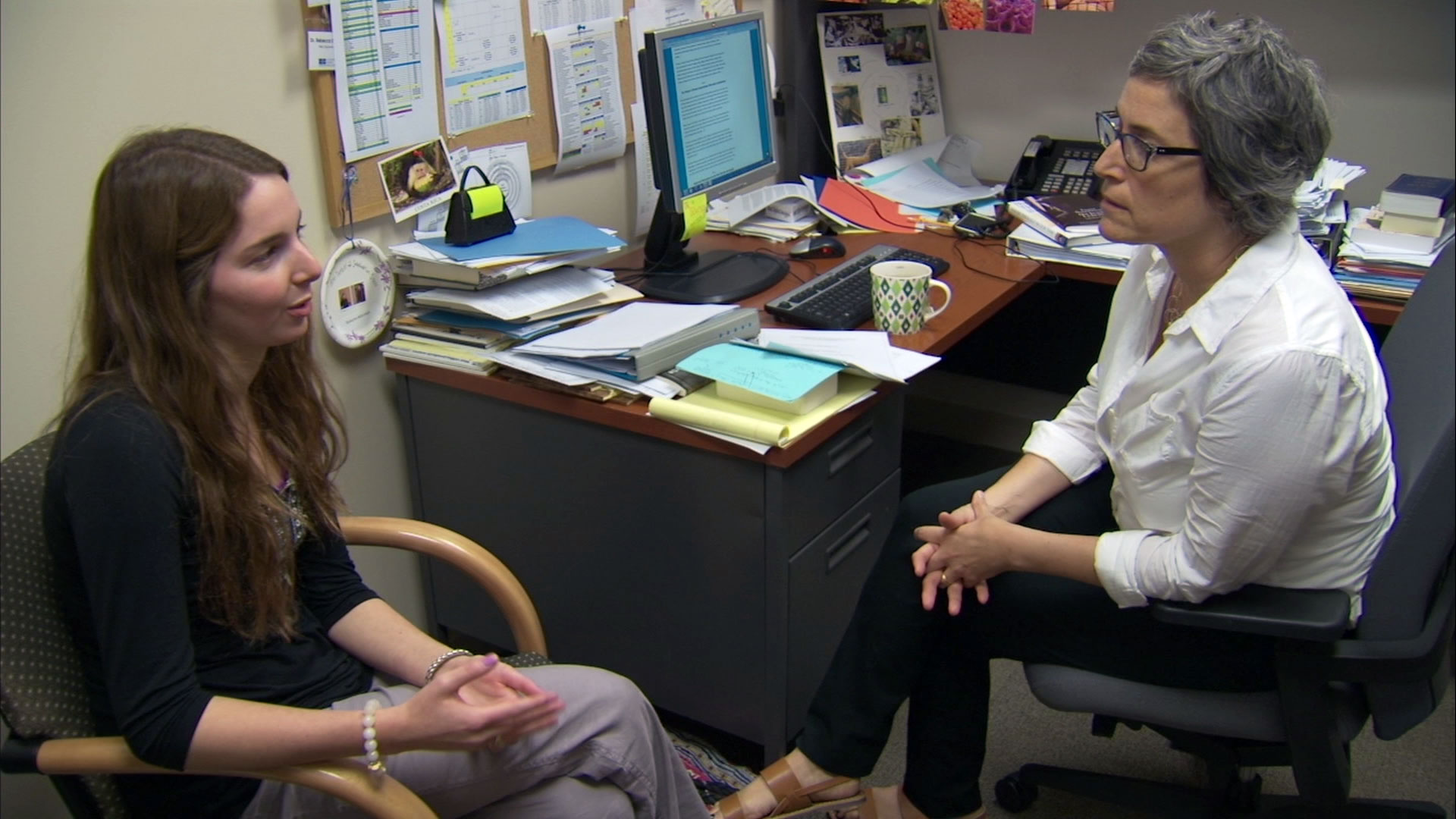
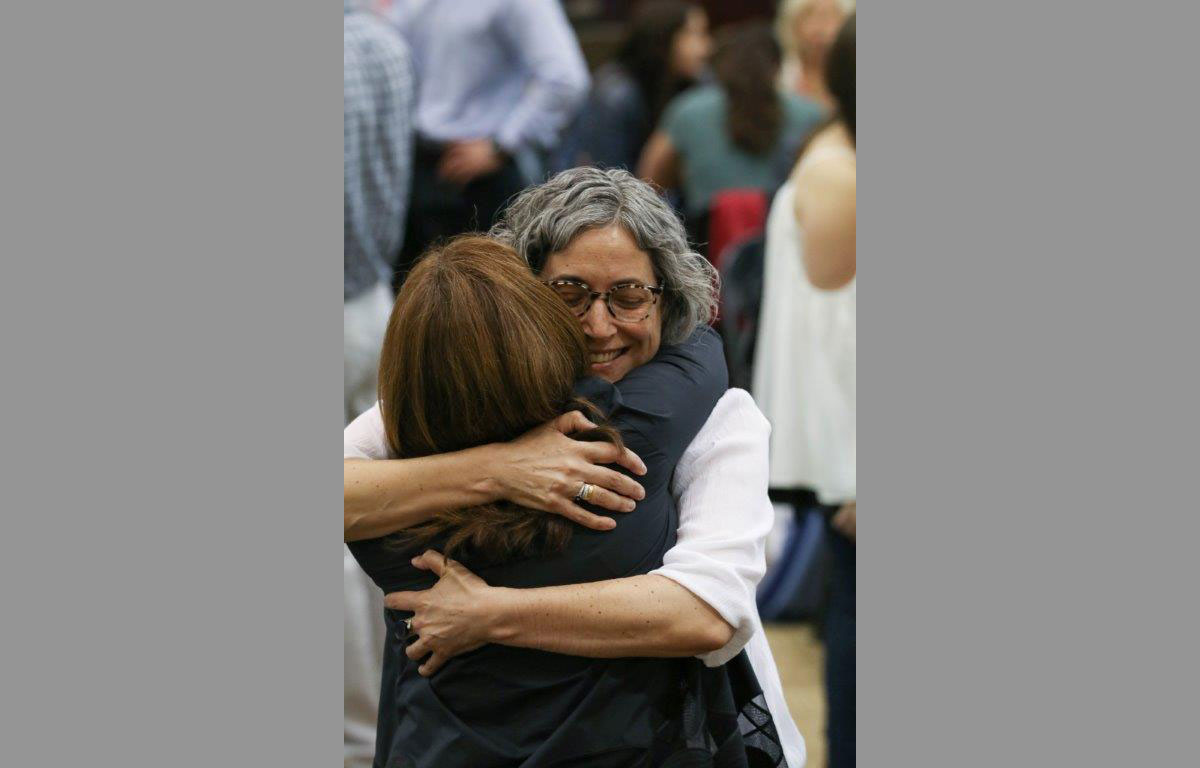
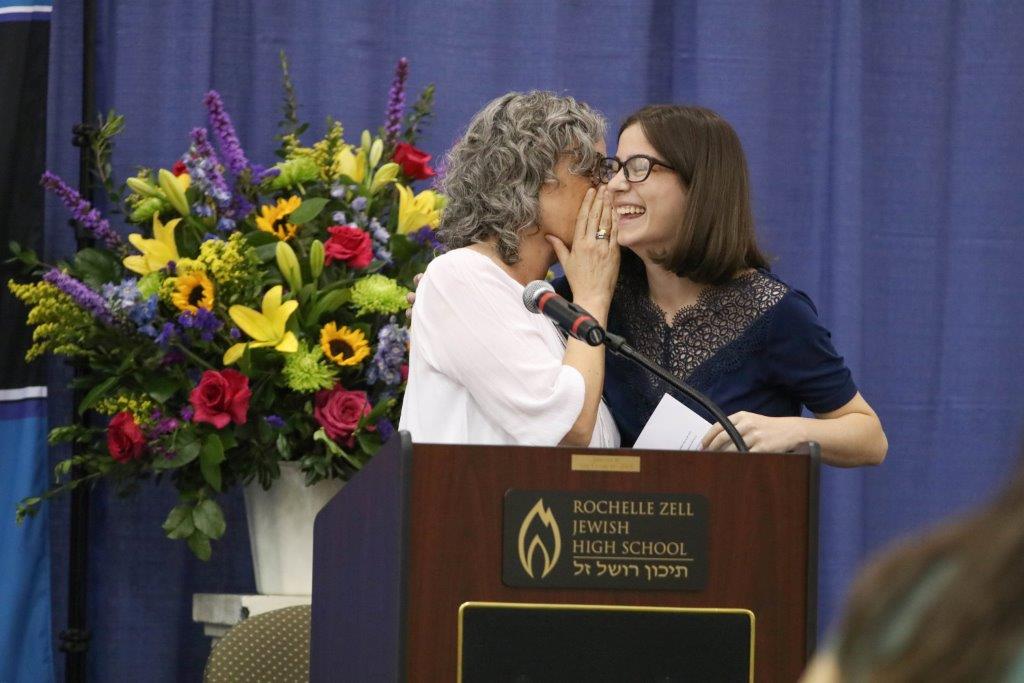
“I had this moment at camp as a young adult counselor,” she said, “where I really grappled with the question of how we teach ‘Jewish obligation,’ to our campers, and I remember thinking to myself that if we could find a way to make obligation compelling to kids, in a language that would work, in a liberal and open way, that would be helpful to them. Then, we could send them off knowing that they ‘got it,’ and their commitment would be solidified.”
But it was later, while in graduate school, when Schorsch began to study the teachings of Martin Buber, that the roots of what would become her central pedagogy really took root. Buber’s I-Thou philosophy— that all of actual life is relationship and in relationship, or the I-You, is also a relationship with God”—reflects how Schorsch understands what her central task is with her students: to bring love into our Jewish classrooms, and to nurture her students’ love of Judaism, she fosters relationships first.
“I’m not really grappling with obligation anymore,” she said. “Rather, I am thinking about love, and I think that a sense of duty and responsibility to living a Jewish life must emanate from a place of love, between teacher and student, student to student, student to text, and so many other forms. That’s what the classroom needs to be about.”
But love is a topic that seems bound to make teens giggle at best, or, clam up and reject any attempts to talk about it, at worst. It’s hard enough for adults to talk to one another with a language of love and kindness and empathy without feeling that they’re falling into dangerous sentimental territory, or that they’ll be overexposed or misunderstood. At a time when we’re more isolated from one another than ever before, thanks to technology and political divides and wide socioeconomic chasms, the challenge of bringing love back to the learning that’s happening in our classrooms seems almost insurmountable.
But Schorsch has specific methods. It begins with her mindset: she feels respect and admiration for her students and wants them to know that, to feel it. She knows they’ve made a choice, either actively or as part of their family’s values, to attend Jewish day school. She appreciates that choice and feels it’s imperative to honor them as human beings, as people who are very capable.
Schorsch is also very mindful of what her classroom feels like. “I'm obsessed with body language, and the possibilities inherent in face to face interactions,” she said. “So anything that’s an obstacle to that, I try and eliminate.”
That means there are no computers or screens in Schorsch’s class. Students are working with good old-fashioned books and pen and paper. They are looking at one another, facing one another, and making eye contact. “As a teacher, you must ask open-ended questions and you must be deeply interested in their answers,” Schorsch said. “Part of that process is showing your students your genuine interest; my students can see me nodding and I can see them and their reactions, and those elements are essential as we begin our work together,” she said.
Schorsch is not afraid of her students being bored, either. “Without their screens, they may be bored, they may doodle, they may stare at the ceiling, they may even put their head down for moment, but that’s OK,” she said. “They’ll come back.” Schorsch believes, as many do, that boredom is a value that’s all but lost on kids today. It’s not a bad thing to have the mind wander aimlessly and in fact, can be quite useful for discovery and self-knowledge.
“I think they appreciate the break from their phones,” she adds. “When they're out in the halls, their phones come out. But at least for a short while each day—whether it’s the 40 minutes they spend in t’fillah in the morning or in my classroom, it’s a chance to take a break.”
Schorsch’s students also spend time journaling and reflecting before they enter into a study of any text, because, as she put it, “this process helps us figure out where they are, and helps them see themselves and their own life experiences in the text.”
For example, in her 12th grade Modern Jewish Thought class, the first long, book-length text Schorsch’s students read is Rav Joseph Soloveitchik’s essay The Lonely Man of Faith. “I was honestly surprised,” she said, “by the extent to which that essay really resonates with teenagers. We know that technology has made us all more isolated from one another, but my students understood that Soloveitchik is talking about how to be human is to experience loneliness and as teenagers, this idea resonates deeply with them.”
“I think one of things adults do is try and shield them from feeling lonely or isolated, or say ‘don’t worry about it,’” she continued. “But in my class, I want us to look at the feelings, and be open about them. Loneliness and other difficult feelings aren’t meant to be swept under the rug, but rather, we need to take these feelings seriously, and name what we are feeling and see these feelings as an opening to connection, as necessary to connection, as does Soloveitchik, as the self---understanding, enabling, turning toward one another and God.”
“In my class, I am trying to foster an opening, not a closing,” she continued. “I don’t want my students to be afraid of sharing big feelings; these are the conversations I want to have with them.”
Any high school teacher knows that those four years are a time of intense pressure for students. And while the world that Schorsch’s students are living in—the world we are all living in, actually, commodifies everything, she finds it essential to help her students see that the entirety of their being isn’t determined by their GPA or the college they’re accepted to. Rather, she hopes to give them an alternative way to imagine themselves.
“All that commodification is so anxiety inducing,” she said. “You cannot possibly think about yourself in a deep way if you’re just thinking about your resume. In fact, the least of my concerns is whether my students are going to become doctors or lawyers. Rather, I want to know how they’re going to respond when bad things happen. Do they close off and disconnect? Do they become angry? Do they cry out against injustice?”
When Schorsch’s students read the Book of Job, she tries to help them make connections to their own lives and see how the text can inform decisions we make about who we want to be in the world, to acknowledge that bad things happen in the world, and to figure out how we respond to those bad things. She finds, too, that a teacher’s willingness to be open is critical.
“I think a teacher’s openness is derived from her sense of aliveness, and a sharing of a teacher’s own love. Is the teacher present and excited? That’s how students in the room will feel love; if they can sense their teacher’s own love for text, for education, for potential.”
Schorsch recognizes that the time her students spend in high school may be stressful but that it’s also a time of substantial growth. She sees her task then as helping her students fall in love with Judaism, Jewish text, Jewish culture—and Jewish life—because all of that is part of helping them develop who they will be as Jewish people in the world, and how they will live in the world with meaning. She sees her students’ choices to keep Shabbat, kashrut and a life of chesed about feeling not only deeply connected to their Jewish past and Jewish communities--as Soloveitchik writes, not as a hitchhiker unaware of her starting place and unsure where she is getting off--but rather as people who are deeply rooted and securely able to interact in the world.
Schorsch is reminded of a verse from Shir HaShirim (3:10) that describes King Solomon’s temple as,
עַמּוּדָיו֙ עָ֣שָׂה כֶ֔סֶף רְפִידָת֣וֹ זָהָ֔ב מֶרְכָּב֖וֹ אַרְגָּמָ֑ן תּוֹכוֹ֙ רָצ֣וּף אַהֲבָ֔ה מִבְּנ֖וֹת יְרוּשָׁלִָֽם׃
or, “inlaid with love.” The verse inspires how she thinks of the school environment she’s hoping to create for her students. “I always wonder, what does that mean, to build a structure that’s ‘inlaid with love?’ What does a school look like if it’s ‘inlaid with love?’”
Schorsch answers her own question. “A school inlaid with love is created through meaningful conversation, face to face encounter, by looking at each other, by careful reading and by not mishearing one another. We can create a love by not imposing our own language onto a text, but rather, by being aware and thoughtful.”
“I set the bar really high,” she added. “But teenagers are exciting to me. Their potential is so enormous. I want to cultivate patience, and have them sit around a table for a long time and just listen to each other. And ultimately I want to challenge them to think. Here is where they can truly begin to become the people they’re meant to be.”
By Adina Kay-Gross, for The Covenant Foundation. Photo by Zion Ozeri.
More to Consider:
- On Being Uncomfortable, By Dr. Rebecca Schorsch, Facebook, August 2018
- Reclaiming Conversation: The Power of Talk in a Digital Age, by Sherry Turkle
- Stop Googling, Lets Talk (Sherry Turkle, The New York Times, Sept 26, 2015)
- Dr. Rebecca Schorsch, Covenant Award Acceptance Speech Film (November 2014)
- Dr. Rebecca Schorsch, Covenant Awards Film 2014
- On Jewish Learning (Franz Rosenzweig, edited by N.N. Glatzer)
- I and Thou (Martin Buber)
“Ribono shel olam, God of the Universe, listen to my heart and my voice as I stand before You, wanting to tell our story. Help me to understand and find the right feelings and words with which to transmit the tale. Make my voice expressive and clear so that the collective wisdom of our people can reach the hearts of those who listen…”
—Peninnah Schram, "My Storyteller's Prayer,” Jewish Stories One Generation Tells Another, (Jason Aronson, an Imprint of Rowman and Littlefield, 1987), p. xxxv.
For Peninnah Schram, 1995 Covenant Award recipient and internationally renowned storyteller, the power of the spoken word was woven into the fabric of her childhood in New London, Connecticut, growing up with her father, Hazzan Samuel E. Manchester, and her mother, Dora Markman Manchester.
“I was blessed with parents who told me stories and the love of story was planted in my imagination,” Peninnah said. “My parents were given a legacy of the oral tradition from their parents which they handed down to me.”
Particularly vivid for Peninnah is the memory of her father chanting the Hineni prayer on the High Holidays.
“He began to walk slowly from the back of the synagogue to the bimah, haltingly, dramatically, chanting by heart, and pleading with his whole heart on behalf of the congregation, his voice coming from deep within him – at times both arms outstretched to the heavens,” she shared.
It was this High Holiday experience that introduced Peninnah to the art of storytelling. “I began to know the power of having words clearly articulated, musical rhythm and timing, pause and silence, readiness to begin as well as bringing the audience along with you in the story journey, and feeling the images communicated expressively through the body and voice holistically,” she said. Peninnah’s mother also had an influence on her storytelling by telling her secular teaching tales. Inspired by her parents, as well as Elie Wiesel and Ruth Rubin – a Yiddish folksinger and ethnomusicologist – the roots of Peninnah’s future profession were planted early on.
For decades, Peninnah has shared her stories and wisdom with the world, beginning in 1969 at Yeshiva University's Stern College for Women, where she taught Speech and Drama. At the time, Peninnah was also volunteering to record books for the blind at The Jewish Braille Institute. She loved a book of folktales she had recorded. After discovering her students at Stern College didn’t know much about Jewish folktales, she realized she had work to do—namely, to begin sharing sacred and secular Jewish folktales of all genres with children, in person, so that these jewels of Jewish culture wouldn’t be lost on another generation. Together with storyteller Laura Simms, Peninnah created a weekly program at the 92nd Street Y called “Fire, Water, Stone & Air” in which they would perform dramatic, participatory tellings of stories from around the world. Later she created another storytelling workshop, along with her Stern College students. This one focused on Jewish tales and was titled "Kernels of a Pomegranate."
Though the term “experiential education” was not yet popular, the program was an experience—and included creative dramatics, movement, music, and art. Through this work, Peninnah developed and refined an entire repertoire of Jewish stories and folktales, later becoming the resident storyteller at The Jewish Museum.
It wasn’t long before Peninnah’s reputation for the art of storytelling became widely known. She became a Professor of Speech and Drama at Yeshiva University's Stern College and the Azrieli Graduate School of Jewish Education and Administration. Then, in 1974, she was offered the opportunity to create a Storytelling course as part of the Speech and Drama curriculum. Peninnah ultimately taught at YU until her retirement as Professor Emerita in 2015.
These days, Peninnah continues to share her storytelling wisdom with the field of Jewish Education. In addition to teaching at a number of conferences, including NewCAJE and Limmud, she presents storytelling programs and workshops at synagogues, universities, and festivals across the US, Canada, and Israel.
Peninnah has always believed in the power of storytelling to pave the way for a brighter future and, given the divisive political climate of today, she finds storytelling as relevant as ever for educators looking for tools with which to teach the next generation values like kindness and empathy.
“Sharing stories creates a bond between people,” Peninnah said. “Once we know someone’s story, we can no longer be enemies because we develop empathy that, in turn, leads to relationships. That’s why stories still work – why they still have power and importance in our world.”
A shared storytelling experience enables listeners to “walk in the shoes” of the storyteller and the characters in the story and also to understand peers on a deeper level, Peninnah explained. That emotional exchange emerges from the deeply human endeavor in which one imagines oneself as the storyteller and the sadness, joy, or other emotions one would feel having been through the same experience.
The powerful human-to-human exchange between storyteller and listeners needs to happen face-to-face for the development of empathy, compassion, and community, Peninnah emphasized.
“There’s just no substitute for the human voice telling a story directly – with people looking at each other – listening to each other,” she said. “It is through the senses that one recalls emotions. It is the emotions that cause one to act in concert with one’s own group and to integrate the aspirations of the individuals with the ideals of their community.”
In addition to promoting empathy, storytelling is a powerful educational method because it “sets the story in the heart,” she noted. As the storyteller speaks, the essence of the story and its lessons are reinforced in the storyteller’s memory and the listener’s memory, and as the story reaches deep into the audience, they are changed and moved at the same time. “The voice is the messenger of the heart. We tell stories with the voice from the heart to reach the hearts of others,” she said.
Storytelling is vital to answering what Peninnah refers to as “heart questions,” the ultimate questions we are all trying to answer throughout our lives. Who are my people? How did they live? How should I live? What are my values? What is the legacy I want to leave for my children and the world?
Judaism is rich with sacred literature – Torah, Talmud, Midrashim, and a secular oral tradition that includes folktales, fairytales, fables, parables, tall tales, mystical tales and supernatural tales – which all set out to answer these questions.
“Shared stories become guides for desirable conduct and values,” Peninnah said. “Passed down from generation to generation, these communal stories educate and develop group identity in a creative and inspiring way. While stories delight, they also teach, and the images of the story remain in the imagination forever. These images then serve as a trigger to recall the lesson itself and contribute to moral development and Jewish identity.”
For educators hoping to incorporate storytelling into their classrooms and lessons, Peninnah offers practical advice that begins with a simple and singular suggestion: practice just listening. A class can walk outside and listen to the sounds around them and their nuances, listen to music and identify the instruments, or practice awareness of the stillness when in a quiet room. She also suggests becoming aware of body language and vocal tone when people are speaking by watching TV or a film with the sound turned down. Teachers and students can also search for a story they love and then share it with the whole class. The more students and teachers practice telling stories, the better. Educators who need a story for teaching a particular topic or theme can search in the Jewish Storytelling Coalition Directory and then contact a professional Jewish storyteller who can provide specialized coaching and guidance.
One of Peninnah’s favorite Jewish teachings comes from the book of Kings I, in which God asks King Solomon what he wishes for. Solomon responds not by asking God for long life, or for riches, or for the destruction of his enemies. Rather, Peninnah cites, Solomon asks for a lev shomea, a “listening heart,” for he understood that it is through listening and gaining a deep understanding of the experience of others that we can acquire true wisdom and only then can we make informed and compassionate choices of how to act in our world.
Although we may not be able to receive wisdom directly from God in the way that Solomon did, we can all begin the journey to acquiring a lev shomea through storytelling.
“We, as storytellers, should listen to the kinds of stories we need to tell,” Peninnah said. “We must listen to the message of the story and feel its importance to our lives. We must listen to the rhythm of the story, as to a musical composition. We must listen to the silences within the story. We must listen to what the listeners of the story need to hear.”
By Yonah Kirschner, for The Covenant Foundation. Photo by Zion Ozeri.
More to Consider:
Books
- Tamar Alexander-Frizer, The Heart Is a Mirror: The Sephardic Folktale (Wayne State University Press, December 6, 2007)
- Molly Cone, Who Knows Ten: Children's Tales of the Ten Commandments (Urj Press; Revised edition, June 1990)
- Sharon Barcan Elswit, The Jewish Story Finder: A Guide to 668 Tales Listing Subjects and Sources (McFarland & Company; 2nd edition, July 27, 2012)
- Barbara Diamond Goldin, A Child's Book of Midrash: 52 Jewish Stories from the Sages (Jason Aronson, an Imprint of Rowman and Littlefield; First Edition, July 7, 1977)
- Goldie Milgram, Ellen Frankel, Peninnah Schram, Cherie Karo Schwartz, Arthur Strimling, eds., Mitzvah Stories: Seeds for Inspiration and Learning (Reclaiming Judaism, November 23, 2011)
- Peninnah Schram, ed.,Chosen Tales: Stories Told by Jewish Storytellers (Jason Aronson, an Imprint of Rowman and Littlefield, July 1, 1995)
Articles
- Vanessa Boris, What Makes Storytelling So Effective For Learning? (Harvard Business Publishing Corporate Learning, December 20, 2017)
- Matthew James Friday, Why Storytelling in the Classroom Matters (Edutopia, July 11, 2014)
- Annette Labovitz, The Effectiveness of Storytelling in Jewish Education (The Lookstein Center for Jewish Education, January 15, 2000
- Timm Lott, Ditch the grammar and teach children storytelling instead (The Guardian, May 19, 2017)
- Clayton Schuster, How a Jewish Storytelling Tradition Is Reflected in Contemporary Art (Hyperallergic, December 11, 2017)
- Sierra Semmel, Learning more than Hebrew through storytelling (Maine Campus, February 4, 2019)
- Daniel J. Solomon, The Ancient Art of Jewish Storytelling Gets A Reboot, In Podcasts And Classes (Forward, May 28, 2017)
Download a full list of Peninnah's publications
On November 14, 2018, The Covenant Foundation and The Jewish Theological Seminary co-sponsored a symposium in memory of Dr. Jonathan S. Woocher. Titled “Accessing Jewish Wisdom,” the symposium featured three panels of Jewish educators and conversation prompts that were inspired by themes found in Krista Tippett’s book Becoming Wise: An Inquiry into the Mystery and Art of Living. The first panel, which featured Tippett, Founder of the On Being Project and host of On Being in conversation with Dr. Arnold M. Eisen, Chancellor of JTS, was followed by a Q&A from educators in the audience. Covenant Award recipient Peninnah Schram asked the first question, and both her question and Tippett’s answer are featured in the video shared here. The ideas expressed in both the question, the answer, and Tippett’s book, inspired the theme of this issue of Sight Line.
More to Consider
- Becoming Wise: An Inquiry into the Mystery and Art of Living (Krista Tippett)
- The On Being Project
- On “On Being” (The Cut, January 2019)
- Knowledge of Jewish Tradition Can Fight Anti-Semitism in America (Huffington Post, March 2017)
- Walking with King (The Jewish Week, January 2016)
These voices showcase best practices and exemplary moments of the Covenant Classroom in action. These educators serve as an example for the field and offer additional insights and inspiration for those seeking to raise the quality of Jewish education.
Gitta Jaroslawicz-Neufeld
“What makes a teacher great is a love of learning and a love for humanity. Everything else can be taught,” says Gitta Jaroslawicz-Neufeld, Director of Education at the Allegra Franco School of Educational Leadership in Brooklyn, NY. “I can teach you how to transmit a text, how to manage a classroom—if you love what you’re doing, it’s a piece of cake,” she says. In this video, viewers watch as Gitta mentors a young Judaic Studies teacher, inside her own classroom as well as at Allegra Franco. She also talks about how important it is for teachers to be intellectually curious, and focus not just on transmitting answers to students, but also, on changing students’ lives.
Amy Skopp Cooper
Amy Skopp Cooper is the National Associate Director of the Ramah Camping Movement and the Director of Camp Ramah in Nyack, NY, a day camp for kids aged 5-13. Ramah in Nyack has over 700 campers and a staff of more than 400 people. “It’s like being the mayor of a town,” Skopp Cooper says. This video gives viewers a window into a day in Amy’s life as camp director, as she tackles a snag in the well-oiled workings of camp life. Faced with record-breaking temperatures one summer, Amy and her staff rally to take over 700 campers off-site and, at the last minute, find multiple air-conditioned spaces for them to spend a camp day. “I guess the way I like to look at camp,” she says, “is that our first answer has to always be yes. In almost every situation, you can figure out a solution.”
Beth Huppin
In this video, Beth Huppin, an educator at Congregation Beth Shalom in Seattle, Washington, talks about the shared language that develops when she teaches texts to adults. She also muses on the profound act of bringing student and text together. “All the clutter, sadness, happiness…the stuff of life, goes away, and the real stuff comes out,” she says.” This video offers a glimpse into one of her adult education classes, where students look at psalms, “our words to God,” and study in chevruta. “They know stuff that I don’t know,” Huppin says, “and together, we come up with something good.”
2014 Covenant Awards: Rebecca Schorsch Acceptance Speech
“In celebrating Jewish education,” Dr. Rebecca Schorsch offers, “we remind ourselves of the contribution of Jewish education in making us whole.” Dr. Schorsch is Director of Jewish Studies at the Chicagoland Jewish High School in Deerfield, IL, and was a recipient of a Covenant Award in 2014.
Sometimes the best way to discover new learning opportunities is by simply talking to friends and colleagues about their own enrichment plans. Collected below are just some of the programs and trainings that your Covenant Award recipients and Pomegranate Prize winners have completed, or are considering. Keep us posted and share your ideas for professional development opportunities in the comments below!
Clergy Opportunities
- Sichat Rabbanim (Ongoing)
- Hartman Rabbinic Intensive (October 2017)
- Hadar Rabbinic Yeshiva Intensive (March 2018)
Mind/Body
- Jewish Spirituality Institute Retreat (Ongoing)
Jewish Music
- Singing Communities Intensive (December 2017)
Leadership & Impact
Teacher Training
- Mandel Teacher Educator Institute (MTEI) (November 2017)
- Teacher Leadership Program at Brandeis University (July 2018)
- National Science Teachers Association’s (NSTA) STEM Forum (July 2017)
- Jewish Montessori Certification Course (June 2017)
Experiential Education
Social Justice & Movement Building
- The Junction Annual: Our World in Transition (May 2017)
Why do we read?
We read for pleasure. We read to find an expression of our own experience. We read to better understand ourselves. We read to learn about far away lands and peoples, lives unfamiliar to ours, experiences wholly different. We read to feel less alone.
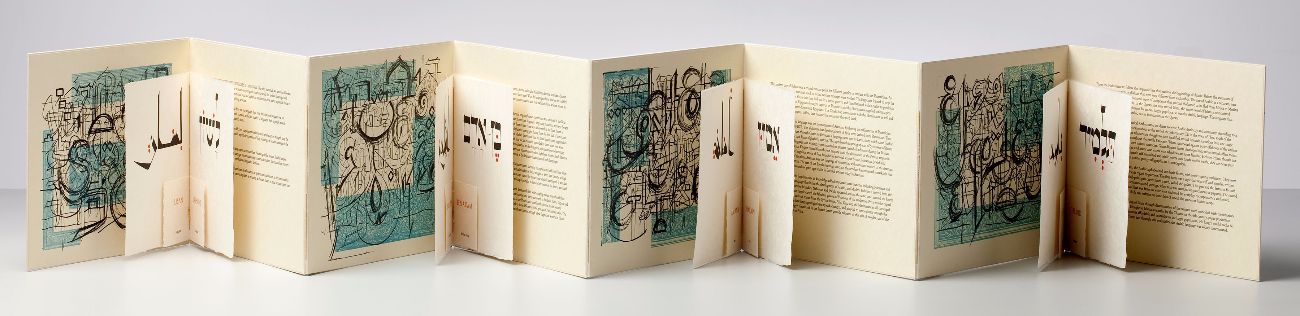
And, “we read because we’re a people of the book,” adds Lynne Avadenka, a visual artist and recent Covenant Foundation grantee. “The fact is, what keeps Jewish people together is a book that we read every week. And every week you can find something new in this book,” she asserts.
“Reading is a radical act,” Avadenka continues. “Think about it…letters are these squiggly things that our eyes and brains have figured out how decode. Our familiarity with words breaks down the wall that might otherwise keep people from getting up close to art.”