An ambitious initiative among JCCs around the world is creating unique connections and partnerships, tearing down silos, and seeding innovative international projects to strengthen Jewish community.
Although relatively new, Amitim, a program of JCC Global, is racking up successes and gaining attention and momentum.
For example, the David Posnack JCC in South Florida is partnering with equivalent agencies in Bogota, Colombia and Even Yehuda, Israel to fuel women’s empowerment through mother-daughter social justice projects in all three regions.
At the Merage JCC in California’s Orange County, teens are joining their contemporaries in Buenos Aires and Kfar Yona, Israel in a long-term leadership development program.
And the Sid Jacobson JCC on Long Island is collaborating with community agencies in Mumbai, India and Zaporozhye, Ukraine, as well as Jerusalem, to connect young adults with varying abilities and give them their rightful place as participating Jews.
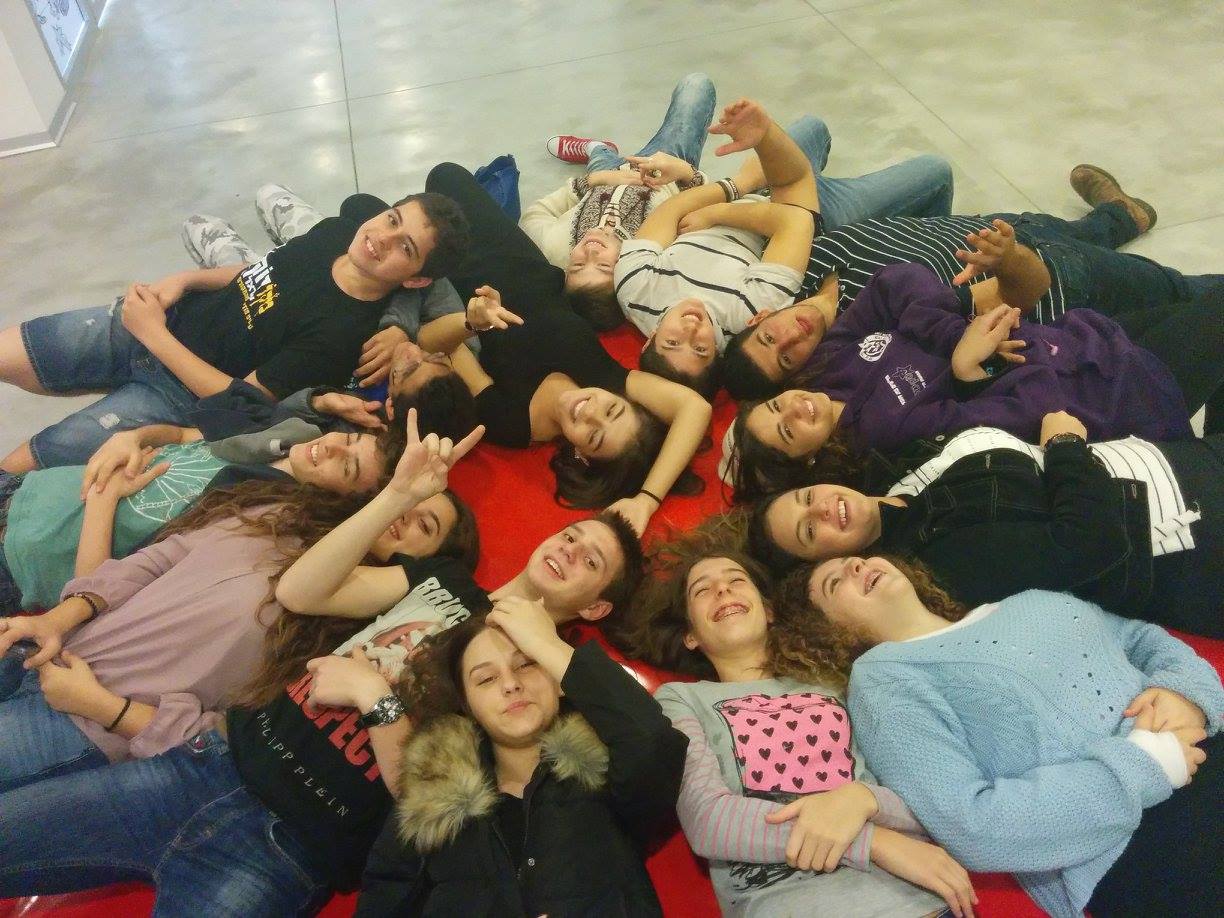
Amitim aims to leverage a worldwide network of Jewish community centers and similar institutions to incubate collaboration, design joint programming, and advance the concept of Jewish Peoplehood – so often cited as a priority within Jewish communal circles – as a concrete and achievable goal.
Driving the initiative is an appreciation of the richness of Jewish communal and educational life across the widest of spectrums, and recognition that joining best practices with grand and creative thinking can lead Jewish outreach and engagement to new heights.
“All Jewish communities are equal,” said Smadar Bar-Akiva, Executive Director of JCC Global, which is based in Jerusalem.
“It doesn’t matter if it is in New York or Bulgaria or Moldova or Israel. Each is sharing the language and framework of informal Jewish education, yet each has a unique perspective and experience based on community and cultural history and norms. Each has something to give and each has something to receive. When they come together, it is both transformational and inspirational.”
Amitim – the Hebrew word for “friends” or “colleagues” – was launched in 2014, underwritten by JCC Global and UJA-Federation of New York, as well as the American Jewish Joint Distribution Committee and some participating JCCs.
The first three-year cohort of participating agencies included 25 JCCs representing 11 countries. Seven joint projects were designed and implemented, reaching and engaging an estimated 5,000 community members, according to JCC Global.
Participation in, and impact of the program has grown dramatically. The second group – known as Amitim 2.0 Fellows – includes 50 JCCs or similar organizations in 15 countries. This cohort, which formed last year, is designing and executing 17 community engagement projects, impacting an estimated 10,000 Jews.
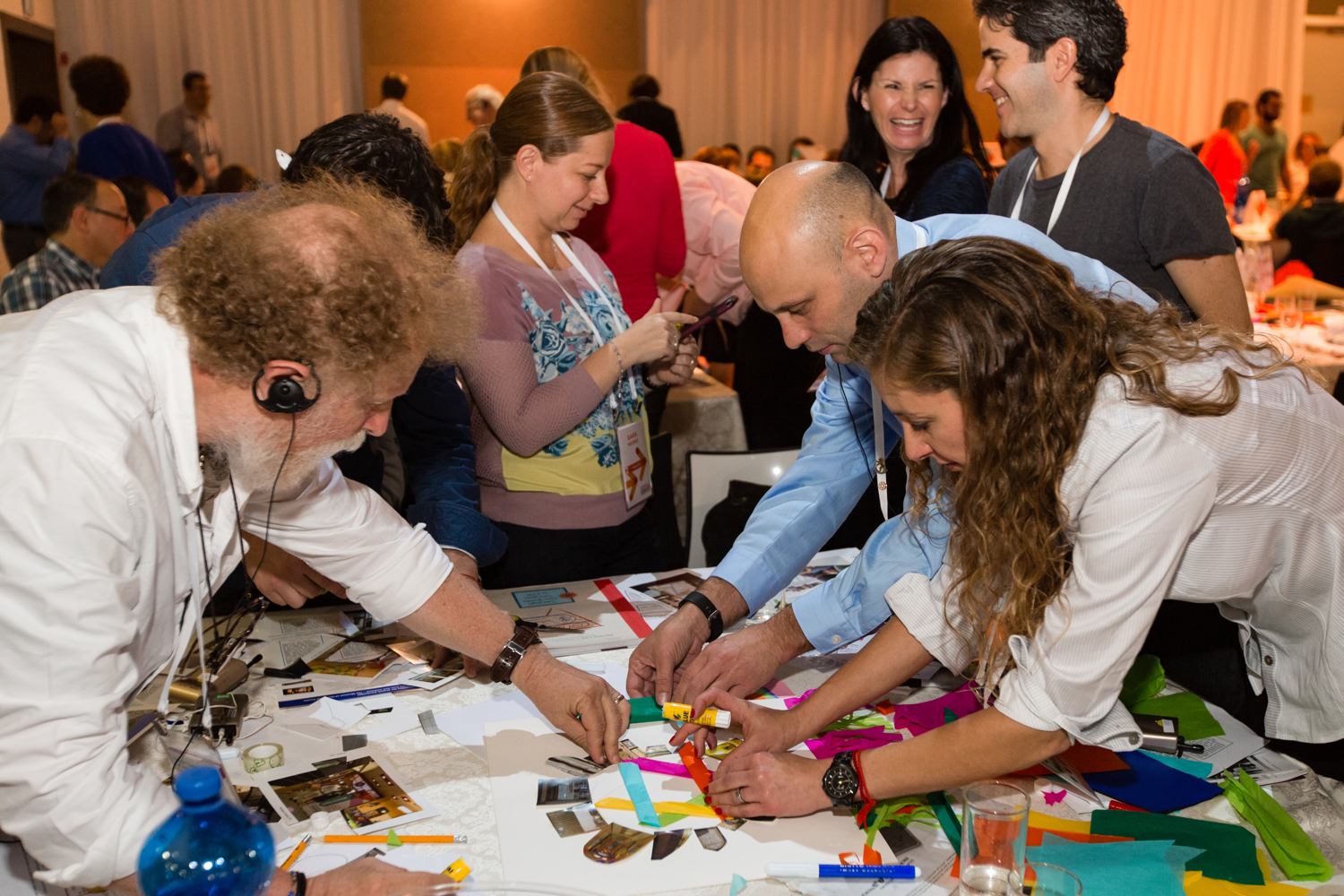
The Marlene Meyerson JCC, on Manhattan’s Upper West Side, was a member of that first Amitim collective, and worked with four other Jewish centers in the United States and abroad to create a leadership development program for a cohort of teens from each community. Participants gathered at Szarvas, a Jewish summer camp near Budapest, Romania, and also in Israel.
The relationships created among the teens themselves will influence their engagement and contribution to Jewish community for life. But also more broadly, the growing connections among Jewish community centers through Amitim-driven collaborations are invaluable, said Joy Levitt, the JCC’s Executive Director.
“We are a well-resourced JCC,” she said. “Nearly 100,000 Jews live in our neighborhood. That’s not true in every community around the world, certainly not in the FSU and Eastern Europe. JCC Global and Amitim give us the opportunity to be helpful to them. It’s part of our responsibility.
“They have their own stresses – less resources, smaller communities, anti-Semitism – yet they are very resilient and creative and in many ways are at the forefront of shaping 21st century Jewish community life. They are in a position to inspire and teach us all.”
The Sid Jacobson JCC, the largest on Long Island with about 3,000 member units, was in the inaugural Amitim Fellows group as well, and is also a participating agency in Amitim 2.0. In partnership with its cluster of AmitimFellows, it is devising ways to address some of the most imperative and universal communal issues: engagement of youth and inclusion of marginalized populations.
Their first project, L’Alliance Teen Project, was a collaboration with Beit HaKerem Community Center in Jerusalem, the Khmelnitsky Welfare Fund in Ukraine, and the Centre Culturel et Communautaire Jerome Cahen in Paris. Via social media and visits to each other’s countries, dozens of teens took part in leadership development and studied each other’s family and Jewish community histories and challenges.
The current project, Better Together, a collaborative project with the Evelyn Peters JCC in Mumbai, Beit Hakerem in Jerusalem, and JCC Mazal Tov in Ukraine, is using social media and travel to join hundreds of young adults with varying physical or developmental abilities in cultural and social exchanges through a Jewish lens, and to sensitize the neurotypical community to their challenges and empowerment.
“The connections and transformations and education taking place as a result of the Amitim program are extraordinary,” said David Black, Executive Director of the Sid Jacobson JCC, citing the inclusion initiative.
“These teens are getting international connections and exposures and support, and making friendships and forming alliances they never would have had. And the ripple effects are enormous, with other populations – families, professionals and lay leaders – being connected in a significant, meaningful and global way.”
In fact, in an evaluation of the first Amitim cohort, released last May by Dr. Ezra Kopelowitz of Research Success Technologies, the initiative is described as “providing a path for active community members to further their connection to the JCC and for connecting community members to global Jewry.”
In downtown Manhattan, at the 14th Street Y, an early stage of the Amitim model played out at the beginning of this month. Gal Maymon and Leener Ivry, two schlichim from Israel working now to engage teens in the Athens Jewish community, were there to learn about and observe LABA: A Laboratory for Jewish Culture – an initiative marrying classic texts, original art, and thought – and the Kaleidoscope program – a monologue showcase – to determine which elements might work within the framework of Jewish-Greek culture and tradition.
Centers in Athens, London, Buenos Aires and Israel are collaborating with the 14th Street Y to create a Jewish text-based program for Jewish teens to explore their Jewish identities and journeys, and express it through monologues shared and discussed on online digital platforms and possibly face-to-face meet-ups.
“This is an amazing opportunity to see and work with people from different places with different perspectives and traditions,” Maymon said. “We are all here doing what we do for the same reasons. We know how powerful these partnerships can be for an individual, for a community, and for the entire Jewish world.”
When 1998 Covenant Award recipient Rabbi Elana Kanter established the Women’s Jewish Learning Center in Phoenix, Arizona in 2010, she often heard the same questions over and over: “Why are you starting a learning center for women only?” “Isn’t that a step backward?”
Kanter understood the sentiments; after all, our society has come a long way since the days of Betty Friedan and the women’s liberation movement over fifty years ago. There’s far more openness now, and more opportunity for women to study and learn in ways they never could in the past. So why, then, would one intentionally separate men and women in study? What would the benefit be?
Kanter’s response was unequivocal, and she’ll tell you the same thing today: It’s not necessarily better to have women learning separately from men, but rather, it’s different, and it’s important to pay attention to why that is.
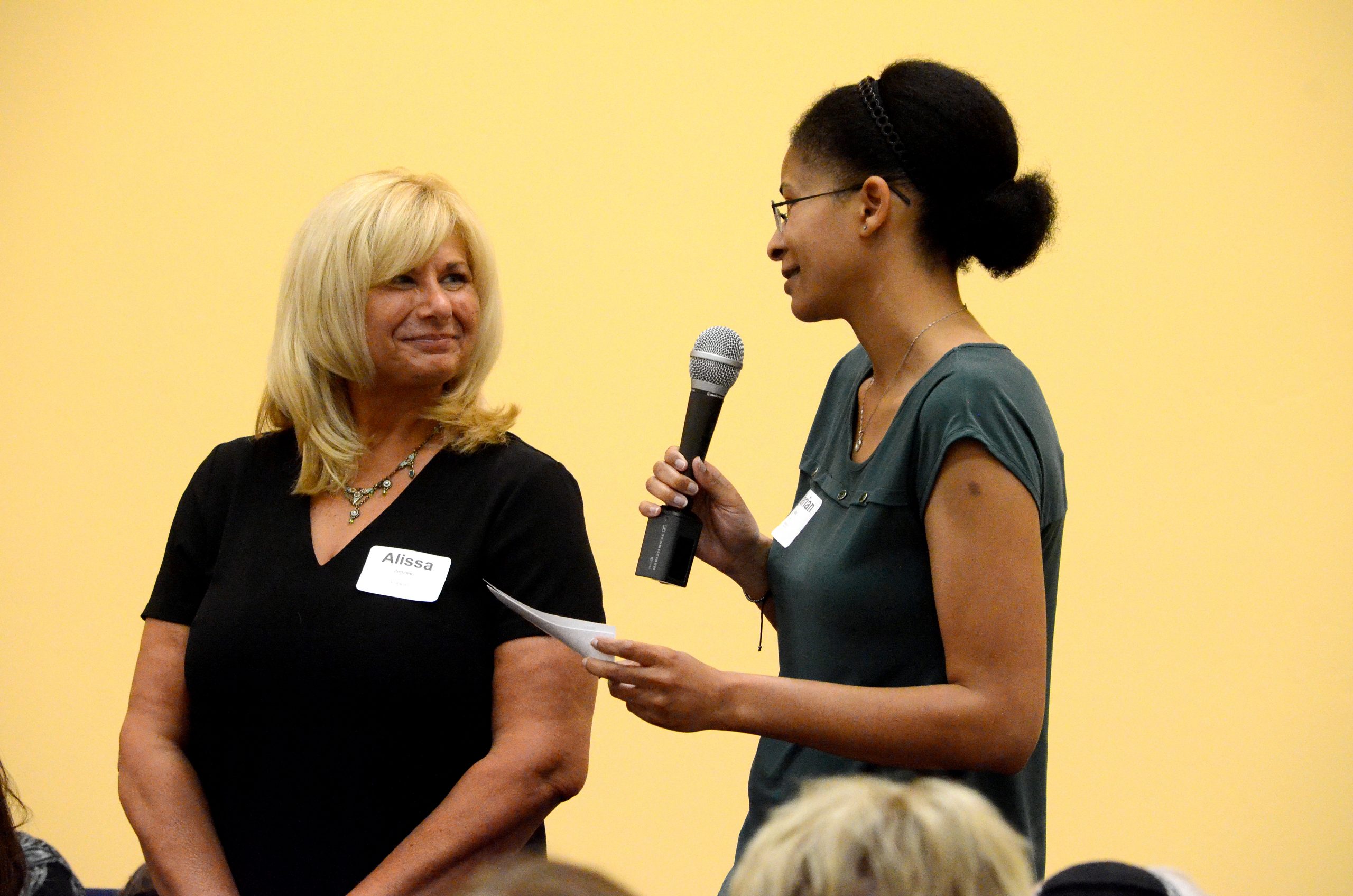
“There’s no question that the dynamic changes when women study alone versus in a mixed group. That’s just absolutely true,” she says.
Kanter and her colleagues wanted to give women space to learn and explore in a safe and supportive environment and the WJLC was established to do just that. Focused on offering “accessible, high-level, and creative Jewish learning for women” in the greater Phoenix area, Kanter, together with her colleague Rabbi Tracee Rosen, have been teaching Talmud, literature and topics related to Jewish spirituality there for the past 8 years.
But there has always been another motivation behind the work that Kanter does, and it’s one that recently has begun transforming the lives of Jewish women in Phoenix—and soon, much further afield—in new and exciting ways.
“We’ve always been interested in helping women develop leadership skills,” Kanter explains. “In 2014, we decided to poll three major Jewish organizations in the greater Phoenix area to really understand the landscape of Jewish leadership in our region, and we found that 10 of the 11 officers at the heads of those organizations were men. That truly made the urgency for a leadership initiative palpable.”
As the only non-denominational women’s adult education institution in the Phoenix area, WJLC was in a unique position to affect change.
“We couldn’t believe that there was such a dearth in women’s leadership. We thought, ‘how can this be?’ Our goals quickly expanded [at the WJLC] and we began to focus on increasing the presence of women in communal leadership roles, while also deepening the Jewish character of that leadership,” Kanter said.
And so, the Women’s Leadership Initiative was born. Co-run by WJLC and PJ Library of the Greater Pheonix area, it aims to equip Jewish women with both the skills needed to succeed in the business and education spheres as well an immersion into dialogue with Jewish texts that have a leadership focus.
“As it happened,” Kanter explained, “PJ Library of Pheonix, our partner in this endeavor, was basically being run by one woman, alone, for five years going. She carried the entire program on her own, signed up a couple of thousand families, but she needed leadership training and support. During the first year of our Institute, we mentored someone who became the new PJ Library co-chair, and also added to their cadre of professionals besides.”
Ten women between the ages of 25-45 are chosen for a cohort each year. The candidates must be nominated by a community leader or member of a previous WLI cohort and then complete an application. The program requires that each member of the cohort attend an opening retreat, meet once a month for a year to join together in study, attend part or all of Limmud Arizona, and meet regularly with a mentor. They are also required to take on a community project or position of their own choosing, of any size, small or large.
Kanter explains that the applicant criteria, is simple. “We are looking for people who are open to growing Jewishly, open to growing as leaders, and open to making connections with people outside of their own sphere.”
She shared that a common denominator amongst the first three cohorts that have completed the WLI so far is that there are always several who are active in their synagogues but don’t know anyone outside of that community and truly want to connect with people living and working right next door, who they might not be familiar with.
“As a result of our year together,” Kanter said, “each participant in the Institute connects with 10 other young Jewish women from different synagogues and communities who have varied interests and those connections yield not only lasting friendships but very fruitful partnerships.”
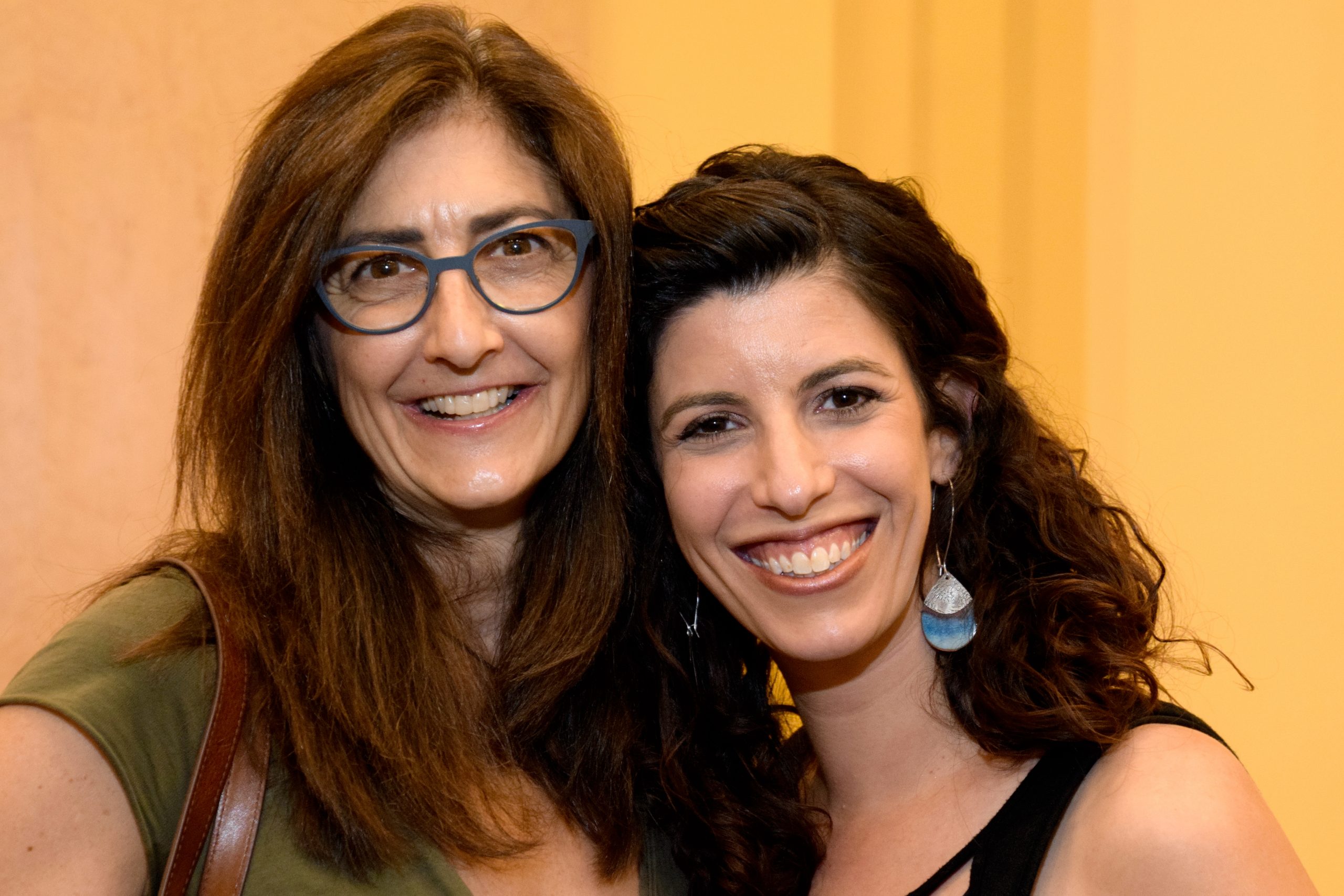
Equally as important, Kanter adds, are the mentor-mentee relationships that are the crux of the Institutes’ mission. In addition to the group study meeting that occurs once a month, all of the women in each Institute cohort meet with their mentor once a month. Initially, they are given a study assignment for each meeting but toward the end of fall, the meetings move toward a focus on the specific project that the mentee has taken on, and how the mentor can support her in her endeavor.
Most often, the mentor-mentee relationship is intergenerational and really serves to knit the fabric of the community together, Kanter said. She culls mentors from professional colleagues she’s encountered either through her teaching, women’s organizations she’s been involved with or in her travels throughout Jewish spaces in the Phoenix area.
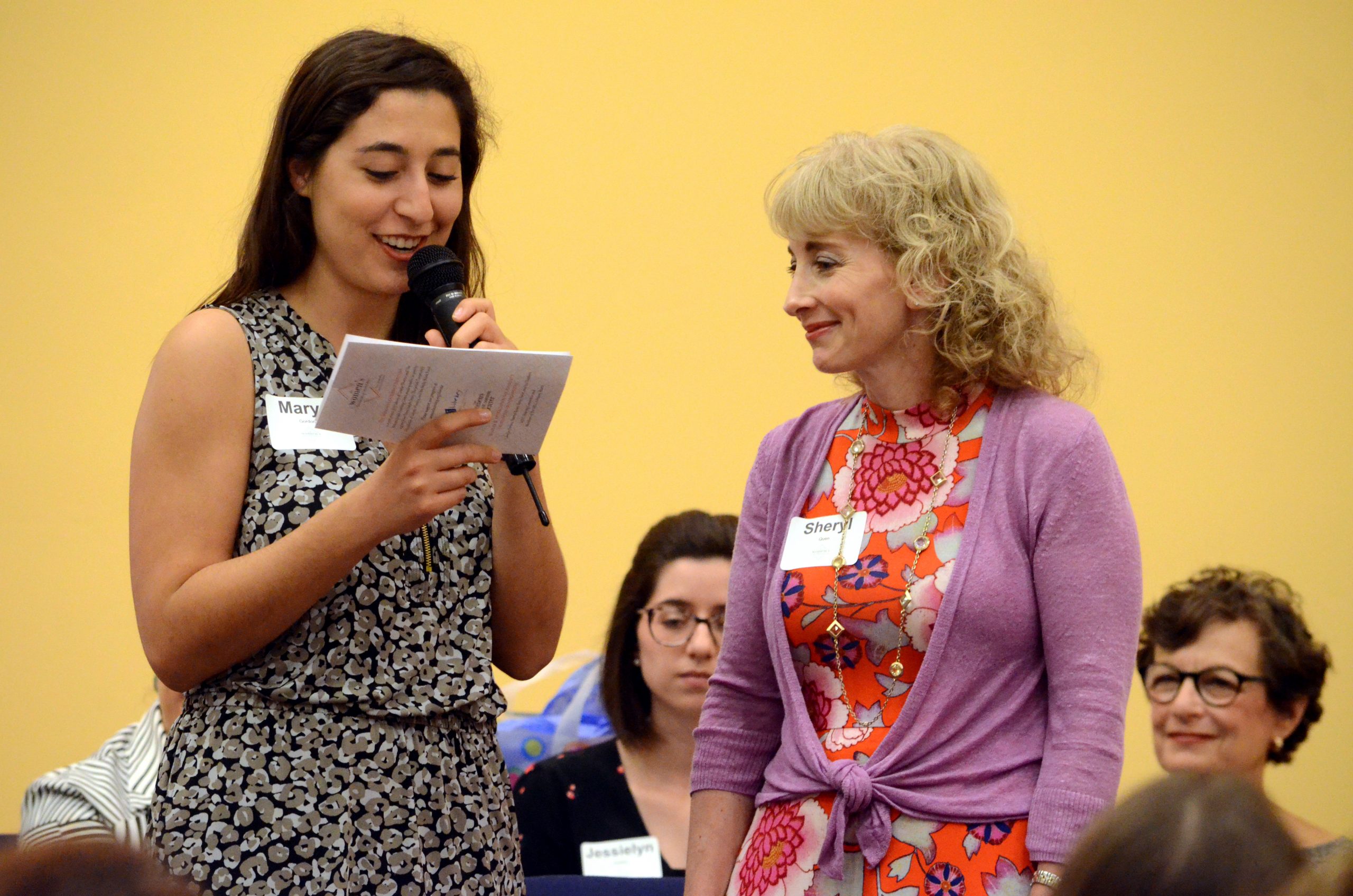
In some cases, the matches between mentor and mentee foster connections that never would have happened otherwise. Kanter recalls a pairing of a young woman from one of the reform synagogues in Phoenix, who was looking to expand her knowledge of the larger Jewish community, with a mentor from the orthodox community in Phoenix, which yielded a wonderful match for both of them.
“This program is really about the networking,” Kanter said. “Many of our mentees are high-powered young women who run businesses and raise families and want to meet other like-minded Jewish young women but they don’t want to do it at a happy hour. Rather, they want to network through meaningful volunteer work that will make a difference in their community.”
The mentors are also supported with training and resources. What’s more, each mentee has access to all of the mentors beyond the one that she meets with regularly. Because of that, the network becomes ever more vast and effective.
“For example,” Kanter explains, “one of our participants who was helping PJ Library wanted PJ Library to participate in a literacy night at the Pardes Day School. As it happened, the Head of School at Pardes was a mentor in our cohort to another woman. And so, an introduction was made and a partnership, launched.”
Some of the other projects that have launched as a result of the Institute include a program to help integrate Jews by Choice into their communities, a teen leadership program at the East Valley JCC, a Jewish Storytellers program, a Financial Literacy Guide created for an in partnership with the Jewish Free Loan Society, a re-launch of a Passover Seder for Gesher– for people with disabilities, a community of practice for Jewish preschool teachers, programming that connects the Jewish community with the Syrian refugee resettlement effort, and much, much more.
Kanter speaks with pride about the success of these projects, focusing on their sustainability, in particular.
“One of our mentees decided to launch a PJ Library Camp weekend, and expected that she would enroll 30-40 people. Turns out she had over 140 people attend—a sold out event. She is now running the program for a second year. This isn’t a requirement anymore—this is something she is inspired to do.”
Now, news of the Institute’s success has spread. Kanter regularly hears from colleagues and friends in cities outside of Phoenix who want to run a WLI in their neck of the woods. She has now begun to train Jewish professional colleagues in certain areas to run programs of their own, beginning with the Jewish community in Birmingham, Alabama, where Kanter and her family used to live.
“We offered to train them and help them get the program off the ground,” Kanter said, “and we gave them a little bit of funding to do it. They’ve already recruited a cohort of 12 mentees and mentors for next fall.”
Across town from Scottsdale at the East Valley JCC, another WLI cohort will launch in Fall 2019, and Kanter is also in conversation with colleagues in St. Louis who are looking to launch their own cohort soon, too.
“The thing about this program that makes it so replicable,” Kanter explained, “is that it’s very low budget, and the curriculum is there.” (Teachers and administrators of the program do receive a small stipend, but it’s far less then a salary they might command in the private sector doing similar work.)
“All we ask is that each subsequent city that launches a WLI then goes on to find another pilot city to teach, so that we are all ‘paying it forward,’ so to speak.”
Just last week, Kanter hosted the third annual Women’s Celebration, honoring the most recent graduating cohort of the WLI. “We really want to raise the profile of this program,” she said. “The community should know what’s happening.”
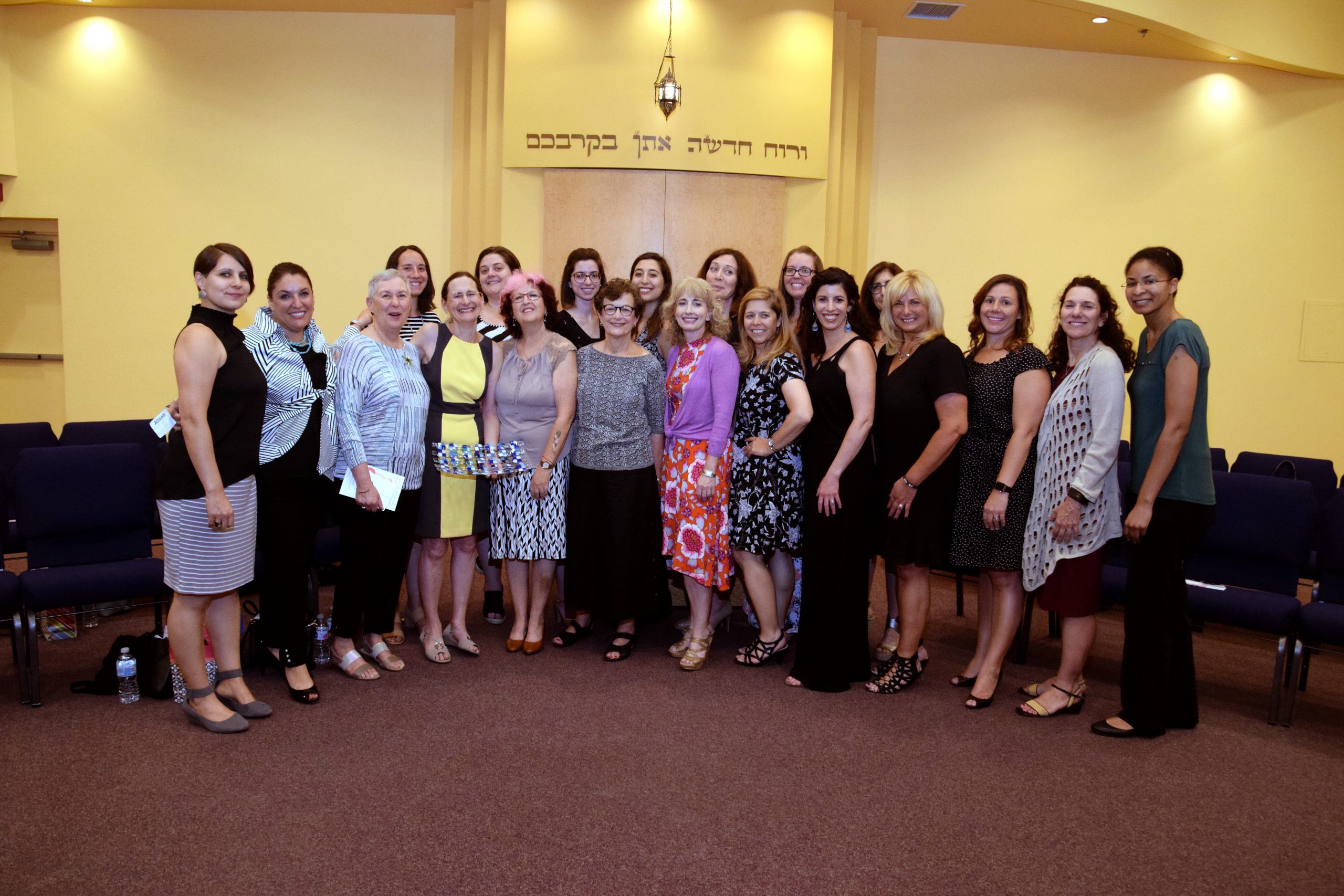
At the celebration, a female rabbi from the community begins with a few words of Torah, and then each cohort member has the chance to share details of the project they’re working on and are joined by a representative from the agency they’ve partnered with.
In an article reflecting on her experience as a mentor to the first cohort of the WLI, Ellen Sacks, Associate Executive Director of Jewish Free Loan, shared that there’s a “magic” element to what happens amongst the women who participate in this program.
“Good thing we, as a community, get to see and experience it in the coming years,” she writes. “As these amazing women continue their leadership journeys and become a true force for change.”
What does community mean to you?
When I became a mother three years ago, it became increasingly important to me that my family find opportunities for belonging. But as a Jewish professional, educator, and a Russian-speaking immigrant in a constant identity tug-of-war, I have a mixed experience of what it means and feels like to be a part of a community.
I wanted my family to thrive in a kinship of like-minded families, with similar traditions, immigration stories and personal baggage, a chance to live Jewishly in our own understanding of the concept, and a unified hope to preserve the Russian language. But I didn’t realize how hard it would be to find it.
For the past 9 years, I have worked at Generation R, a department within the Marlene Meyerson JCC Manhattan, founded by American Russophile Audrey David. Generation R serves the rapidly growing Russian-speaking Jewish (RSJ) population on Manhattan’s Upper West Side.
What started as a small UJA Federation-funded initiative in 2005 to serve Russian-speaking 20s and 30s, grew to include cultural tours, concerts, plays, literary events, and a multitude of programs under David’s leadership, expanding to family- and child-centered programming, which I currently oversee.
Since Generation R’s inception, the JCC’s doors have welcomed thousands of Russian-speaking Jews from all over the tri-state area.
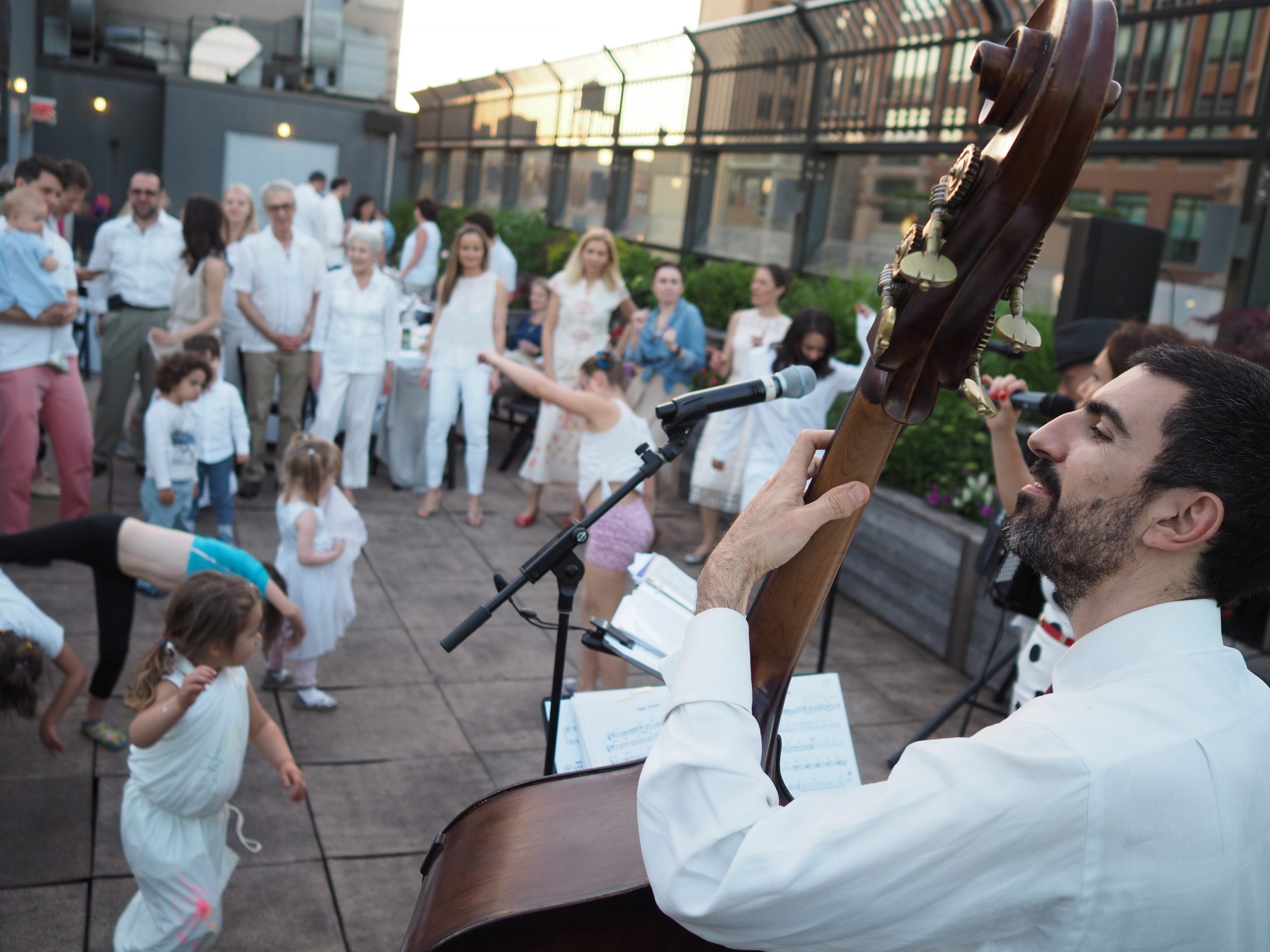
The department’s success lies in the continuity of engagement: the ‘singles’ coming to our 20s and 30s events go on to join us for family events once they’ve had children, and their children then come to our programs; therein, they build friendships and make discoveries about Jewish traditions. Once the children age out, they return as volunteers. We’ve built strong connections with the families we serve and in turn, many have come to view Generation R as a hub for Russian-speaking Jewish community.
And so, the community-building success I’ve witnessed and experienced at Generation R inspired me to try and build something closer to where I live, in Queens.
For most of my life, I have felt displaced, constantly having to work hard to belong: from Ukraine to Brooklyn, to Indianapolis, then back to Brooklyn, and later, to Queens.
I was always in transition, often hiding my identity or revealing only parts of it. Having a Jewish last name and Jewish blood running through my veins was an issue in the Soviet Union; having a Christian Orthodox mother was problematic amongst some of the Russian Jews I met in Brooklyn. In Indianapolis, speaking Russian made me stand out; and then, there was Queens: a place of uncertainty, and where I would start a family and raise my daughter.
Close to home, I met women in a similar predicament: here they were, living in the area for years, yearning to be part of a Russian-speaking community with ties to Jewish life but not finding it.
“But what does community mean?” asks Linda White, community engagement play curator and founder of Imagination Play Project. “I think it’s important to ask people this question. What does [community] feel like? How do you build it? What would it take for you to feel part of a community?’”
The RSJ community I yearned to be part of would consist of families interested in growing, sharing, playing, discovering, creating, and celebrating together, with a drive to preserve the Russian language and culture, and to raise our children with an appreciation for their Jewish heritage.
“Community is about that space, outside of your family, where you feel embraced, accepted, and understood; where support during times of need are not questioned and where people are in ongoing dialogue,” said Abby Knopp, chief operating officer at The Jewish Education Project, who has done extensive work with Russian-speaking Jewry.
I wanted to build such a community, so I started with what I knew best: education. I sought interest within local social media groups populated with Russian-speaking mothers to gather for playgroups with a focus on progressive early childhood education through a Jewish lens.
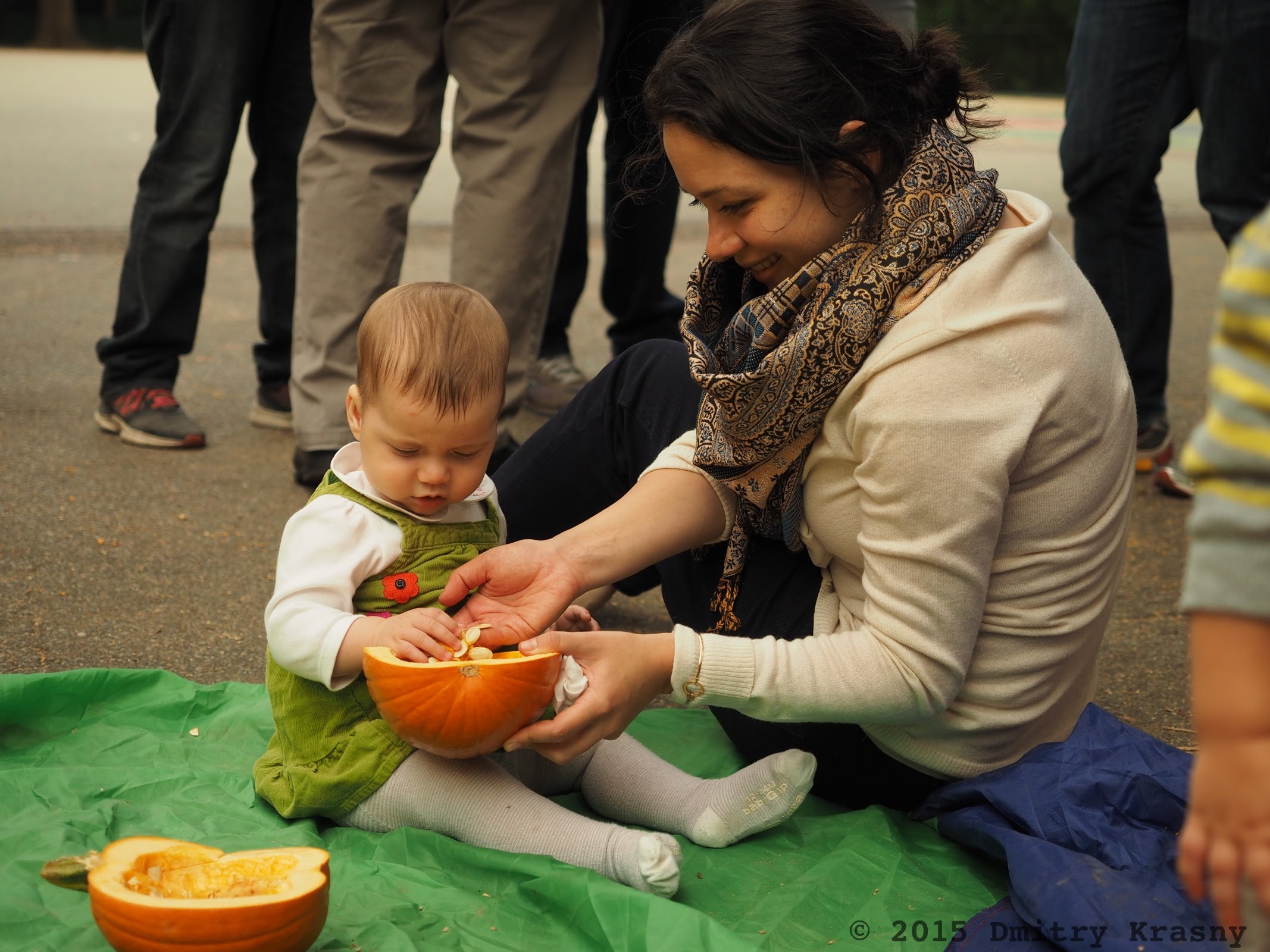
While children played and made discoveries about Jewish holidays, the intention was also to spark conversation among mothers about child development, what it meant to live Jewishly, and how to bring Jewish traditions into our homes. I received enormous interest in such playgroups, but I had no space to run them.
I also needed funding. I reached out to colleagues and friends within RSJ networks, and began looking for grants. Stars aligned in my favor, and I ultimately launched Kinder Klub thanks to generous funding from PJ Library and the Genesis Philanthropy Group. The next step was to find Jewish organizations in the neighborhood to partner with, so that we might have a space where we could meet. But this, too, proved to be more challenging that I might have imagined. Calls and emails went unanswered.
According to the 2011 Berman Jewish DataBank study, 49 percent of all households in the Forest Hills/Rego Park/Kew Gardens area (the region of Queens where I live), identify as Jewish, of which 44 percent include a Russian speaker, with 24 percent Queens-wide. Why then, was there not support for it, too?
Throughout my search, I spoke with multiple leaders of Jewish organizations in Queens. Among those who attempted to engage RSJs, one shared that his programs lacked attendance, and that the families that did come did not always return due to their lack of religious connection to Judaism. Another said that big Jewish holiday events were well attended by RSJs but there was “lack of commitment” in other areas, such as congregation attendance.
But perhaps, focusing on programs instead of on RSJ community building is the problem.
COJECO’s executive director, Roman Shmulenson, believes that organizations offering programs in an attempt to engage RSJs without a larger picture in mind will not get very far.
“We always define success at COJECO as long-term community involvement, where people develop a sense of belonging and a sense of responsibility for what happens in the community,” Shmulenson said. “Every program should be planned as a tool to build a community.”
After more weeks of knocking on doors and sending emails, Kinder Klub finally found a temporary home at Forest Hills Jewish Center. The community center rented us a classroom in its nursery school for a very reasonable price. Executive Director, Deborah Gregor, and then-nursery school director, Susan Rosenbaum, consistently checked in, inviting our families to community center events and greeting us with smiles.
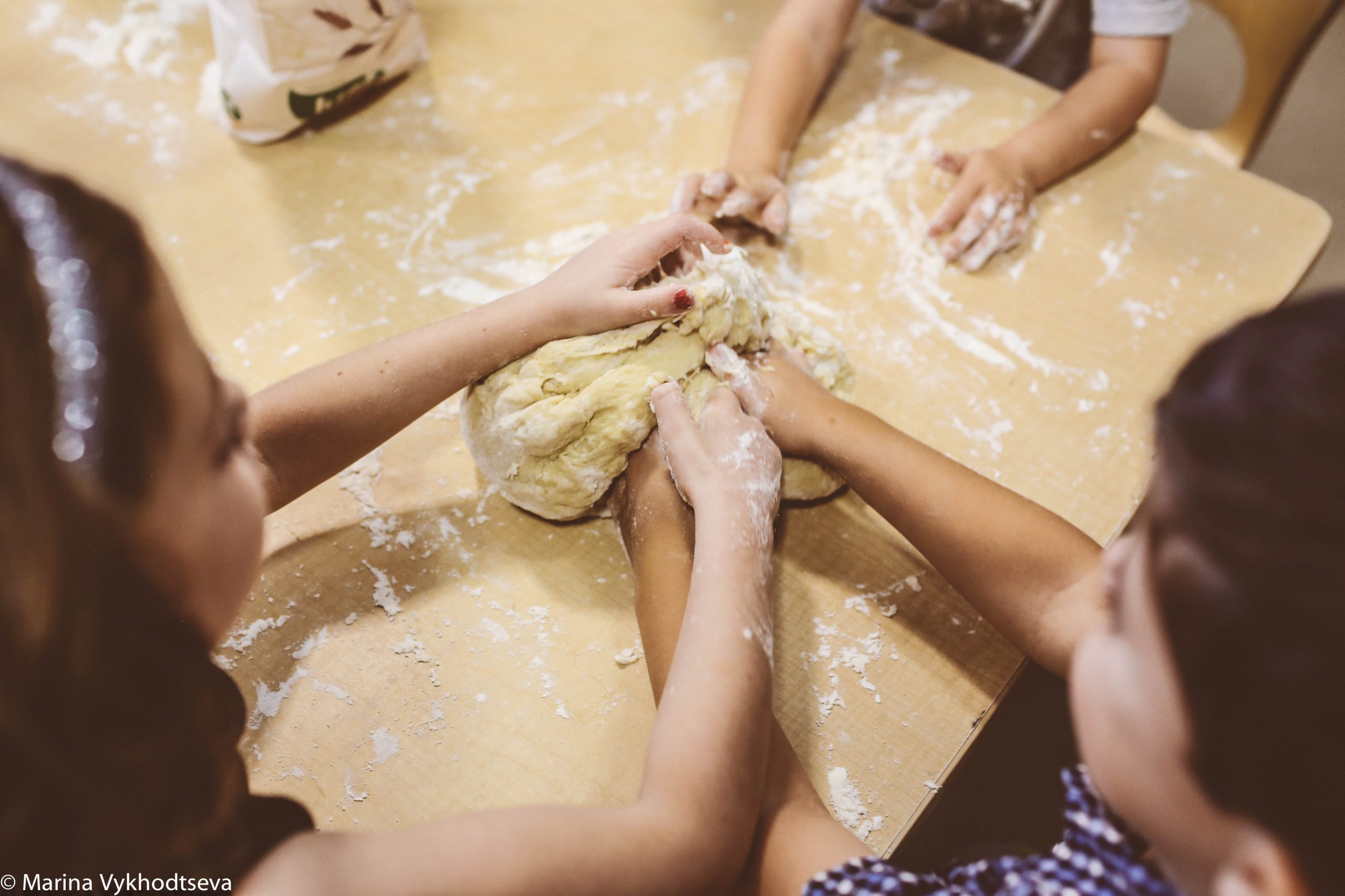
Interest in Kinder Klub group grew. Families befriended each other, and we began to feel like a community—an enthusiastic, supportive, caring community of like-minded families with similar goals and values.
This past winter, our big success was a residency at FHJC, thanks to a microgrant from The Jewish Education Project and Genesis Philanthropy Group. We celebrated Chanukah, Tu B’Shevat, and Purim together. Once the grant ran out, we found ourselves quasi-homeless, but we braved the cold weather to continue our learning outdoors.
Today, I find myself wondering how to sustain our community’s future. We’ve grown from 14 families to more than 90 in two years, and if I could wish for something, it would be indoor space.
Then again, I trust that with a deep sense of belonging, a strong connection to each other, and a shared responsibility for meaningful Jewish involvement, we can overcome any closed doors and survive any thunderstorms.
2017 Pomegranate Prize Recipient, Director of Russian-speaking Children & Families Programs, Generation R, Marlene Meyerson JCC Manhattan
When I was graduating from college almost 15 years ago, I erroneously added “Community Organizer” to my resume, thinking that my role at Hillel–where I assigned service leaders, planned programs, made sure Shabbat meals went smoothly, and so on—fit the bill.
Today, I understand the term quite differently.
In fact, in my five years of working as a rabbi at T’ruah: The Rabbinic Call for Human Rights, I’ve gotten a whole new education in what it means to organize a community, in the way that Saul Alinsky used the term. Today, I understand that community organizing is both a powerful force for social change and an essential tool in building a thriving Jewish community.
Alinksy, the grandfather of community organizing, worked for years with poor communities in Chicago, building their collective capacity to assert their rights against powerful government and business interests.
He identified potential community leaders and trained them to conduct focused one-on-one conversations with other potential members, addressing their common interests and bringing them in to take collective action. As this cycle of recruiting and training continues, people build community and power simultaneously. Today, Alinsky’s organization, the Industrial Areas Foundation, is a national network.
I recently had the opportunity to learn with Mike Gecan, a veteran organizer with the IAF. Gecan explained that in order to succeed, community organizations (of any sort) must bring people together for three purposes: relating, learning, and effective action.
Relating means people have real relationships with each other;. learning is self-evident, and action means doing something public, together, in the world.
Then Gecan asked us to name types of groups that do all three. After a few moments’ silence, the group began to offer examples:
Sports teams. Dance or drama groups. Military units.
Summer camp was my contribution, based on the formative years I spent working at URJ Eisner Camp.
If you think about any of these examples, you’ll see that they’re all built around relating, learning, and action. What’s more, none are necessarily political.
While organizing is most often found on the political left, there is nothing inherently liberal about organizing. In fact, the Tea Party has used Alinsky’s techniques. The approach itself is politically neutral.
This is why I think community organizing can be used to reinvigorate Jewish communities regardless of how (or if) they identify themselves politically.
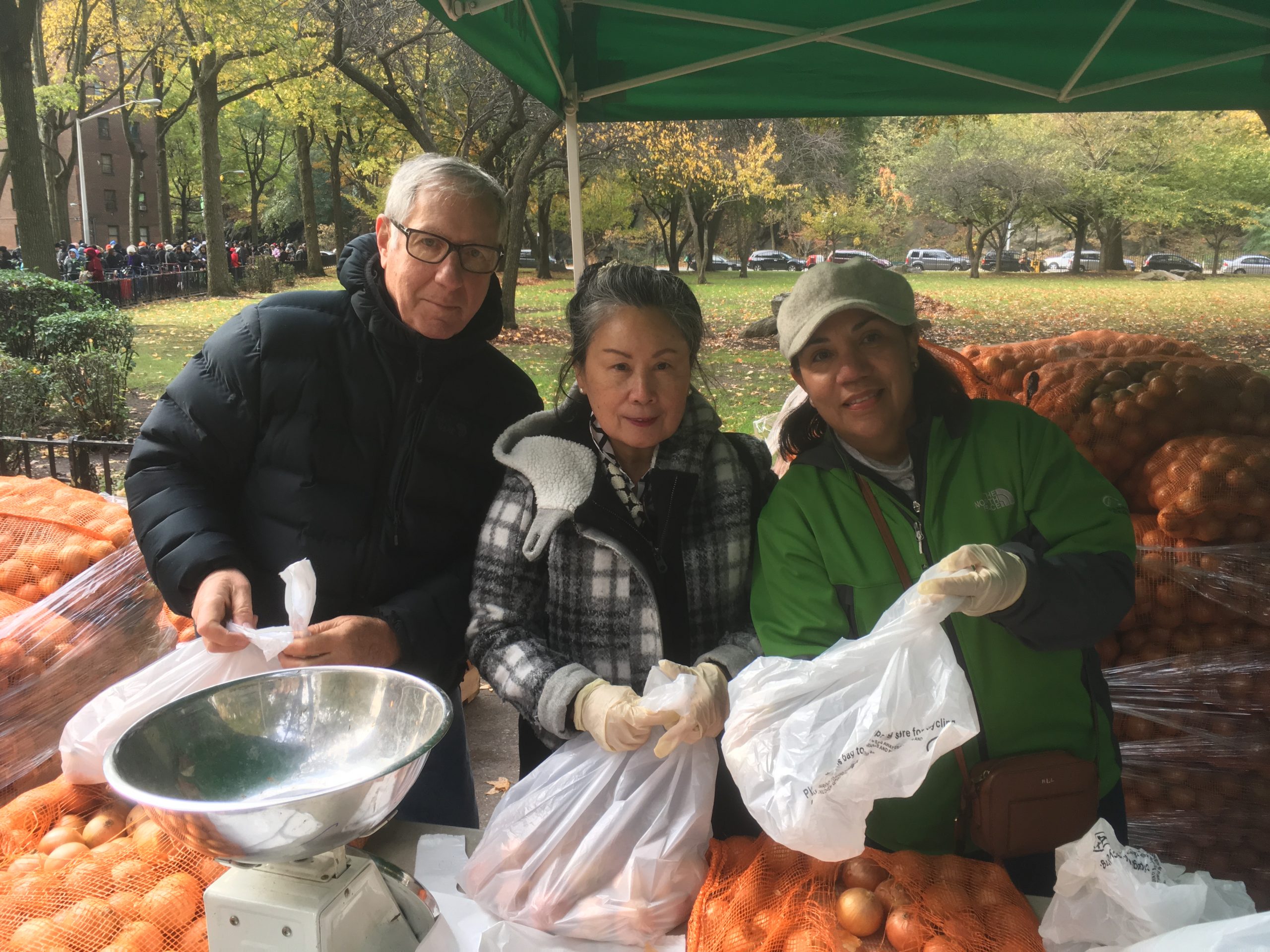
The idea of congregation-based community organizing has taken off in some sectors of the Jewish world. Rabbi Rachel Timoner, of Congregation Beth Elohim in Park Slope, Brooklyn, says there is no question that the process has created deep community for the 50 people on her “dismantling racism” leadership team.
Jews for Racial and Economic Justice (JFREJ), in New York City, is primarily an Alinsky-style organizing “shop.” But it also has come to serve as a primary Jewish community for many Jews who feel disaffected from more institutional Jewish organizations, especially Jews of color. Politics aside, one of the reasons this community is vibrant is action; its members know there is a purpose for their being together besides just being together.
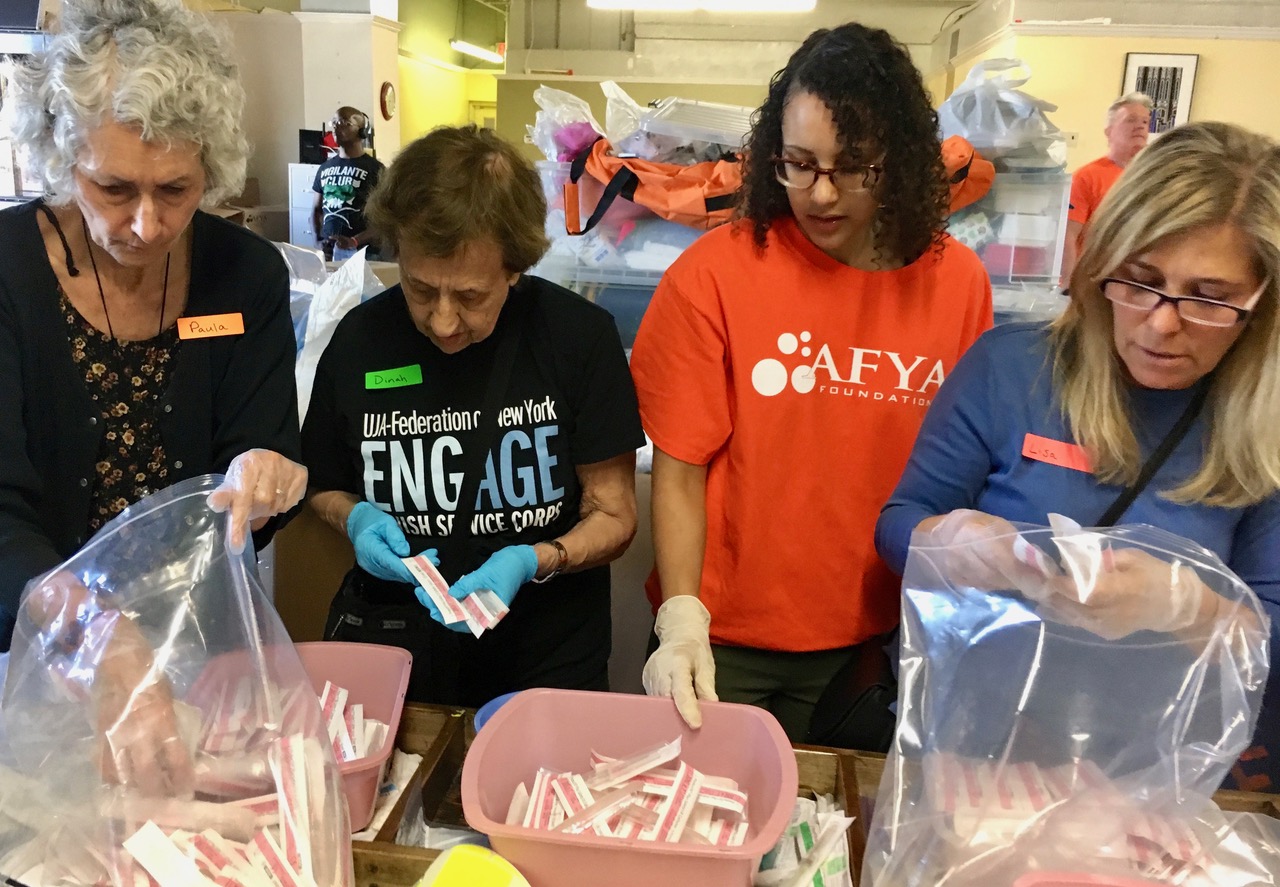
Rabbi Brian Fink runs a volunteer program for retirees, UJA Federation of New York’s Engage Jewish Service Corps, based at the Marlene Meyerson JCC Manhattan. But it’s much more than a volunteer matching service. The goal is to provide meaningful community for people who may be downsizing and relocating to the city or who lost a major social network when they retired.
And peer mentoring, one-to-one engagement, and volunteer leadership make the program happen—“by design as well as by necessity,” Rabbi Fink adds. It’s not only because of a dearth of staffing—it’s because of the impact that volunteer leadership has on the leaders themselves and the community they are able to nourish. It’s no coincidence that he brings this approach to Engage having previously worked in Hillel, which has embraced organizing (calling it “engagement”) in the last ten-plus years.
Organizers—paid staff—see themselves as teachers, coaches, and talent-scouts. Their job is to invest constantly in developing their leaders, both quantity and quality, so that leadership gives as much to the leader as it does to the community. The skills they gain are transferrable. The action they’re able to take injects meaning into their lives, in a way that should nourish them and keep them coming back for more.
Recruitment should not just be about what new members can do for the organization but also what the organization can do for them. Just think of how much more effective lay leadership boards would be (at synagogues, or other such community-based Jewish organizations) if their members had received extensive training over several years in what it takes to lead a community.
Because as I learned from Gecan, “If you think your organization is all built, you’re on your way to dying.”
An ongoing process of reaching out to potential new members keeps us open. Helping them plug into roles for relating, learning, and taking meaningful action makes us grow. Building their skills so they can move up a ladder of engagement and contribute in new, more significant ways keeps up the influx of fresh ideas and new energy.
Relational, personal recruiting is more than the glue holding a community together; it’s like a shining beacon that makes the community ever-attractive to newcomers, and ever more effective for all.
2017 Pomegranate Prize recipient, Director of Education, T’ruah: The Rabbinic Call for Human Rights
Author’s Note: I would like to thank Professor Janice Fine, from whom I learned so much about organizing, and without whom this article would not have been possible.
Jewish overnight camp can be a magical experience; it’s an institution that allows kids to develop confidence, independence and a sense of self, while building a supportive, safe and inclusive community that in many cases, lasts a lifetime. For so many Jewish sleep away camp veterans, camp is the place where they first felt they truly “belonged.”
But what if you added an extra dose of magic to the camp algorithm: Grandparents?
Bubbie Zaydie Family Camp was started at Tamarack Camps in Ortonville, Michigan 30 years ago, with the goal of giving grandparents and grandchildren a chance to enjoy a Shabbat weekend of fun activities together in a beautiful camp setting, while also fostering bonds amongst the grandparent cohort.
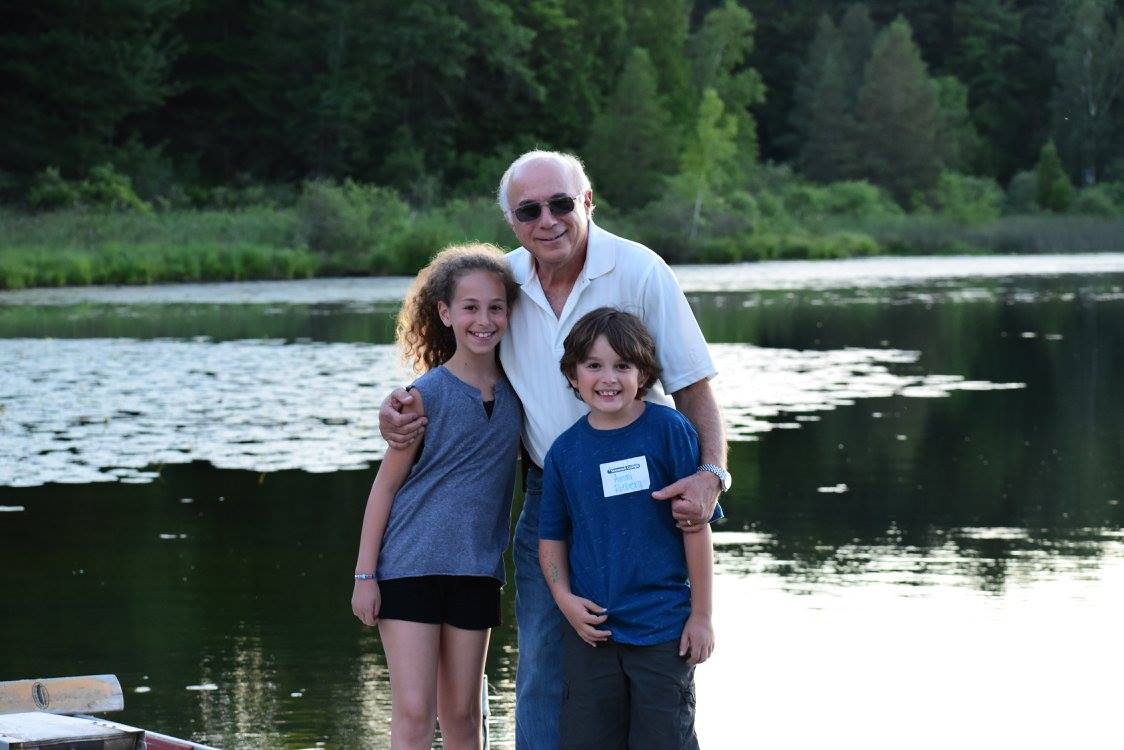
Helayne Shaw, Director of Family Camping at Tamarack, runs eight Bubbie Zaydie camp weekends a summer. The program is so popular, Shaw said, that registration has to be held by lottery: this year, they were sold out, with wait lists for all weekends at the lottery’s conclusion.
Each weekend averages about 85 people in total, with many grandparents bringing multiple grandchildren at once.
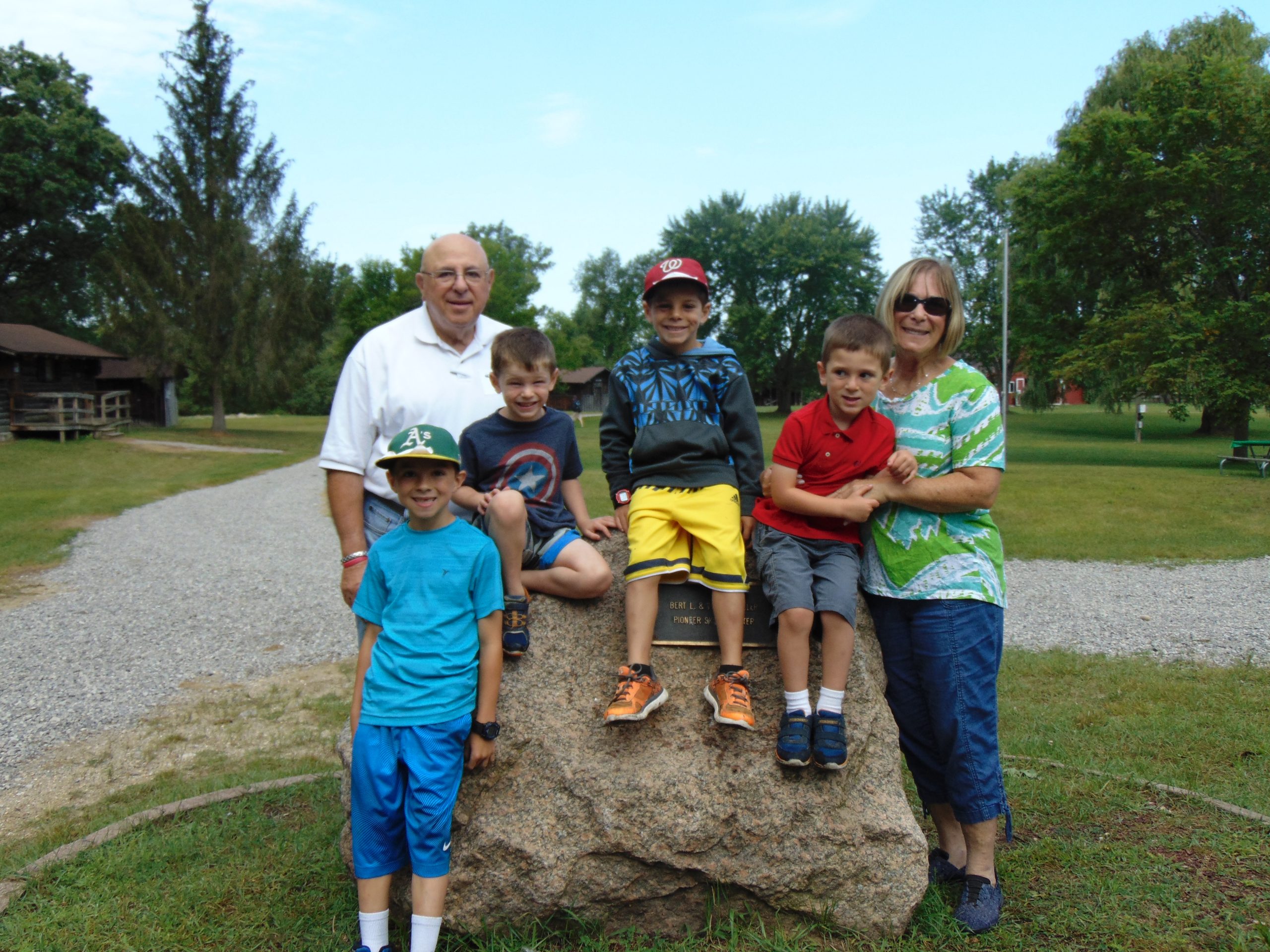
Child attendees at Bubbie Zaydie camp are generally aged 4 to 12. Most families attending camp, Shaw said, are composed of Michigan-residing grandparents who have grandchildren that live further afield. Coming together for a weekend of Bubbie Zaydie camp allows families that may not see each other regularly to strengthen bonds and enjoy Shabbat with a community of friends.
“Other than FaceTime, the cousins don’t see each other all year,” said Bev Tepper, who will attend her seventh Bubbie Zaydie camp weekend this summer. “Our Bubbie Zaydie weekend is not only a tradition for the eight grandchildren to have quality time together and with us, but it gives their parents — my three children and their spouses –quality time together,” Tepper said.
A weekend of Bubbie Zaydie camp is action-packed. Families arrive in the afternoon on Friday and after getting settled, embark on their choice of activity, whether it’s fishing or sports or art. At 6 pm, the group gathers for flagpole and then Kabbalat Shabbat services.
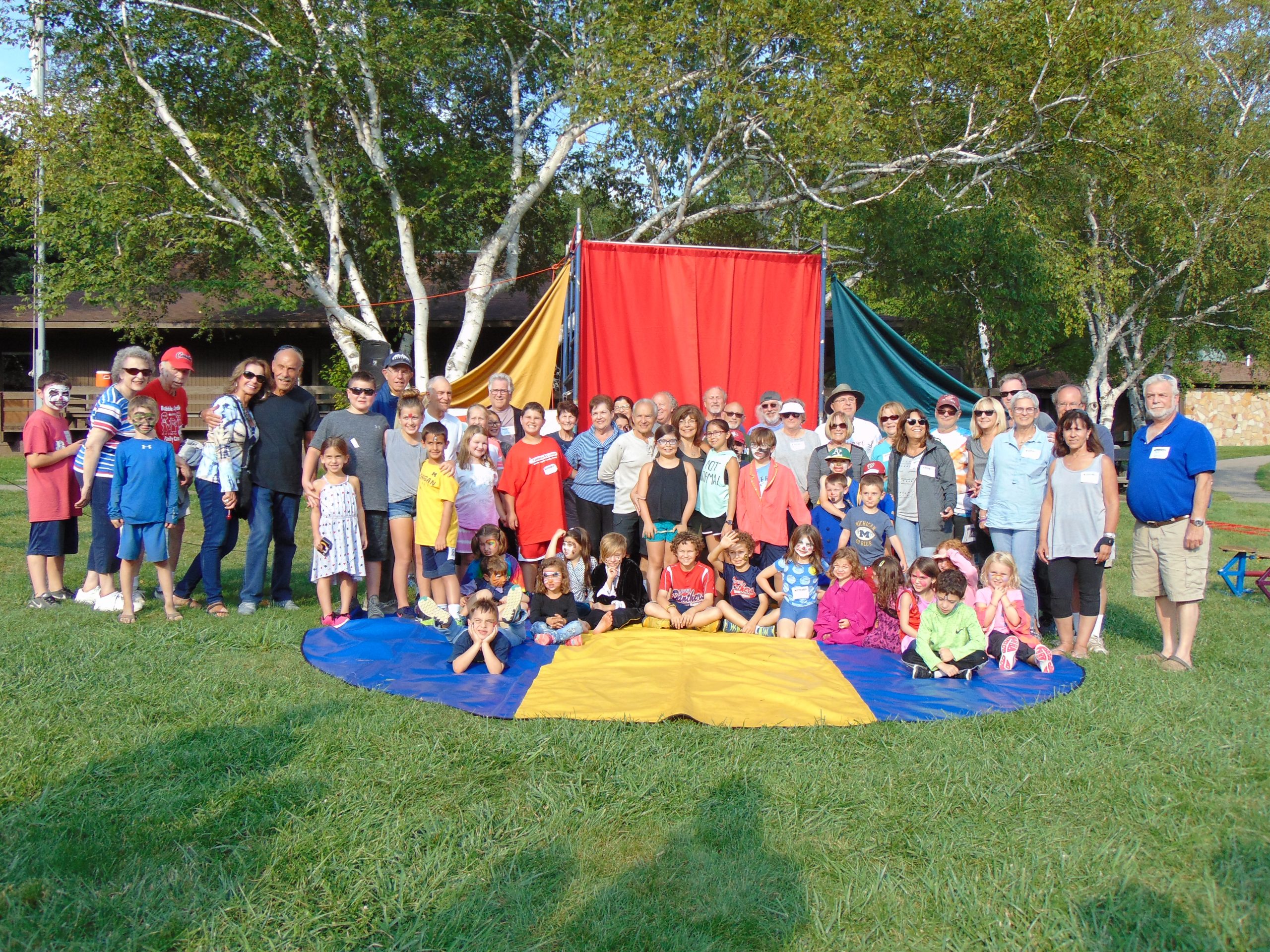
Tamarack is a JCCA community camp, and draws campers and families from across the Jewish spectrum. Shabbat services are accessible, with songs, candle lighting and, of course, blessing of the grandchildren.
Shaw added that for some participants, the grandchildren are part of interfaith families, and camp is a way to expose the grandchildren to Judaism in an inclusive way.
With Federation making a large allocation to the camp, and the guidance of the Va’ad of Metropolitan Detroit, Tamarack is a kosher facility but hosts people from a wide range of religious observance, Shaw said.
Grandparent Bobby Schostak has attended Bubbie Zaydie camp five times, and called the Shabbat celebration a fundamental bonding piece of the experience.
“The highlights of the weekend are Shabbat, connecting with other grandparents who have the same values as us, and the Jewish traditions and fun activities,” he said.
After family-style Friday night Shabbat dinner, orientation and family introductions, the groups split up according to the ages of the grandchildren: the young ones have a bedtime story with puppets, and two other groups go on a “night hike” (while it’s still light outside, at 9 pm in Michigan!). Grandparents don’t have to come along on these events, though they’re welcome to do so, Shaw says. Many opt to stay behind and reconnect with one another.
This summer, Roberta Ingber will be taking four grandsons, ages 9, 7 and 4-year-old twins, to Bubbie Zaydie camp for her 11th year. A big part of the appeal of the camp, Ingber says, is the community forged by the grandparent attendees.
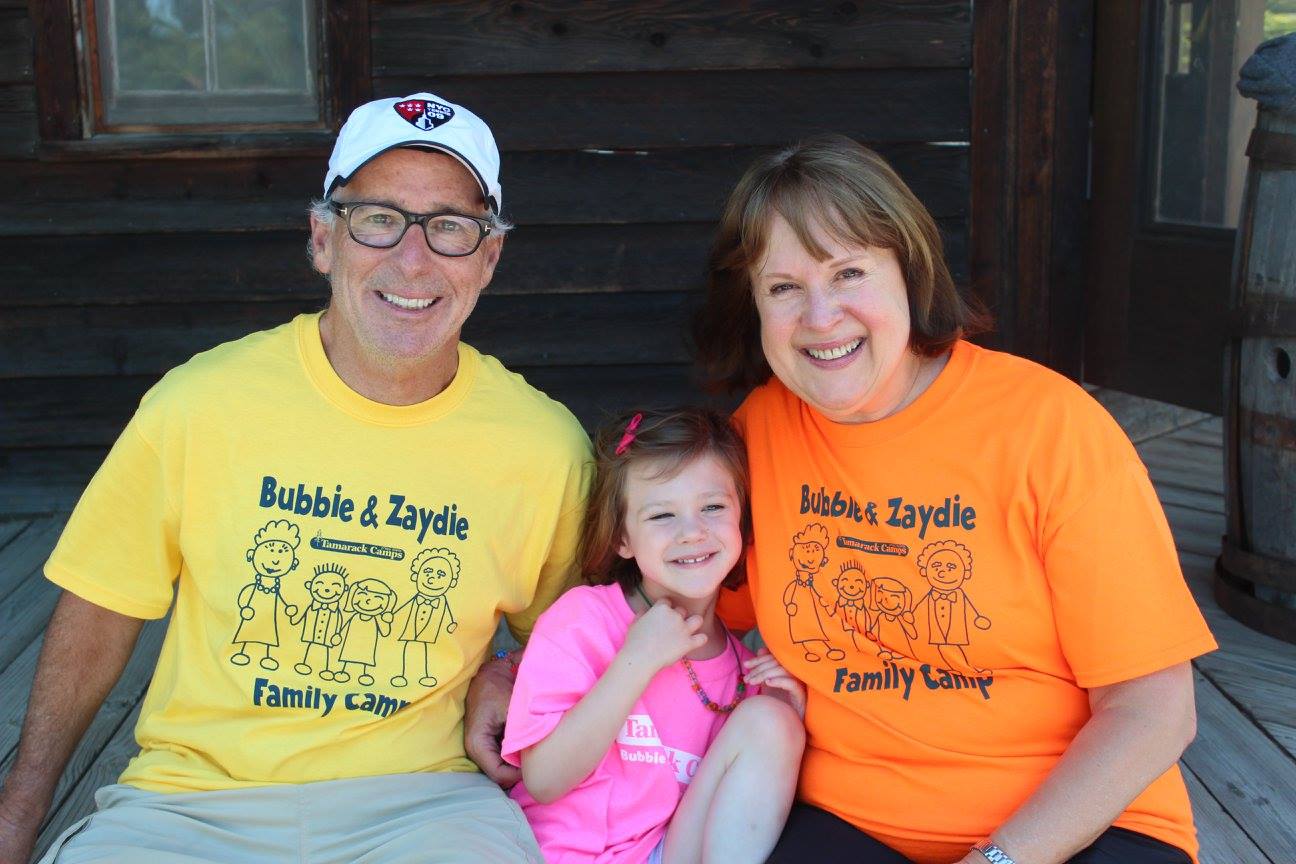
“One of the side effects of going to Bubbie Zaydie camp was building stronger bonds with the other grandparents,” Ingber said. “We reconnected with many old friends.”
Once the kids return from their evening activity, everyone drifts to bed. In the morning, there’s a light nosh for early risers at 7:15, and then breakfast and flagpole and Shabbat morning services from 8:45 am on. Afterwards, families can choose from six different activities depending on their degree of Shabbat observance. And after lunch, the group heads to main camp for the beach, where grandparents and grandchildren swim in the lake with the option of going canoeing and kayaking as well.
After cleaning up, Shaw said, outside entertainment comes in. Last year, Cirque Amongus, a DIY circus, came in and taught kids how to do trapeze, balance beams and other activities and then put on a show. This year, it’s ninja warrior training.
Dinner, a choice activity and havdallah follow, along with an optional movie night, and then it’s Sunday. “Campers” go to the main camp, where they can do rock climbing, horseback riding and enjoy a “frontier” section of camp with the opportunity to take photos and make hand-dipped candles. At the end of the weekend, each family gets an award.
“We do push a lot into the weekend, but everyone has a great time,” Shaw said. “It’s uninterrupted time for families, and everyone cries when it’s time to go home!”
While the weekends are full of creativity, interaction, activity and fun, Shaw says the magic is, simply, No Parents Allowed. “It’s grandparent rules only.”
“The kids love the freedom,” she added. “There are very few, if any, meltdowns, because everyone is so happy just soaking up the fun.
“The grandparents are making and taking memories that last a lifetime,” Shaw added. “We have many alumni that will always remember coming to Bubbie Zaydie camp as a child. It’s truly a l’dor va’dor experience – from generation to generation, we are making lasting Jewish memories.”
There are lots of apps out there - millions, to be exact – and new apps are released daily. But which are Jewish-education specific? And where does one begin to locate the best of the bunch?
Here's a 4-minute, 4-app review especially fun for Jewish educators or those interested in Judaism. Happy swiping!
Debby Jacoby, Jewish Educational Technology Consultant and Connector
- The Jewish.tv app is a cornucopia of videos with educational and entertainment topics, from adult classes to kid channels, food shows to music. Sponsored by Chabad, this app offers "Editors Picks" and "Most Viewed" or you can enter through the "Channels" option and find all the content listed there. There is also a search option, which allows you to search by keyword for the video of your choice.
- Prayer Player is a great app for learning to decode/read Jewish prayers while learning the traditional melodies. With 10 different prayers to choose from, there are multiple ways to practice reading while having fun. Each prayer has a translation and transliteration option, line-by-line audio and some history. It's fun having kids play this app in pairs--helping each other pop the correct balloons--or for an adult to sit and "coach" Hebrew reading. This app is great for all ages and especially fun for younger learners.
- BetaMidrash is currently available only as an Android app but it is definitely one to keep an eye on. This app has thousands of Jewish texts merged with open source translations from the Sefaria.org folks for limitless exploration and learning opportunities for the novice and maven alike. Like the Torah Library app from Davka, one of the earliest pioneers in the Torah technology field, huge libraries of ancient Jewish texts are always at your fingertips without ever needing to dust books. Torah Library has easy to use search, bookmarking and sharing functions. Davka Corp has a multitude of other apps to explore for every age learner.
- The Israel App is a digital travel guide to use for planning a future trip, self-guiding your visit or enjoying a virtual tour of the most famous and most esoteric places in Israel. Replete with historical facts, audio, images and useful travel information (like hotel/car rentals, weather, phone numbers and restaurant info), this free app is like having a concierge in the palm of your hand. The GPS-guided walking tours let you walk every corner of Israel without worrying about getting lost. When loading the app you have the choice of streaming in realtime, pre-loading content (no data connection required once loaded) or manually pre-loading content picking and choosing exactly what you're looking for. Perfect for use while exercising, too. Turn on the app, plug in your headphones, hop on the treadmill and walk through the land of Israel as you stay in shape. Wish you were planning a trip, but for now your classroom is as close as you'll get? This app is also a super tool for teaching/learning about Israel, and a lot of fun for students to explore independently. (Note: if you are actually planning a visit to Israel be sure and also download the Israel Railways app for all the train travel info you need or check out any number of the other Israel travel apps in the app store!)
So go ahead and swipe, and then swipe again. It's all in there!
In Case You Missed It: Check out a selection of recent ELI talks on topics related to professional development, educator training and enrichment. And mark your calendars for later this summer, when a new slate of Covenant Award recipients make their ELI talks debut!
Building a Holy Playground: When Leaders Stop Controlling and Start Trusting
Karina Zilberman, Covenant Award Recipient and Director of the 92Y Shababa Network
Choosing the Miracles of Our Lives
Sandra Lilienthal, Covenant Award Recipient, Adult Jewish Educator
Where are You Now: The Building of Authentic Leaders
Rabbi Yossi Kastan, Head of School, Brauser Maimonides Academy
Matching Our Insides With Our Outsides: Lessons in Jewish Nonprofit Management
Gali Cooks, Executive Director, Leading Edge
So Shall You Make It: Igniting Change in Congregational Learning
Nancy Parkes, Director of Congregational Learning, Temple Israel Center
Why We Need Passion-Based Learning in Jewish Education
Tikvah Weiner, Co-Founder and Director, I.D.E.A. Schools Network
In the ongoing conversation about Jewish supplementary education, there are lots of central questions. What is the best setting? How much should retention of knowledge matter, versus deeply engaging programming? How often should students attend? What should the nature of parent participation be?
The list of questions goes on, and for each, there’s a spirited and thoughtful debate.
But what if we boiled all of those musings down into these two essential questions:
“What do we need to do to strengthen Jewish life? And how do we enable our children to have a sense of wonder, excitement and joy in the Jewish tradition that they are a part of?”

These are the questions that Rabbi Joy Levitt, Executive Director of the JCC Manhattan, asked herself upon founding the Jewish Journey Project, an initiative designed to “revolutionize Jewish education for children,” five years ago.
Levitt didn’t find that the traditional classroom setting was the answer. “I guess the most radical thing I could say is that I’m not convinced the school setting is the right model for the transmission of values, culture, or language,” Levitt said. “But the issue isn’t whether supplementary education should happen in synagogues or not,” she added. “Synagogues can be part of the solution... But where we locate experiential learning for kids isn’t as relevant as starting with what kids need.”
And what does a typical 10-year-old need in a supplementary education? And where does an educator go to find out? For Levitt and her colleagues, as they developed JJP, they spent time with educators in many places, including those working at Bank Street College of Education, and they started by asking simple questions, like: “Who is a 10-year-old?”
“This is a very tough age,” Levitt said. “Emerging out of childhood and into adolescence, things are happening to bodies and brains, and what these children need is complicated. So for example, from a Jewish perspective, it seems to me that they need to learn moral courage. And the Jewish tradition is replete with lessons of moral courage. As Jewish educators, we need to understand that the decisions they make every day—fighting a bully, or standing up for someone more vulnerable, or finding their voice—are the central challenges kids face,” Levitt said.
“But as long as we make Jewish supplementary education about the accumulation of information and not focused on their central challenges,” she continued, “then Judaism will not be a source of inspiration, comfort and belonging for these kids, and that place, whatever it may be, will be up for grabs.”

Levitt then relayed a personal story to drive her point home. She spoke about her time as a congregational rabbi, 25 years ago. During that time, she taught in her synagogue’s afternoon school and had one student who struggled with hyperactivity and was highly disruptive in the classroom, even throwing chairs out of the classroom windows. Levitt called the student’s mother, who argued that ‘Hebrew school wasn’t real school,’ and she wasn’t particularly concerned about her son’s behavior while he was there. Levitt then told this parent that she had a choice to either address the issue, or the student could no longer come to Hebrew school.
“In many ways,” Levitt reflected, “the Jewish Journey Project is the tikkun of that experience. It’s not that I was wrong about the need to address this student’s behavior, but the central question is how do we help that kid—regardless of his individual needs—love being Jewish.”
To that end, the JJP is rooted in a flexible model for children in 3rd-7th grades, and offers courses held at several partner synagogues and at the JCC Manhattan weekly from Monday-Thursday. The program takes advantage of rich opportunities to engage outside of the classroom, making use of the vast Jewish resources of New York City.
In addition, the Jewish Journey Project offers small classes and different learning modalities aimed at resonating with all families, including those with children who have special needs. There’s also a learning specialist on the JJP staff that can help families choose which classes might work best for children.
All JJP students plan and build their own personalized learning journey by choosing courses and workshops that match their interests, like Architecture: DIY Building, Discovering Israel Through STEAM, Judaism, Animals and Us, and Torah Stories and Stop Motion Animation, to name a few.
“The beauty of this program is that children and families have a lot of choices, our teachers have great expertise and then we put that together with Jewish content,” said Rabbi Lori Forman-Jacobi, director of the Jewish Journey Program. “The range of experience that we can offer students knows no bounds.” Forman-Jacobi added that since the JJP is self-selecting, this helps to address some of the behavioral issues that tend to arise in more traditional Hebrew school settings.
“Because we also do advising sessions with parents and meet with families one-on-one, we can articulate long term goals, go over new courses that we’re offering and help guide parents and children to consider classes and topics that might be outside of their comfort zone. Since kids are choosing topics that interest them, this helps to cut down on the sense of being forced to attend afternoon school,” she said.
“Whatever you do after-school has to be at least as good if not better than the school environment that a student is coming from during the regular daytime hours,” Levitt added. “If you give a student a high quality experience after school, there’s a high level of motivation for that child because the programming is really good.”
So we know that a child might want a Jewish supplementary setting to address the challenges relevant to his or her life, and we know a child wants innovative and engaging programming that would engage and contrast with what he or she does during secular school hours. But what about parents? What do parents who seek an alternative to synagogue school, want out of a supplementary Jewish education for their child?
“We know that parents want their child to feel good about being Jewish, have Jewish values, and know their way around Jewish life—that is, how to participate in a Passover seder, light Hanukkah candles, and stand up in front of their community for a Bar or Bar Mitzvah,” Levitt said. “But there are so many other marvelous things that kids could experience through Judaism that, unless a parent has also experienced those things, they don’t know necessarily know to look for, or ask for.”
Ultimately, she offered this distillation: “I would like to help them have a Shabbat and holiday practice, a spiritual practice for their souls, a social action practice and a regular learning practice. If through our efforts we can lead families there, then that’s great.”
However, Levitt also added that when kids are between the ages of 6-12, there are really just two outcomes that truly matter: first, that they feel Judaism is the fertile ground in which they get nurtured to grow, and second, that they feel that it’s joyful.
“And I don’t think we’re there yet,” she concluded, “But I think all institutions ought to be figuring out how we best deliver that, for our families.”
More to Consider
- The Emma Lazarus Project Poetry Contest
- Jewish Journey Project: From Innovation to Self Sustaining
- The Beautiful Meaning Behind My Daughter’s Non-Traditional Bat Mitzvah
- Mommy, I Want a Day Off (The Jewish Week)
- Hebrew homepagehttp://jewishjourneyproject.weebly.com/
Dr. Arnold Eisen has served as Chancellor of the Jewish Theological Seminary of America since 2006, and has been a Board Member of The Covenant Foundation since 1999. In addition, he is one of the leading scholars in the field of Modern Jewish Thought. Prior to becoming Chancellor of JTS, Dr. Eisen was the Koshland Professor of Jewish Culture and Religion and Chair of the Department of Religious Studies at Stanford University.
Dr. Eisen has long had a deep personal and professional interest in the arts and their ability to transform people’s understanding of and relationship to Jewish life and culture. He recently spoke with The Covenant Foundation about the initiatives JTS has launched over the past few years to integrate art and music into all aspects of JTS’s educational programs and leadership training. These initiatives include the following: art galleries in the hallways, poetry in the classrooms, and joint concerts between JTS Cantorial students and Juilliard jazz musicians. Dr. Eisen also shared his personal connections to art, as well as his vision for how arts education can help shift the focus of Jewish institutions from “educating Jews” to “educating Jewish human beings.”
What inspired the new emphasis at JTS on integrating the arts throughout the Seminary’s program?
It’s always been clear to leaders of JTS that Jewish spirituality takes in a lot more territory than “religion” narrowly defined. That’s why Louis Finkelstein launched the Jewish Museum, which still operates under our auspices. He wanted to make the case that Jewish expression is broad. There’s a quote from Franz Rosensweig, which Solomon Schechter also used, that “Nothing Jewish is alien to me.” We know there are many portals through which Jews enter Jewish life and Judaism. JTS is an educational institution at which we train Jewish leaders; we want them to tie both their own Jewish leadership and commitment and their leadership as educators to spirituality, and that is often expressed through art. For the people that they are leading, art is a major feature of their lives and their spiritual expressions, whether through music or painting or dance.
We’ve found that the same is true of our students, so we wanted to recognize that, bring it to the surface, and give them ways to express it. The JTS building has really changed, because now there are art exhibits in the building, paintings and photographs on the walls, and music literally in the hallways. In addition, the Cantorial School has become a more visible presence. I myself have always been drawn to the arts, especially music, which has been an important part of my life since I was a child. I studied piano for many years. For me, playing Bach and listening to a Beethoven String Quartet are spiritual exercises. Of course, we have the arts in our Jewish tradition; look at the fabrics and colors of the Tabernacle and the importance of music in the Temple service. I think we do ourselves a disservice when we as educators don’t tap into this.
What are some other examples of the impact of the arts on the schools and the students at JTS?
There is much more interaction now between the Cantorial School and both the Davidson School and the Rabbinical School. Many rabbis have musical ability, and we want to enhance that ability as part of their work as rabbis. Many cantors have some Jewish learning, and we want to enhance that learning and thereby enable them to better use their musical talents in the service of God and Torah. In other words, if they’re more aware of their own tradition, feel more connected to it, and are more learned in it, and if they have more educational techniques and skills, then they are better able to connect their music to their own spirituality and use their music to connect other people to Judaism.
We have up on the walls this year an amazing exhibit of photographs of trees by Larry Lederman. In my remarks opening the exhibit, I said that I will never forget Martin Buber’s passage in I and Thou about not seeing trees merely as objects, or something beautiful or something you can study scientifically, but that you can really have an “I and Thou relationship” with a tree. That’s true for creating works of art and relating to works of art. So we have been staring at these photographs of trees that seemed to be on fire, to be backlit. None of them are retouched, but you see amazing light and color in them. Every day, we have students in a second floor lounge, sitting and conversing and spending time in front of trees. You can’t specify or predict the impact that will have on their thinking and emotions, but you know it’s got to matter. We had an exhibit of paintings last year that were either created for those spaces or deemed to be perfect for those spaces, and again it gave a new dimension to the educational experience.
I teach a course every other year on the philosophy of Conservative Judaism. During one session of this course, a TA who was in the Rabbinical School suggested the following exercise. We asked every student to put up on Google Docs a work of art, a piece of music, a photograph, or a poem that spoke deeply to him or her spiritually. The students were then asked to write a short paragraph about how that item connects to their Judaism and to Conservative Judaism in particular. We put all of them up on a screen in class and had every person spend 20 minutes talking about his or her piece. By far, it was the best and most meaningful class of the year.
This new focus on the arts came out of a Task Force we had commissioned around these issues. I remember at one meeting Nessa Rappaport said, “You want to teach your rabbis how to see better.” That’s right; when you surround people with visual arts they see better. The same is true of the current place of music in the school. We have a partnership with Juilliard in which their Jazz Quartets and String Ensemble come and not only give concerts for but work with students, and not just cantorial students. That teaches students to hear better.
What do you see as the role of the arts in Jewish education for youth and teens? How could the experiences of JTS students be translated to supplemental schools and day schools?
At JTS, during one of the visits by the Juilliard Jazz Ensemble, we had all of these young people--most of them not Jewish--riffing back and forth with the Cantorial students and the faculty. There is an historical relationship between jazz and Jewish music. And it was wonderful to see our Cantorial students being musical--singing or playing instruments--and the Juilliard students singing or playing something in response. I’m imagining a city-wide Hebrew High School program in which a local musician or group would come and do a jam session with the students in that room, and in which the relationship between contemporary Jewish music and contemporary music as a whole would not just be talked about, but would be played and exhibited. What could that do for the relationship of those students to their Judaism? At the very least they would see that the guitar part of themselves, or the drum part of themselves, or the sax, or the clarinet, or whatever it is, comes together with their Jewishness.
When you’re educating teenagers, you need to understand that, for a lot of them, music is a big part of their lives. They can spend hours and hours every week playing guitar or drums. Why would one not want to connect that part of their own spirituality to their Judaism? One certainly would. By doing this, we’re not only recognizing a feature of what actually goes on in people’s souls, but we’re bringing to the surface some tools that Jewish educators and other leaders can use in teaching Jews about Judaism. So I think the moral, the nafka minah, for all Jewish educators is clear. You have this dimension of the human being, and certainly of children and teenagers, and we must not let it remain unconnected to our students’ emerging Judaism.
This is part of one of my pet educational campaigns. We should not regard our task as educating Jews, but rather that we’re educating Jewish human beings. Because we only have students in a Jewish educational setting for at best half a day in day school, or a small number of hours per week in supplementary school, it’s understandable that for generations we’ve said that we’re going to focus on the Jewish and try to give them as much text or tefillah or Hebrew as we can. But they’re not coming to us as Jews; they’re coming to us as Jewish human beings. The hyphen, the connection between the Jewish and the human, should be an explicit focus of the education. Currently, we give them the Jewish and leave it to them to figure out how it relates to the human, and that’s wrong. Mordecai Kaplan said this 80 years ago. The arts are part of the human in the Jewish part of them; with the Jewish arts you can connect the Jewish and the human in a very powerful way. That’s what we want to do in Jewish education.
We need to reach a lot of Jews out there who never set foot in a synagogue. And we know from the data that they don’t want to call themselves religious. But many of them are touched by the arts, and we want to find a way to reach that part of them. We need a new kind of creativity in the classroom that’s going to reach that part of Jewish kids. I know people are going to say, “We only have so many hours in the classroom; how can we spend an hour visiting an art museum?” But if a teacher is imaginative, he or she is going to connect to those students’ hearts and souls. That’s what we’re there to do.
In honor of President's Day and the myriad voices that make up our great democracy, we’ve collected reflections from five practitioners in the areas of Jewish text, civil discourse, civic engagement and education.
In one reflection, Rabbi Shai Held urges us to examine how as Jews and educators, we can engage effectively, argue civilly, think critically and act empathetically, too.
Rabbi Held writes, “So nu, what now? I want people to engage at that level. I want people to be challenged, inspired, and provoked. To ask themselves, ‘What am I responsible for, who am I responsible to?’”
As you read through his thoughts and those of the others collected here, ask yourself, ‘What now? What’s next? How can I help?’”
In honor of President's Day and the myriad voices that make up our great democracy, we’ve collected reflections from five practitioners in the areas of Jewish text, civil discourse, civic engagement and education.
In one reflection, Rabbi Shai Held urges us to examine how as Jews and educators, we can engage effectively, argue civilly, think critically and act empathetically, too.
Rabbi Held writes, “So nu, what now? I want people to engage at that level. I want people to be challenged, inspired, and provoked. To ask themselves, ‘What am I responsible for, who am I responsible to?’”
As you read through his thoughts and those of the others collected here, ask yourself, ‘What now? What’s next? How can I help?’”
 Eric Liu, Founder and CEO, Citizen University, Executive Director, Aspen Institute Citizenship and American Identity Program
Civic literacy, to be capable and powerful participating citizens in this country, is the point of the whole endeavor of civic engagement...
Adam Strom, Director of Scholarship and Innovation, Facing History and Ourselves
We are currently witnessing the world’s largest refugee crisis since World War II. There are 65.3 million people displaced across the globe right now and about one billion others on the move...
Rabbi Shai Held, President, Dean, Chair in Jewish Thought, Mechon Hadar
The more time I spent teaching certain texts—primarily biblical texts about how the God of the Torah is preoccupied with the status of the most vulnerable in society...
Rabbi Jason Rubenstein, Dean of Students and Alumni, Yeshivat Hadar
I can point to a few distinct narratives that when looked at together, form the basis for how I view the intersection of Torah and civic engagement in my life...
Rabbi Melissa Weintraub, Co-Founding Director, Resetting The Table
Many things might bring people to conversations with those with whom they disagree. Relationship: caring about another person and knowing we can’t not talk about something that matters to us both...