When you walk into a museum, you don’t generally expect to view the work of teenagers, but that’s exactly what you’d see on a visit to The Contemporary Jewish Museum (The CJM). In fact, youth engagement, creative collaboration with teens, and featuring teen voices, are significant parts of The CJM’s mission.
Committed to supporting youth as they explore their identity and values, The CJM has always placed a strong emphasis on youth engagement through TAC (Teen Art Connect—the umbrella for all of the museum’s teen programming), a year-long TAC Internship, free admission to the museum for youth 18 and under, and a vision for involving teens in the co-creation of museum exhibitions.
“We don’t want to create for—we want to create with teens,” said Fraidy Aber, Constance Wolf Director of Education and Civic Engagement at The CJM.



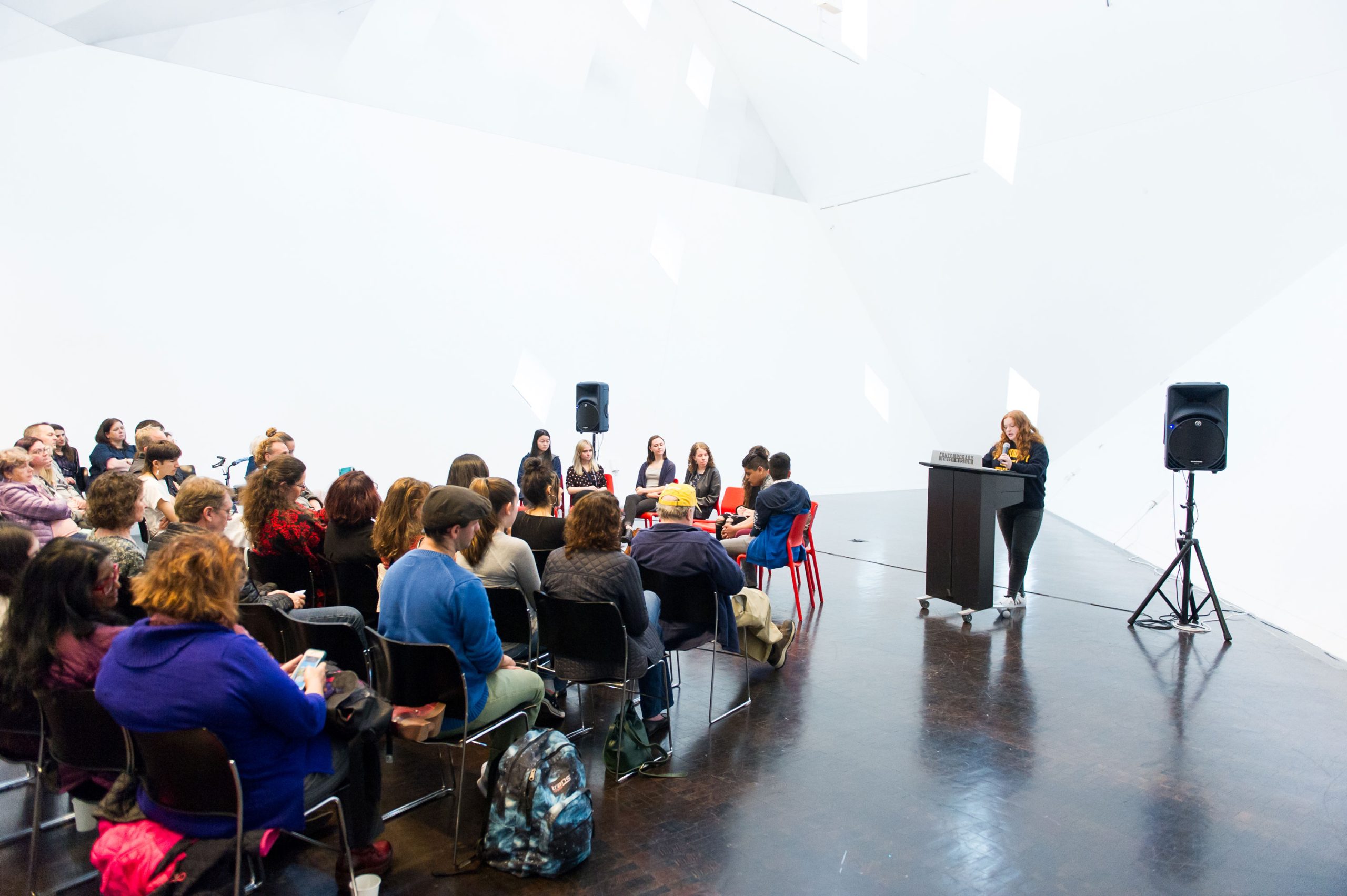

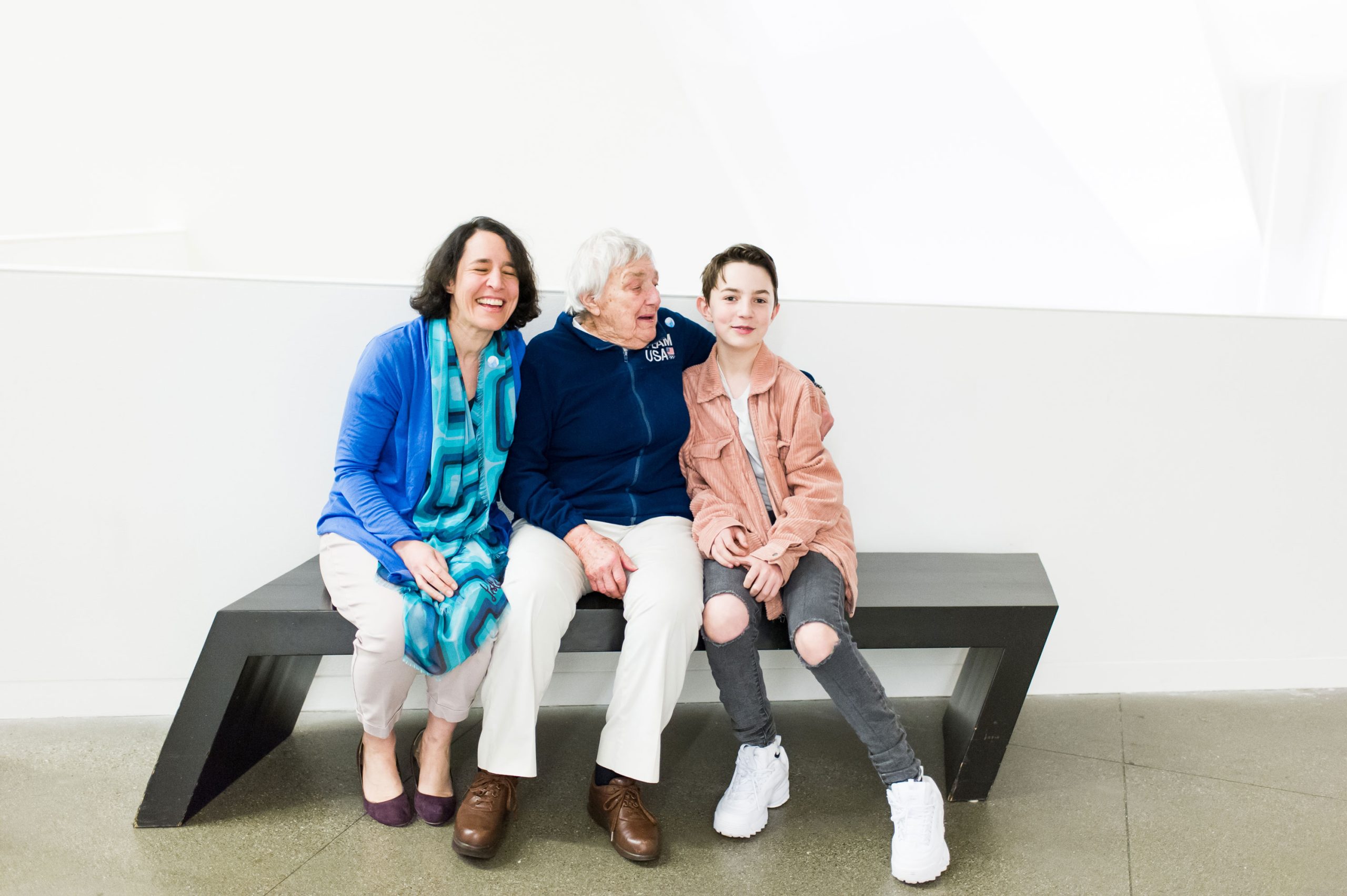

Three years ago, with support from a Covenant Foundation grant, The CJM launched a new youth project called What We Hold: 100 Jewish Teen Voices—an educational program in which teens create audio recordings of stories that explore Jewish values through intergenerational family narratives. Research has shown that a sense of “intergenerational self”—a self with a deep sense of both family and personal history, coined by Dr. Marshall Duke—is a strong predictor of overall psychological health. By delving into their Jewish heritage, and recording a family member’s story, teen participants in the What We Hold project have an opportunity to intentionally and reflectively build their “intergenerational self” in their own unique way.
What We Hold gives teens this timely opportunity to reflect on their Jewish heritage at a point in their adolescence when they are actively exploring their Jewish identities and values as individuals and building their sense of intergenerational self, Aber explained.
To create the audio recordings, teens picked a family story, determined who they’d need to interview, conducted interviews and transcribed them, storyboarded and edited the narrative, and either developed a script to read for their recording or used professional editing software to splice together moments from the original interview into a tight and compelling narrative. Finally, they added their own reflections to the recording about what they learned from their family’s story. Intentionally designed to mimic the process of a professional podcaster, the project empowered participants with lifelong skills for telling Jewish stories to a 21st century audience. Through this process, teens dug deeper into their Jewish family story and gained new insights into their own Jewish identities.
Ethan Finestone, a student at the Jewish Community High School of the Bay, recorded a story about his great-great-grandfather’s emigration from Odessa, Ukraine to Scotland. He explained that because he learned that his family faced so much hate and persecution—to the point that they had to leave the place where the family had lived for hundreds of years—he now feels a new sense of purpose.
“It’s my role as a Jew to bridge gaps when people are immigrating [to America] and to help immigrants as much as I can,” Finestone said.
From recording his family’s story, he also gained a renewed sense of pride in his Jewish identity and a feeling of appreciation for life in the United States.
“The fact that my ancestors had the courage to pack up and leave their family, home, and community—I feel proud of the strength they had,” Finestone shared. “[I understand better] how lucky I am to be living where I’m protected and can express my Judaism to the fullest extent and still feel safe.”
Elizabeth Levie, who participated through The CJM’s TAC Squad program, explained that she didn’t grow up particularly observant or involved in Jewish life. The What We Hold project opened a new path for her to engage with being Jewish and made her much more conscious of her Jewish heritage. Levie’s recording tells the story of how her grandmother faced bullying for being Jewish and grappled with her Jewish identity as a result.
“[Her story] changed my perspective and made me feel like I have a responsibility to honor and hold on to it, because of all the persevering she did. It reaffirmed the importance of my Jewishness. I’m in college now and go to Hillel every Friday, because I understand how I am part of this wider history.”
For Lilah Ferris, What We Hold was not only informative and inspiring but also liberating. A student at the Jewish Community High School of the Bay, Ferris recorded the story of her great-great-great-grandmother, Kerry Wiler, who left Germany and immigrated to Washington Heights, New York. After learning the way that Wiler crafted her Jewish identity, Ferris is now more confident in her own Jewish identity.
“I can be my own type of Jew and create my own Jewish path—that’s what my great-great-great-grandmother did,” Ferris said. “I feel more comfortable with my Jewish identity and knowing that it won’t necessarily be like anyone else’s Jewish identity. I have the freedom to define what it means to be Jewish for myself.”
When Jesse Stein* was an intern at The CJM, he recorded a story that gives context to his grandfather’s ardent Zionism. After fleeing Nazi persecution, his grandfather’s family settled in Palestine. There, at age 16, his grandfather fought on the front lines in Israel’s War of Independence. Interviewing his grandfather provided Stein an opportunity to reconcile two conflicting aspects of his Jewish identity: a commitment to advocating for peace in the Israeli-Palestinian conflict and being descended from someone who fought in that conflict.
“[What We Hold] forced me to confront that this [history] is a part of who I am,” Stein explained. “You can take account of your family and take responsibility for where you come from, but you don’t have to be defined by it. [It’s like] existing in two worlds. It’s challenging but I can hold both. [I can say], ‘This is where my family comes from, and I’m going to do everything I can to create a better future.’”
At an opening celebration for the What We Hold exhibition, teen participants—in front of their families, friends, and community—publicly reflected on what they had learned from the whole experience. This special evening reiterated how The CJM’s youth engagement work makes teens feel not only welcomed but also honored and respected.
“People don’t usually hear teen voices or have access to teen ideas, so for museum visitors to witness teens being treated as professional artists in a museum space is extremely powerful,” Aber said. “[What We Hold] is about real people and real stories, and reminds visitors that museums are places of human connection.”
*Last name has been changed.
By Yonah Kirschner, for The Covenant Foundation
More to Consider
- Film: Intensive Teen Programs in Contemporary Art Museums (MuseumNext, December 2016)
- Museums Tell Teenagers: We’re Here for You (The New York Times, March 2017)
- Project Audio: Teaching Students How to Produce Their Own Podcasts (The New York Times, April 2018)
- Room to Rise: The Lasting Impact of Intensive Teen Programs in Art Museums (Whitney Museum of American Art, 2015)
- Teen Audio Guide (Art Institute of Chicago)
 Marshall P. Duke is the Charles Howard Candler Professor of Psychology at Emory University, where he has served as Director of Training in clinical Psychology and as Chair of the Department of Psychology. As a member of Emory’s psychology faculty and as a core faculty member with The Emory Center for Myth and Ritual in American Life (MARIAL), he has studied a variety of family issues, most notably the development of a child’s intergenerational self and how family narratives—or knowing the ups and downs of one’s family story—can help build resilience in children and teens.
More to Consider
- Read the full text of Marshall’s paper on the power of family history in adolescent well-being and identity, here.
- Watch Marshall Duke’s TedX Talk on Family Narratives.
- Check out the 20 “Do You Know” scale of questions to ask your students and children.
- Questions and Answers with Dr. Marshall Duke (Laird Norton WM)
- The Family Stories that Bind Us (New York Times, March 17, 2013)
- Children Benefit if They Know About Their Relatives (Emory University, March 3, 2010)
- Childhood Self-Esteem and Family Togetherness (Well Being Journal, Jan/Feb 2006)
Dr. Mary Bigler is an award-winning professor in the Department of Teacher Education at Eastern Michigan University who has been teaching and speaking publicly on topics related to literacy and education for over 40 years. Below, Dr. Bigler shares details of the Family Diary, an original idea she developed to help families engage with one another.
The premise behind the family diary is simple: Every day, everyone in your family should write one sentence in a diary. All you need is a spiral bound notebook; write "Family Diary" on the cover. Then, choose a specific time—perhaps right after dinner or before bedtime—so that writing in the diary becomes ritualized, like brushing your teeth or going to Grandma's for Sunday dinner.
The sentence that a family member writes each evening can be about anything. The only rule is that it must be a sentence "appropriate" for the family diary (no swearing, mean-spirited thoughts, put-downs of others, etc.) Each family member should also write their name after the entry, and the date on the top of the page. If there are children in your family who are too young to write, they can dictate their sentence to someone who can write it for them. Make sure not to write more than one sentence; this shouldn’t be a burden or take too much time.
An important part of the process: Every time you write a new sentence, read the previous day’s writing out loud. Other ideas for engaging with the diary: Kids might ask for their favorite day to be read out loud (a holiday or birthday are popular choices) and consider keeping the diary on the coffee table in the living room or another prominent location. That way, whenever anyone comes to visit, you can encourage them to read a page or two from the family diary. Then tell your visitor, “Anyone who reads our family diary has to write a sentence in the diary.” Eventually, you will have a sentence from every visitor to your home!
Make sure someone writes in the diary every day. Take it with you on vacations. In twenty years, you will have the most priceless heirloom—a history of your family, written by your family.
The Family Diary brings families together to share the day’s events and in these busy times, when devices tend to replace conversations in families, it is a way to get family members together to share in a common project that requires them to focus on one another. (Sometimes kids will have difficulty deciding the one thing they want to write about and will talk about three choices of things, so parents then have an opportunity to hear about other things that are important or happened that day.)
By Dr. Mary Bigler, for The Covenant Foundation
More to Consider
To learn more about Mary and her work, visit her website and watch her promotional video on Vimeo.
The Jewish community is ever changing and so, too, is the Jewish family. As an Associate Rabbi at Temple Isaiah in the San Francisco Bay Area, I’ve had the opportunity to reflect on these changes and have tried, along with my colleagues, to address the fluctuating needs of our congregants. One thing we know for sure is that Jewish community doesn’t happen by chance anymore. In the past, Jews often lived close to one another and close to extended family. It was easy to connect and see other Jewish families on a daily basis. Today, that’s not the case. In some parts of our country, there is no longer a neighborhood feel to the Jewish community.
And so, at Temple Isaiah, we strive to create structures and programs that actively build Jewish community. The membership of our 900+ family synagogue is spread far and wide, and our children are often one of only a few Jewish students in their grades at schools. Many of our families have moved to the Bay Area as adults while their extended family live a plane ride away. Not having family or longtime friends close by, these families come to our synagogue actively seeking Jewish community; to socialize and celebrate Jewish holidays. As we look to the future of Jewish family engagement and education, we need to create inviting spaces for families to “hang-out” in Jewish community, giving them time and structure to become friends with other Jewish families.
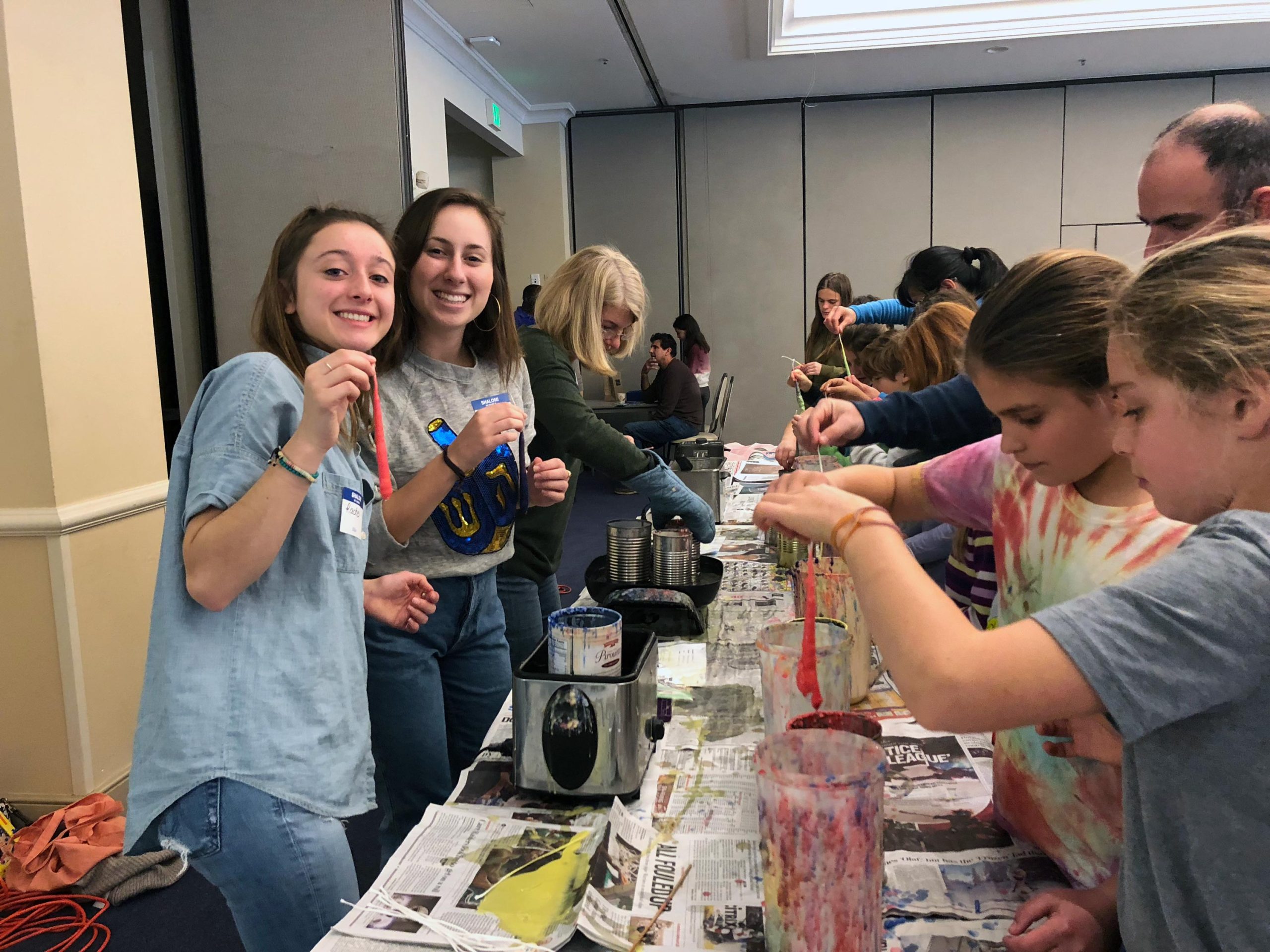
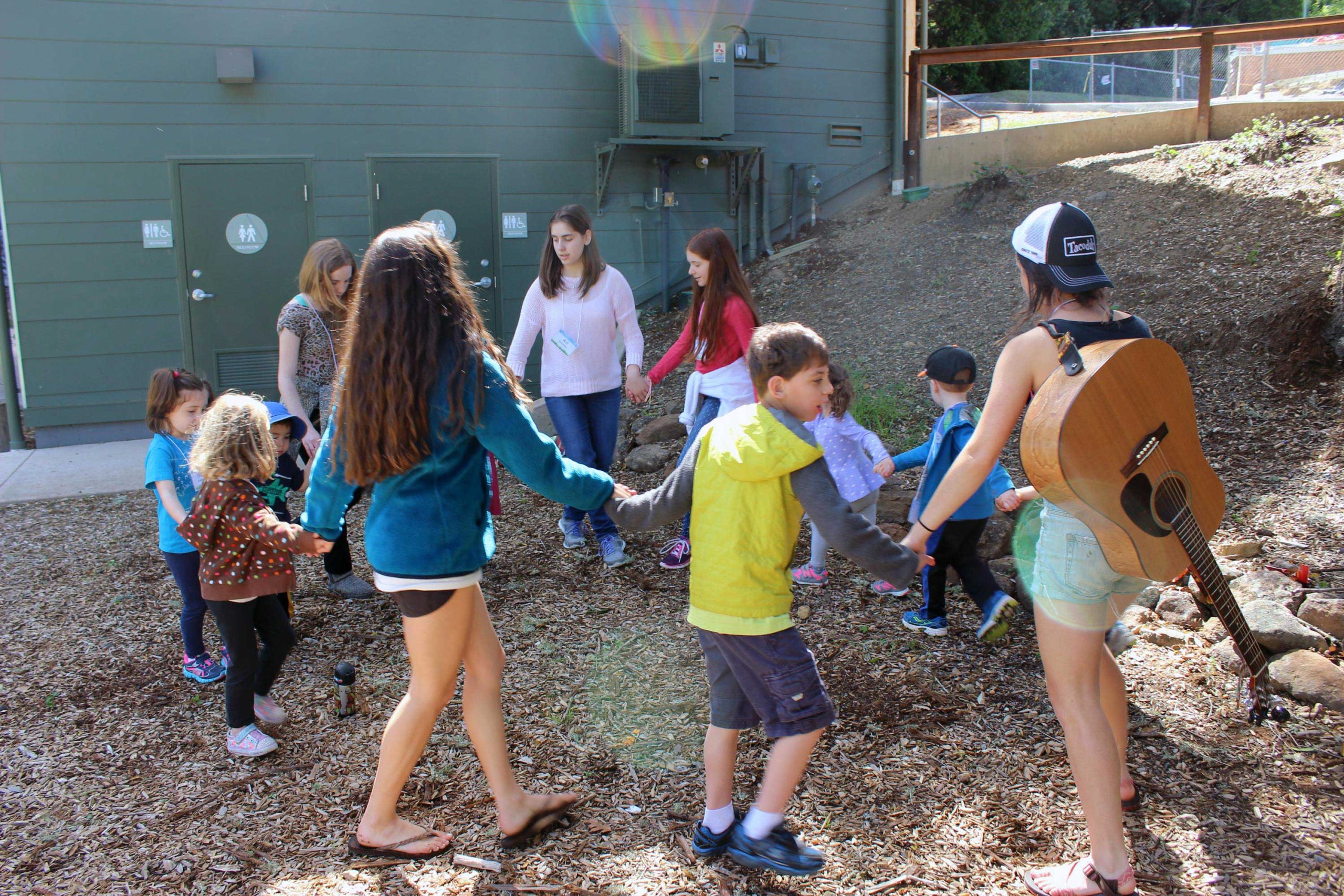
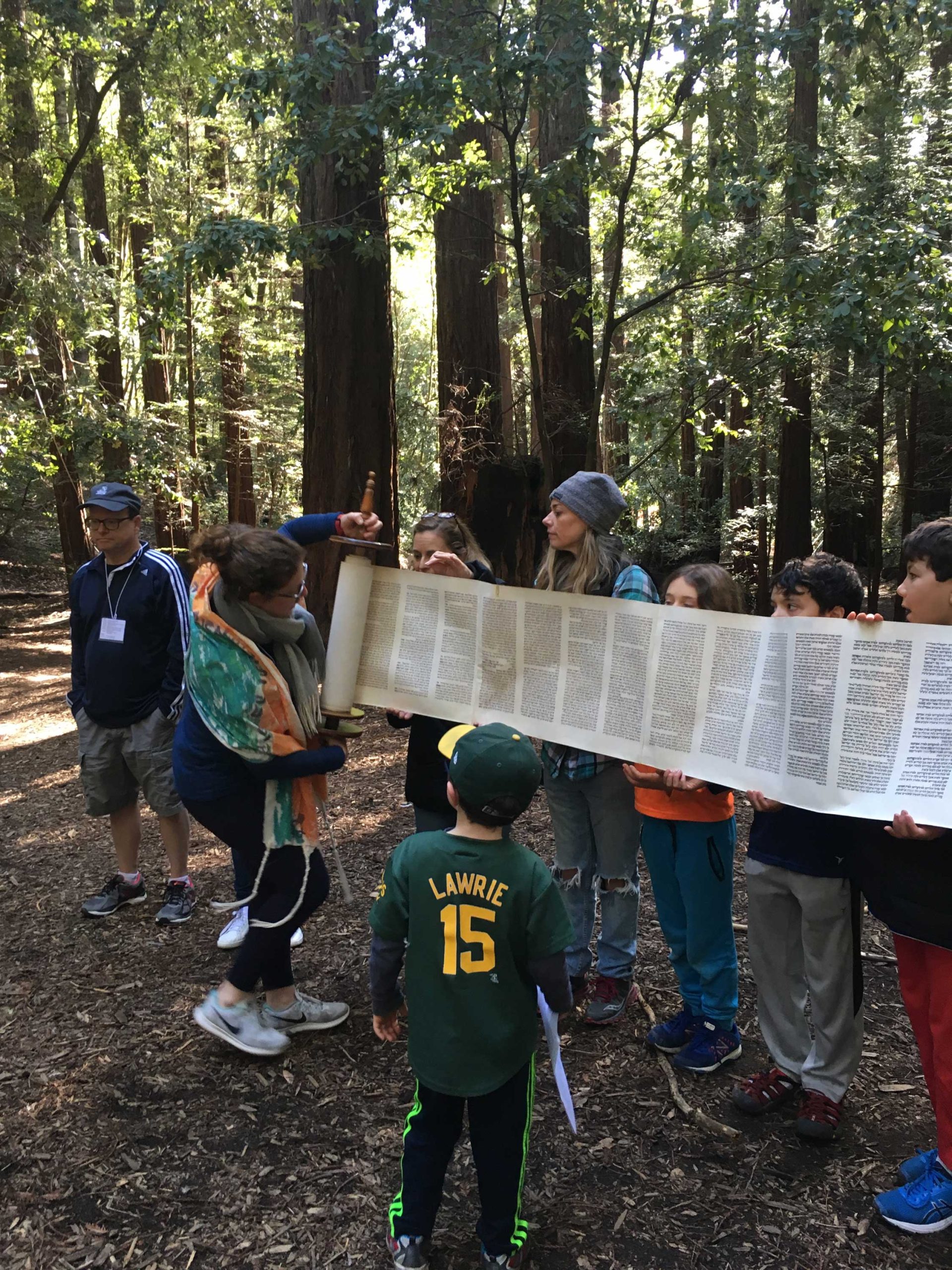
Another important factor to consider when addressing the shifting needs of today’s Jewish families is that many have at least one parent who did not grow up Jewish, a parent who actively participates in another religion, or who is hesitant to embrace organized religion. This reality further encourages the need to create welcoming opportunities for families to “try-out” participation in Jewish community, with activities that do not require prior knowledge and are a fun way to meet other people.
I grew up as an active participant and leader in NFTY, and I worked with Jewish teens for many years. Reflecting on my experiences as a Jewish youth group participant and leader led me to wonder, along with lay leaders at Temple Isaiah, what it would be like if family programming at our synagogue looked similar to the style and structure found in teen-led youth groups. The informal, social programming that is a trademark of youth group activities—from creative Havdalah services around a campfire to limo scavenger hunts—helps teens build meaningful relationships outside the religious school classroom. Could the success of that model of engagement address the needs and interests of today’s Jewish families?
These wonderings led to the creation of Kulanu, an innovative “youth group style” program for Jewish families with kids in K-6th grades at Temple Isaiah. Kulanu, which means “all together” is designed to connect families through year-round informal Jewish activities. Kulanu activities complement and enhance other aspects of synagogue life, like religious school and Shabbat worship, while building community and empowering participants.
Kulanu provides easy commitment opportunities for this age cohort to “hang-out” in Jewish community and engage with Judaism in an informal environment. It builds on the excitement from a family retreat, it strengthens relationships that form in the classroom and when kids are fully engaged in an activity, and it provides parents a space to easily connect with one another.
Like youth group events, Kulanu programs occur throughout the year and vary in style and structure. (Click here to see the Kulanu calendar from the past year.) Some of the program titles look like something you would see on any synagogue calendar. However, the programming is intentionally designed to strengthen community from one event to the next and create meaningful time for families to spend together. For example, it used to be that many families at our synagogue did not participate in the rituals of tashlich. Now, after family Rosh Hashanah services, over 75 families join for Kulanu’s tashlich program. It begins with parents and children doing a guided exercise together in which they reflect on the past year and set goals for the upcoming year. After the tashlich ritual, families stay for a picnic where you might find a friendly game of soccer or playing on the playground. There is meaningful time to interact with your immediate family and time “to be” in Jewish community.
We have volunteered to harvest food with Urban Farmers on Shavuot, on Sukkot we have fulfilled the commandment of joy with a gaga tournament followed by dinner in the sukkah, and we have celebrated the creation of the world with a camping trip on Shabbat Bereshit. Social outings such as bowling, Top-Chef competitions and backyard movie nights always include Havdalah. The synagogue’s family retreat has now become a central event of the Kulanu calendar.
Each event is designed to include programming that engages the kids, allowing the parents to socialize with one another while there are also activities that engage the whole family together. The variety of programs provides many entryways for families, and the consistency of programming throughout the year strengthens the individual relationships and community.
Kulanu’s leadership also addresses the needs of the modern family and incorporates the idea of being “all together” into how programs are created. Like a youth group model, Kulanu programming is planned by those who participate in the programs in partnership with a synagogue staff or clergy member. Many families have parents who work and kids who participate in many extra-curricular activities. Time is limited. Adult-only meetings that take place during the weekday or at night often don’t work for many families. In addition to needing to make an effort to be in Jewish community, families are searching for ways to spend meaningful time together. Therefore, Kulanu is led by a committee that consists of families. In preparation for the coming year, the families on the committee will come together at someone’s house for a potluck meal that includes time to plan. Parents don’t need to worry about finding childcare or being away another night to participate. The kids will often play with one another while the parents meet. The older kids also have an opportunity to express their ideas.
Entire families will often help prepare or lead the activities at the various programs. Sometimes it is simple. The kids will be there with their parents helping to platter food in the synagogue kitchen or will string lights for Glow-in-the-Dark Chanukah Shabbat. The older kids look forward to being counselors at the family retreat and are empowered to create and lead the Trivia Kahoot on family game night. This past year we had a NinJew Warrior Shabbat led by a member family in conjunction with the clergy. During this interactive, intergenerational Shabbat service, we incorporated ideas of being a Jewish warrior and introduced this concept through conversations about the Maccabees, Ruth Bader Ginsburg, IDF soldiers, Gal Gadot as Wonder Woman and others. In this particular family, the mother, a yoga instructor, helped us find our “inner warrior” by leading yoga during the service and the father and 4th grade son, both fans of parkour, created and ran an obstacle course during the oneg to engage the kids while the parents socialized with one another. Family programs prepared for and led by families have been the most successful.
“The real magic of Kulanu started happening when my children were allowed, and encouraged, to take leadership roles in planning events, discovering their own natural gifts, and what’s unique about them,” shared Heather Stoneman, an Executive Board member of Temple Isaiah, who found her connection to the synagogue as a participant and then later as chair of the Kulanu committee. “The simple act of encouraging our children to be involved in some of the decision making and planning, has allowed my whole family to feel more connected to the community, have quality time together, and there’s an added benefit of increased self-esteem and confidence for my kids.”
Kulanu’s meaning of “all together” literally defines the purpose and structure of these family programs. When we create experiences for our families to enjoy together, we strengthen our Jewish community and empower the next generation.
By Rabbi Alissa Forrest Miller, for The Covenant Foundation
More to Consider
- 2017 Pomegranate Prize Awarded to Five Rising Jewish Educators from Across the Country
- Celebrating B’nai Mitzvah in Israel Has Becoming a Tradition for Temple Isaiah Families
For 18 years, Barbara Rosenblit, a 2004 Covenant Award recipient and Jewish educator, taught young women to consider life stories as a road map.
“One of the goals of this project has always been not to necessarily be inspired by other people’s lives but to be aware of them, and to understand, by learning of their ups and downs, that life is complex, and while your life is something you craft for yourself, stories can help to direct us, and help us choose how to navigate our own lives.”
The project Rosenblit is referring to was borne of a course she taught to juniors and seniors at The Weber School in Atlanta, GA for nearly two decades, called Addressing Women’s Lives. In this interdisciplinary course, students engaged in a year of studying the history of Jewish women in America, identified and interviewed a Jewish woman 75 years or older, and then created a mixed-media work—using embroidery hoops, lamps, vintage handbags, hats, place settings, shadow boxes, and many other objects—that reflected something students learned about each woman’s life.
At the end of the course each year, the students displayed their work in a public exhibition housed within the Weber School’s art gallery.
[Read more about Rosenblit’s work in Sight Line: The Covenant Classroom, 2015.]
“One of the reasons I think this project was as successful as it was, is that it had a visual element to it,” Rosenblit reflected, commenting on the public exhibition that was the culmination of the course each spring. “There’s something about adding a visual presentation that gave us access to a much wider audience to which we could share about the lives of women, and this also raised the bar for our participating students. In today’s day and age, to not take a ‘selfie,’ but rather, to turn the lens on someone else, was transformative for our students.”
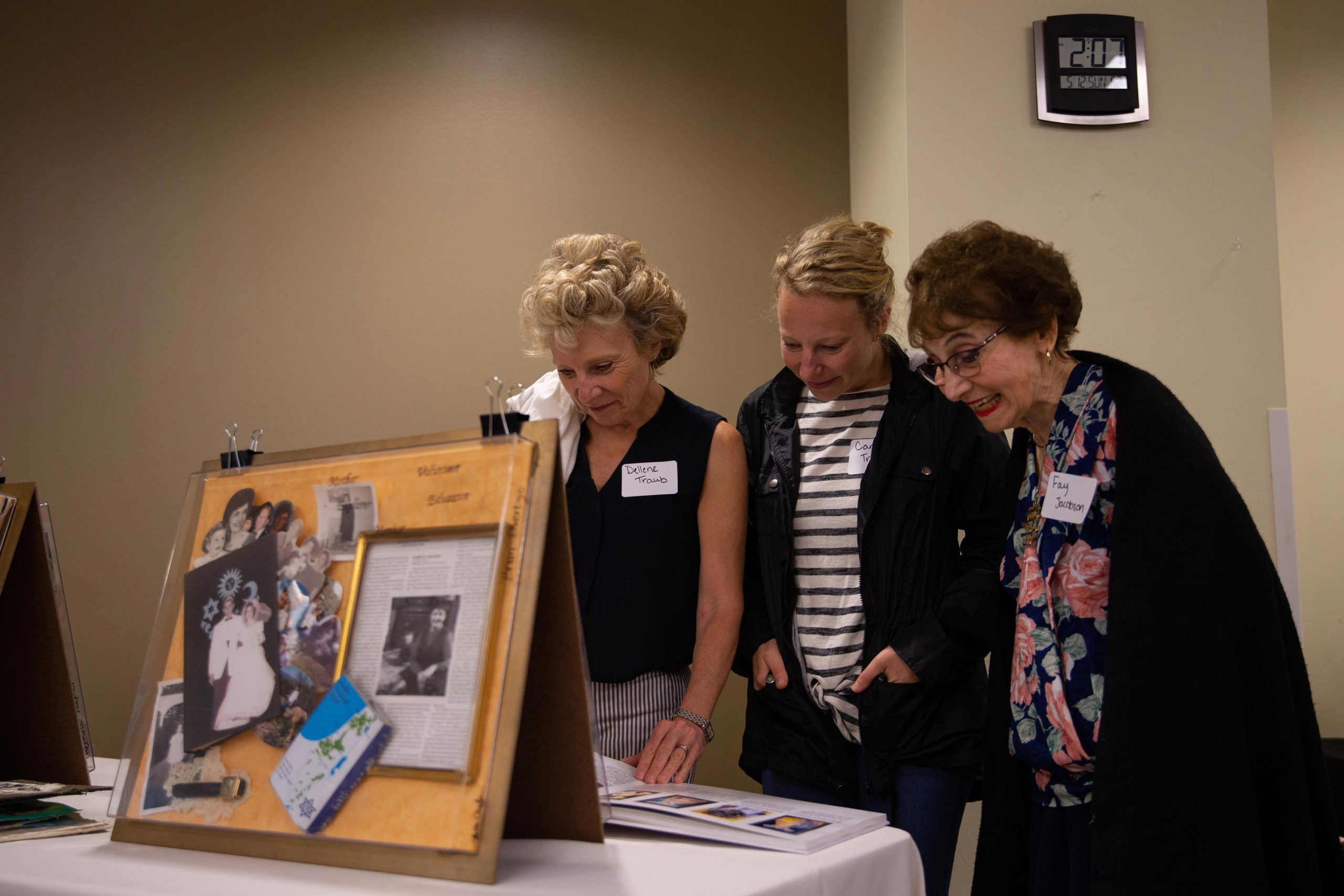
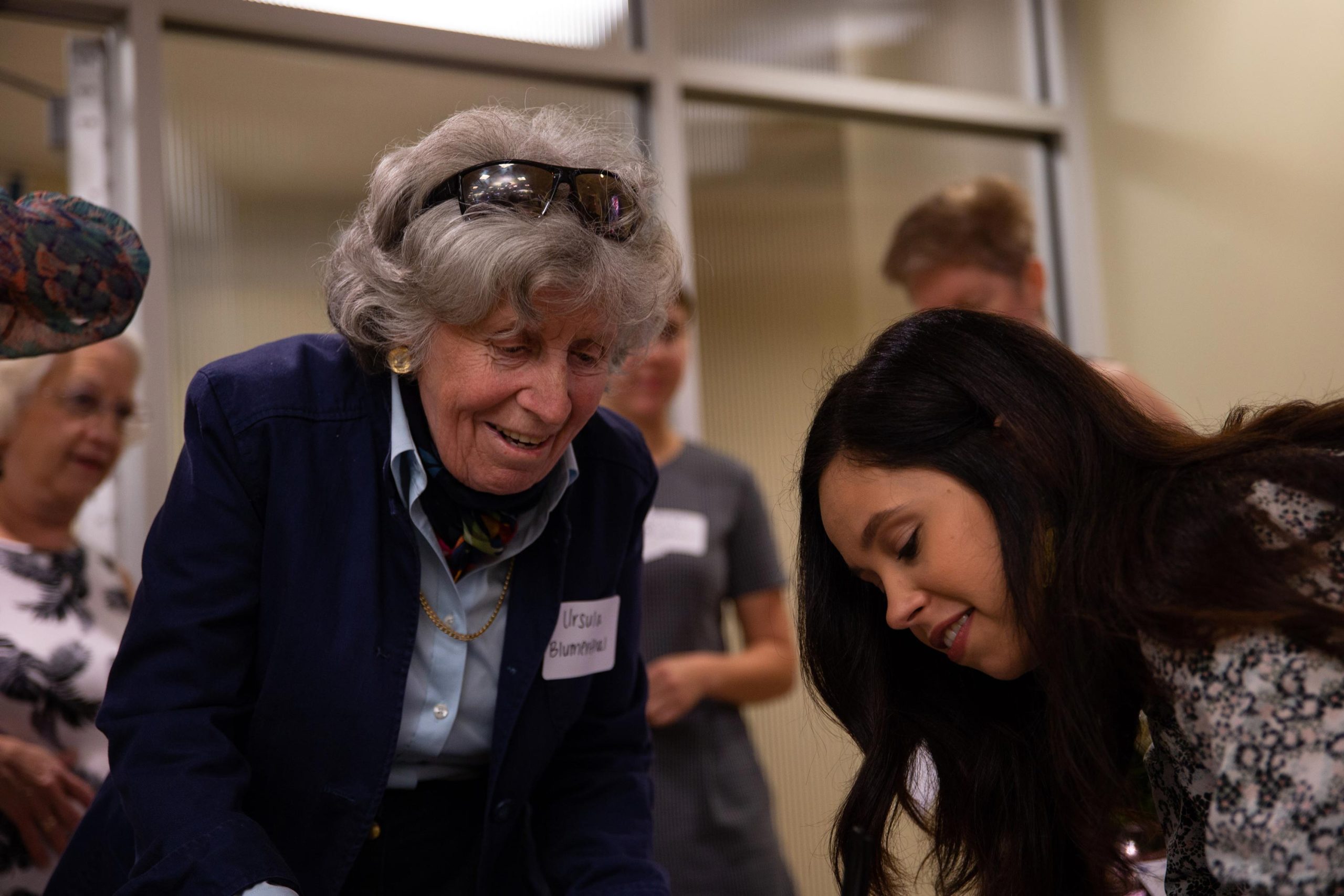
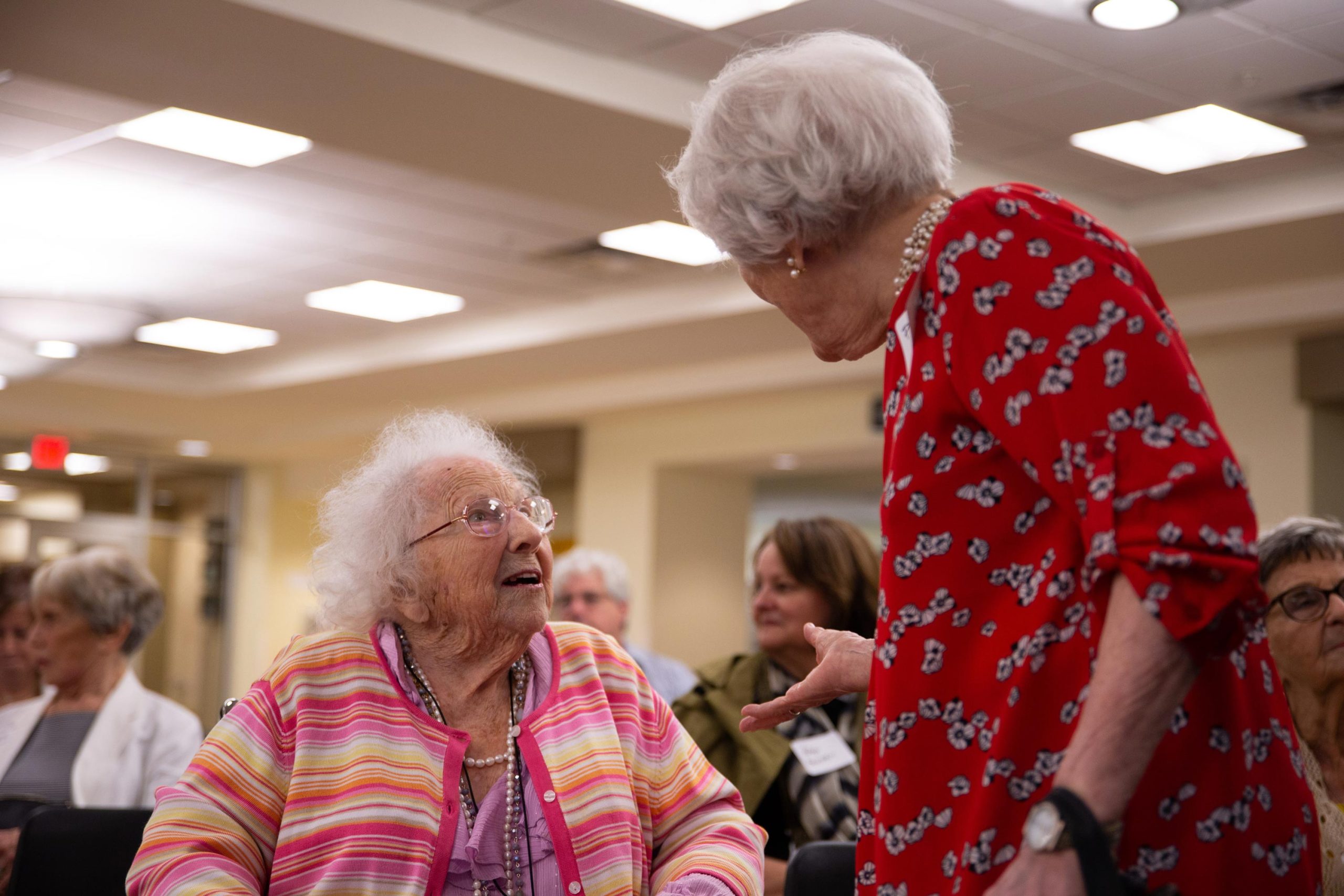
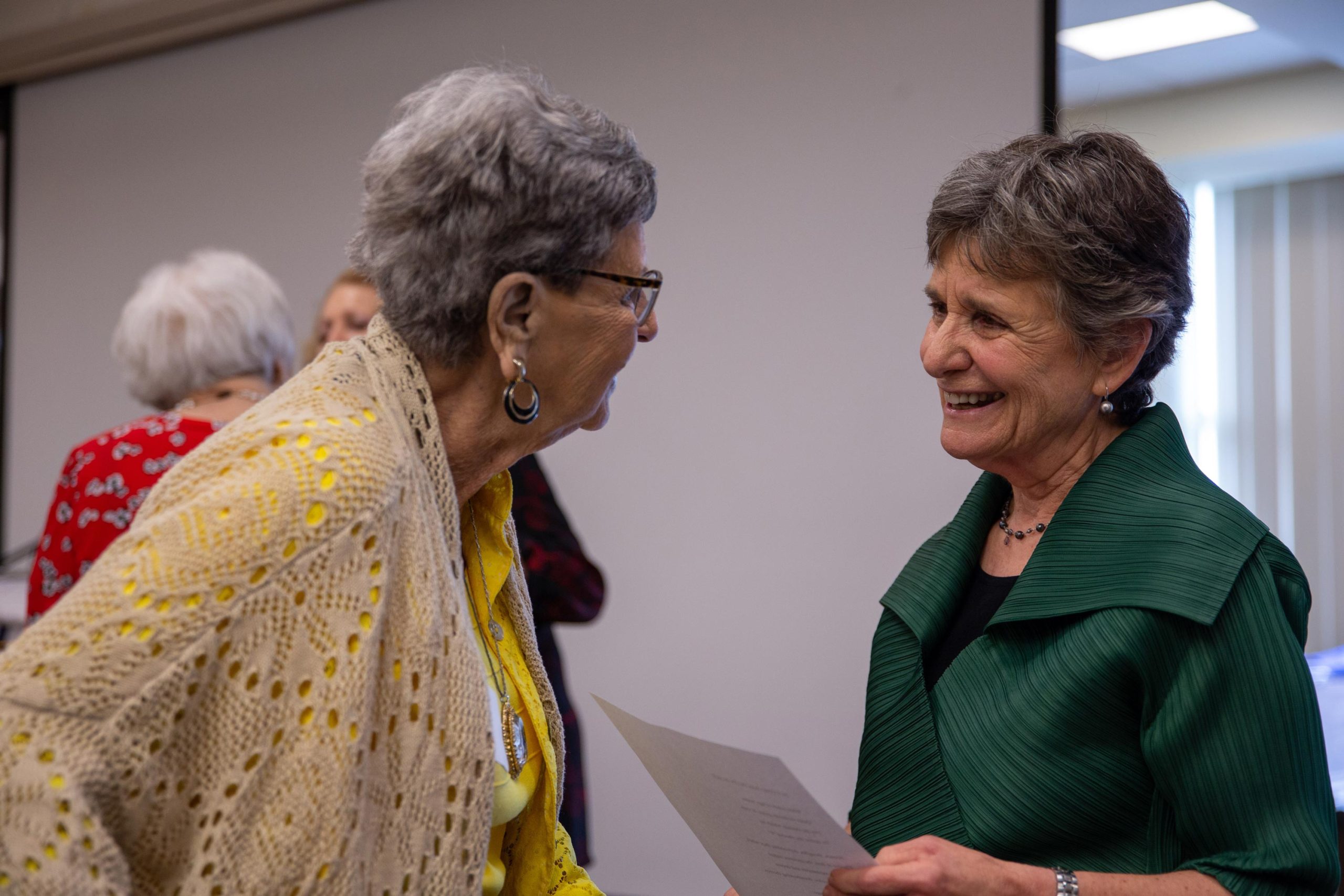
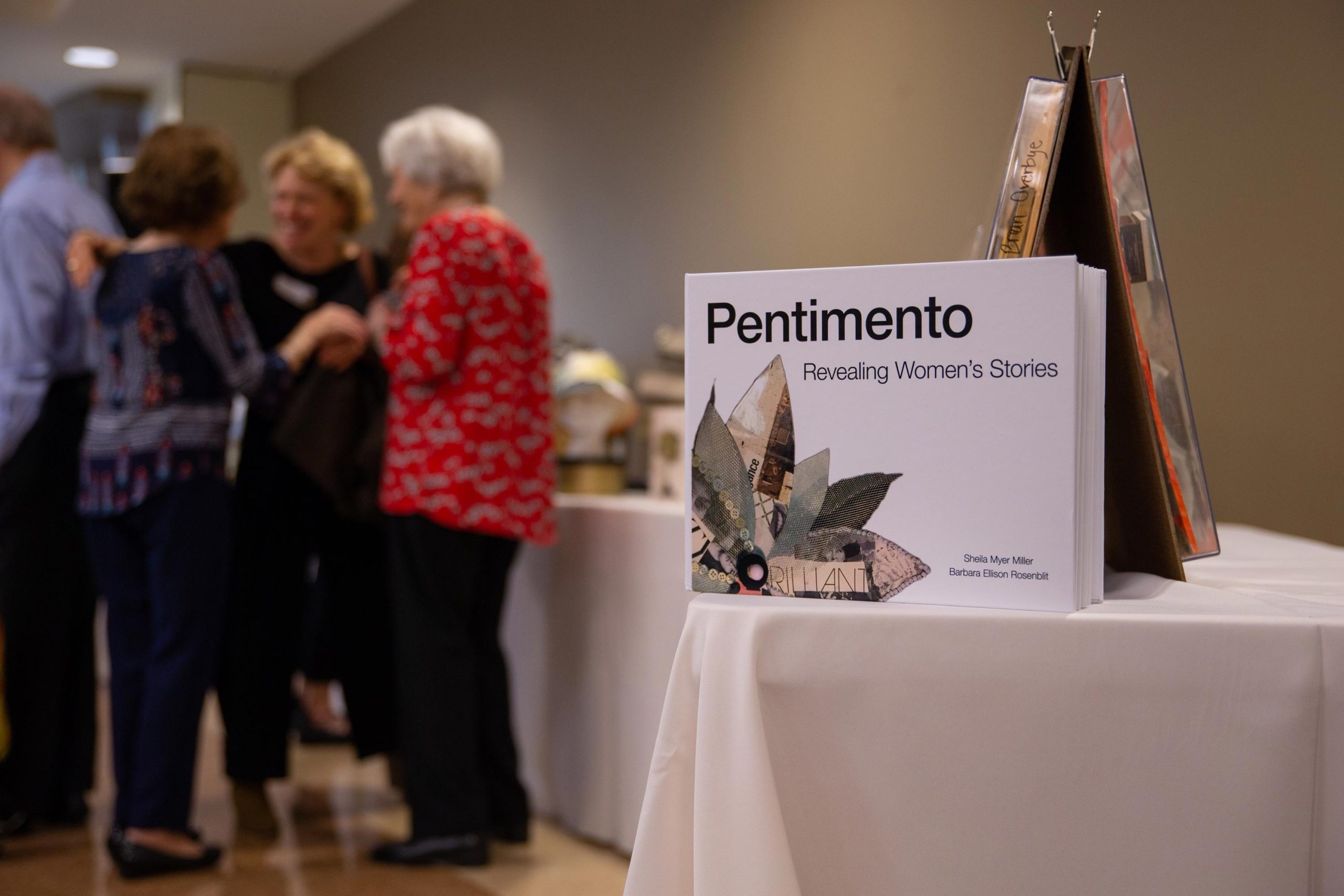
Now, upon her retirement from teaching, Rosenblit and her colleague, artist Sheila Miller, have captured those 18 years of stories and creations into a limited edition book, titled, fittingly, Pentimento, an Italian word that describes the process in art by which a composition shows the drawing or painting that has happened underneath it—so that when one observes the art, there are traces of the versions that came before. Their next steps also look towards documenting and expanding their curriculum and designing workshops for both teachers and adult groups.
“You have to collect the stories of those who came before you, and be aware of them and be curious about them,” Rosenblit said. “And in terms of the development of a teenager, understanding the ‘intergenerational self,’ and where one exists on the timeline of one’s own family, is essential to building core elements of one’s identity.”
Miller added that the interviewing process was done with extreme sensitivity, and many students walked away knowing things they hadn’t known before. “The students had a chance to think about what it meant to be an immigrant, or to lose family members, or to be a woman with a career in the 1930’s,” she said. “Elements of a life that many of today’s high school students wouldn’t otherwise be able to imagine.”
One of the reasons Rosenblit and Miller decided to produce the book, was because they realized “the fragility of the pieces.” They understood that these stories their students had collected over the years needed to be documented in some permanent way.
“This is true about all of our stories,” Rosenblit said. “They need to be captured and held.”
Miller agreed. “Because family stories are ephemeral,” she said, “they disappear in a sense. But by giving them visual form, you also give the stories a bit of permanence. The bits and bobs and archival objects the students use in their presentation, the little mementoes, things found that were hidden in drawers or transcripts, are one way to bring the stories out, while also engaging young students in visual expression.”
When asked how this project relates to family education, Rosenblit was unequivocal:
“Learning the stories of those who came before you is essential family education,” she said.
She emphasized, too, that many students didn’t just interview those to whom they were related, but rather, in many cases, students interviewed with older women in their community with whom they had no connection prior to the project.
“This makes ripples out beyond the biological family, or the nuclear family,” she said. “This project expands the human family.”
By Adina Kay-Gross, for The Covenant Foundation
More to Consider
- Order Pentimento here
- Pentimento on Film
- Covenant in Action: Addressing Women’s Lives
- Jewish Women in Modern America (Weber)
We asked two prominent voices in Jewish social media—Rabbi Danya Ruttenberg and Jordana Horn—to think about those issues most pressing to young Jewish families today and share their thoughts with us. Below is a condensed version of their conversation.
Rabbi Danya Ruttenberg: We’re going through a difficult chapter of American history right now. Whether we’re talking about gun violence or immigration or the treatment of Muslim Americans or something else, there are a lot of things that our kids are picking up on and we need to develop better language for talking to them about these things in ways that are truthful, age-appropriate, and leave them not feeling terrified or despairing. To me, this is one of the most urgent and timely issues facing young Jewish families today.
I recently wrote about Mr. Rogers, and was struck by his unflinching willingness to engage with kids around things they might be overhearing on the TV or radio, or from their parents. For example, after Robert Kennedy was shot in 1968, he did a segment explaining what the word “assassination” meant, for very young children. He told them the truth—that it was hard and sad, and that it was OK to feel scared and mad about it.
I think this is where Jewish values, traditions, and principles might be able to help—particularly around our own obligations to work for a more just and whole world and to preserve lives and human dignity above all else.
Jordana Horn: Agreed, 100%. From day one of nursery school, we should be driving home the essential Jewish message that all human beings are created in the image of God—that we are all imbued with a spark of the divine, the ineffable, the magnificent. Because once we know and appreciate that, everything else is commentary.
And I believe that’s just as important as learning our classmate’s names (maybe even more so?) —learning that there is something holy in every human being, and that is at the root of WHY, as Jews, we have the imperative to repair the world.
I think there are also important discussions to be had about WHEN to talk to children about world events. I’m not convinced, for example, that kids of every age who go to shul on Shabbat need to know about what happened in Pittsburgh. And yet, my nursery-school-age child who goes to a Jewish nursery school has active shooter drills because it’s a Jewish school. I deeply resent the uglier parts of this world’s intrusion into my kids’ childhood—but I think there is a nuanced discussion to be had about not only what you say and how, but when you say it and why. I’ve not yet talked to my little girls ages 8 and under about the Holocaust, for example, but I have had very involved, no-holds-barred discussions about everything with my teens since they were 10 and up.
DR: Right. And different parents are going to have different attitudes about how to handle the difficult, painful things, and of course approaches need to be tailored also to the kid, and their personality, but it’s impossible to ignore this issue now.
Another pressing issue is inclusion, or celebration—making a Jewish community that is truly both welcoming to everyone, and also honors and celebrates what a range of perspectives and experiences can offer our tradition and community. It’s not enough to create a Jewish community that welcomes Jews of Color, disabled Jews, Jews from interfaith families, Jews of every gender, sexuality, and family configuration. Rather, we should also be open to growing and evolving based on the insights and leadership of folks from all walks of life and ways of being. It might take some work for us to get there, but I think it’s important work.
JH: Yes. We should make an active effort to open up these ideas and discussions, even when the room in which we sit doesn’t immediately present as diverse. We have to make an active effort to read books to kids about people who aren’t neurotypical, or families that present differently, or Jewish people who aren’t Jewish from birth or don’t trace their genes back to the shtetl. We also have to remind ourselves that some differences aren’t immediately visible, and it’s imperative to always communicate the idea from the outset that we are understanding and our arms are open. I think that ties back to this idea of why we are all doing what we are doing in the first place.
I would love to encourage Jewish communities to create programming that addresses differences—or at least doesn’t assume that everyone is coming from the same place.
DR: I’d love to see the Jewish community offering frazzled, busy parents more tools to help be more present with their kids more of the time. There are a lot of ways that our tradition can help--to find the holy sparks waiting to be raised from mundane (dare I say--boring) tasks like folding laundry or sweeping up Cheerios, find the blessings that can be recited after an unpleasant encounter with poop, or find the I-Thou encounter, as philosopher Martin Buber would put it, the true communion with the other, during the moments when empathy might seem elusive.
I have a lot of thoughts and opinions on helping parents see how parenting—in the hard, tricky, agonizing moments as well as the sweet ones--can be a legitimate spiritual practice in its own right. Nurture the Wow: Finding Spirituality in the Frustration, Boredom, Tears, Poop, Desperation, Wonder, and Radical Amazement of Parenting is predicated on the assumption that parenting can be not only a spiritual practice when you’re blowing bubbles at the park or feeling mystically connected in a sleepy snuggle—the warm, feel-good moments—but that it can also be a spiritual practice when you find the sparks of light in the hardest, most crazymaking moments. Pulling up just the tiniest droplets of compassion from underneath the frustration. Tapping into that well of love at 3 A.M. when really all you want to do is Go. Back. To. Sleep. It’s about finding gratitude for the body that works well enough to poop, even if it means extra laundry. It’s about allowing yourself to get present, fully present, in whatever’s happening: present in the mundane moments of cleaning up, present in the hard moments when your frustration levels are high, present in the uncomfortable moments when you realize how little of their lives and fates you really control.
When we find compassion for our kids, we become kinder and softer. When we learn how to trust our instincts as parents, we become more in tune with ourselves. And, when we allow ourselves to enter fully into the breathtaking love we have for our kids, it can bring us to the doorway of the sacred.
I’d love to see the Jewish world talking more about these questions, offering frazzled, busy parents more tools to help be more present with their kids more of the time. There are enough ways that our tradition can help them with this project.
JH: I’d like the Jewish community to make more active efforts to enfranchise the disenfranchised. So many of our life problems are dealt with behind closed doors—and yet, we know intellectually that we can all be a source of comfort and solace to one another. I belong to many Jewish communities, and in one, there was a wonderful program where the rabbi ‘interviewed’ a friend of mine, Rebecca Soffer. Rebecca is one of the creators of the website ModernLoss.com, a clearinghouse of feelings about grief and loss of all shapes and permutations. On a busy weeknight, over 100 people showed up for this talk—people who had lost spouses, parents, friends, and children. They came to sit and listen and learn—and the conversations afterwards were just as valuable as the conversation on the bima had been, and maybe even more so, because they fostered a sense of connection and community.
So many of the problems that keep us up at night—whether depression and anxiety, eating disorders, fertility struggles, or what have you—are ones that we deal with alone, out of a misbegotten sense of shame or fear. I would like the Jewish community to take more aggressive strides to meet people where they are and to extend a hand of love and compassion to all those who are struggling. In today’s world, we have the mechanisms for connectivity in our literal pockets with smart phones and social media, and yet each of us finds ourselves more alone. I believe our Judaism can help us out of the lonely darkness and into the warmth of physical connection and community.
More to Consider
Rabbi Danya Ruttenberg
- The Twitter Rabbi (Chicago Reader, August 2019)
- The New, Women-Led Theology of Parenting (The Atlantic, May 2016)
- Parenting as a Spiritual Practice (Rabbi Danya Ruttenberg presents an ELI Talk)
- Transforming the Mundane Everyday Work of Parenting into a Spiritual Practice (Alternet.org, May 16, 2016)
- Collected writing by Rabbi Danya Ruttenberg on MyJewishLearning.com
- What Moms Get in Return: The Unexpected Enlightenment of Parenting While Female (Salon, May 7, 2016)
- Parenting As a Spiritual Practice (New York Times, September 4, 2013)
- Collected writing by Rabbi Danya Ruttenberg on Forward.com
Jordana Horn
- Call Your Mother: Kveller podcast
- My New Parenting Goal: To Be Like God (Times of Israel, September 2018)
- Collected writing by Jordana Horn on Kveller.com
- Collected writing by Jordana Horn on Forward.com
- Collected writing by Jordana Horn on MyJewishLearning.com
In “24/6: The Power of Unplugging One Day a Week,” filmmaker, internet pioneer and Covenant grantee Tiffany Shlain makes a compelling case for “Tech Shabbat,” a weekly 24-hour break from technology that she and her family have practiced for the past decade.
Shlain, who founded the Webby Awards, is by no means anti-screen. Among the many benefits of Tech Shabbat, she counts the renewed sense of wonder at the marvels of technology that she experiences each Saturday evening. Living 24/6, she writes, “lets you have the best of both worlds: the joy of tech and the joy of unplugging.”
Drawing on neuroscience research and historical conceptions of the day of rest to illustrate how 24/7 culture depletes us, Shlain describes her own family’s practice, which starts with a Friday night Shabbat dinner featuring homemade challah and creative discussion prompts and incorporates art projects, outdoor adventures and other forms of reconnecting—in the traditional sense. The book’s final section, “It’s Easier Than You Think,” offers a step-by-step guide for those of all ages (and religions) who are interested in giving Tech Shabbat a try.
Below, Shlain offers insight into what inspired her to start a Tech Shabbat practice, her evolving relationship with technology, and the challenges and delights of unplugging yourself and your family.
How would you describe Tech Shabbat, on one foot?
Be present with those that you love and be present when you’re focusing on work. The rest is commentary.
When did you start observing Tech Shabbat, and why?
Almost 10 years ago, my father died and my husband’s and my daughter was born, within a couple of weeks of one another. I started rethinking how I was spending my time and how little of it we have and what are we doing while we’re here on this earth. Around the same time, I participated in the first National Day of Unplugging with my husband [robotics professor Ken Goldberg] and our children. [National Day of Unplugging is sponsored by Reboot; I’m part of the original Reboot cohort.] Most people just did it that day, and it was a ceremonial, once a year event. But for us, it felt so great that we never stopped doing it each week. We called it a “Tech Shabbat,” and it’s completely changed our lives—for my husband and me and our daughters, who are now 16 and 10. It’s also changed my film studio, because when you set that boundary, you’re setting an example and everyone stops checking their screens on the weekend. It’s had nothing but positive ripple effects in every aspect of our lives.
How does Tech Shabbat look different from a more traditional Jewish Shabbat observance, and in what ways do they overlap or align?
If you’re an observant Jew, you’re already doing an incredible practice that has enhanced your life, and you’re doing it as a covenant with God. My family and I are doing it not in a religious sense, though I have great respect for wherever you fall on the belief spectrum, but as a beautiful practice to be present with each other and a reflective day of rest away from screens and away from being “on” 24/7. We had done a partial version of Shabbat before—maybe a nice dinner, candles—always inviting family and friends, but it was never a full day, and to be honest I never really felt that a full day off for Shabbat was available to me because I’m not a religious Jew. My big epiphany was that I am Jewish, and I love so many of the ideas, ethics and practices, and I want to engage with them. I think there are a lot of Jews like me who feel like, “I’m not Orthodox, I can’t observe in that way.” I want to say, “Yes you can!” It’s an incredible, beautiful practice in our lineage, and you can interpret it for the modern age.
Our Tech Shabbat starts Friday night with a Shabbat meal, with blessings and homemade challah and friends and family around the table, and we end Saturday at 5:00 P.M. In a traditionally observed Shabbat, there’s no cars, no electricity, no creation of any kind, but I love to journal and write on my Shabbat. It’s really a time of reading and reflection for me. I do art projects with my family. I think if you get to the core of Shabbat, it’s about presence and gratitude and creating, and, as Abraham Joshua Heschel so beautifully put it, “a palace in time.” We’re doing that.
So many people are wrestling with the role of technology in their lives and their kids’ lives. How has Tech Shabbat helped you recalibrate your family’s relationships with technology more broadly?
I’m just like anyone else. I can get caught up and feel like I’m “on” too much—whether it’s work or social media. To have a full day without it reminds you how you can live without it, which is a wonderful thing. You get very resourceful. It forces you to put your mind in a different mode. When you’re in it all the time, you can’t step back and look at how you’re using it, or how it’s using you. I think people are so scared of being without their phones, but I think the biggest message is that you get back so much more. Saturday night, when we go back on our screens, I re-appreciate the screens and all you can do with the Internet so much more. So, it has this dual effect. I love being offline, I race towards it, and I’m super excited to be online again.
When families try Tech Shabbat, who is most likely to find it challenging? Is it the teenagers? The parents?
It depends on the family. A lot of parents say, “Oh, my kids would never do this,” or “Oh my husband would never do this,” or, “That ship’s left the port, I can never re-establish that.” But isn’t that what family is about, when you’re all under one roof and you’re paying the rent and you’re modeling behavior and saying this is what we value, as a family? There are so many amazing things online, but it’s not amazing 24/7. This book is my invitation for families and people with and without kids to try this. People are always so fascinated that we actually have done this for nearly a decade, and we have a teenager. So, in the book I lay it all out: How to convince your kids, and how to convince your partner, how to make this a fun experiment that you’re going to do. Our 16-year-old daughter [who is quoted in the book] writes really eloquently about this subject. She loves having a day of no homework and no stress and no FOMO [fear of missing out].
After practicing Tech Shabbat for nearly a decade, what inspired you to write this book?
The longer we’ve done Tech Shabbat, the more meshuganeh everyone’s become with their screens. Ten years ago, it wasn’t like it is now, where you walk around and no one’s looking up. So, it felt more and more urgent. It felt like I had to share this practice with everyone.
What advice do you have for readers who want to give Tech Shabbat a try?
Write a list of what you wish you had more time to do, personally and as a family. Make your Tech Shabbat filled with that. In the book there are so many strategies and thoughts around all of this. My film studio runs an event each year called Character Day, when people around the world watch our films and have a discussion in their schools or companies or homes around how to live a life of meaning and purpose. This year for Character Day, on September 27, we’re asking, “How does technology enhance who we are and our character strengths like empathy, curiosity, presence?” We’re going to invite everyone to try doing Tech Shabbat with us for four weeks in a row, with mini challenges around intentional tech use leading up to it. If people want to join us, you can find out more at characterday.org. I have a lot of strategies in the book about how to bring this into your life.
Since you were in high school, when you wrote a paper proposing that kids from enemy countries throughout the world connect with one another via modem, you’ve been remarkably prescient about the evolving role of technology in our lives. What do you see as the big issues on the horizon? Any insight into how to get ahead of them?
I think we are being manipulated online beyond what we really, truly understand. We’ve given away our data so that corporations can manipulate us based on what we’ve “liked.” I think people should watch a documentary called “The Great Hack,” which just came out on Netflix, and they will grasp what I’m talking about. Soon it might not be the screen. It might be augmented reality. Regardless of what the technology looks like, we have to create space to be off the network and create these “palaces in time,” where we aren’t letting the world in all the time.
It’s key that, as parents, we remind our kids and showcase all the pleasures that don’t involve screens. What do we want to be teaching our children? What do we want to say is important and valuable? That’s what Shabbat is about. It’s one of the greatest gifts of the Jews, to ourselves and the world. It’s that full day every week that has brought the real power of the practice to me and my family.
Written and edited by staff of The Covenant Foundation
More to Consider
- Order the book here: 24SixLife.com
- Sign up for Character Day to try the Tech Shabbat Challenge here
- Watch The Great Hack on Netflix
- All of Tiffany Shlain’s films exploring this subject--including six short films coming out this fall and the Sundance feature documentary Connected: An Autobiography about Love, Death & Technology can be found here
- Follow @tiffanyshlain on Twitter
- Read Tiffany's Op-Ed in The Boston Globe on The Case for a Tech Shabbat in a Too-Connected World
If one were to survey Jewish parents about what they think the most pivotal moment is in their child’s Jewish journey, chances are a majority would answer the B’nai Mitzvah. But whereas the ritual is meant to symbolize a moment when a young person stands at the dawn of a rich Jewish life to come, more often than not these days, the B’nai Mitzvah represents the opposite: an ending of sorts.
Often, with the B’nai Mitzvah, comes a slowing down of a young person’s time in synagogue, less frequent attendance in religious school, and for many families, the culmination of a journey that was just starting to rev up.
“As we conducted research with groups of Jewish teenagers, we heard a lot about how proud and how good they felt about having a B’nai Mitzvah, but we were also painfully aware of how much they saw the moment as a graduation from Jewish life,” shared Deborah Meyer, Founder and CEO of Moving Traditions, the nonprofit organization that has recently launched a national program for B’nai Mitzvah students and their families.
“It’s also a difficult moment,” Meyer continued, “as parents are figuring out how to raise a teen, and children are transitioning into their teenage years. The Jewish community should be helping families navigate this moment, which is filled with issues that are challenging, but also very sweet and meaningful.”
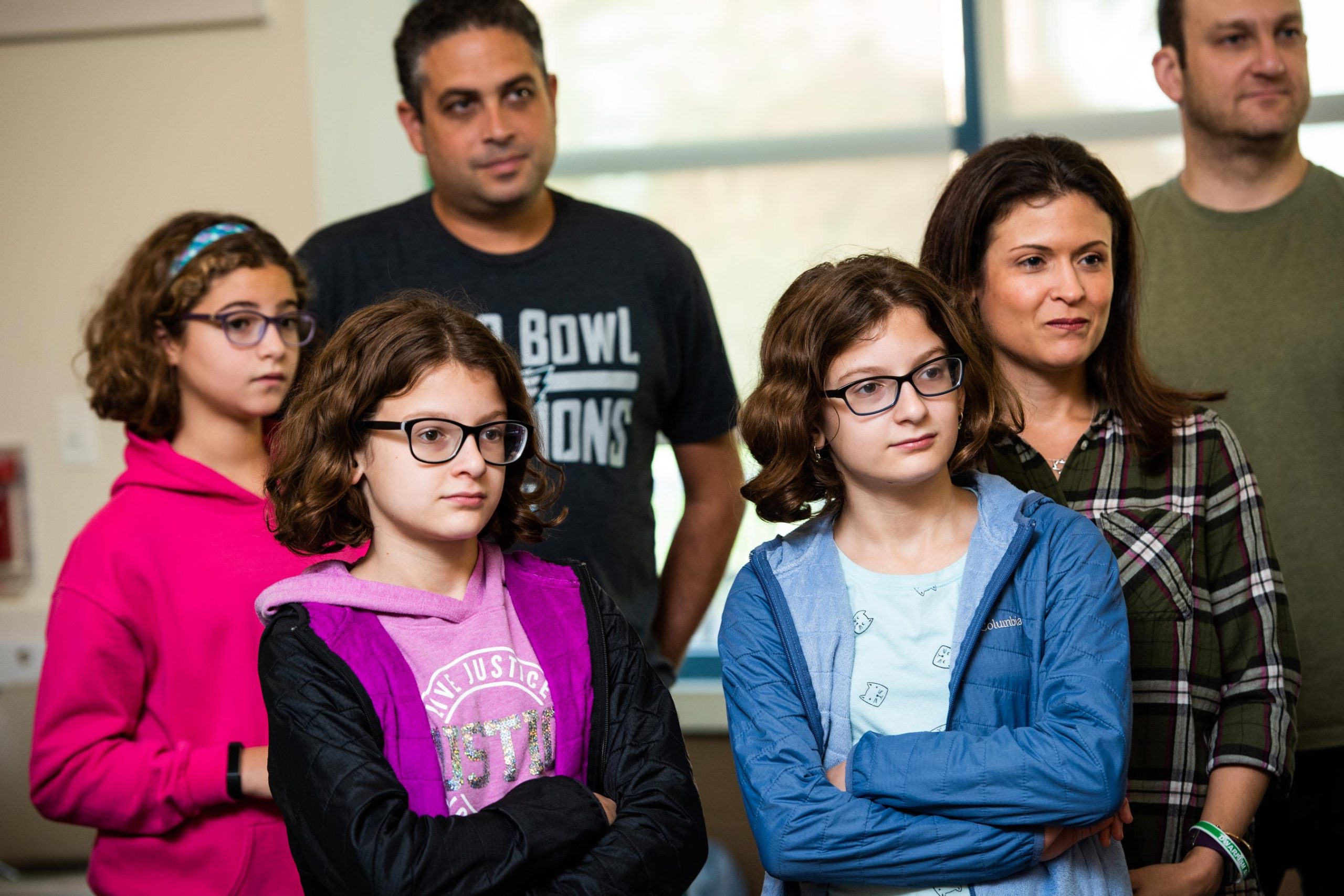
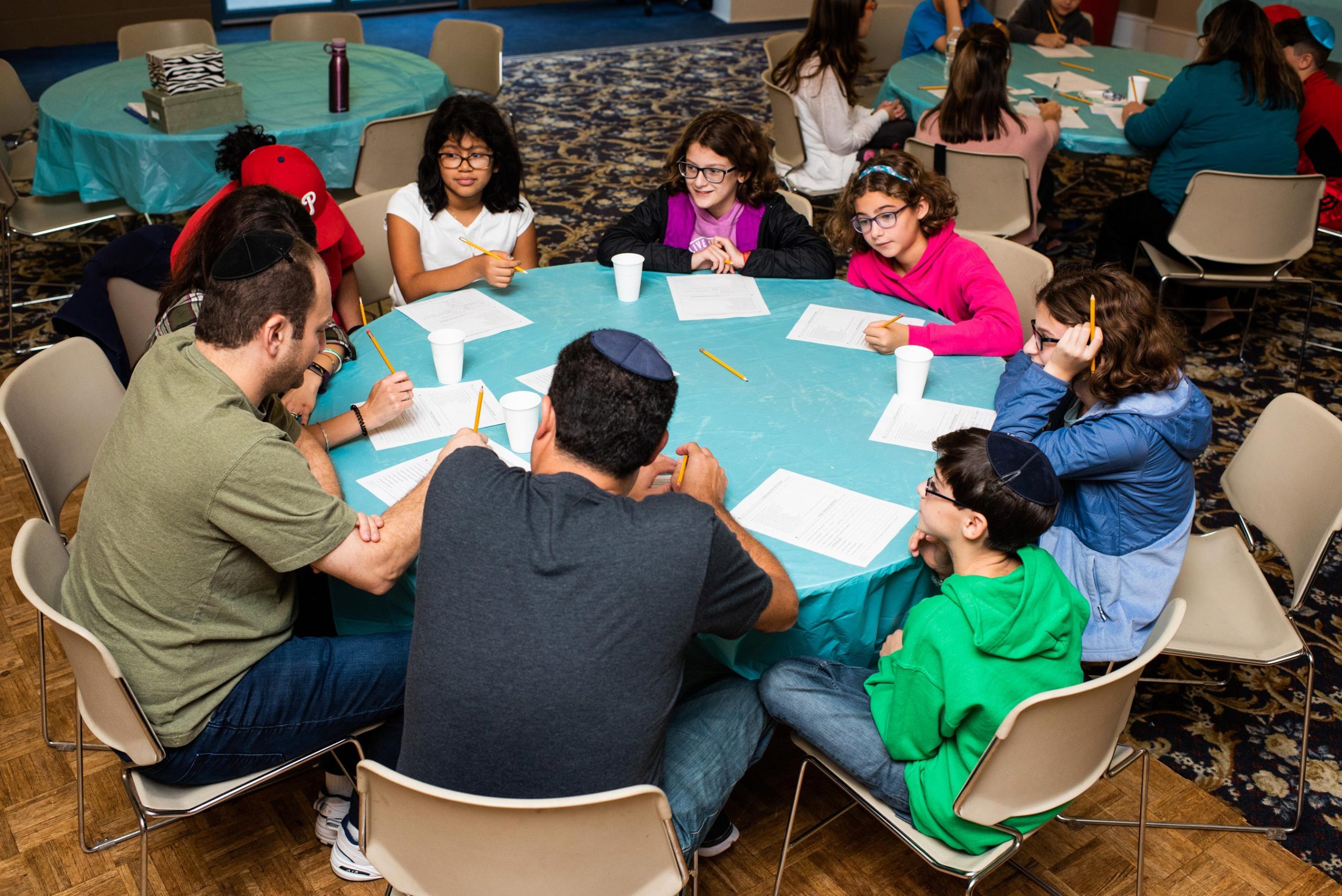

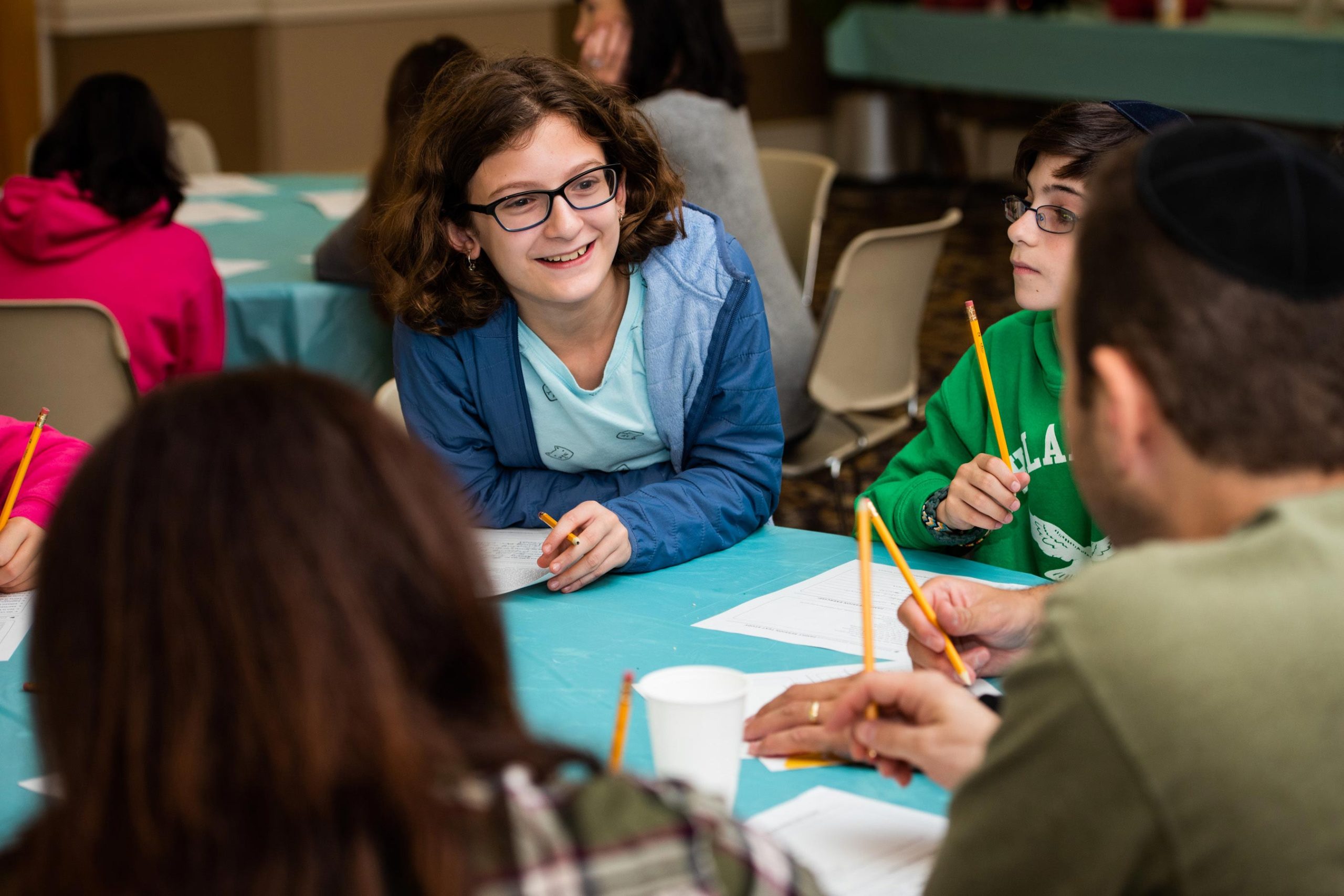
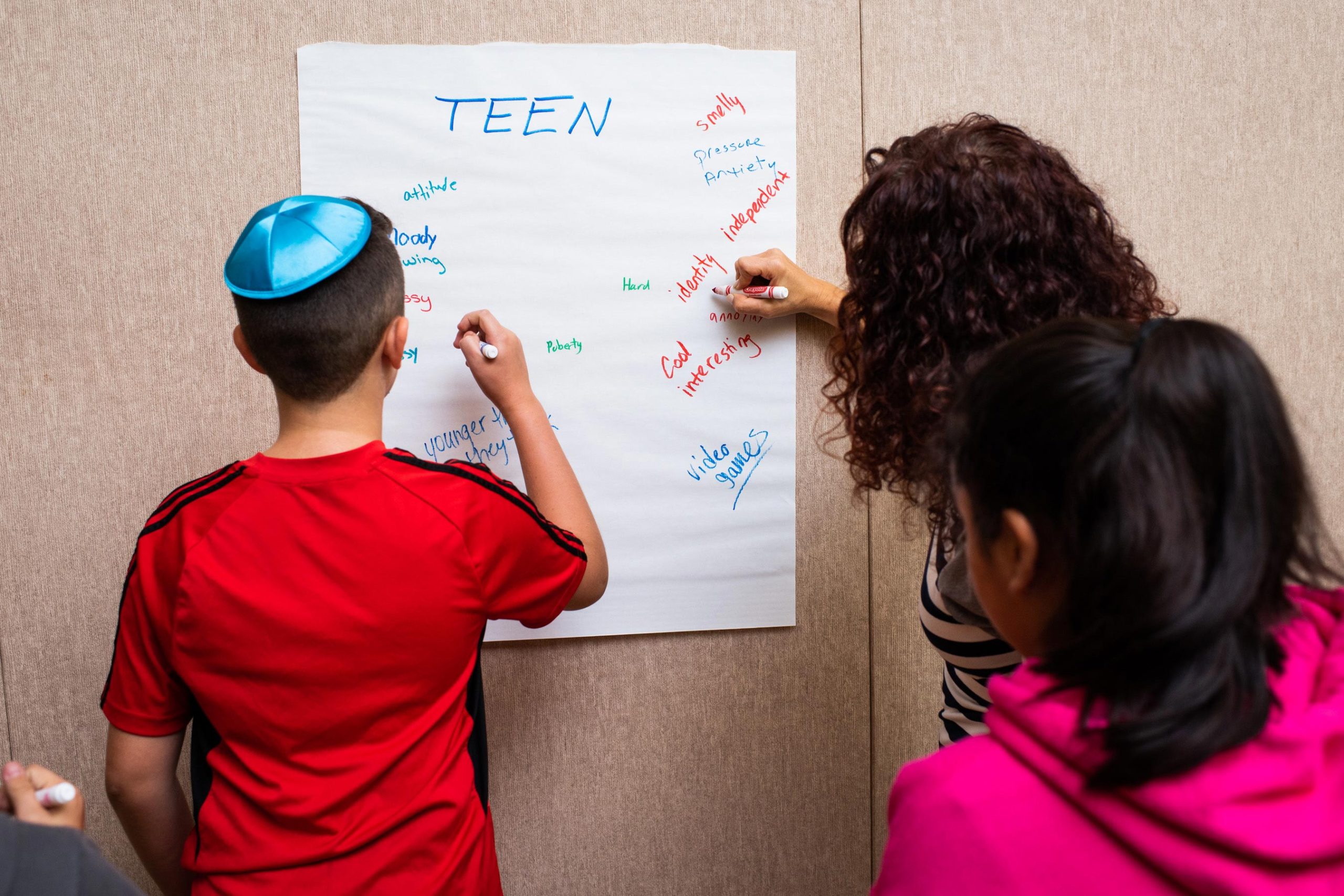
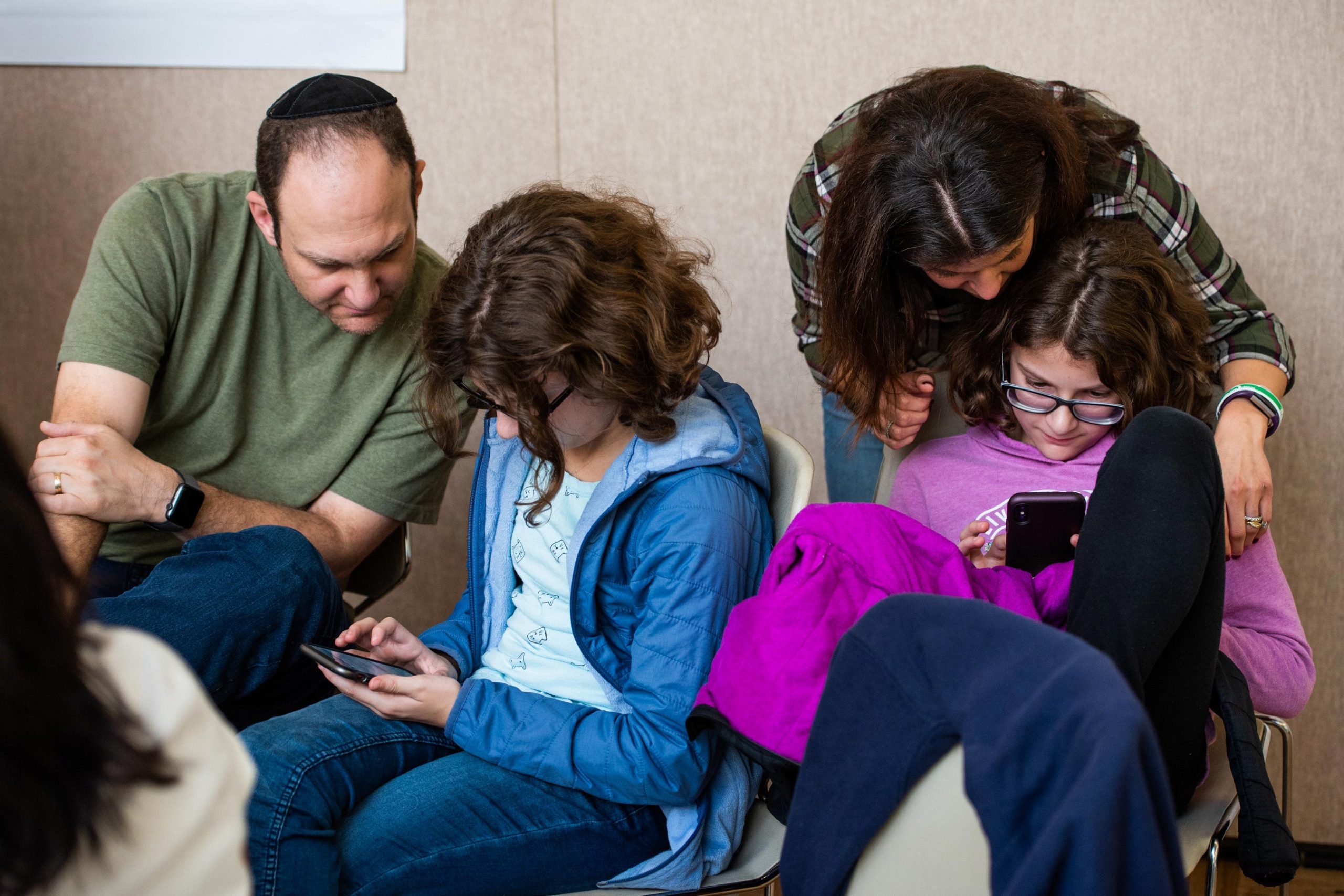
At the start of 2019, with a field-tested curriculum designed by rabbis, social workers, and psychologists, Moving Traditions began doing just that, as the organization presented a program to synagogues that uses their signature model of informal education to address the “social realities” of sixth and seventh graders and their parents.
“Every child develops differently, but there are patterns that sociologists and psychologists have urged educators and parents to pay attention to,” said Rabbi Daniel Brenner, Chief of Education at Moving Traditions. “The period that begins around ages 13-15 is a time where adolescents look more toward their peers for social cues than they do toward any other adult, including their parents,” he said.
Brenner added how essential it is for adolescents to have mentors during the 8th-10th grade years, because those are the times that can present the most opportunity for risk and dangerous behavior amongst teens. They are tuning out adult voices as much as they can—a developmentally appropriate move—and they are under so much pressure both socially and academically.
“But what we also know,” Brenner said, “is that 6th grade, where the vast majority of students are 12 years old, is a moment when kids tend to still be ‘in conversation’ with their parents, and so it offers a window of opportunity to establish good communication skills and support practices—both for children as well as for parents.”
Brenner explained that this age is critical, and may be one of the last stages where it’s possible to have parents and children in the same room conversing with relative ease, free from some of the tensions that develop as kids enter more deeply into the teen years.
“We also know that intimacy between parent and child starts to diminish even in elementary school,” Brenner said, “and that process continues through the 6th grade. Parents are reading less to their kids before bed, parents aren’t necessarily comforting their children after a playground fall, for example, or administering medicine when a child gets a cold. Understandably, parents begin to urge their children to do these things for themselves. But as a parent withdraws from the physical needs and care of their child, some kids who felt coddled might rejoice in their newfound independence, but others begin to grieve, missing the loving touch of their parents.”
Brenner and Meyer explained that in this transitional moment, just before the B’nai Mitzvah, focusing on ‘big issues’ is most profound. For that reason, the Moving Traditions B’nai Mitzvah curriculum centers around questions like: What does it mean to become a teen? How do I navigate being the center of attention? What are the obligations of hosts and guests? How is parenting a teen different then parenting a child? (Many of these questions are also explored on the original Moving Traditions podcast, @13.)
It may seem obvious that these are questions that we should be asking ourselves and our kids as we prepare for such a momentous occasion, and yet, research has shown that at American synagogues today, more often than not the conversation surrounding B’nai Mitzvah is focused largely on logistics—the date, the caterer, the venue—and not necessarily on the substantive and meaningful aspects of the event.
Meyer and Brenner understand this phenomenon as the result of many different factors at work—so many of which are part of a larger conversation about how parenting has changed from 25 or 30 years ago. They cite factors like the professionalization of childhood, the realities of households with two working parents who in so many cases are trying to make ends meet, and daily schedules that are crushing to both kids and adults alike.
But here’s the good news: In their research, Meyer, Brenner and their colleagues at Moving Traditions have also found that families truly want the Jewish community to step in and create experiences that address their needs.
“We are finding that there is definitely an appetite for family education,” Brenner said, “but it has to be designed with parents and preteens in mind for it to actually work.”
When looking at the data that they culled from the first year of the program, Meyer, Brenner and their colleagues found that of the over 900 families surveyed about their experience with the new B’nai Mitzvah curriculum, the majority of parents responded that what they enjoy most about it is just being together with their children. The second aspect most valued by parents surveyed? Being with other parents.
“This tells us a lot about the potential,” Brenner reflected. “If you structure a conversation well, and make sure there’s a well-trained facilitator who can help that conversation hit the right message with the right tone, parents and kids will notice, and be far more inclined to want to continue having those talks in a community setting” he said.
And their theory is bearing out in the numbers, too. In fact, 73% of participating synagogues who ran the program in its first year hosted two or more family sessions in addition to the student-centered learning, and the vast majority did even more, averaging between 2-4 family sessions during the year. Brenner added that through this experience, parents and kids alike begin to see that the Jewish community is a place that can help teens thrive, talk about friendship, and examine unreal expectations.
“Our teen groups [Rosh Hodesh and Shevet] are focused on creating peer community and learning how to be part of helping create community,” Meyer said, “so that teens can do that for themselves moving forward. And the B’nai Mitzvah program is yet another opportunity for creating community—for parents. We are giving parents the chance to see that rather than thinking of B’nai Mitzvah as something that they do for their kids, or to please the grandparents, it’s an event that reinforces and strengthens Jewish community.”
Meyer explained that in creating the B’nai Mitzvah program, Moving Traditions strove to understand which key issues were at work at this moment in history, and what the real-life developmental and historical issues are that come up at this time in the life cycle. Then, there’s the question of how Jewish teachings apply to those issues. In response, Moving Traditions staff created resources and tested them. And central to this work and everything Moving Traditions does, is ensuring that participants from different socioeconomic and cultural backgrounds will find something meaningful and useful and necessary in the sessions they attend.
Perhaps most critical to the program’s success, according to Meyer, is the fact that Moving Traditions prepares clergy and Jewish educators to explore through Jewish teachings the social-emotional and developmental issues that arise in families at this transition from child to teen. (This training is actually the focus of the Covenant Foundation’s funding to Moving Traditions.) The Carol Lowenstein Moving Traditions B’nai Mitzvah Training Institute has been found to be truly valuable by clergy and educators, even those with many years of experience in B’nai Mitzvah preparation, because it connects “real life” issues in adolescence and parenting with Judaism.
“What Judaism provides for those of us that find meaning in it, are moments where we can stop and think about our lives and be intentional about how we’re living,” Meyer said.
“The B’nai Mitzvah is a liminal moment in Jewish life,” she added. “Children are becoming teens, and in some cases, they are preparing to leave the Jewish fold. How do we create experiences that will serve them and their families and institutions?”
Meyer answered her own question. “First,” she said, “we start with reframing the ritual as one that’s most centrally about becoming a teenager, and helping parents think about the social and emotional realities of that,” she continued. “And that’s really key, today especially, as our society becomes more and more atomized, and we all struggle to find meaning.”
“Through this experience, of talking and learning together, we’re hoping to provide families with an experience that is incredibly relevant to them.”
By Adina Kay-Gross, for The Covenant Foundation
More to Consider
- Moving Traditions’ New B’nai Mitzvah Traditions (Jewish Journal)
- New Program Aims to Get B’nai Mitzvah Teens to Open Up (Jewish Journal)
- Meaning Making for Teens: An Interview with Deborah Meyer (Sight Line, Volume 5)
- How a New Model of Family Education Places the Parent-Child Relationship at the Center of the B’nai Mitzvah Experience (eJewish Philanthropy, March 18, 2019)
- Thinking Differently About B’nai Mitzvah (eJewish Philanthropy, October 30, 2018)
- Baboons, Bonobos, Bar Mitzvah Boys (Rabbi Daniel Brenner's ELI Talk)
His husband was going to be away for the weekend, so Brian Rubin-Sowers was searching for something to do with his 3-year-old and 6-month-old daughters. Having a theater background, Rubin-Sowers was intrigued by the email he received from Congregation Beit Simchat Torah (CBST) about an immersive theatrical experience for young children and their grownups. He decided to check it out. What he discovered that weekend, he says, was simply “magical.”
The new program from CBST, New York City’s LGBTQ synagogue, is called Aggadah Adventures. CBST first piloted an Adventure – the story of Noah in an experience titled Under the Rainbow – in June 2018 over Pride weekend. This year, supported by The Covenant Foundation, CBST created and held two new Adventures: Purim-themed Behind the Mask and Passover-themed Down the Nile. Both Adventures were filled to capacity, serving over 100 participants over three engagements for each one.
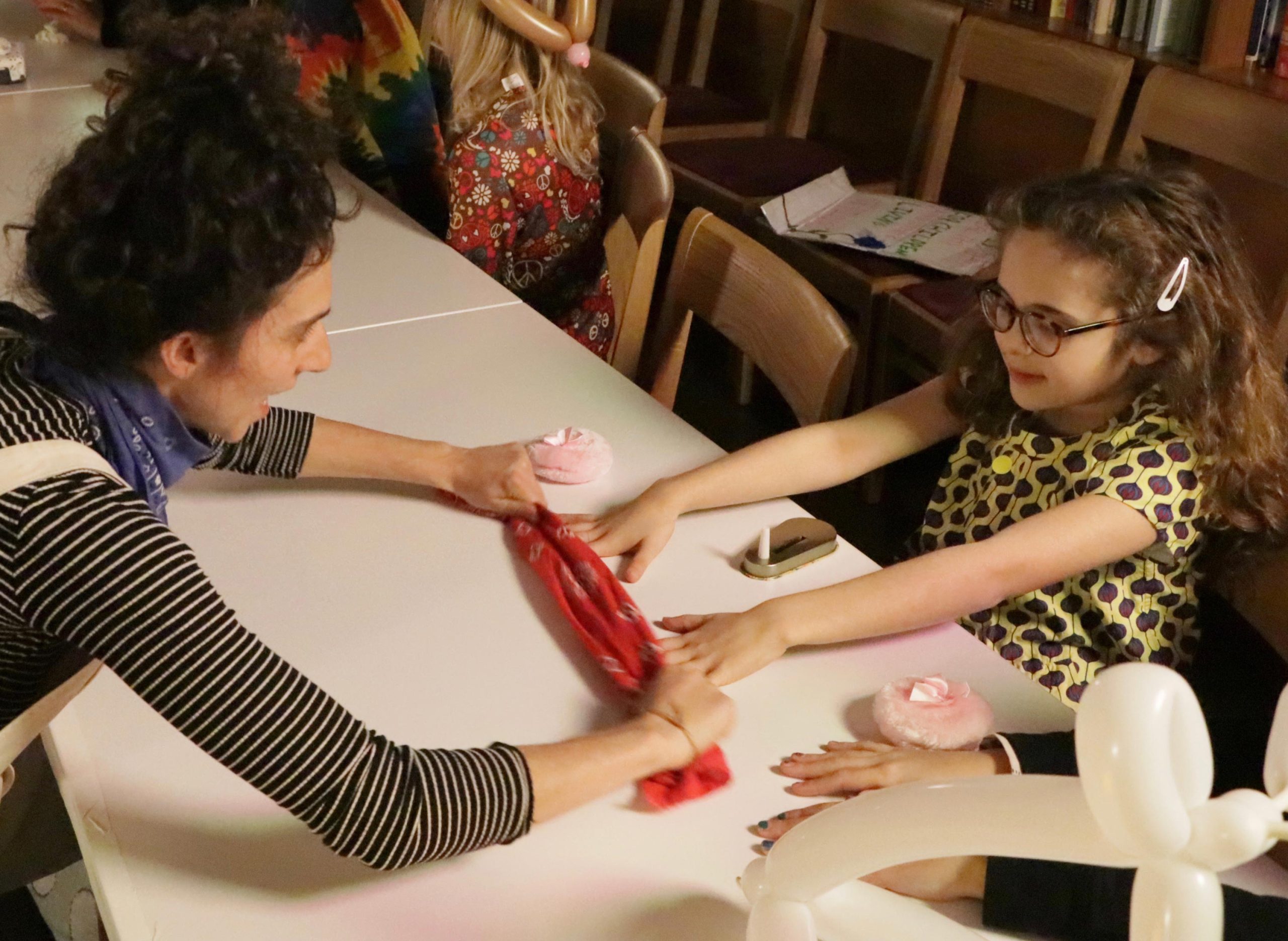
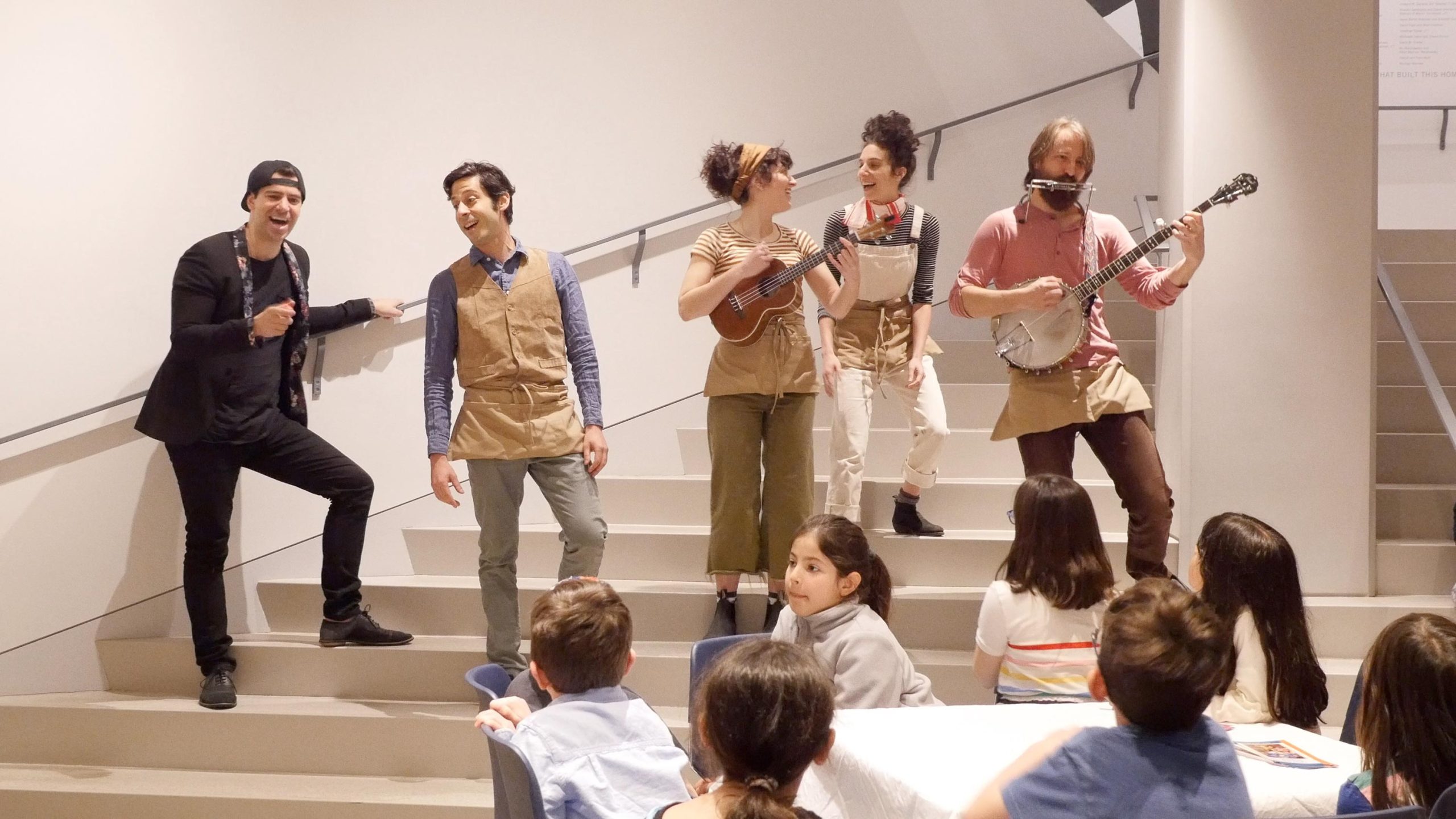
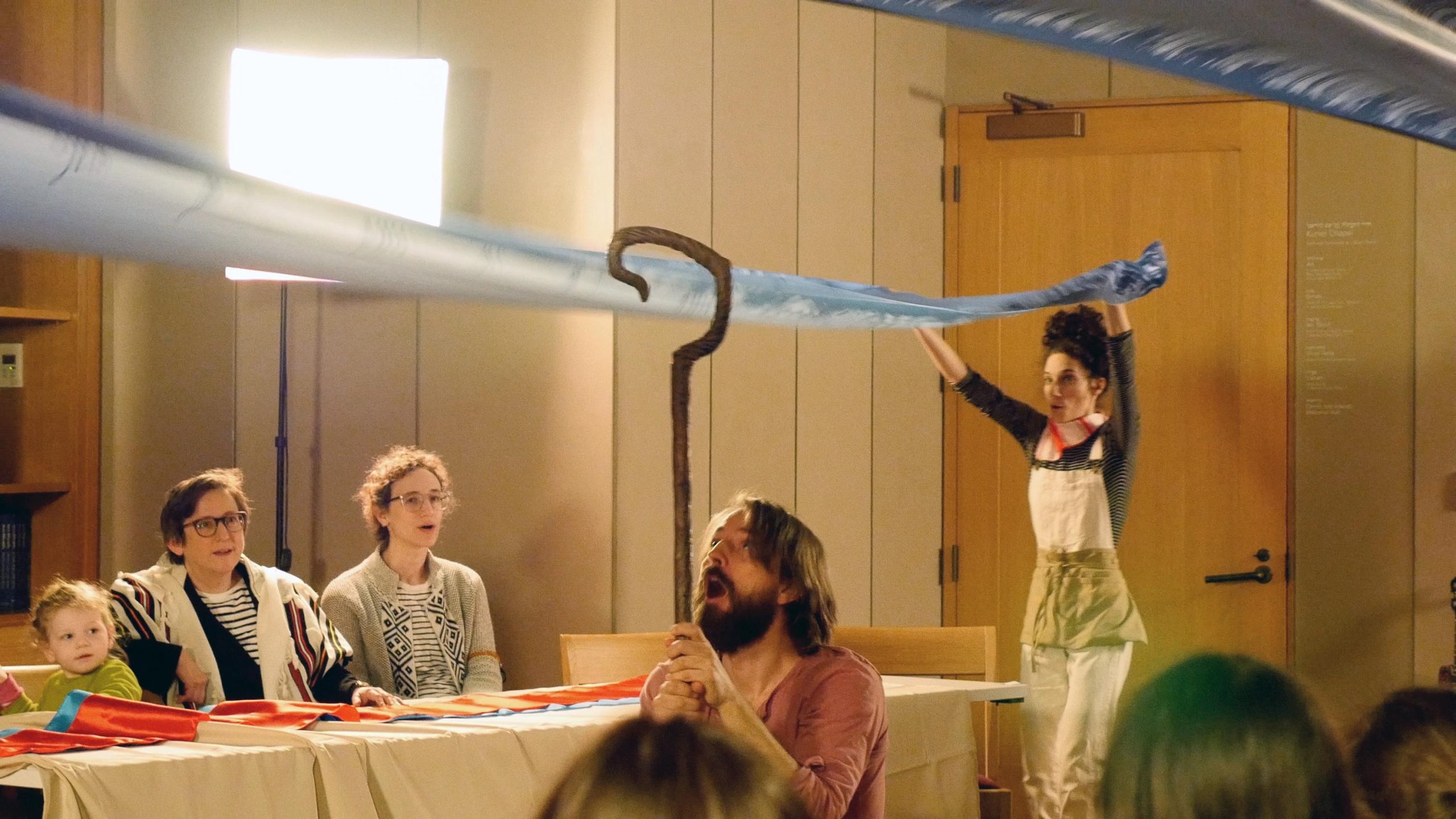
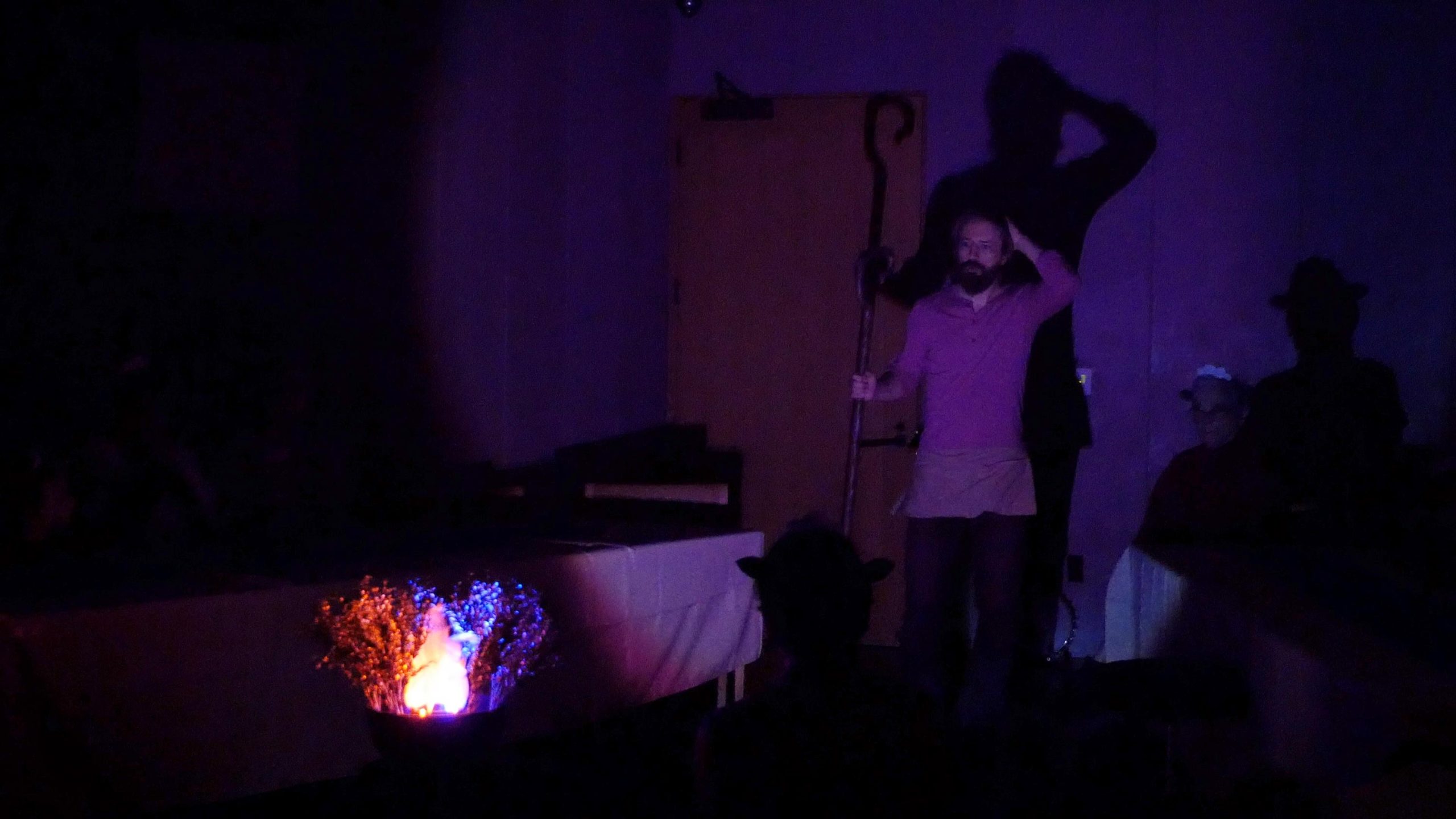
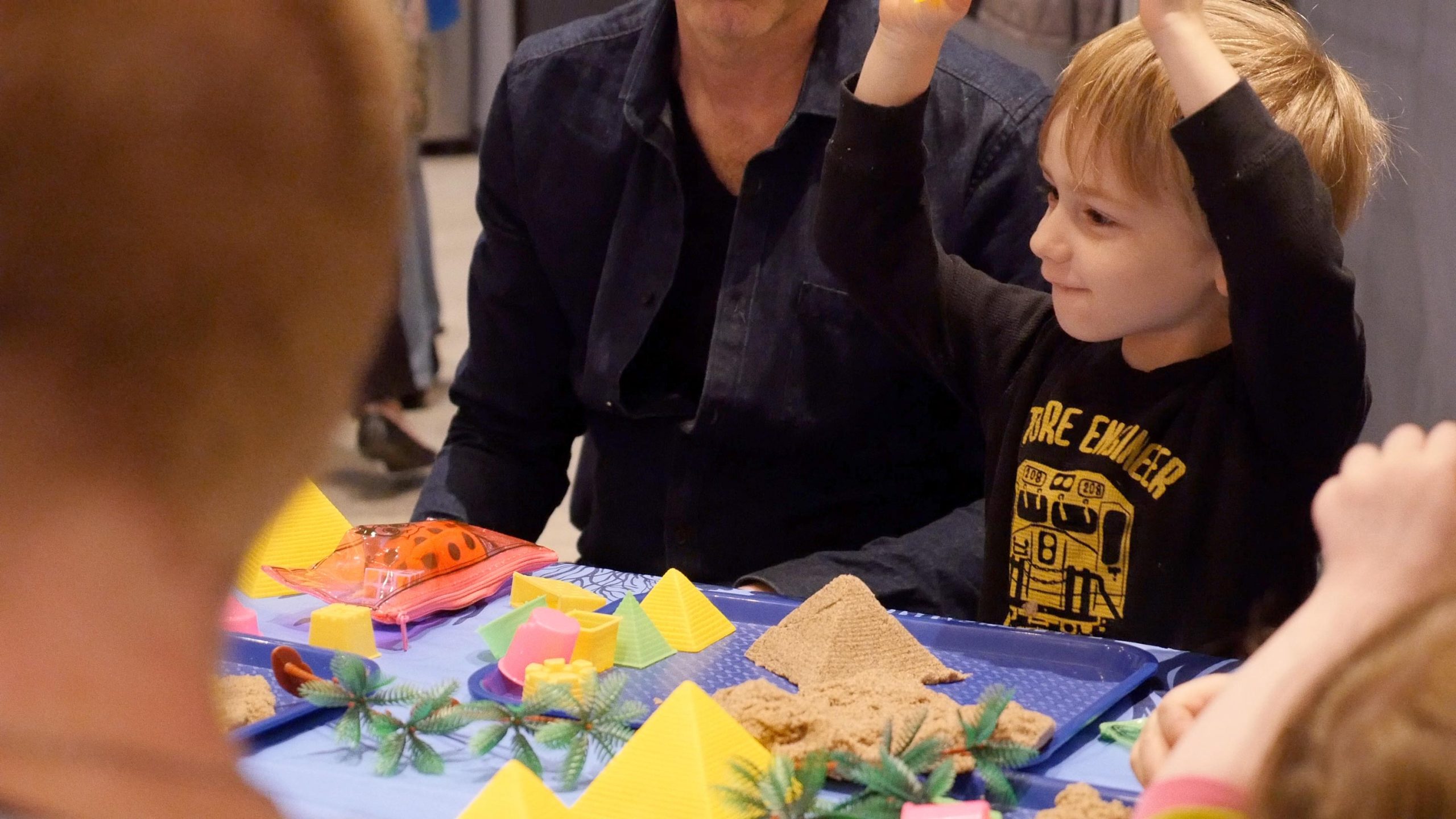

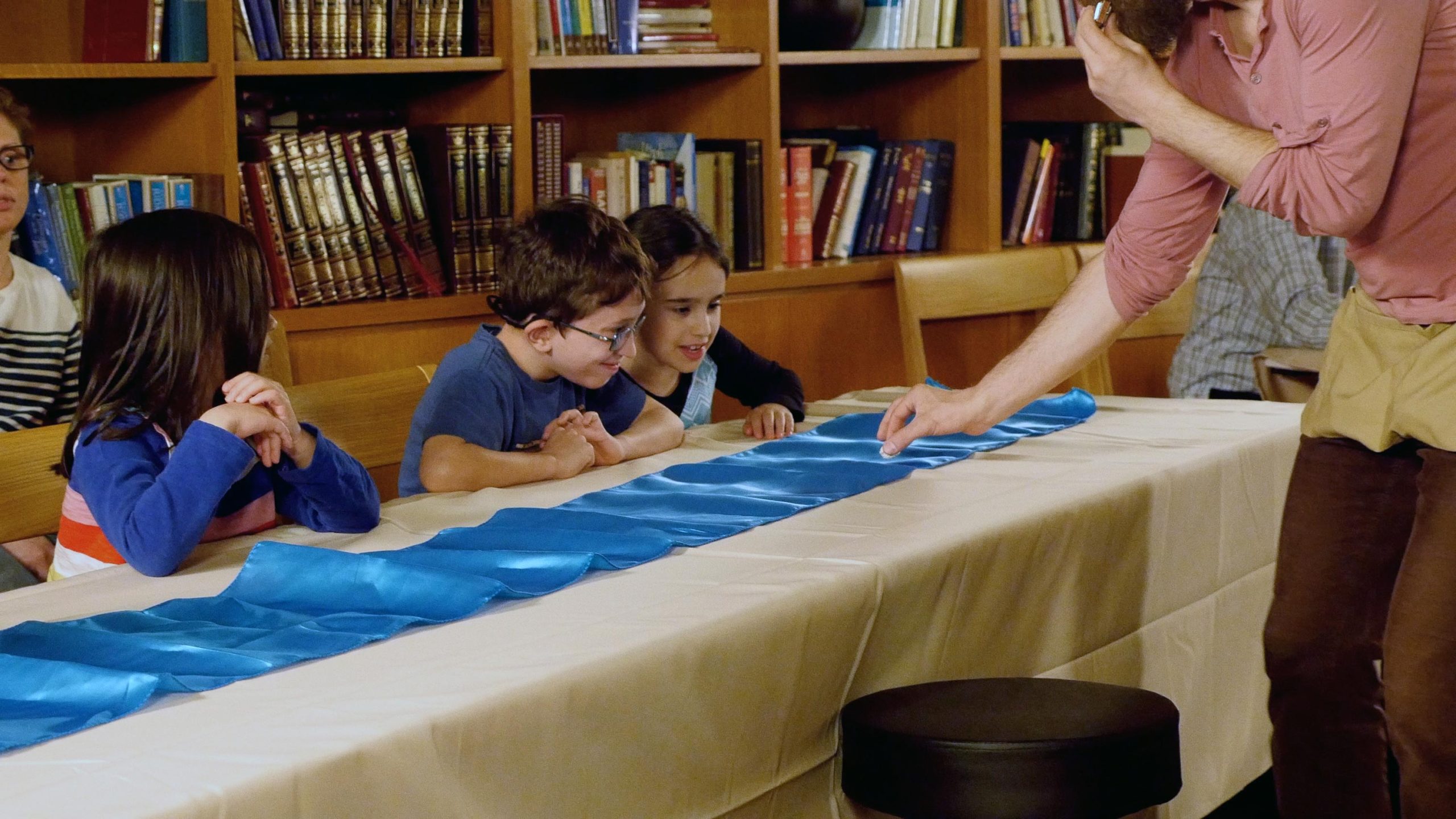

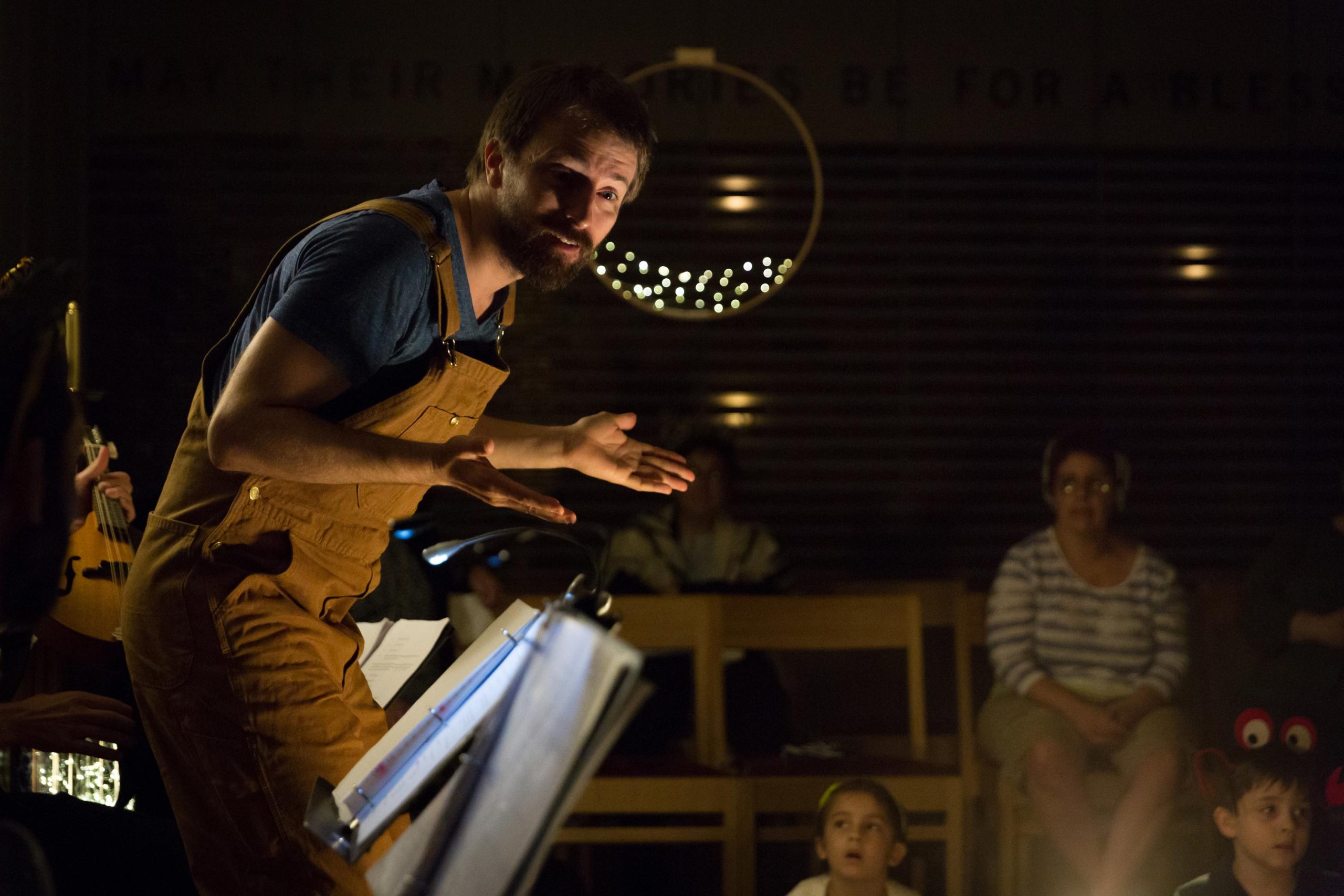
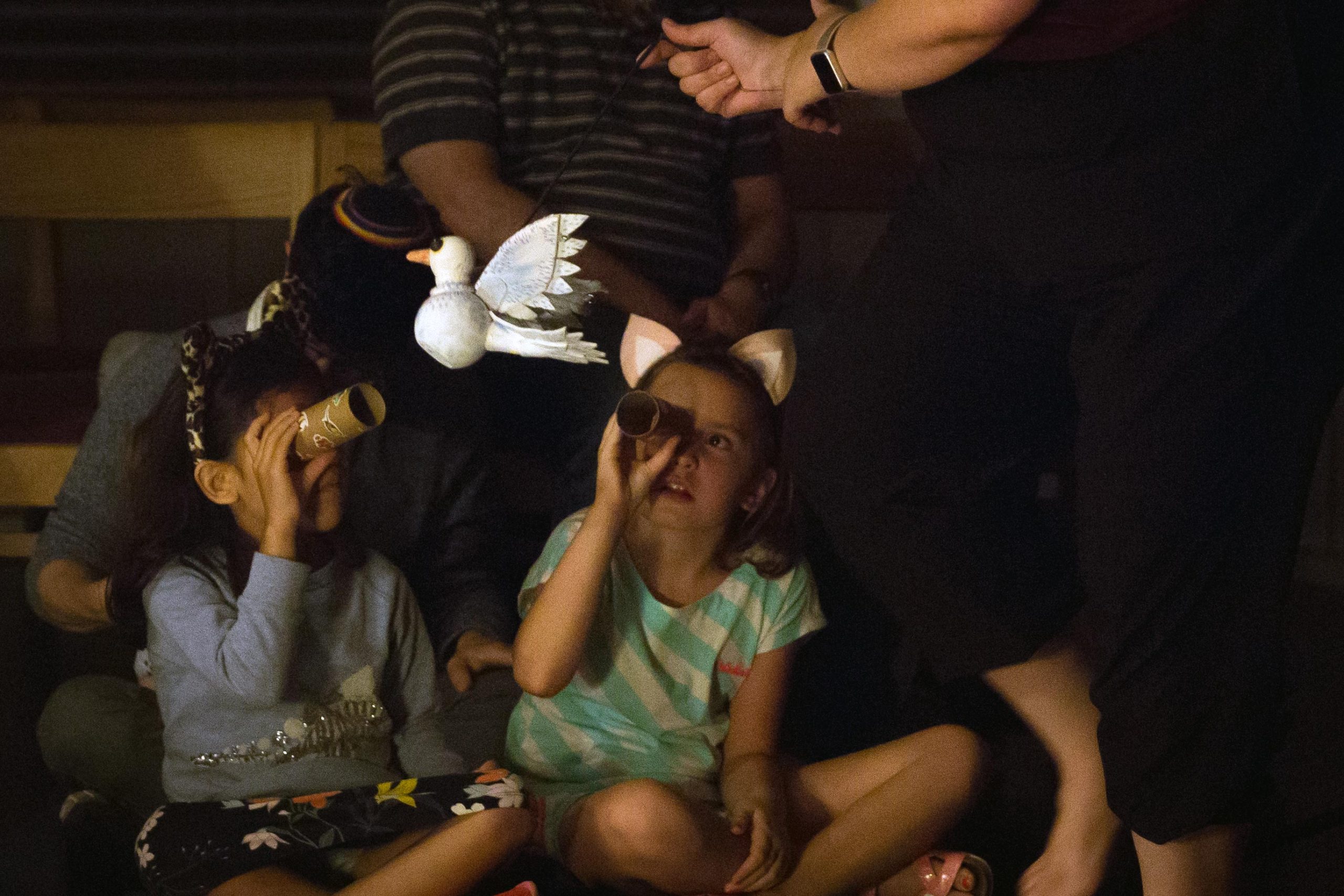
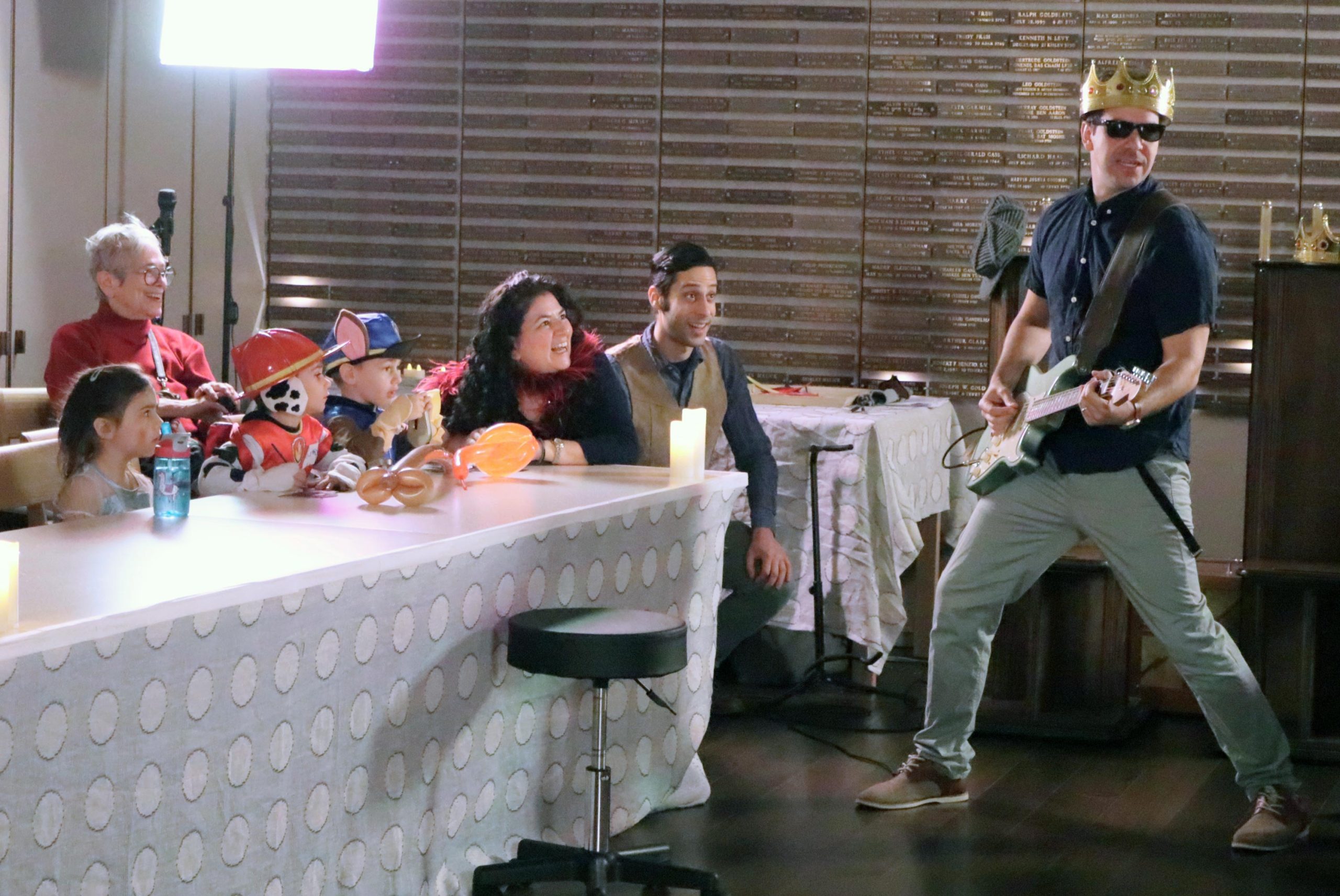
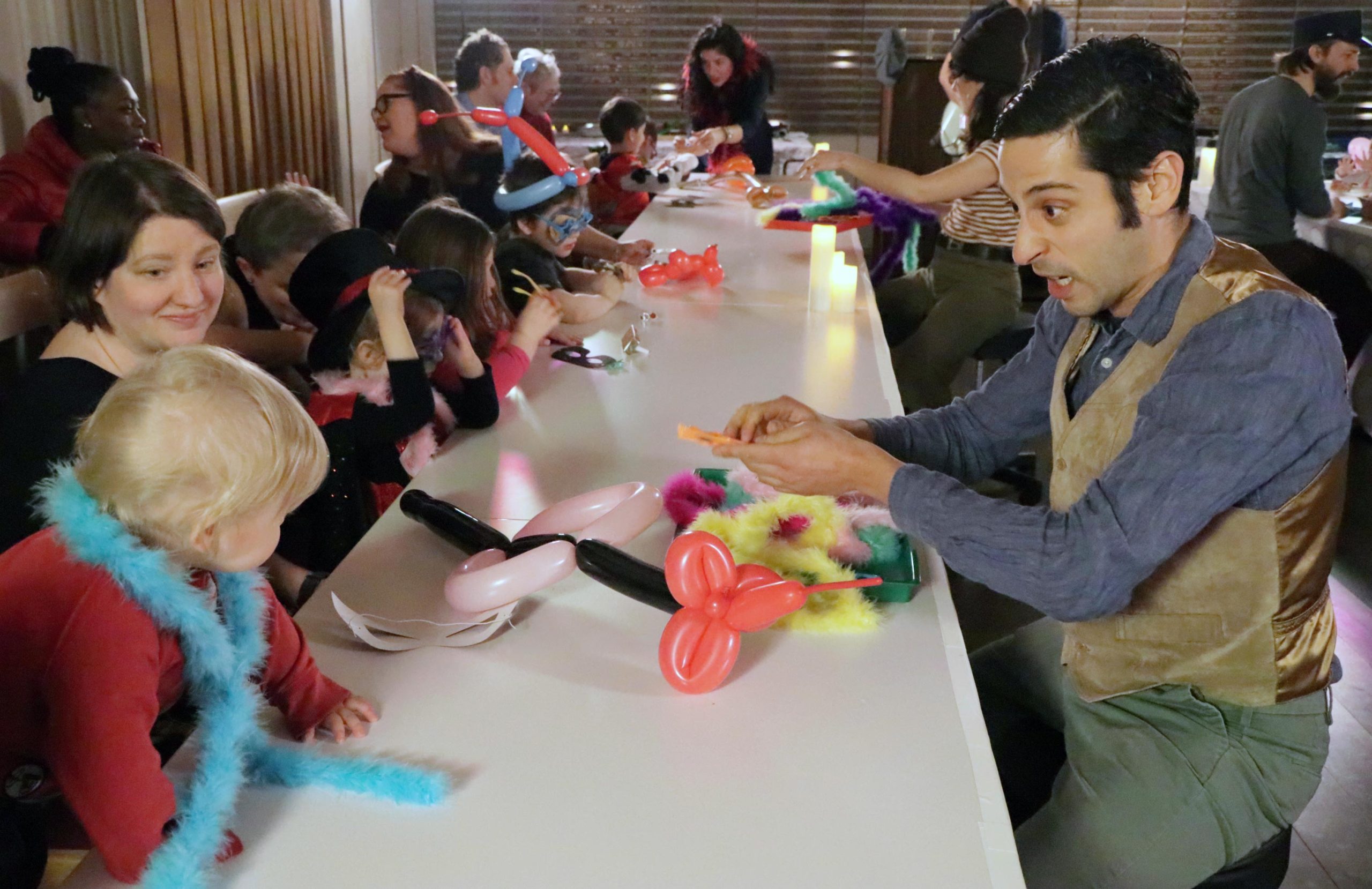
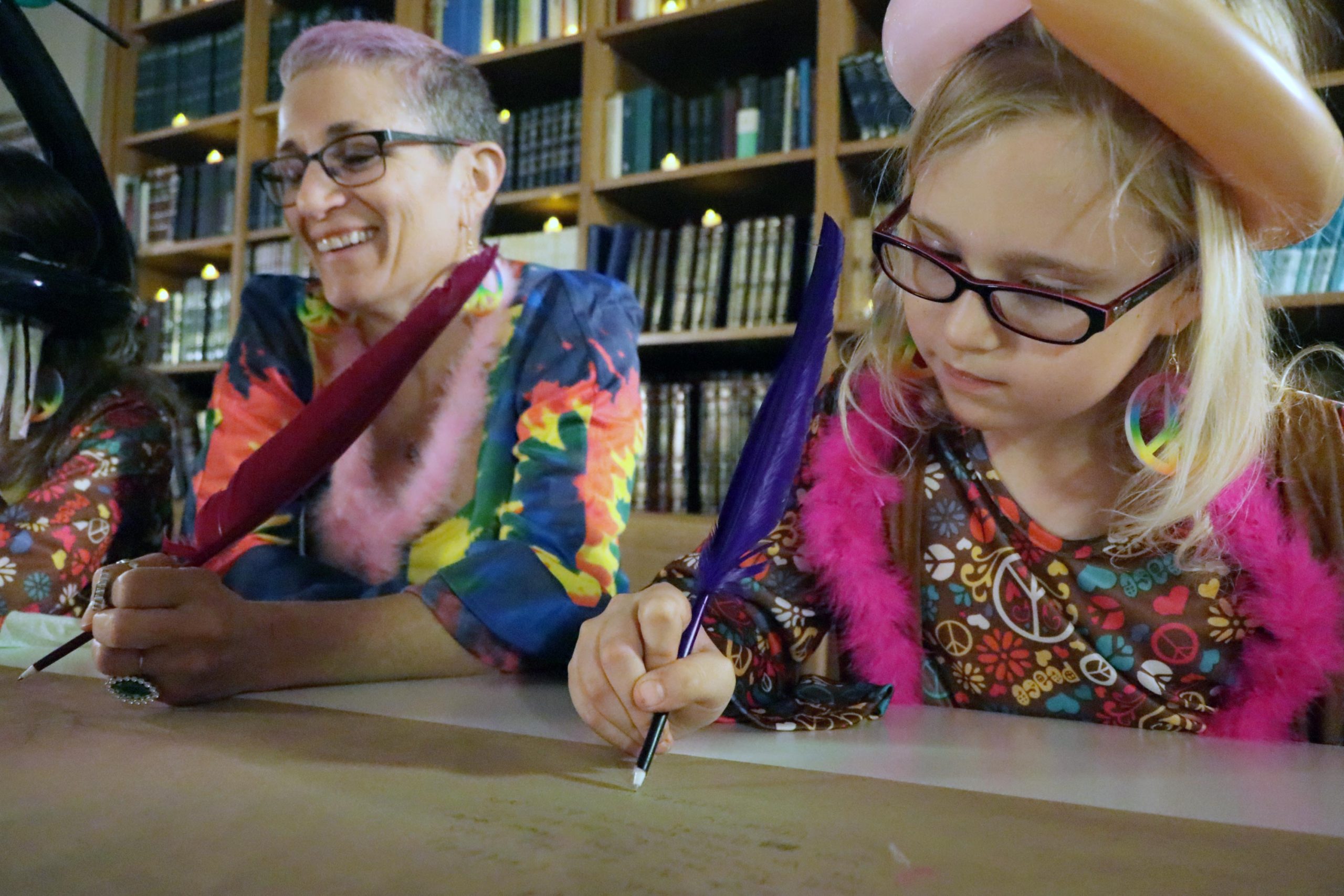
When CBST was founded in 1973 as one of the first gay synagogues in the United States, the demographic reality of the community meant that its founders did not see the need for family and children’s programming. Spurred by progressive legislation in more recent years, expanded families-by-choice options, and a dramatically increasing number of LGBTQ individuals and couples choosing to have children, families with young children now represent over 20% of CBST’s 600 member households. To better serve this rapidly growing demographic, in 1994 spiritual leader Rabbi Sharon Kleinbaum created the first monthly “tot Shabbat” program. Then, in 1999 CBST established a Hebrew School that, over the next 10 years, grew into the robust Limmud B’Shabbat education program for children ages six to 18 and the bi-monthly Alef-Bet Shabbat service for babies, toddlers, and preschoolers. However, more recently, the leadership of the synagogue felt that there was still a gap in CBST’s early childhood programming.
Rabbi Yael Rapport, Assistant Rabbi at CBST and Project Director for Aggadah Adventures, was looking for a more immersive and experiential program that parents could have a genuine stake in, and experience alongside their children rather than just watching from a distance. When Jonathan Shmidt Chapman, who serves as the Executive Director of Theatre for Young Audiences/USA and now also serves as Project Director for Aggadah Adventures, asked her what it might be like for families to walk into Noah’s ark in a Jewish Theatre for the Very Young (TVY) experience, Rabbi Rapport knew they were onto something.
“No one else in the congregational world is doing anything like this,” said Rabbi Rapport.
The international theatre model of TVY has become increasingly popular over the past decade as a powerful way to convey narrative in an age-appropriate way to children under five and their families. Drawing on many special TVY techniques – including immersive storytelling, multi-sensory elements, 360-degree learning environment, and small participant size to maximize interaction between artist-educators and participants – Aggadah Adventures has emerged as an exciting program to connect CBST families with young children to Jewish stories, holidays, learning, and wisdom.
“The key words for us were family engagement,” Rabbi Rapport explained. “But we also want to be creating very deep roots within a child’s experience and memory about Jewish story, ritual, and community, and it didn't make sense to do that without the grownups who came with the kids.”
Aggadah Adventures is anchored by CBST’s commitment to using the arts and music as vehicles for connection to Judaism. The medium of theater adds to the depth of Jewish learning that participants can experience. Rabbi Rapport explained how Aggadah Adventures has the profound ability to take participants to a higher level and unlock Jewish stories in the sense of both pshat (surface-level, literal meaning) and drash (deeper, interpreted meaning).
“Every single time [children attend] they will be transformed, and adults will be transformed by watching their children be transformed,” said Rabbi Rapport.
This learning and transformation begins the moment kids and families arrive in the lobby. Before even entering into CBST’s chapel – the Aggadah Adventures performance space – children are given a role in the story and are invited with their families to participate in a hands-on activity with a direct connection to the upcoming experience. For the Purim Adventure, children made masks, and for Passover, they built pyramids using kinetic sand. Following the activity, the artist-educators break into a welcoming song and lead everyone into the chapel, with families moving in a troubadour-like procession. When participants enter the chapel, they find an intentionally designed, completely immersive environment.
“I have a background in theater so I’m always wondering, ‘What is that first moment?’” said Beth Slepian, who has been going to CBST’s High Holiday services for 15 years and has attended all three Aggadah Adventures with her 2-year-old son. “You have to get people right away, or you might not get them at all. There’s a welcoming vibe to this program and the music captured my son’s attention immediately.”
The magic continues inside the chapel as the story begins to unfold all around the participants. In the Noah’s ark Adventure, the room was transformed to make families feel as if they were on the ark, complete with water sounds, fish swimming by illuminated portholes, and even a misty ocean breeze. There was consensus among parents that this all-encompassing, multi-sensory experience is what really stands out about the program. Children don’t just watch the performance unfold at a distance in front of them. The artist-educators are constantly coming up to them with various interactive elements. The high ratio of one artist-educator to every three or four children allows for a high frequency of interactivity in which the performers can reach every child and form a deep connection.
“The kids can have a very individual experience,” Slepian said. “They don’t get lost in the numbers. You feel like you’re a part of this story. There’s something about the smaller ratio [of artist-educators to children] and the level of artistry that brings it to life in a way that you’re not left out, you’re in it the whole time. It’s engaging for both the kids and the parents.”
The level of artistry was also mentioned frequently as a standout feature of Aggadah Adventures. Chapman, who directs and adapts the stories, and writes the original music for each Adventure along with composer Ty Citerman, noted that the “care and attention to detail we’re giving the development of the program really shows when parents come in.”
Jennifer Johnson, whose twin sons were 6-years-old when they attended all three Aggadah Adventures as part of their regular participation in the Limmud B’Shabbat program, recognized how this level of artistry makes Aggadah Adventures a completely different experience from anything she’s done before. “I’ve never seen something so engaging and creative and immersive,” she said. “There’s nothing like it in any Jewish early childhood setting. It’s professional caliber. You’re expecting a little children's theater, and then you think, ‘Wow, what did I just walk into?’”
Emerging from this high caliber of immersive storytelling is the uniquely powerful and long-term impact the program is having on young learners. Rabbi Rapport shared that their team has received dozens of emails from parents saying how, even months later, their children are retelling and recreating the stories at home.
For Rubin-Sowers, seeing how much his daughter learned was a highlight of Aggadah Adventures. “She continued to talk about it after the fact, and would tell people the Purim story and how Haman wasn’t nice to the Jews,” he said.
Beyond making Jewish stories exciting and accessible for children and families, Aggadah Adventures has emerged as a prime space for participants to build community. Rabbi Rapport pointed out that the pre-show activities, which provide a framework for grown-ups to chat casually while their children play, are actually a very “sneaky” community-building exercise. This opportunity for community-building is all the more important for LGBTQ families, who can often feel very isolated as a minority within a minority in Jewish spaces, Rabbi Rapport explained.
“Everyone feels comfortable, welcome, and safe,” Johnson said. “You are there as who you are, fully present. It’s so enveloping, it creates that sense of community, even if you don’t know who’s sitting next to you.”
In this safe space, Johnson felt that both of her sons, one of whom is autistic, could learn and thrive: “My kids sat and interacted and engaged and answered questions through the whole thing, to the point that I literally cried. It’s all the best of what CBST does: creativity with religion, being sensitive to what everyone needs, and professional level.”
Aggadah Adventures is also acting as a force for community-building by serving as the “entry point” to engagement at CBST. Despite living in Brooklyn, Rubin-Sowers and his husband felt that Aggadah Adventures reconfirmed how CBST is their home, and they have since reinstated their synagogue membership. Rubins-Sowers says they will keep attending Aggadah Adventures and also plan to bring their daughters to the Alef-Bet Shabbat service in the fall. Several other families have joined the synagogue as members after participating in Aggadah Adventures and are now attending tot Shabbat and more at CBST.
On the other end of the spectrum are families who remember a time in the '70s and '80s when LGBTQ Jewish experiences largely didn’t involve children, due to the many societal barriers that kept LGBTQ individuals and families from child-rearing. Rabbi Rapport shared that one family who are longtime members of CBST distinctly remember feeling resigned and disappointed. But now, she attested, this same family is witness to the evolution of what an LGBTQ synagogue looks like today, with innovative, cutting edge programs geared specifically toward tiny babies and the families that surround them, and for very young kids who think this is normal, and that this is just what Jewish life looks like.
“It was really moving to hear from that family,” Rabbi Rapport said. “They have children now and they have seen this program. And it’s nothing short of miraculous.”
By Yonah Kirschner, for The Covenant Foundation
More to Consider
- 7 Ways Straight Jews Can Become Better LGBTQ Allies (The Forward, June 2018)
- Baby Theater Comes of Age (American Theater, September 2010)
- Changing Lives, Making History: Congregation Beit Simchat Torah – The First Forty Years (Congregation Beit Simchat Torah, September 2014)
- Coming Out for Purim (Tablet Magazine, February 2013)
- Filled with Wonder: 5 Attributes of Quality Theatre for the Very Young (Americans for the Arts Artsblog, March 2013)
- Forty Years of ‘Making History’ at CBST (The Jewish Week, October 2014)
- Start ’Em Early: Theatre for the Very Young Brings in New Audiences (American Theater, May 2016)
- Stonewall at 50: Jewish LGTBQ Activists in NYC Reflect on How Life Has Changed for the Community (Haaretz, June 2019)
- The Impact of Baby Theatre (Spellbound Theater, October 2015)
- The Young Audience: Exploring and Enhancing Children's Experiences of Theatre (Trentham Books, September 2010)
- Theatre for the Very Young: Varied and Complex (Goethe Institute, June 2016)
- Theatre for Babies (The New Yorker, April 2016)
- Theatre for Young Audiences: A Critical Handbook (Trentham Books, March 2013)
Dear Reader,
The following interactive study guide is designed to help you maximize your understanding of Deborah Lipstadt’s book, Antisemitism: Here and Now, and to personalize your reading experience. It can also be used by facilitators and educators to structure conversations on antisemitism today. The guide contains a chapter-by-chapter review in the form of a salient quote and a set of three questions for each letter in a series. The questions are there to alert readers to the central themes of each letter grouping, to invite reflection on one’s own experiences, and to engage in a mental debate and discussion with the author. There are no answers given; the questions are either designed to draw out the opinion of individual readers or involve a basic comprehension of the content.
This section is followed by a brief interview with the author to get to know a little bit more about Deborah Lipstadt and what inspired her to devote a book to this topic. The guide also includes seven case studies that a teacher, Hillel leader, board president, or book club moderator may wish to dissect with a group and analyze. The case studies are all composites of real-life situations. Walking through them carefully can provide participants an opportunity to think about how to respond when encountering parallel situations in their own lives. Lastly, the guide contains several group exercises to provoke conversations about antisemitism, identity, and diversity, as well as an online resource section with links to other books and to organizations fighting antisemitism. Each section of the guide begins with a quote from the Jewish philosopher Martin Buber (1878-1965) to put these critical conversations within the context of human relationships.
Antisemitism: Here and Now
A Chapter-by-Chapter Study Guide
“The real struggle is not between East and West, or capitalism and communism, but between education and propaganda.”
Martin Buber, I and Thou
A Note to the Reader:
“ …the existence of prejudice in any of its forms is a threat to all those who value an inclusive, democratic, and multicultural society…Antisemitism flourishes in a society that is intolerant of others, be they immigrants or racial and religious minorities. When expressions of contempt for one group become normative, it is virtually inevitable that similar hatred will be directed at other groups.” [page xi]
- Lipstadt opens the book with the observation “This has been a challenging project.” For a historian of the Holocaust, why would a book on antisemitism be more difficult to write than one on the Shoah?
- According to Lipstadt, why shouldn’t a conversation on antisemitism be driven by either increasing or decreasing numbers of antisemitic acts?
- What is an “elastic” view of antisemitism?
I. Antisemitism: A Conversation
Letter #1: The Perplexed
“ I feel comfortable as a Jew, except maybe when Israel is the topic of discussion.” [page 4]
- Why is Abigail, a Jewish college student, hesitant and confused in this first letter to her professor?
- Abigail cites the canard that Jews must be in some way responsible for antisemitism since it has persisted for so long. As you read the book, variations of this myth will come up multiple times. How does Lipstadt confront it?
- Joe, Lipstadt’s fictional, non-Jewish university colleague, also struggles with the rise of hate generally and the stubbornness of antisemitism in society. What does he not fully understand?
Letter #2: A Delusion
“ It is hard, if not impossible, to explain something that is essentially irrational, delusional, and absurd.” [page 7]
- How does antisemitism fit into the context of a conspiracy theory?
- What does a “self-sealing quality” mean and how does antisemitism have this feature?
- In this chapter, we come upon the first of several jokes that Lipstadt shares with her readers in the course of the book. There have been several books written on the relationship of Jews to humor - making jokes as a way to cope with suffering. In Man’s Search for Meaning, Viktor E. Frankl writes of his concentration camp experience: “There were songs, poems, jokes, some with underlying satire regarding the camp. All were meant to help us forget, and they did help.” Do you think there is a relationship between being Jewish and being funny?
Letter #3: A Definition
“ If you cannot define something, you cannot address it or fight it.” [page 15]
- Abigail asks Lipstadt “Can someone be an unintentional antisemite?” Based on Lipstadt’s response, what do you think?
- The expression attributed to the philosopher Isaiah Berlin that “an antisemite is someone who hates Jews more than is absolutely necessary” is itself perplexing. What does Berlin mean by this?
- Consider two formal definitions of antisemitism that Lipstadt shares in this letter. What differences do you detect between them? Which resonates more with you and why?
“A certain perception of Jews, which may be expressed as hatred towards Jews. Rhetorical and physical manifestations of antisemitism are directed toward Jewish or non-Jewish individuals and/or their property, toward Jewish community institutions and religious facilities.” [emphasis added] [page 15]
International Holocaust Remembrance Alliance
“A persisting latent structure of hostile belief towards Jews as a collectivity manifested in individuals as attitudes, and in culture as myth, ideology, folklore, and imagery, and in actions – social or legal discrimination, political mobilization against Jews, and collective or state violence – which results in and/or is designed to distance, displace, or destroy Jews as Jews.” [emphasis in original] [pages 15-16]
Helen Fein
Letter #4: A Spelling
“Rarely has so much meaning been vested in a hyphen and an uppercase letter.” [page 22]
- Spell-check (and the Oxford English Dictionary) offers only one correct spelling of “antisemitism” and it is not the one Lipstadt uses throughout the book. Why does Lipstadt insist on using one that is all lowercase and without a hyphen?
- There is an important subcontext for the spelling of “antisemitism” that Lipstadt shares with Abigail and Joe. What are the three faulty assumptions behind the word “Semitic” that Lipstadt points out?
- In “Antisemitism: No Hyphen” from Why?: Explaining the Holocaust, Peter Hayes writes that Wilhelm Marr, who created the word antisemitism, wanted a term that was “an abstract, pseudoscientific euphemism” that would
- differentiate Jews authoritatively from everyone else,
- root their difference in their very nature and thought processes, and thus
- assert that opposition to Jews was not a mere prejudice, but a response to a demonstrable reality that had to be dealt with politically.
What does Hayes mean by “not a mere prejudice” but something bigger than that?
Did it work? Can you think of other linguistic examples where a euphemism not only described or manipulated a condition but actually was responsible for perpetuating a falsehood?
II. A Taxonomy of the Antisemite
Letter #1: The Extremist: From the Streets to the Internet
“ …easy ahistorical analogies to the Holocaust and Nazism cheapen the genocidal actions of the Germans and often create an unwarranted angst among people today.” [page 30]
- Abigail wants to understand what the uptick in antisemitic incidents means, while finding a way to respond to friends who believe that “all the concerns about antisemitism today are overblown.” What would you say to her friends?
- Lipstadt offers “coded” references that can be decoded as antisemitism. Name a few that she mentions. How is antisemitism both similar to and different from other forms of antisemitism?
- Extremists, in Lipstadt’s portrait, “tend to proliferate during times when there is populist resentment against what is regarded as an ‘elite’ class of people – usually highly educated men and women with liberal political and social views.” If that is the case, why are we seeing a resurgence of antisemitism now?
Letter #2: Beyond the Extremist
“There are many antisemites who would never dream of even using offensive rhetoric.” [page 43]
- “Funny, you don’t look like an antisemite.” Lipstadt discusses those who, as part of their strategy, make a point of not “looking” like antisemites. What’s the strategy of such white supremacists?
- The subtlety of this type of antisemitism can make it much harder to fight. Can you think of a personal example of this kind of encounter with antisemitism?
- How can one combat subtle forms of antisemitism that often fly under the radar?
Letter #3: Antisemitic Enablers
“ On some level, I find the utilitarian antisemite – the pot-stirrer who enables haters – to be more reprehensible than the ideologue who openly acknowledges his antisemitism. Because he is not affiliated with any extremist group, the utilitarian stands a better chance of both plausibly denying his antisemitism and influencing an audience that would never listen to an extremist. The unapologetic hater is, at least, honest about his feelings. With him, we know what we are up against.” [page 55]
- Lipstadt here distinguishes between an ideological antisemite and a utilitarian one. What is the difference between them? Do you think it should make a difference in how we respond to these different expressions of antisemitism?
- In a marginal note, Lipstadt contends that “White supremacists claim that ‘whites’ face a looming genocide. They, not the minority groups they attack, are the true victims.” Why do they see themselves as victims and how does this move the light away from their hate crimes?
- Lipstadt quotes journalist Franklin Foer that “Philosemites are antisemites who like Jews.” What does this expression mean?
Letter #4: The Dinner Party Antisemite
“ Someone who feels the need to boast that he has Jewish (or African-American) friends is more often than not someone who has problems with Jews (or blacks) who aren’t his friends.” [page 70]
- Joe describes the “gentleman’s antisemitism” he experienced among his parents’ friends during his childhood. Ask your own parents or grandparents to share similar experiences: college quotas, restricted golf club memberships for Jews, or professional roadblocks.
- Lipstadt claims that some people deny that a comment is antisemitic because it is made by a friend or family member. Can you think of a case in your own life when this has happened? If you had the chance to redo such an encounter, what might you say?
- “If you make bigoted statements about Jews, you are antisemitic, regardless of how many Jews you are related to.” Do you agree or disagree? Justify your answer.
Letter #5: The Clueless Antisemite
“The clueless antisemite is an otherwise nice and well-meaning person who is completely unaware that she has internalized antisemitic stereotypes and is perpetuating them.” [pages 77-78]
- Abigail is upset because a friend assumed she’d love a sale or bargain because she is Jewish. She wants a clever retort but a thoughtful response might prove more helpful. What might you say in a similar situation?
- Stereotype threats happen when groups internalize the stereotypes others associate with them. Jews can be just as guilty of perpetuating antisemitism as non-Jews by using stereotypes about Jews. “When groups that have been subjected to discrimination and prejudice denigrate themselves, they do more than internalize a negative self-perception. They give license to others to do likewise,” contends Lipstadt. We often take offense when our group is the subject of jokes made by members of other groups, but not when someone from within our group makes a joke about Jews. Is this self-denigration healthy or itself a problem? Are jokes that are subtly – and not so subtly – antisemitic acceptable if told by Jews? Can we say things that others can’t? Or does it suggest that we, even subtly, agree with what is being suggested by the joke?
- How might the taxonomy of antisemites, as outlined by Lipstadt in this chapter, help in fighting antisemitism?
III. Contextualizing Antisemitism
Letter #1: A Cognitive Failure?
“…is there any way of educating the haters?” [page 83]
- According to Lipstadt, what is “at the heart of all conspiracy theories”?
- Lipstadt brings in examples of “rational answers to irrational accusations.” Why doesn’t this work as an approach? What does or might work?
- In her discussion of Professor Joy Karega’s support of antisemitic conspiracy theories and theorists, Lipstadt touches on the minefield of black/Jewish relations. Earlier in the book, Lipstadt condemns the competition for victimhood that can take place between minority groups that have both been victims of prejudice. Using personal experience and outside resources, how would you describe black/Jewish relations today? How do you think ruptures between blacks and Jews can be healed?
Letter #2: Delegitimizing Antisemitism: Jews Can’t Be Victims
“ The fact that you have a Jewish heritage does not automatically equip you - or anyone else, for that matter – to know what to say when challenged by someone who minimizes the significance of antisemitism today.” [page 90]
- As this letter begins, Lipstadt boldly writes that “Antisemitism is not in the same category as racism.” Later she writes that “Antisemitism is different in structure, history, and contemporary impact than other forms of racism.” In what ways is antisemitism the same, and in what ways is it different?
- Sometimes Jews can be very sensitive to threats of antisemitism but ironically espouse racism. How might you begin a conversation with someone who behaves this way?
- In an editorial in Science, Jose-Alain Sahel, the chair of the Department of Ophthalmology at the University of Pittsburgh School of Medicine, shared the following observation after the massacre of Jews at Pittsburgh’s Tree of Life Synagogue: “The French philosopher Emmanuel Levinas asserted that looking into the face of one’s fellow invokes the imperative: ‘Thou shalt not kill.’ This sounds naïve and far too simplistic in the face of guns and strongly held prejudices. Yet, is there anything else more meaningful than looking into human faces and listening?” Describe a time you listened very carefully to a victim of racism.
Letter #3: Antisemitism and Racism: The Same Yet Different
“ As the victims of prejudice ourselves, we know from personal experience how important it is to have the support of other communities when we fight prejudice against us.” [page 99]
- Should we, as Abigail suggests, look for commonalities in victimhood, or does doing so diminish the uniqueness of the hate shown towards any particular group identity?
- Lipstadt condemns the “my discrimination is worse than your discrimination” game. But people still play it. In fact, in America, it seems to be more popular than ever. What is harmful about perpetuating this narrative?
- The fact that many American Jews do not experience everyday antisemitism and have achieved a historically unprecedented degree of success in this country has led some to dismiss the significance of antisemitism, especially when it takes place in Europe and other geographically faraway places. What would you say to such a person?
Letter #4: A Time to Panic?
“People who speak of the campus as a ‘hotbed’ of antisemitism overstate the case and are positing something that is at odds with most students’ reality.” [page 110]
- Abigail’s grandparents and their friends bemoan the “explosion of antisemitism” throughout the world today and compare it to 1930s Germany. Do you know people who do this? Do you make these comparisons?
- Why does Lipstadt believe that such comparisons are inaccurate and potentially harmful? Do you agree with her?
- Near the end of this letter, Lipstadt distinguishes between current manifestations of antisemitism in America and in Europe. She believes this requires our attention rather than our panic. What do you think is the difference between the two? Can you cite an example of each?
IV. “Yes, But”: Rationalizing Evil
Letter #1: The Ominous Case of Salman Rushdie
“ Jews, together with other religious and ethnic minorities, have always thrived in societies where freedom of speech and religion have been highly valued. They have blossomed in societies that welcome an array of cultures and beliefs.” [page 117]
- Joe is troubled by what he believes might be a connection between antisemitism and the intolerance and violence of Muslim extremists. Does Lipstadt agree?
- Lipstadt uses the case of life-threatening responses to Salman Rushdie’s book, The Satanic Verses, to highlight the indifference of other artists, politicians, and intellectuals to Muslim extremism. Can you think of other contemporary cases that illustrate this and the broader political forces at play?
- “‘Yes, but’ is the top of the slippery slope of immoral equivalencies,” states Lipstadt at the end of her letter. What does she mean by this and how does it apply to antisemitism?
Letter #2: Pixilating the Problem
“ …liberal friends are very happy to criticize Catholicism, Christianity, and Judaism, but when it comes to Islam, it feels as though all their open-minded principles are disregarded.” [pages 123-124] - Lloyd Newsom
- In this letter, Lipstadt turns her attention to the murder of Theo van Gogh in 2004 by a Dutch-Moroccan Muslim extremist for producing a short film about Islam’s oppressive laws regarding women and the global responses to his murder. Which response that she cites, if any, disturbs you the most?
- In this letter, Lipstadt poses a profound ethical dilemma: should a news outlet publish material that may be inflammatory - and may even serve as an incitement to murder - for the sake of freedom of expression? Make a compelling case for both sides.
- Should newspapers apologize for reporting on stories that some find offensive?
Letter #3: Parisian Tragedies
“ In the end, there is only one acceptable response when freedom of expression is met with terrorism and murder: a plain and unequivocal declaration that this is wrong. Nothing – not poverty, anger, disenfranchisement, religious belief, or anything else – can justify it.” [page 127]
- Quoting journalist Theodor Holman, Lipstadt writes, “Tolerance has been transformed into cowardice.” What does this mean? Later, Lipstadt distinguishes between being murdered for something one does as opposed to being killed because of something one is. What is the difference, according to Lipstadt? Do you think this difference makes one or the other more acceptable or understandable?
- What is the “short journey” from intolerance to extremism to antisemitism that Lipstadt describes?
- Lipstadt concludes that “There are ways of disagreeing with the policies of the Israeli government without sounding antisemitic. And blaming all Jews for something wrong that Israel has done – that’s antisemitic.” Describe an acceptable way of disagreeing with policies of the Israeli government.
V. Holocaust Denial: From Hard-Core to Soft-Core
Letter #1: A Matter of Antisemitism, Not History
“ …when I first heard of Holocaust deniers…I, too, dismissed them as not worthy of serious analysis. Then I looked more closely, and I changed my mind.” [page 140]
- Abigail initially thought that Holocaust deniers were in the same category as flat-earth theorists. What does Lipstadt write that might change her mind?
- Why do deniers, given the implausibility of their arguments, attract adherents, according to Lipstadt?
- Lipstadt refuses to enter into debates with Holocaust deniers, stating “You can have your own opinions, but not your own facts.” Why not debate deniers?
Letter #2: Inverting Victims and Perpetrators
“ I often hear Israelis described as the equivalent of Nazis.” [page 146]
- What is “genocide inversion” and how can it be countered effectively?
- Lipstadt makes a distinction in this letter and elsewhere between hard-core and soft-core denial of the Holocaust. What is that distinction and which does she believe is harder to fight?
- Lipstadt uses the term “Jew-baiting.” What is it and what is its intended outcome?
Letter #3: Branding Victims and Collaborators
“ Critics…who claim there was a collaboration between Nazis and Zionists do so for one repugnant reason only: to imply that the Jews themselves were complicit in the Nazis’ horrendous crimes.” [pages 154-155]
- In Letter #3, Lipstadt describes the Ha’avara or Transfer Agreement. Here she discusses the way it is used by soft-core deniers. How is it used as a form of denial?
- Lipstadt claims that what she’s described in this letter is “one of the more sophisticated and slippery forms of Holocaust denial.” What reason does she give?
- Discuss the “Livingstone Formulation” and the problem with it.
Letter #4: De-Judaizing the Holocaust
“ I worry not just about the rewriting of history but also about the attack on democracy that seems to come with it.” [page 156]
- Both Abigail and Lipstadt ponder the “interlocking directorate” of trends in Europe: the “trampling on historical accuracy” that feeds on antisemitism and attacks democracy. How does Lipstadt link these behaviors and attitudes?
- Lipstadt makes a broad claim that countries that participate in these behaviors are “engaged in blatant and conscious efforts to rewrite their histories.” Why would they want to do so?
- Discuss the change of legislation in 2018 by the Polish Parliament and its aftermath.
VI. The Campus and Beyond
Letter #1: Toxifying Israel
“ BDS-inspired academic and cultural boycotts can be inconsistent and capricious.” [page 172]
- Abigail is concerned about freedom of speech on campus and cites examples of Israelis who are barred from speaking on campus or so badly heckled they can’t be heard. Have you ever personally experienced this squashing of a “free exchange of ideas” on campus or beyond?
- Abigail sees herself as progressive, but she has been told that if she supports Israel and believes in Zionism she cannot be politically progressive. Lipstadt shows her the faulty logic of the left. How does she quell Abigail’s anxiety?
- Lipstadt offers three principles that form the bedrock of the BDS movement and concludes that boycotts are “blunt instruments.” What are the principles and what does she mean by a blunt instrument?
Letter #2: BDS: Antisemitism or Politics?
“ I often hear the argument that the BDS movement can’t be considered antisemitic because many of its members are Jews…It is sadly true that one of the most pernicious results of prejudice is when members of a persecuted group accept the ugly stereotypes used to characterize them.” [page 183]
- Joe chimes in with a critical question: “However antithetical to academic freedom BDS may be, can it truly be called antisemitic?” Take us through Lipstadt’s response.
- How can one compellingly fight the assertion that Zionism is racism?
- What does Lipstadt mean when she differentiates between the actual goal and the stated goal of the BDS movement?
Letter #3: Campus Groupthink: Not-So-Safe Zones
“ Students on American college campuses seem to have taken notions of political correctness, as well as ideas about ‘inclusivity,’ ‘exclusivity,’ and ‘safe space,’ to a point where they trump freedom of speech.” [page 185]
- In this letter, Lipstadt questions the silencing of opinions on campus that may be deemed offensive, quoting Salman Rushdie’s words: “Ideas are not people. Being rude about an idea is not the same as being rude about your aunt…” What does Rushdie mean?
- Lipstadt makes a connection between silencing and antisemitism on campus. How are these trends connected?
- In their book The Coddling of the American Mind: How Good Intentions and Bad Ideas Are Setting Up a Generation for Failure, Greg Lukianoff and Jonathan Haidt argue that “The notion that a university should protect all of its students from ideas that some of them find offensive is a repudiation of the legacy of Socrates, who described himself as the ’gadfly‘ of the Athenian people. He thought it was his job to sting, to disturb, to question, and thereby to provoke his fellow Athenians to think through their current beliefs and change the ones they could not defend.” How is this coddling trend changing the atmosphere of university life and society’s capacity to debate?
- Some pro-Israel groups have attempted to limit the activities of pro-BDS groups on campus. Is it dangerous for Jews to want to prevent certain kinds of speech but then object when Israelis are silenced? Are the two instances fundamentally different?
Letter #4: Progressivism and Zionism: Antisemitism by Subterfuge
“ Many Jews involved with progressive causes are increasingly feeling this tug, if not outright war, between their Jewish and political identities.” [page 195]
- Abigail shares her distress that she has been labeled privileged, rather than progressive, because she is Jewish. Some campus groups refuse to work with Jewish groups or even individuals unless they affirm that they are against “Israeli racism.” How can Abigail make the case for her own activism? Why might a Jewish student support Palestinian rights on campus?
- Lipstadt raises the concern that such pressures encourage “self-censorship” of essential aspects of one’s identity in order to fit into a group. She also discusses accusations leveled at Jews of instrumentalizing antisemitism. What does “instrumentalizing antisemitism” mean?
- Does Lipstadt believe anti-Zionist Jews are antisemitic? What do you think?
Letter #5: Responding to the Progressive “Critique”
“ …we must carefully differentiate between campaigns that disagree with Israeli policy and those that essentially call for the elimination of the Jewish state. There is a vast difference between being opposed to the policies of the Israeli government and being an antisemite.” [pages 205-206]
- Lipstadt is concerned when Jews reflexively respond to criticism of Israel by labeling it an expression of antisemitism. What is her worry?
- According to the book, many progressive groups in America do not protest violations of human rights in other countries where they are flagrantly ignored. To understand this mindset, defend this inconsistency.
- According to Lipstadt, “We must not think of fighting antisemitism or anti-Israel animus as a one-size-fits-all process.” How can we ‘customize’ each debate?
Letter #6: Myopia: Seeing Antisemitism Only on the Other Side
“ Those on the left see Jew-hatred only on the right. Those on the right see it only on the left. Both are correct in what they see. But they are blind or rather willfully blind themselves to the antisemitism in their midst.” [page 211]
- Having taken on the left, Lipstadt now takes aim at the far-right. She calls bizarre the white supremacist admiration for Israel - those who hate Jews but love Israel. Explain this trend.
- Discuss the new Polish law that makes it illegal to publicly criticize Poland for its role in World War II and how this affected Poland’s Jews. What is the Polish government trying to achieve? Why have Holocaust historians responded so vehemently to this law?
- Lipstadt warns Abigail and Joe “to call out both friends and foes,” not to give in to despair, and to be present to confront antisemitism on campus and beyond it. How might one’s simple presence challenge progressives or far-right extremists?
VII. Oy Versus Joy: Rejecting Victimhood
Letter #1: Missing the Forest for the Trees: A Dental School and a Fraternity
“ And what exactly is a small act of antisemitism? Shouldn’t there be a zero-tolerance policy for any act of antisemitism? [page 227]
- Lipstadt acknowledges that there can be oversensitivity to prejudice, but she invites readers, even when seething with anger, to “act strategically, not passionately.” Why mute passion in the face of hate?
- Lipstadt recalls in detail the painful and humiliating experience of Jewish dental students in the 1950s and 1960s at Emory, her own university. What happened and what was the eventual outcome?
- Lipstadt uses two cases at Emory – the dental school debacle and the AEPi swastika incident – to discuss antisemitic acts and the subsequent compassionate, unified campus response to them. She challenges readers to remember both the act and the response. Why ?
Letter #2: Speaking Truth to Friends: Beyond Victimhood
“ …if antisemitism becomes the sole focus of our concerns, we run the risk of seeing the entire Jewish experience through the eyes of the people who hate us.” [page 236]
- Lipstadt uses the work of two Jewish historians, Salo Baron and Simon Rawidowicz, to make the case for a rich and vibrant Jewish history and culture that encompasses much more than a laser-like focus only on antisemitism. Look up these historians and then consider the significance of their contributions as they appear in this letter.
- According to Lipstadt, “By anticipating the worst, Jews protect themselves from being blindsided by bad turns of events.” Pessimism here is a coping mechanism. We may understand it as such, but it has repercussions. What are they?
- Joe is concerned that his criticism of Israel may be misconstrued as antisemitism, so he censors himself. Lipstadt tells him not to. Why?
Letter #3: Celebrating the Good in the Face of the Bad
“ Although I have devoted most of my professional life to the study of the persecution of the Jews, that has never been what has driven me personally as a Jew.” [page 241]
- In this concluding letter, Lipstadt writes to Abigail alone. Lipstadt abandons her professional tone to speak to her student from the heart. Why?
- Building on her penultimate letter, Lipstadt warns that antisemitism turns Jews into objects rather than subjects. What does she mean?
- The book closes with a personal plea for Abigail and all her readers to have an expansive view of lived Judaism so that antisemitism is not the chief driver of Jewish identity. “Jewish tradition in all its manifestations – religious, secular, intellectual, communal, artistic, and so much more – is far too valuable to be tossed aside and replaced with a singular concentration on the fight against hatred.” Lipstadt is describing a real phenomenon. Why might people make antisemitism the main focus of their Judaism?
Study Guide Interview Questions for Deborah Lipstadt
“ We can be redeemed only to the extent to which we see ourselves.”
Martin Buber, I and Thou
- Antisemitism: Here and Now is clearly a very personal book. You’ve written many academic books; what inspired you to write this book?
DEL: I have long been one of those who felt that Jews, particularly but not only in the United States, have overemphasized the threat of antisemitism. They were more inclined to see the glass as half empty than more than half full. Fundraising campaigns for both domestic and overseas Jewish causes seem to emphasize the negative. While what they were saying was factual, it bothered me that they seemed to ignore the fact that, in many respects, Jewish life has never been better. That doesn’t mean that the antisemitism was not real. It was. But we seemed to be losing sight of the good as we emphasized the bad.
Yet about five years ago, I noted increased expressions and acts of antisemitism, first on the political left and then on the political right. Something was changing. It also seemed to me that many observers and analysts were not taking the problem seriously. Maybe I was wrong. I did not know. So, I did what academics do when they see a problem that perplexes them: write a book.
- Deborah, can you describe an incident of antisemitism in your own life that made you question society in a profound way? I have encountered those small acts of antisemitism, the ones that make something in your brain go “Click.”
DEL: My first teaching job after graduate school was at the University of Washington. I was the first Jewish studies professor on the faculty. A few months after my arrival, I was having coffee with a colleague from the history department. He offered me what he thought was a sincere compliment. “When we heard that a Jewish woman from New York was applying for the job, we were all very wary. But we were wrong. You are a terrific colleague.” I smiled, thanked him, and thought “You have no idea what a bigoted statement that was.” Today I probably would not have kept silent. I hope I could have dredged up some witty — but piercing — comeback.
The most profound and direct form of antisemitism that I encountered occurred when I was on trial in London after Holocaust denier David Irving accused me of libel. As I entered and left the courtroom, his supporters would whisper antisemitic cracks or send me anonymous – their bravery never fails to underwhelm — notes: “Jewish bitch. Die.” Seething, I had to sit in court listening to his snide antisemitic comments.
Truth be told, I find the first example more disturbing than the second. That may sound strange. But it is very true. And I hope that readers of this book will understand why.
- In the book, you offer definitions of antisemitism, some critical dates in the development of antisemitism, and even discuss the multiple spellings of antisemitism. Some believe that antisemitism is as old as the Bible. How old do you think antisemitism is?
DEL: As I argue in the book, it goes back to the way the story of the death of Jesus has been taught by many church leaders for millennia. It has shown a remarkable ability to mutate and adapt to new situations. Irrespective of whether it is expressed by religious leaders (Christians, Muslims), political leaders (socialists, communists, liberals, Nazis, right wing conservatives, and others), or “societal” groups (country clubs, schools, universities, residential neighborhoods, and others), it always contains the same elements: Jews seek power. They will use their “smarts” for their own benefit even if it harms millions of others. And their “god is money.”
- You wrote this book as someone deeply involved in campus life. In the book, you share correspondence with two fictional characters: a non-Jewish law professor named Joe who is curious and troubled, and a Jewish student named Abigail who is confused. They both struggle with BDS, the notion that Zionism is racism, the repurposing of WWII history, and the difficulty posed both by the political right and the left. Is it harder to be a Jewish college student today than when you went to university?
DEL: I think it really depends on what university a student attends. Large public universities, those with large graduate schools, tend to demonstrate stronger and harsher expression of anti-Israel and anti-Zionism. Often these attitudes morph into purebred antisemitism. But at the same time, it is crucial to remember that in many respects Jewish life on campus is thriving. Every major university has a Hillel and, often, a Chabad house. Every major university or college has a Jewish studies program, programs that are vibrant and attract both Jewish and non-Jewish students. This was not the case when I was in school.
- Tell us about the letter structure you chose since this is your first book with an epistolary style. Was it easier or harder to write than your other books? While we’re on the topic, you sign Joe’s and Abigail’s letters with their first names but yours with your initials DEL. Is there a reason?
DEL: These days, I tend to sign most emails and personal letters DEL. Using that moniker also resolved the problem of signing my letters to Joe with “Deborah” and my letters to Abigail with “Professor Lipstadt” or “Deborah Lipstadt.” (I don’t think students and teachers should be on a first-name basis. I may be old-fashioned in that regard, but so be it.) So DEL it was!
- Your middle name is Esther. You’ve been called a modern-day Esther. You took on Holocaust denier David Irving and won in court – a mesmerizing story captured in your book History on Trial and the movie “Denial.” Do you find yourself channeling the biblical Esther in your work?
DEL: I think it would be a bit egotistical to claim to channel Esther, or Deborah for that matter. But, in Jewish tradition, we give children names to link them to previous generations and previous figures in Jewish life. We do that in order to honor those who are no longer alive and to inspire the child to emulate the characteristics of the person after whom they are named. I sort of feel that way.
On the day the verdict in my trial was handed down, I returned to my hotel late at night to find hundreds of emails. One of them simply said: Book of Esther 4:14. This is the point in the story where Esther tells Mordechai that she cannot go see the king without being summoned. Otherwise, she might be killed. Mordechai, impatient with her concern about her own fate rather than the fate of her people, admonished her: “Who knows if not for this reason you became Queen?” Sometimes, when I reflect on what has happened to me, most particularly the trial, the movie “Denial,” and now this book, which appears at such a crucial and difficult moment for Jews, I think back on that verse.
Who knows??? If not for this….. I hope it does not sound too egotistical to say, it gives a certain purpose to my life.
- You are the product of a strong Jewish day school education and Jewish summer camps. You spent your junior year abroad in Israel in 1967, a seminal year in Israel’s history. For a person who is both cheerful and immersed in the positive aspects of Jewish life, why did you become a historian of the Holocaust?
DEL: Many years ago, Yehuda Bauer told me the following story. He had started his academic career as a historian of the Yishuv, the pre-state Jewish community in Palestine. One day Abba Kovner, the leader of the Vilna ghetto resistance and one of Israel’s most beloved poets, said to him, “What is the most significant thing to happen to the Jewish people in the 20th century?” Bauer said, “The establishment of the state of Israel and the Shoah, which took the life of one out of every three Jews alive.” Kovner admonished him: “There are many who are studying the history of Israel. There are virtually none who are studying the Shoah. That must be your topic.”
- To elaborate on your answer to #7, several times in the book, you stress that antisemitism cannot be the sum total of one’s Jewish experience or perspective. Why do you think Jewish identity for so many is anchored in someone else’s hate rather than in the warm embrace of a vibrant Jewish life?
DEL: Hate, prejudice, and persecution are the great equalizers.
You need not be an educated or identifying Jew to be the subject of oppression. The Germans did not distinguish between highly identifying Jews and totally assimilated ones when they gathered their prey. (In fact, they thought of assimilated Jews, i.e. those Jews who could not be easily identified as Jews, as more dangerous than Jews who could be easily identified. Assimilated Jews could, the Nazis argued, more easily do their evil deeds without being noticed.) One does not have to know anything about Jewish tradition to know that I or my family can be the objects of hatred.
- You make an important distinction between antisemites and antisemitism, asking your readers to fight antisemitism while not elevating “its purveyors.” Can you help readers better understand this distinction?
DEL: This is a big challenge. How do you fight discrimination and hatred without making the purveyor of that hatred seem to be more important than they are? In the book I mention what my lawyer Anthony Julius told me shortly before my trial. “Think of fighting David Irving as you would of cleaning the shit in which you stepped off your shoes. The dirt has no intrinsic importance but you must get it off your feet and not drag it into the house. If you do the latter and get it into the carpet and on the floors, you will be in real trouble.” Antisemites, racists, homophobes, and the like are low lifes. We must fight them – clean them off our feet — without making them seem very important.
Having said that, I acknowledge how difficult it is. During my trial, my legal team made David Irving look absurd in the courtroom. He was repeatedly caught in lies, prevarications, and misquotations. Simply put, he looked silly.
In truth, it wasn’t anything we did to him. It was what he did to himself. Even when the evidence showed that his argument was completely false, he refused to retreat. We boxed him in with the truth. His so-called evidence never proved his claims. In fact, at one point the judge admonished Irving that the document he had in front of him and was questioning one of our experts about did not say what he said it said. He ended up, in my opinion, looking like the court jester, sort of pathetic.
Currently many Jews and non-Jews are appalled by the likes of the Reverend Louis Farrakhan, who regularly demeans Jews and LGBTQ people. In many respects, he is a “has-been,” someone of no real importance. We must find a way of fighting him without building him up in significance.
- In the book’s introductory note, you write that this book is your “attempt to explore a perplexing and disturbing set of circumstances…written with the hope that it will provoke action.” What specific action/s would you like the book to provoke that will make you feel that the book has had genuine impact?
DEL: I don’t have an all-encompassing checklist for readers, i.e. do precisely this, that, or the other. I wish I did. But I do think there are certain steps that anyone who wants to fight prejudice, in this case antisemitism, can do.
- It is crucial that today Jew and non-Jew not keep silent in the face of hatred and prejudice. We must challenge everyone – wisely and adeptly – when they engage in any form of prejudice, including antisemitism. Even if the person making the comment is someone we “love” or a member of our family and the gathering is a festive one (Thanksgiving dinner, Seder), we must speak out. We must do so, not for the sake of the hater, but for the other people – especially the young ones – around the table. We must telegraph two messages to them:
- We virulently disagree with such comments.
- We don’t remain silent in the face of prejudice and hatred for the “sake of peace.”
- But we must do so wisely and strategically. As angry as we may be, we must respond in a fashion that, rather than reveal our anger, shows the person making the comment to be the bigot, hater, or idiot that they are.
- We must differentiate between an asinine antisemitic comment and something that is just asinine.
- It is not sufficient to say, “I know it when I see it.” We must be prepared to teach, explain, and enlighten. We must be prepared to explain to the truly unenlightened why their comment is antisemitic or is founded on antisemitic imagery, such as section II/ Letter 5, in which Abigail tells me of an incident where she, the only Jew in the conversation, is told that there is a place for bargains.
- We must especially challenge those on the same side of the political transom as us. Since I began writing this book and publishing related articles, posting items on Facebook, or tweeting about it, I have been repeatedly struck by how many people see antisemitism only on the other side of the political transom. Some just ignore what is right next to them. They are quick to blame the other side. Recently, some Facebook commenter, who proudly describes herself as a supporter of the right, made the absurd argument that the shooter in Pittsburgh had been encouraged to do what he did by antisemitism on the left. Those on the left ignore the overt antisemitism in their midst but are apoplectic about antisemitism among the populist right.
- We must carefully differentiate between criticisms of Israeli policies and a critique that is antisemitic. Sometimes the line between the two is blurry. But if we malign someone as engaging in antisemitism when they are not, we lose our ability to criticize them when that criticism is legitimate.
- And finally, we must never let the OY become the defining principle of our lives. Judaism is far too rich and vibrant a tradition for us to make it into something solely of sadness and persecution.
Case Studies in Antisemitism for Antisemitism: Here and Now
“ Love is responsibility of an I for a You…”
Martin Buber, I and Thou
CASE #1: Antisemitism and Intersectionality
You always saw your social activism as an expression of your Jewish values. With every protest, you hear the echoes of the Exodus story. Because you were a stranger, you cannot let anyone else be marginalized. You understood that others feel the same and were taken by Frederick Douglass’ own advocacy for women: “When I ran away from slavery, it was for myself; when I advocated emancipation, it was for my people; but when I stood up for the rights of women, self was out of the question, and I found nobility in the act.” Inspired by Douglass, you found nobility in advocating for those without a voice. In that spirit, you committed yourself to a social activist march as one of its central organizers. In addition to significant personal donations you’ve made to support this cause, you have put dozens of hours into marketing, recruiting, and setting up the march’s logistics as a member of its leadership team. A few days before the march, a number of other leaders invited you to a private meeting and told you they needed you to take your name off the organization’s literature because you are Jewish. Your participation would detract from support for the cause. Intersectionality – a conceptual framework in which oppressive institutions are connected and cannot be separated – is standing in the way of your activism. You are deeply alarmed.
How do you respond?
What do you do?
Whom can you go to for support?
CASE #2: Antisemitism for Intellectuals
For decades, you have been a big fan of a particular author, following his career trajectory from his first novel to his essay collections. He first awoke within you an awareness of the plight of his people through his fictional adaptation of a particular era. He recently made disparaging comments about Israel. Researching this further, you discovered that he not only criticized Israel widely, but he was also quoted in an interview supporting the work of a known Holocaust denier. As a minority writer of acclaim, he has used his fiction to create empathic characters. You initially dismissed his remarks, thinking that if you stopped reading the literary works of antisemites, you would deny yourself exposure to some of the world’s great poets, novelists, and playwrights. But something about this writer is different, perhaps because he is a contemporary or maybe simply because he opened your eyes to the suffering of others. His new book just came out.
Will you buy this author’s new book? Justify your answer.
CASE #3: Cyber Hate
Tweeting regularly as part of your work responsibilities within a corporate social media team, you check your company’s Twitter feed often and were disturbed to see a surge in antisemitic tweets. They seemed random and illogical, but the harsher the language, the faster the tweets traveled. You did some quick research. The Anti-Defamation League (ADL) claims that “Racism, sexism, homophobia, religious extremism and conspiracy theories have deep roots in social media, and perpetrators have recognized and capitalized on the near-universal reach of popular platforms.” In one of their latest reports – an analysis that tracked a calendar year of tweets – they contend that 4.2 million antisemitic tweets were posted and reposted on Twitter by three million unique handles. Sadly, you noticed that a middle manager who supervises you has one such unique handle and is responsible for posting and reposting tweets immersed in the subculture of white supremacy. You are not sure he knows you are Jewish and are unsure it would make a difference. Your great-grandparents were Holocaust survivors and a great uncle was a partisan fighter in the Warsaw Ghetto. Even though he is your boss, you are not prepared to stand idly by, wondering if his supervisor knows about his cyber activity, even if it’s not on work time.
Discuss your course of action.
CASE #4: The Politics of Antisemitism
A large synagogue in your area was recently vandalized. Worshippers who turned up for a Shabbat service were dismayed to find large black swastikas spray-painted on the doors and several of the Hebrew letters of the synagogue’s name ripped off the building’s exterior. A few days later, many tombstones in the Jewish section of the local cemetery were knocked over. The town has been regularly praised for its inclusivity and was regarded by its residents as a safe and happy place to live. The president of the synagogue board is outraged because the mayor of the town refuses to see any connection between the incidents. He is trying to minimize the damage by isolating the incidents and downplaying their impact. As mayor, he is trying to hold the center and lean on the town’s long history of peaceful relations among all community members. The mayor is Muslim. Some members of the synagogue are attacking him as an antisemite. You feel that the charges against the mayor are unproven and know the damage that such labels can have on an individual’s political career, but you are struggling to understand why he has not taken a more forceful stand. You decide to write him a letter.
Share the contents of your letter.
CASE #5: BDS Fatigue
You are a junior at a small liberal arts university in the Midwest. You went on a Birthright trip in the winter of your freshman year. When the trip was over, you became actively involved in your college Hillel. You wanted to stay connected to the Jewish people. You suffered two terrible years of Hebrew school in sixth and seventh grade, mostly bored and sore at your parents because you could not try out for the school’s soccer team. Birthright exposed you to a whole other Jewish universe. You had a wonderful, immersive, and positive experience of Judaism for the first time in your life. In the first semester of your sophomore year, already a board member at Hillel, you watched Students for Justice in Palestine gain momentum on campus. They held several rallies on the quad, and posters emblazoned with “Israel is an Apartheid State” were plastered all over the student center. You and some other members of the Hillel leadership rushed to remove them and put up posters in support of Israel, but SJP ripped them down. The poster war ended, unsurprisingly, in a student senate vote on whether to support BDS on campus in the late spring. You barely studied for finals, trying to galvanize Jewish and non-Jewish students to support the anti-BDS movement and vote the initiative down. The night of the vote, you stayed up until 2am, when the results were announced. Your side won by only one point. It was a pyrrhic victory – and only the beginning of the fight. Your team was exhausted, and you did poorly on finals, which were only a week after the vote. Now, in the fall semester of your junior year, you are watching a replay. The posters have gone up again. The fury is brewing, but you are mentally spent. Your parents were upset about the drop in your GPA and could not see why you prioritized a cause over your own academic success. You were upset that so few students joined you last spring and feel it’s time for other students to do their share; the problem is that so few are willing. The leader in you says to continue the fight. The student in you says to focus on your studies.
What do you do at this juncture?
CASE # 6: To Jew
Leaving a retail store and wishing the clerk a nice holiday, you stopped in your tracks when the sour clerk whispered loudly, “If only the Jews wouldn’t work us so hard.” You left the store with your friend, puzzled and upset. You were in a large store; the chain was founded and run by a man with no Jewish ties, and the store was located in a rural area without a noticeable Jewish population. The two of you check in with each other. “Did he say what I thought he said?” you ask your friend. “He did. What should we do?” she responds. “Nothing,” you reply. She was unsatisfied with your passivity and marched back into the store to tell the clerk she was Jewish and offended by his comment. The clerk looked at her stone-faced and said, “You don’t look Jewish.”
What should your friend say or do next?
CASE #7: Antisemitism for Children?
A friend in your neighborhood has a daughter in 2nd grade who frequently comes over to play with your 7-year-old daughter. They have developed a lovely friendship, similar to the one you have with her parents. One afternoon in your kitchen, as the girls were having a snack, the neighbor’s child asked your daughter for the name of her priest.
“We don’t have a priest. We have a rabbi.”
“Why don’t you have a priest?”
“Because we’re Jewish.”
“I hate Jews. My dad says that Jews don’t go to heaven.”
You overhear this and are not sure where this rather demure girl picked up this kind of language. When you walk her back to her house, you make a point of speaking to her father privately when he answers the door. You share the dialogue. Shockingly, he is not surprised. He and his wife are very religious. The father simply says, “Jews who do not believe in Jesus will go to hell,” as if it were as evident as a simple math problem.
How do you respond?
Antisemitism: Here and Now Exercises in Diversity
“All real living is meeting.”
Martin Buber, I and Thou
Antisemitism does not grow in a vacuum. It thrives in echo chambers and environments that are closed to the voices, background, and dispositions of the Other. The following exercises are designed to prompt both discomfort and deep thinking about identity in relation to self and others, with the ultimate goal to consider the forces that help antisemitism thrive and those that combat it. The authentic work begins inside.
Exercise #1: The Challenge of Stereotypes
“Yes, stereotypes are a real time-saver!,” joked Wallace Rickard in an article of that same title in The Onion. You don’t have to think with sophistication and nuance because stereotypes slot people neatly into boxes for you. But, as research published in Stanford University’s Stanford Business attests, stereotypes can negatively influence both perception and action.
https://www.gsb.stanford.edu/insights/stereotyping-makes-people-more-likely-act-badly
Stereotypes come in more than one flavor and can be perpetuated by members of the very group that is victimized by them. People are often willing to internalize and act based on negative stereotypes of their own group, while ignoring positive stereotypes often associated with their group. Rate how you responded to the following five-task challenge:
- List negative stereotypes associated with Jews.
- Count the number of stereotypes in your list.
- List positive stereotypes associated with Jews.
- Count the number of stereotypes in this list.
- Continue with your second list until the positive stereotypes exceed the negative ones.
Questions to process this exercise:
- How much have you internalized negative stereotypes about Jews?
- Why do we often internalize the negative more than the positive?
- Can you think of a time when a perception of Jewish stereotyping influenced your behavior?
- Looking at both lists having completed the exercise, what did you learn about yourself?
- What, if anything, proved challenging about this exercise?
- Apply this exercise to another group identity and compare and contrast the lists you’ve created.
Exercise #2: Step Forward, Step Back
(Adapted from website Trainingforchange.org)
This exercise begins with a group of people standing in the center of a room. It is to be led by one moderator who does not move and asks the questions of the group. The exercise is to be done in silence. At the end, the exercise should be processed while all participants are still standing in place, having looked around the room and seen where each is in relation to the other.
- If you are a U.S. citizen, take a step forward.
- If you were brought up in a working-class family, take a step backward.
- If you grew up middle or upper class, take a step forward.
- If you have lived in America for over ten years, take a step forward.
- If you are female, take a step backward.
- If you have been bullied, take a step backward.
- If you have been a victim of antisemitism, take a step backward.
- If you are Christian, take a step forward.
- If you are Muslim, take a step backward.
- If you are Jewish, take a step backward.
- If you are Hindu, take a step backward.
- If the breadwinner in your family was ever unemployed while you were a child, take a step backward.
- If you went to sleep-away camp as a child, take a step forward.
- If you are under 21 years old or over 60, take a step backward.
- If you are able-bodied, take a step forward.
- If you have any physical disability, take a step backward.
- If you are gay, take a step backward.
- If you are transgender, take a step backward.
- If you have travelled outside the U.S., take a step forward.
- If you attended a private liberal arts college or an Ivy League university, take a step forward.
- If you or members of your family have been on welfare, take a step backward.
- If you are the first member of your family to have a college degree, take a step forward.
Processing the exercise: While the group is still standing, the moderator should ask the person who has taken the most steps backward how he or she feels and what it was like to do this exercise. The moderator should then do the same for the person who has taken the most steps forward. The moderator can then ask this of anyone else in the group and discuss areas of discomfort or discovery. Groups tend to think of themselves as fair and equal in the moment, not always understanding the challenges or privileges of individual members of the group.
Exercise #3: Seven Categories of “Otherness”
(Based on research from Why Are All the Black Kids Sitting Alone in the Cafeteria?: And Other Conversations about Race by Beverly Daniel Tatum)
The moderator should hand out a piece of paper with the following identity categories to each participant and ask them to fill out the first category in each pair quietly. Once completed, participants should reflect on the experiences they had when a particular aspect of their identity has been called into question related to the second category and write that down. For example: a woman may write down female as a gender category and then share an incident of misogyny under the sexism category. Upon completion, ask participants to partner with the person he or she knows least well in the group and give each participant in the pair two uninterrupted minutes to share their categories. After the four minutes are up, invite the group to come together again and ask participants to share what they learned from listening to a partner.
Race/Ethnicity: Racism:
Gender: Sexism:
Religion: Religious Oppression:
Sexual Orientation: Heterosexism:
Socioeconomic Status: Classism:
Age: Ageism:
Physical/Mental Abilities: Ableism:
Exercise #4: The Jewish Discomfort Zone
The moderator hands out an index card and pen to each participant in a group. Participants are given one timed minute to write an environment or activity in which they feel completely comfortable and natural expressing Jewish identity. The moderator then invites participants to share their personal comfort zones with others and freely ask questions of others in the room. The moderator then asks participants to turn the index card over and, in one timed minute, write about an environment or activity where one feels very uncomfortable as a Jew. The moderator then invites participants to discuss answers and share observations.
The moderator then invites the group to reflect on patterns that surfaced among the answers about comfort and discomfort and may wish to list them on a board. Looking at the list, the moderator may conclude the exercise with one or all of the following questions:
- What did you learn about yourself through the writing and processing of this exercise?
- What did you learn about others?
- What would it take for your discomfort zone to become more comfortable?
Some Other Resources on Antisemitism:
Mahzarin R. Banaji and Anthony G. Greenwald Blindspot: Hidden Biases of Good People (New York: Bantam, 2016).
Edward Flannery, The Anguish of the Jews: Twenty-Three Centuries of Anti-Semitism (Mahwah, NJ: Paulist Press, 2004).
Phyllis Goldstein, A Convenient Hatred: The History of Anti-Semitism (Boston: Facing History and Ourselves: 2011).
Anthony Julius, Trials of the Diaspora: Eight Hundred Years of Anti-Semitism in England (London: Oxford University Press, 2012).
Walter Laquer, The Changing Face of Antisemitism: From Ancient Times to the Present Day (New York: Oxford University Press, 2008).
Marvin Perry and Frederick M Schweitzer, Antisemitic Myths: A Historical and Contemporary Anthology (Indianapolis: Indiana University Press, 2008).
Eunice C. Pollack, Anti-Semitism on the Campus: Past and Present (Boston: Academic Studies Press, 2018).
Dennis Prager and Joseph Telushin, Why the Jews? The Reason for Antisemitism, the Most Accurate Predictor of Human Evil (New York: Touchstone, 2003).