It has been a tough couple of months at The Covenant Foundation. We have lost two giants: Eli N. Evans z”l, Chair of The Covenant Foundation Board of Directors for 22 years, and Harlene Winnick Appelman z”l, Executive Director of the Foundation for 16 years and a 1991 Covenant Award Recipient.
The grief we feel is palpable. By the time this volume of Sight Line is published, we will have concluded shloshim for Harlene and had an evening devoted to celebrating her life. To honor Eli’s legacy, a symposium has been planned in partnership with the Center for Jewish History and the Southern Jewish Historical Society; it will take place on October 9. These programs are meant to offer family members and the community an opportunity for comfort and reflection. But there is no doubt: These losses are profound.
When I first came to New York City as a young professional, I met Eli, who was then the President of the Revson Foundation. Eli became my champion. He was kind, patient, curious, and brilliant; his laugh was truly contagious. He was the consummate storyteller. As Associate Director of The Covenant Foundation, I often traveled with Eli to Chicago for Board meetings. We spent many hours in the airport terminal swapping stories, and I was always mesmerized by his. Eli was a wise and gentle soul. We will all miss his counsel and wonderful stories!
Although Harlene and I had connected on several projects prior to 2006, it was not until that year, when I was hired to be the Associate Director at the Foundation, that we began to work together so intensely. From the beginning, Harlene described us as partners. We trusted each other completely and depended on each other to fulfill the goals of the Foundation. As anyone who has worked with us can attest, our leadership styles are quite different, and yet our core values, sense of duty and obligation, creative instincts, and programmatic vision merged as one Covenant voice that I am proud to continue to advance. We had imagined a friendship into old age, but with deep sadness, I acknowledge that this will not be so.
Reflecting on these losses, I have become acutely aware that my identity has been altered indelibly. As we lose those close to us, we must reorient and face the world a little more alone, but also buoyed by the lessons that those relationships imparted. No amount of preparation makes the final goodbye easier, but the promise of forging new connections and deepening old ones gives us the strength to move forward, and even flourish.
My mother, Marcy Blinderman, is now over 100 years old. She has taught me so much, but in this moment, a few crucial lessons stand out: Continue to build new relationships until you are no longer capable of communicating. Remain curious about all that is new even if you are not immediately comfortable. Develop new interests and do not be afraid of the future; rather, delight in the possibilities. If not, your soul will be diminished, your heart will be filled with longing, and your mind will lose its elasticity. I know she is correct.
Several articles that appear in this volume consider the ideas of connection, spirituality, and healing, through a variety of approaches, conceived of and led by thoughtful and inspired educators. As we enter the New Year, let us remember, too, the unique power and healing quality that relationship-building offers, and look ahead to the new connections we may build in 5783.
Shana Tova U’Metuka,
Joni
Maya Bernstein, a 2012 Pomegranate Prize recipient, recently published a collection of poetry titled There is No Place Without You. Reviews of Bernstein’s poems describe them as “authentic and honest, spanning the secular and the sacred, speaking truth to our fears and joys, navigating the complex intimacy and distance we experience as humans striving to connect to ourselves, one another, and to the forces that act upon us in the world.”
Sight Line asked Na’amit Sturm Nagel, a fellow Pomegranate Prize recipient and a doctoral student in the English Department at UC-Irvine, to read a selection of Bernstein’s poems and then have a conversation about them. An edited version of their conversation follows.
When did you start writing poetry, and how did you move from writing individual poems to compiling collections of poetry?
I started writing poetry in summer camp, in middle school. The first memory I have of writing a poem is breaking away from the bunk and the kids and going into the forest to sit on a rock. I had one of those moments where the sun was touching the rocks, you know, just sort of where your mind is blown, and feeling like I needed to write.
Why do you think you were drawn to poetry as opposed to any other form of expression?
I’ve always loved to write. I’ve written a lot in professional contexts about leadership and facilitation; about motherhood in blogs and essays; academic pieces and lyric nonfiction pieces; and Torah and idea pieces. In seventh grade I even wrote a novel, which I still have in notebooks. I’ve also written short stories. I’ve played with lots of different genres, but I guess poetry has always drawn me in. There’s something about feeling like you have to be so careful with choosing your language. For me, poetry is connected to trying to capture emotion and feeling. There’s something about trying to capture the inexpressible and the intense in a short form, that is not necessarily logical or linear, that resonated and continues to resonate with me.
How did you go from being an eighth grader writing poetry in the woods in camp to publishing a collection of poetry?
I’m realizing it’s impossible to talk about this without talking about my experience with breast cancer. I was diagnosed with breast cancer and stopped doing a lot of the work I was doing and was forced to slow down my life. That’s when I realized how much I wanted and needed to be writing, and then began to amass enough poems to think, “There are themes here. There’s a story here.” Even though each individual poem in some way stands alone and can be read alone, it’s actually a lot richer and deeper when you look at these ideas together. And then came working on poetry on at least two levels, if not more: trying to craft the individual poems, but then also trying to craft an arc of the story through the poems.
Is reading or writing poetry a healing practice for you? How can writing poetry be a tool for accessing spirituality?
There is no question it’s a healing practice for me. I think it’s always been. I think the eighth grade version of me, writing poetry in summer camp in the woods, was trying to heal around these questions: Do I fit in? Do I not fit in? Who am I? Is who I am accepted and welcomed and embraced?
There’s no question that when I was sick there was something very grounding and healing about writing. In particular, the ability to observe oneself and to observe one’s own experience, and not just be pulled along by it—that’s part of what writing does for me. It allows me to say, “Oh, fascinating: I’m terrified,” or “I’m in pain: how can I try to convey that—to myself, to others?” Poetry gave me the ability to not be swept along by pain, but to be an observer of it.
Has your poetry always had Jewish or religious motifs? What draws you to the poetic form when depicting certain spiritual struggles and themes?
I didn’t realize until a couple of years ago how Jewish my poetry is! I don’t think it always has been. The fact that I grew up Modern Orthodox, studying these texts and saying these prayers and psalms, is sort of ingrained in my poetic training unintentionally. I think it was Rabbi Benay Lappe who first introduced me to the idea that basically all world religions and philosophies are a set of attempted answers to the huge human questions. How did I get here? What am I doing here? What happens after I die? What happened before I was born? What’s the purpose of life? Judaism is the language I use to wrestle with these questions.
I particularly appreciate the intimacy of the poetic voice in your work and the multiplicity of selves, specifically when you describe “standing on my own shoulders.” How has writing poetry helped you explore your identity?
I’m thinking about the title of my collection, There is No Place Without You, which is a phrase from the Zohar. In Aramaic, it is “leit atar panui mineh,” which my great-grandmother had inscribed on a ring and that ring was handed down to me. This expression was used a lot in my family—this sense that the Divine is everywhere, whether you like it or not!
In this collection, I’m coming at this question from the angle of the multiple You. It is the You who keeps changing, who continues to elude our grasps. I struggle with: Who is this You that I’m trying to connect with? The You might be God or the universe, the big force out there that’s bigger than us. But then the You is also the lover and the children and then, somehow, the You is also aspects of myself. When I started playing with writing into this idea that the You keeps changing, that actually helped me realize that the me keeps changing, too. The speaker as a mother is really different from the speaker tapping into my 10-year-old self, or the speaker as somebody in a religious crisis, or a middle-aged woman who sometimes wishes she weren’t a mother. It sort of just happened that I discovered the subconscious layers of selves through the writing.
How do you think putting this poetry together has helped you in terms of creating a more united self, or a more connected sense of self?
I think the first thing that it’s done is that it’s helped surface the complex layers of selves that have been inside me. I don’t think there’s an arc, but there’s a cacophony of messy selves who are in conflict, which is really hard, but in some ways that’s more true to who I am. Who knows how it will evolve, but I had to let them all out of the locked places they were in, which I do think is part of a healing process.
At the end of your poem “Elul Ghazal,” there is a shift in tenses—with “would” and “will” —that makes me wonder about the relationship between the past, present, and future in your work. What role does time play in your poetry and in your own personal journey of healing?
I wonder a lot about whether real change can happen. I think that a lot of my poetry is trying to explore that question. Is it possible to break out of patterns that were set, not just in my own past, but through family patterns and epigenetic patterns? In the present moment, is there something we can do that will not only change the future, but also somehow retroactively change, and heal, the past? That is the theme of my professional work, where I teach leadership and facilitation. I care about trying to help groups of people figure out in the present how to break patterns so that they can create different futures from past models.
I love the idea of “ein mukdam u’meuchar ba’Torah,” or “there’s no early or late in the Torah.” The idea that you can’t read the Torah in linear fashion, that something that seems to happen towards the end of the “story” actually maybe happened towards the beginning. It messes with our idea of the narrative arc. It’s so poetic! I’m trying to play with that idea, with the idea that time is somehow round, and say, on the one hand, here is this thing: language. It’s amazing. It actually can express the inexpressible. But, on the other hand, it’s ridiculous. It’s child’s play in the face of something monumental and magnificent.
Interview conducted by Na’amit Sturm Nagel, for The Covenant Foundation
Maya Bernstein’s writing has appeared in Cider Press Review, Eunoia Review, Harvard Business Review, On the Seawall, Poetica Magazine, Stanford Social Innovation Review, Tablet Magazine, and elsewhere. She is on faculty at Georgetown University’s Institute for Transformational Leadership, Yeshivat Maharat, and the Masa Leadership Center. A graduate of Columbia College and Harvard Graduate School of Education, Bernstein is pursuing an MFA in poetry from Sarah Lawrence College. She recently released an album, Shiviti, with Noah Solomon. Her first poetry collection is There Is No Place Without You (Ben Yehuda Press, 2022). Bernstein received a Covenant Pomegranate Prize in 2012.
Na’amit Sturm Nagel is a doctoral student in the English department at UC-Irvine. She studies American Jewish Literature, specifically comparing the American Jewish experience to the African American and Asian American experiences. Her work focuses on gender, generational trauma and relationships to temporality. Na’amit Sturm Nagel has published op-eds and book reviews in The Los Angeles Review of Books, Moment Magazine, The Forward, Lehrhaus, The Jewish Journal, and Kveller. She received a Covenant Pomegranate Prize in 2019.
More Poetry to Consider:
- “Dancing in Odessa” by Ilya Kaminsky
- “Ledger” by Jane Hirschfield
- “The Volcano and After” by Alicia Ostriker
- “Magdalene” by Marie Howe
With its themes of introspection, t’shuva (repentance or return), renewal, and new beginnings, the Jewish New Year is a chance to consider our communal culture and reflect on how we can achieve a climate of organizational wellness that will contribute to the overall health and wellbeing of the community. Organizations, like individuals, can profoundly benefit from a process of cheshbon nefesh, or soul-searching.
A healthy Jewish workplace—whether in a synagogue or organization—is one in which all participants feel safe, supported, and respected, and where the culture fosters sacredness, healing, productivity, collaboration, and creativity. When issues come up that are complex and challenging, decisions are made with thoughtfulness, research-based knowledge, intentionality, and sincere regard for Jewish values.
Sacred Spaces is a national organization whose mission is timely: They work to build healthy Jewish communities by partnering with Jewish institutions to prevent and respond to sexual, physical, and emotional abuse; harassment; and violence across all ages and stages of life. With the support of a grant from the Covenant Foundation, Sacred Spaces has created and is distributing an important, user-friendly publication, Respect and Responsibility: A Jewish Ethics Study Guide, for Jewish professionals and lay leaders across the denominational spectrum. The study guide was prepared in partnership with The Center for Jewish Ethics of Reconstructing Judaism. Sacred Spaces is also working to train Jewish educators to use the guide.
Judith Belasco, Executive Director of Sacred Spaces, explained what her organization means when they speak of respect and responsibility. “When we use the term ‘respect,’ we are not referencing respect for an individual in a position of authority or power, but rather respect for the inherent godliness, or tzelem elohim, that each person has,” she said.
“When we use the term ‘organizational responsibility,’” she continued, “we are referring to an organization’s moral obligation to take proactive measures to prevent harassment, discrimination, and abuse, and to respond immediately and ethically should suspicions of abuse or neglect arise.”
“We’ve seen when institutions get it wrong,” Belasco added. “For instance, when a case comes forward, a community can become divisive between victim-survivors, supporters, and the institutions. Sacred Spaces is built on the belief that there’s another way: You can have a response that is both trauma-informed and fair, and that response can help to create a culture that can optimally strengthen the institution.”
Belasco also explained that Sacred Spaces tries to “emphasize readiness,” which entails identifying the core values of the institution and its understanding of safety and respect, rather than responding only after an incident has already occurred.
The Respect and Responsibility study guide is particularly helpful in framing institutional and communal conversations. Now available on the Sacred Spaces website, the 16 essays (with more to be added) are written by a cross-section of rabbis of different denominations and professionals across a range of disciplines including educators, social workers, and psychologists. The four units are “Grounding Values”; “Teachings on Leadership, Power and Responsibility”; “Responding to Abuse”; and “Prayer, Poetry and Kavannot” (which is in development). Contributors include Rabbi David Ingber, Rabbi Mary Zamore, Dr. Elana Stein Hain, Dr. Shira Epstein, Dr. Hadar Schwartz, Rabbi Matthew Goldstone, and Rabbi Dr. Mira Wasserman.
“The ability to prevent and respond to abuse of all kinds is not specific to any one part of the Jewish community. We are striving to serve across the Jewish community,” Belasco says.
According to Sacred Spaces, the study guide addresses questions about the type of institutional change that is needed to allow the voices of those who have been harmed in the Jewish community to be heard; the challenges—and opportunities—of offering and receiving tochecha, or rebuke, in cases of harassment and abuse; and how the biblical command to pursue justice can relate to fostering dignity and safety in Jewish communal life.
In an essay of particular significance in time for the High Holy Days, Rabbi Yosef Blau offers a summary of the multidimensional teachings of Maimonides on the laws of t’shuva, or repentance. Rabbi Blau, the Senior Mashgiach Ruchani (spiritual advisor) at the Rabbi Isaac Elchanan Theological Seminary at Yeshiva University—who serves as a spiritual guidance counselor for students—presents t’shuva as foundational to Judaism and critically important to individuals’ transformation and self-improvement. The straightforward essay is followed by discussion questions that inspire reflection on how the tenets of t’shuva can relate to issues of abuse of power. While Rabbi Blau focuses on t’shuva as a process for individuals, the questions encourage readers to think about how organizations and communities might support the t’shuva of individual perpetrators of abuse and, at the same time, engage in a communal process of repentance.
Last year Sacred Spaces engaged with more than 3,000 individuals representing more than 680 institutions. Its staff members are attuned to the nuances and rhythms of Jewish life and Jewish practice and the unspoken considerations that might be in place. Sometimes, a familial sense of community can make reporting incidents challenging, and sometimes there are long-existing and accepted power dynamics. As Belasco explained, while Jewish organizations may want to promote a culture of being warm and welcoming, that same culture can make them vulnerable to someone coming in and abusing trust.
In conversation, Belasco mentioned other key Jewish values and teachings that are highlighted in the work of Sacred Spaces: “Devote yourself to justice and support the victim” (Isaiah 1:17); Justice, justice, you shall pursue (Deuteronomy 16:20); and “Do not stand idly by the blood of your neighbor” (Leviticus 19:16). All of these can spark significant communal dialogue and connections.
“Healthy dialogue about values becomes foundational to building a culture of safety, respect, and equity in the organization,” Belasco said.
By Sandee Brawarsky, for The Covenant Foundation
More to Consider
- Publications by Sacred Spaces team members
- “There’s No Statute of Limitations on Teshuva” by Gary Rosenblatt, December 10, 2021
- “Domestic abuse survivors get free fair-trade mezuzot under new program” by Lev Gringauz, August 10, 2022
- “Preventing Abuse in Jewish Organizations that Serve Youth: Ten Policies to Create Safer Environments” by Shira Berkovits, April 10, 2016
How do Jewish young people feel about the word “spirituality?” How do they feel about the word “God?” What practices or points of connection do they consider spiritually meaningful? And how might spiritual meaning-making impact their wellness and wellbeing?
These are just some of the questions that the new “Jewish Spirituality” survey of young people asks in an attempt to generate insights that might prove useful to professionals working with this cohort.
Spearheaded by Michal Fox Smart, Chief Program Officer at the Institute for Jewish Spirituality (IJS), the survey represents an opportunity to learn how to better address young people’s needs.
(The survey closes soon, but there is still time to share it with the young people you know.)
“Spirituality is an innate need and capacity of every human being,” Fox Smart shared. “It is not a balm; it doesn’t make people happy all the time. But it cultivates resilience. It helps you recognize, withstand, and be in whatever is true at the moment.”
In our own moment, the wide-ranging impacts of COVID-19 have exacerbated mental health challenges among teens and young adults, spurring rises in stress, anxiety, and depression. Acknowledging the contemporary dimensions of these problems, IJS sought to consult young people themselves and to study the ways in which spirituality might contribute to their lives.
The “Jewish Spirituality” survey was thus created in partnership with the Springtide Research Institute and with six Jewish organizations—Hillel, Teen Resiliency Roundtable, The Jewish Education Project, Moving Traditions, OneTable, and the Union for Reform Judaism—who contributed to the survey process and distribution. As the survey collection process winds down in the fall of 2022, Springtide’s data analysis will begin in earnest.
“There are a number of risks associated with studying young people,” explained Megan Bissell, practicing applied sociologist and Head of Research at Springtide. “Generations change, social contexts change, and you can’t make sweeping generalizations about every diverse group. But we have to have the conversation—about the intersection of meaning and spirituality and mental health—in order to truly understand how to respond.
“It’s important to understand not only what causes young people’s loneliness and isolation, but also what offsets those feelings. Where are young people finding support and help? What is helping them to thrive?” Bissell added. “What really matters to us is how young people are making meaning in the world. Where are they getting their questions answered? Where are the intersections of their inner and outer lives?”
Springtide specializes in studying the lives of young people, ages 13 to 25. It often partners with mission-driven organizations (such as the Institute for Jewish Spirituality) to create customized research projects that will help those organizations better serve the young people in their communities.
The “Jewish Spirituality” survey project launched with a robust discovery phase during which IJS and its partner organizations helped to define the survey objectives and context. Springtide worked to craft the questions using a combination of theory, validated scales, and those deeply informative discovery conversations. Partners were invited to offer feedback before distribution, and additional focus groups were planned to lend young peoples’ stories to the data.
The survey was distributed via the project partners and a wider set of participating organizations that signed on to support the effort. The hope is that each partner will receive insights that are relevant to its own work as well as to the fields of Jewish spirituality, engagement, and education. With the goal of collecting at least 1,000 responses, the survey will not be generally representative of all Jewish young people in the U.S. However, it will launch a new chapter in gaining actionable insights regarding young people who identify as Jewish, whether their identification stems from family, cultural, religious, and/or other personal sources.
For Fox Smart, achieving relevant and significant information meant extending beyond the limitations of previous studies. There have been many attempts to ask young people about their behaviors or about particular activities—from lighting Shabbat candles to attending Jewish summer camps—that might indicate connections to Jewish spirituality. But, Fox Smart explained, focusing only on behaviors leaves critical questions unanswered. The “Jewish Spirituality” survey also introduced a focus on young people’s inner landscapes.
“Beginning to understand young people’s inner lives, and spiritual lives, requires unpacking language. The survey deliberately asks things in a number of different ways,” Fox Smart said. The survey allowed for the possibility that different words or associations would resonate with diverse Jewish young people—including those who may or may not readily define their experiences and expressions as “spiritual” or their spirituality as specifically “Jewish.”
The new data on these questions and possibilities—and its analysis and interpretation by a team of experts—will be crucial to designing programs and offerings that really serve the population. Fox Smart noted IJS’s goal of spending a few months working with Springtide to digest the data and then widely sharing findings and recommendations.
“Addressing the inner lives and spiritual wellbeing of our young people is of critical importance right now,” Fox Smart said. “When we continue to focus on offering educational experiences that are overly focused on intellect, skills, and content—we do that at a price. Many young people are leaving [Jewish educational experiences] full of knowledge and skills but without the motivation or inspiration to remain engaged. We can help them in their actual lives and in their need for connection and meaning.”
By Miriam R. Haier, for The Covenant Foundation
More to Consider
- “Spirituality: The Essence of Jewish Education” (The Jewish Education Project: Adapting Podcast)
- “The Gift of Awareness for Educators: Jewish Mindfulness Meditation for You and Your Students” (Institute for Jewish Spirituality)
- Springtide Research Institute Report: The State of Religion & Young People (2021)
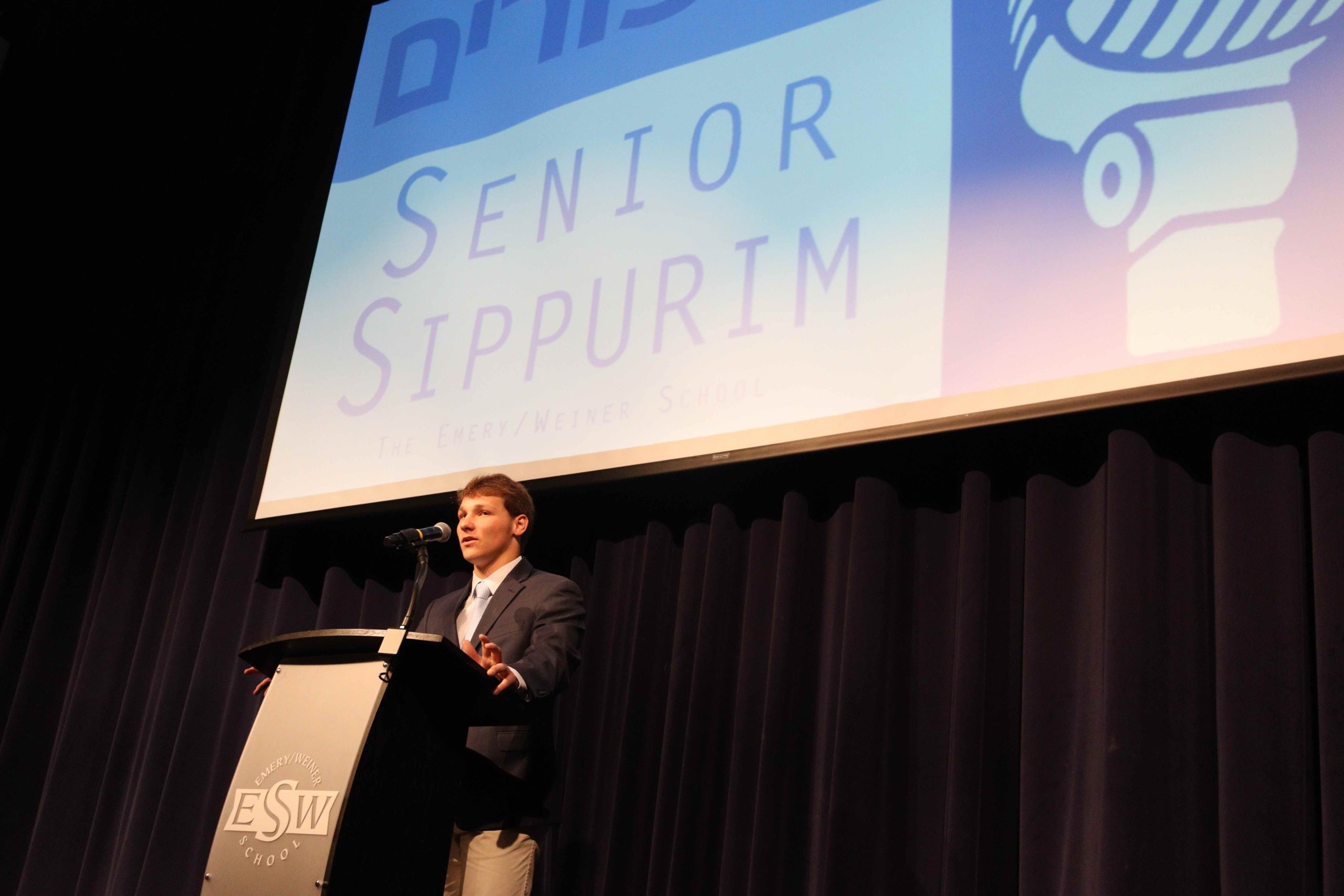
In the spring of 2022, Phoebe Cosgrove stood up in front of hundreds of her peers The Emery/Weiner School in Houston to give a speech. After an introduction by her Spanish and yoga teacher, Ashley Lauderdale, Cosgrove opened up about a tender topic—the impact that her brother’s disability had on her family life.
It turned out that the risk was not in what she might reveal about her brother, Jake—a popular former Emery/Weiner student, now at the University of Texas in Austin, who was born without a right eye—but in what she might reveal about herself. Her bravery—even pugilism—in protecting her brother from teasing had hidden the toll that her family’s medical odyssey had taken on her.
“All of us struggle, whether it’s noticeable or not,” said Cosgrove, 19, who is also now studying at UT Austin. In the age of Instagram and polished selfies, she added, the epidemic of “body anxiety, depression, and other mental illnesses” is airbrushed away. Talking openly and honestly about one’s issues, in a supportive community environment, is the antidote.
At the progressive Jewish day school Emery/Weiner, a program called Sippur aims to create space for these kinds of transformational conversations by combining Jewish values, faculty engagement, and the storytelling rigor of the popular series The Moth. Cosgrove is one of 18 students who delivered a sippur (story) during the 2021-2022 school year.
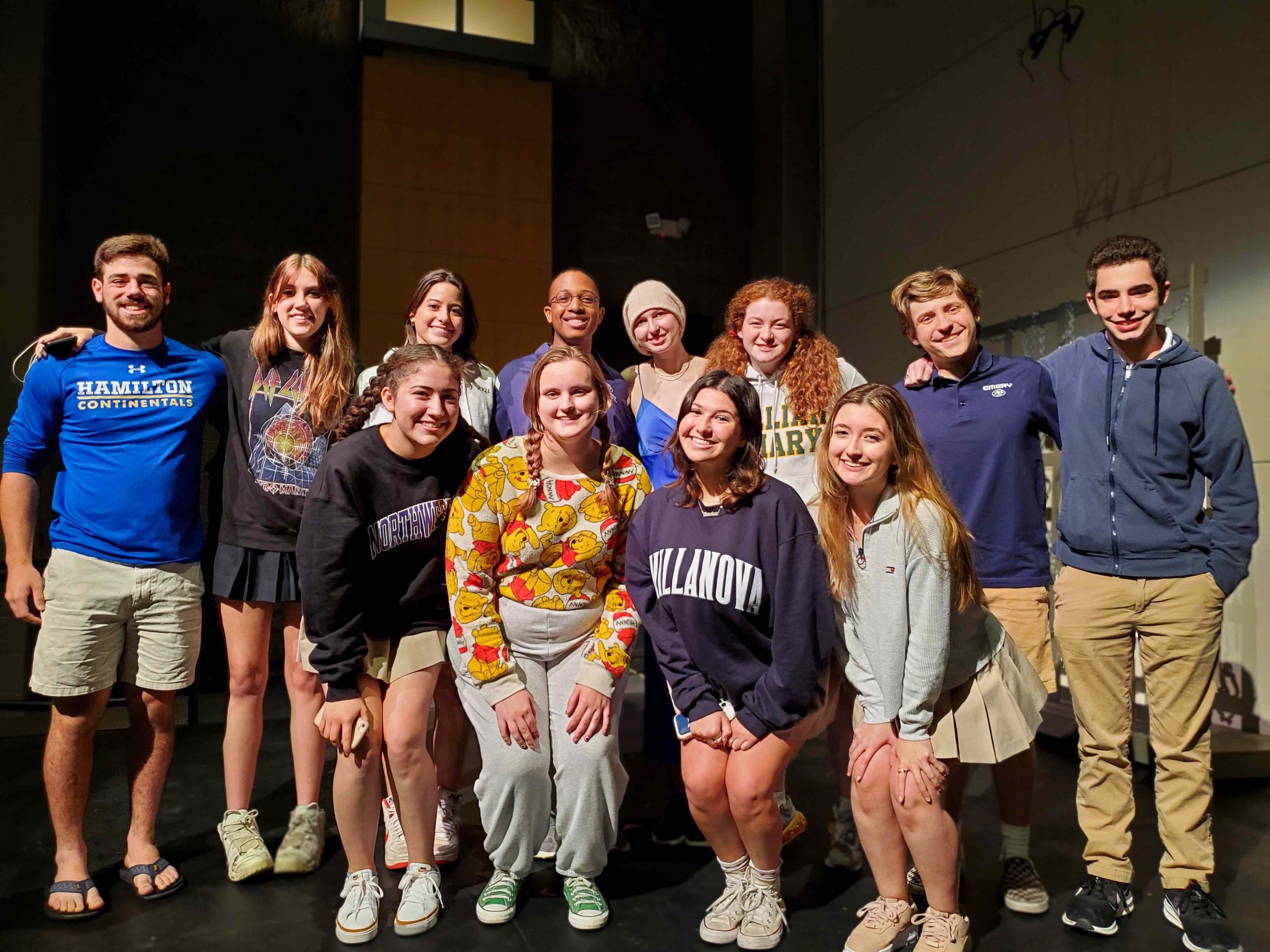
The brainchild of Rabbi Laura Sheinkopf, Director of Jewish Life at Emery/Weiner, Sippur is now in its fourth year. A voluntary program for high school seniors, Sippur is inspired in part by the impact of student speechmaking at many high schools. Those presentations, Sheinkopf said, can have a transformative effect on both the student and the larger school community. What was missing, she added, was a day school program “to make this framework for offering personal and true narratives distinctly Jewish.”
The impact of sharing 7- to 10-minute personal stories was immediate. “Students talked about divorce, and cancer, and losing siblings, and mental illness,“ said Sheinkopf. The second year coincided with the onset of COVID, but seeing the value for students, Sheinkopf opted to continue the program on Zoom. By 2022, with the general increase in teen isolation and anxiety, the program seemed indispensable, and not just for the students.
“Teachers have felt incredibly validated by their work with students. To stand up there and introduce them, having worked with them on these stories, ennobles their teaching like few others things do,” said Sheinkopf. “They feel this tremendous pride.”
Yvonne Cosgrove, Jake and Phoebe’s mother, notes that Sippur enriched their family life as well, in part by “making visible the things they were going through that we didn’t see, or appreciate before.” By bringing difficult conversations into the open—at home, and in the school community at large—“it makes it easier to accept what students are actually feeling, and to be more open to the difficulties they are going through.”
Some students use the storytelling process to gain courage or offer reflections that they might not otherwise feel safe making public. One student, who received a cancer diagnosis in high school, explained that the process of writing a story allowed her to disentangle her self from the disease. “Cancer is not the author of this sippur,” she said at the end of her speech. “I am.”
Another student presented a critique of how the school community dealt with the topic of race, causing what Yvonne Cosgrove described as “substantial and positive conversations about the issues he raised.”
Moving forward, The Emery/Weiner School hopes to forge deeper educational connections between “Jewish” and “story” in part by creating a formal curriculum. They also plan to train more faculty mentors to develop student speeches and find ways to share and discuss the students’ stories beyond their presentations, including publishing a booklet and creating a podcast.
For Phoebe Cosgrove, the presence of Jewish values in this process is already crystal clear. “The value of not engaging in lashon harah, or gossip, was something that clearly came out in my story,” she said, in reference to loose talk about her brother’s condition. At the same time, she realized that her brother’s preternatural acceptance of his condition evoked another Jewish value, that of b’tzelem elohim—the acknowledgment that we are all made in the image of God.
Sheinkopf believes that these and other Jewish values, like the respect that students and teachers should have for one another, can be effectively discussed and transmitted through story.
“We explain our laws through stories, explain prayers through stories, tell moral lessons through stories,” she said, adding that a key element of Jewish life is midrash, the ancient system of story-based commentaries “through which we fill in the blanks left open by the tradition.”
Sheinkopf teaches her students the privilege and responsibility of public storytelling: “Once you speak something out loud, it belongs to the community as much as to you.” When a storytelling process is done right, “a student can knit their personal story into the community itself, in a way that says, ‘You really matter.’”
After four years of managing Sippur, and decades as a rabbi and educator, Sheinkopf isn’t afraid to say that “storytelling is in fact the very heart of the Jewish experience.”
By Dan Schifrin, for The Covenant Foundation
More to Consider
- “JLC and the New Director of Jewish Life” by Lauren Dauber, February 8, 2021
- “Inside the Adolescent Mental Health Crisis” from The New York Times, August 30, 2022
Rabbi Lisa Goldstein has been thinking, teaching, and writing about spirituality, trauma, education, and healing for many years. But it’s only recently that she’s discovered her passion and life’s work.
At a time when our community looks for healing in all directions—healing from health trauma, violence in our schools and our streets, and rifts that exist in our communities and our country—Goldstein has made some discoveries that could be useful to us all.
“For a long time I have been interested in the dynamic between spirituality and well-being. They’re not exactly the same thing: Spirituality is about cultivating greater awareness, expanded awareness, and consciousness, in a way that offers greater access to the big picture,” Goldstein said.
As the Executive Director of the Institute for Jewish Spirituality, where she worked from 2011-2019, Goldstein spent a great deal of time teaching Jewish mindfulness practices to audiences that had little experience with them. As she explained, mindfulness asks that we pay attention to the changing truth of our experience, moment to moment to moment, as a way of cultivating greater compassion for ourselves and others.
“Mindfulness is also about being better able to notice what’s happening, and training the mind to notice the sacredness, or divinity, that is manifest in any moment, including the difficult moments.” The key is to make space for those moments and not react to them.
As Goldstein moved deeper into mindfulness work, she realized that while mindfulness helps us hear our inner voices, what so often interrupts that process is childhood and intergenerational trauma.
“When we hear the word ‘trauma,’ we often think about shock trauma; some big terrible event—an act of violence, war, or a serious accident. We know from years of studying the effects of PTSD that when a person experiences something that grave, the resulting fear gets stuck in the body and leads to all kinds of symptoms.”
But Goldstein shared that there is another kind of trauma, called “complex trauma,” which can have effects that are just as devastating to our hearts, minds, and bodies. Complex trauma causes us to shut down certain parts of ourselves as a coping mechanism, so that we can stay in relationship with our environment.
“Complex trauma shows up in individuals, but it’s also intergenerational,” Goldstein said. For example, Jews have experienced thousands of years of trauma from feeling unwanted in our environment. She shares that people often process this kind of trauma in one of two ways. Either we feel deeply ashamed and need to prove our worth (for example, by overachieving, placing tremendous emphasis on academics and success) or we go in another direction and purport not to care, separating ourselves from the community and writing everyone off.
“The way in which we shut down becomes the lens through which we see the world, and we may not even be aware of it,” Goldstein explained.
So how can Jewish spiritual language help?
Goldstein pointed first to the phrase “ratzo v’shov,” or “run and return,” which she knows from Chasidic sources, but might also date back Sefer Yetzira, or the Book of Creation. The phrase comes from a passage that references a vision the prophet Ezekiel has of God. Jewish mystical tradition interprets the phrase to describe a process whereby a person draws near to God or to a higher spiritual plane, connects powerfully to that place of awareness and total openness and connection, and then returns to regular life, regular interactions, and the mundane.
“What’s so interesting is that this same pattern of connecting and disconnecting is at the core of trauma healing,” Goldstein said. “It’s a process of bringing a kind of tikkun (repair) to both attachment and individuation, being loved and held and seen and valued but also stepping back and thinking about your own separateness, which allows you to be fully actualized yourself.”
Healing, she explained, is not just about the process of connecting; it’s about disconnecting, too. It’s the breath in and the breath out.
“When we can see and embody that,” Goldstein said, “when we can embrace it, it opens up so much space for healing and health and wellbeing and connection, and for feeling integrated.”
Enter psychologist, teacher, and facilitator Dr. Betsy Stone. Author of the recently published Refuah Shlemah, a compilation of essays about trauma, clergy, post-traumatic growth and the impact of COVID, Stone offers that from a psychological point of view, we don’t actually recover from trauma. Instead, we absorb and adapt to trauma.
“Trauma changes the trajectory of our lives,” Stone said. “When we talk about the learning loss that kids experienced as a result of schools being closed during the pandemic, we are suggesting that if they do the work, they will catch up and things will go back to normal.”
“But children and adults alike need an opportunity to reflect, to practice emotional literacy, where we name our feelings and how our feelings impact us.”
Goldstein agreed. “The pandemic has both created new trauma but also, it has ripped the mask off the trauma that was there underneath. While in many ways we’re yearning to go back to normal, that would not serve us. It behooves us as a community to do more thinking about what we’ve experienced, to bring together experts around it, to share different modalities and tools for healing.”
One modality is Kabbalah, the Jewish mystical practice, which teaches that angels, who serve as messengers, function in the world of Yetzirah or of formation, where emotions develop.
“What I think is so interesting,” Goldstein shared, “is that this Kabbalistic concept reflects the idea that emotions are actually the messengers from the life force within us.” Emotions tell us really important information, she continued. And understanding that these messengers exist in the realm of the emotional world is very aligned with the insights of modern psychology.
“If you look at any emotion,” Goldstein said, “you must ask, what is that emotion communicating? The emotion of anger, for example, is a protest. It’s giving us important information that something is not OK. When we know that, we can use that information and say to ourselves, ‘This thing is not OK, what can I do about it?’ Anger is a signal, just like anxiety is a signal. And so many of us have intense anxiety. But if we can bring curiosity and connection to what’s going on underneath the surface of our feelings, those uncomfortable feelings begin to dissipate.”
COVID, as we know too well, has severely disrupted the connection process, both within ourselves and with our community. For example, Stone pointed out that historically, we’ve always lived in naturally occurring communities. When you drop your child at preschool and you chat quickly with another parent in the parking lot about being up all night with your toddler, and the other parent relates, she is normalizing your feeling. In essence, you’ve found yourself in a micro-naturally occurring community of two.
“But Zoom doesn’t promote that kind of interaction,” Stone said. “It’s very functional, for meetings, or even a virtual doctor’s visit. But these kinds of exchanges [like the one described above] create bridges between people. Now that we’ve been separated for so long, we must consciously work on rebuilding those relationship bridges.”
Both Stone and Goldstein are actively working to build those bridges through their work. In addition to her writing and teaching, Stone has been counseling clergy in the Jewish community.
“Our rabbis and cantors have been holding us, supporting us, for so long. And all the while, their own work has gotten much more isolated and isolating,” Stone said. “As a general rule, many people choose the rabbinate because they like to touch people’s lives, but it’s really hard to touch people’s lives when you don’t know them—when they’re never in the synagogue building.”
“We need to make space for our clergy to do the same kind of healing and recovery that we need to do ourselves,” she said.
Stone shared how clergy tell her that the most important part of synagogue services these days is the oneg, because right now, any way that we can connect people is good for the community.
“Part of our job is to think about what an ideal community looks like and what little steps we can take to make it ideal and to understand that regardless, good healing and change is a very slow process,” she added.
For Rabbi Goldstein, in addition to studying texts, teaching, and counseling, she is diving deep into the study of NARM (neuroaffective relational model). Goldstein explained that this therapeutic approach works by bringing much curiosity to what our actual experience of the world is, and doing that in relationship with someone else who can hold that space for us when it’s too threatening or scary or painful for us to look at it directly.
“This practice has deep spiritual underpinnings,” she said. “It asks, how can we allow the lifeforce to flow through us, unimpeded?”
“The really cool part about this work,” she continued, “is that there’s research that when we start working to address intergenerational trauma, we make things better for ourselves and also for our children.”
“We’re not doomed,” she added. “Rather, we are poised to do something helpful and powerful.”
By Adina Kay-Gross, for The Covenant Foundation
More to Consider
- The Practice Guide for Healing Developmental Trauma
- They Left It All Behind
- Wounds Into Wisdom
- Shalom Aleichem: On angels and emotions
- That Quiet Disrupting Voice
- Caring for Clergy While they Care for Us (eJewish Philanthropy, October 7, 2021)
Covenant Award recipient Gabrielle Kaplan-Mayer is working hard to build a Jewish space for serious talk about mental health.
As Chief Program Officer of Jewish Learning Venture (JLV) in Philadelphia, she has done pioneering work to promote inclusion in the Jewish community and ensure that Judaism is accessible to all young people, particularly those with disabilities. This season, JLV’s Whole Community Inclusion initiative, which Kaplan-Mayer directs, will expand its efforts to focus on mental health as well as physical, learning, and developmental disabilities, and chronic illness.
“The mental health component is a bit of a deeper dive this year,” Kaplan-Mayer said.
She and her colleagues have been thinking about people living with mental illnesses that impact their daily lives as well as those with other disabilities who are facing enormous stress, social stigma, and isolation as a result of the COVID-19 pandemic.
“As we are coming back from the pandemic—or as we are still living with the pandemic—we see there’s a lot of anxiety and depression in kids and teens,” Kaplan-Mayer said. She explained that research done during the lockdown period showed an increase in mental health issues among young people. The educators she works with reported that as kids returned to classes last year, their developmental and emotional skills were not on track. The fact that they hadn’t been socializing was problematic, as that is key to emotional development. Educators, Kaplan-Mayer said, need to learn more about anxiety and depression, the most common expressions of mental struggles.
In October, JLV is hosting “Jewish Approaches to Mental Wellness: An Exploration of Jewish Values and Prayer,” a community forum for educators and community leaders, through The Blue Dove Foundation. In the interactive workshop, a group of 30 participants will explore middot, or Jewish values, and the misheberach, or healing prayer, as it relates to mental health and addiction. Follow-up programs, open to larger audiences, are in the works as well.
“The more we make this an ongoing part of our conversation, the more we can make a dramatic shift in reducing the stigma,” Kaplan-Mayer said.
She added that it is helpful for community members who may be suffering, even if they are not yet comfortable opening up to others, to hear that their synagogues and community centers are hosting speakers on mental illness or establishing support groups.
Through the JLV Teen Assistant Program (TAP), Kaplan-Mayer and her colleagues have been training and mentoring a select group of high school students, drawn from congregations across denominations and across the city, since 2002. These students support other students in congregational schools who have a range of disabilities. JLV is also expanding its focus on this program, with additional training so that the TAP students can further support their peers’ social and emotional needs.
One student wrote in the group’s blog about a program TAP had with comedian and inclusion advocate Pamela Rae Schuller. On her website, Schuller describes herself as making “brutally honest confessions about what it’s like being 4 foot 6 (and a half) and having a whole lot of Tourette Syndrome.” During the program, Schuller detailed her work and how failure helped her grow as a person. According to the student who then blogged about it, “This was so interesting to listen to because in life you grow every time you overcome something difficult.”
Later, the students spoke together about issues that they were facing as madrichim, or counselors. A member of the group would describe an issue in their school and the others would listen and then offer ideas and suggestions. The student wrote, “I learned so much about mental health and how to help someone in the moment.”
After a session about autism, another TAP participant shared, “I learned that autism comes in various forms and differs from person to person, thus being flexible rather than having one concrete method of interacting is key to connecting and making each person feel comfortable. Through the rest of my TAP experience, I hope to further my understanding of the way that mental disabilities affect individuals and how I can be the best supporter I can be.”
Kaplan-Mayer also facilitates the Inclusion Specialist Network. This year’s theme is “Social-Emotional Skills + Mental Health Awareness in Our Schools,” and discussion topics include addressing anxiety, supporting students who are questioning or changing gender identity, and facing cliques and loneliness in Jewish spaces.
Kaplan-Mayer explained that for the younger generation, mental health may not have the same stigma as it does for adults. Many young people are used to hearing celebrities speaking openly about mental health and therapy.
As a parent of a 19-year-old and a 17-year-old, Kaplan-Mayer has an understanding of the world that kids are living in today, “when a lot of systems are falling apart,” with gun violence, hate speech, climate change, and war coloring young people’s perspectives.
“We don’t have research yet on how this is all impacting kids. We know that one of our Jewish values is pikuah nefesh, saving lives. These kids are under so much mental stress. We want to make sure that we are getting in there and providing tools for not only living with mental illness but living with mental wellness. We need to ask what are the proactive tools that we can give kids to recognize their mental health needs.”
Kaplan-Mayer is full of passion and creativity for the work she does; she is always thinking of new ideas and how to do things better. Often, her language is infused with Jewish teachings and values.
“Gabby shifts communal and individual mindsets toward disability and mental health Jewish inclusion. She puts people with lived experiences at the very center of her work, elevating Jewish values as the basis for inclusion and belonging,” said Shelly Cristensen, Senior Director of Faith Inclusion and Belonging at the national organization RespectAbility, in an email.
She added, “Gabby teaches that there is no place for ‘them’ and ‘us’ thinking. There is only ‘us.’”
Inspired in part by her experiences as the mother of a child with autism, Kaplan-Mayer sought to expand her role as a Jewish educator to ensure that all children had opportunities to participate in synagogue and communal life and to receive a Jewish education.
She has long been involved in her Philadelphia synagogue, Mishkan Shalom, and also pursues her own writing and teaches creative writing. Her classes and workshops are more about spiritual expression—tapping into inner wisdom—than the craft of writing. She is the author of plays and several books including, most recently, The Little Gate-Crasher, which is the true story of her great-uncle, who overcame much prejudice about dwarfism to lead an extraordinary life. Kaplan-Mayer is now working on a memoir about her own journey through spiritual transformations.
For Kaplan-Mayer, there’s a strong spiritual component to the work she does.
“When you really do the work in disability inclusion and realize that each of us is created b’tzelem Elohim, in the image of God, as stated in the Book of Genesis, it’s not about anyone being better. Disabilities can scare people—it’s related to vulnerability. If you need help to see, walk, communicate, there’s a vulnerability. That’s what we want to lean into. Each of us have vulnerabilities. That’s what being human is.
“In terms of mental health struggles, what human being hasn’t had them? Of course, there’s a spectrum. Every human being has struggled at times in life. The more we can understand that’s part of the human condition, the more we grow in our connection to the divine sources.”
In an ELI talk about her work several years ago, Kaplan-Mayer quoted the Talmudic dictum that when you show up for the sick or those suffering in any way, you take away 1/60th of their pain. Bikur cholim, or visiting the sick, also relates to emotional wellbeing, she said, encouraging people to simply say something like, “I know this is really hard and I’m here with you.”
“We have to get over own discomfort with disability and move into lovingkindness,” Kaplan-Mayer said. “Growth and holiness come from valuing each heart.”
By Sandee Brawarsky, for The Covenant Foundation
More to Consider
- Gabrielle Kaplan-Mayer’s Website
- “Celebrating a Different Kind of Coming of Age” by Gabrielle Kaplan-Mayer, August 25, 2022
- “Responding to Disability” by Gabrielle Kaplan-Mayer, August 16, 2017
- “Gabrielle Kaplan-Mayer Honored with Covenant Award” by Sasha Rogelberg, June 29, 2022
- Jewish Learning Venture
- “‘This is Us’ explored the difficulties parents of disabled children face. There’s also hope.” by Gabrielle Kaplan-Mayer, May 30, 2022
In July of 2022, Orot: Center for New Jewish Learning in Illinois planned to host a daylong retreat for women in the serene and abundant environment of a nature preserve. The retreat would be a chance for adult learners to explore—through the prism of midsummer and the month of Tammuz—the challenges of life’s contradictions. How can we at once hold joy, pleasure, and beauty, as well as struggle, pain, and loss?
The questions that were to define the retreat took on acute, painful relevance in the aftermath of the deadly mass shooting at Highland Park’s Fourth of July parade. Members of the Orot community, and their friends and family members, were grief-stricken. Some had been at the parade and fled the gunfire; others continued to feel a palpable sense of terror in their wider communities.
Orot’s immediate reaction was to host a free gathering, online, for anyone who needed a healing space. Then it was called upon to respond to an increase in demand for its already-planned retreat. People needed an experience through which to process their feelings about the violence and loss. They turned to Orot.
“The retreat was shaped very intentionally from the beginning. But it took on its own energy because of the people who were there and what they needed,” explained Rebecca Minkus-Lieberman, an Orot founder and creator of the retreat experience.
Orot has always worked to center its learners’ wellbeing. Now its approach helped it to offer real comfort in an exceptionally difficult moment. The day of the retreat, Orot’s openness to the life experiences of its students—and to facilitating intersections between those experiences and Jewish wisdom—created ways for people to both share and process their grief. The expansive program provided a safe environment in which to share feelings of vulnerability while engaging in group learning, movement and art-making, and practicing mindfulness in nature. As one student later said, the retreat was a chance to “re-collect” herself and find her ground again.
For eight years, Orot has offered adult Jewish learners myriad ways to find their ground. The organization’s five founders came together to fill a gap in the Jewish learning landscape in the Midwest. Their aim was to create a place that would “meet adult Jewish learners where they were”—extending beyond the intellectual and offering Jewish wisdom as a resource for navigating the ups-and-downs of all of life.
“We wanted to design learning experiences that would meet Jewish adults in an integrated, holistic way—speaking to people’s heads, their hearts, their embodied selves, their spirits, their creative selves,” Rebecca Minkus-Lieberman explained. (Minkus-Lieberman and Dr. Jane Shapiro, a recipient of the 2017 Covenant Award, are the two cofounders who still work with Orot full-time.)
Rather than presenting large, one-off programs, Orot creates more intimate classes, series, cohort experiences, and communities through which people can flourish or grow over time, together with educators and with one another. Orot prioritizes participants’ wellbeing and development, and its relational approach ensures that learners’ needs remain in-focus. Orot’s educators create spaces in which learners can ask questions that are deeply relevant to their own lives and explore not only their struggles, but also possible ways forward.
Even as Orot invites adult learners to bring their whole selves to their learning, it remains committed to offering a diversity of pathways to Jewish wisdom and connection. Classes and workshops, trainings, conversations, and other events bring different modalities into conversation with Jewish wisdom. A Jewish text, practice, or teaching is centered in every experience and is then layered with other forms of wisdom—from genres such as poetry, philosophy, and art, and including modalities such as mindfulness, meditation, music, and embodied practice or movement. Depending on the program, different Orot teachers are involved in designing and offering it. Programs evolve as the community evolves.
The goal remains to open multiple portals to Jewish wisdom and connection. “There isn’t just one entryway. Our name is Orot because we understand that there isn’t just one light; there are multiple lights. We want people to find their own lighted pathway—their own connection with Jewish wisdom,” said Minkus-Lieberman.
The adult learners who participate in Orot’s programs are of diverse backgrounds and have a range of prior Jewish learning experiences—from positive to negative to none at all. A common denominator, however, is that they are seeking spiritual nourishment or fulfillment. They are looking for contexts and spaces in which they can do the work of asking questions in community. Having doubts or difficulties, or even simply trying to navigate life experiences, can feel isolating. Orot brings wonderers into community and offers them the spiritual accompaniment of educators who light pathways to Jewish wisdom.
“It’s about welcoming people into Jewish text and Jewish wisdom,” Dr. Jane Shapiro said. “Because we draw on Jewish wisdom in our own lives, we can say, ‘Look at this treasure-house we have. It’s our inheritance from our ancestors—and it’s yours, too. We’re not here to be the experts and to tell you what it means. We’re here to help you unlock the secrets for yourselves.’
“There’s a certain way of sharing this common inheritance that helps people realize, ‘Wow. The Torah is a resource for me, for my life.’ That’s the practice,” Dr. Shapiro added.
By Miriam R. Haier, for The Covenant Foundation
More to Consider
- “Peaceful Parenting” with Orot
- “When Yoga meets Judaism” by Cindy Sher, June 21, 2019
- “The Torah of Bubbiehood” ELI Talk by Dr. Jane Shapiro
- Inside the Skev podcast episode with Dr. Jane Shapiro
The last two years were nothing if not a wilderness for teens. On top of the typical social and physiological challenges of adolescence, they got stuck with COVID and its attendant isolation. Many young people were pushed to the brink in terms of general wellness and mental health.
As Jewish educators and youth professionals know all too well, it’s not just the teens who struggled. Forced to create new frameworks and programs on the fly, our teachers were tasked with the impossible, and the stress took its toll.
As Jewish educators Kimberly Duenas and Brett Lubarsky wrote in “Teshuva for Educators: Returning to Self-Care,” a recent article for M²: The Institute for Experiential Jewish Education, COVID pushed educators into “a new reality.” The new reality, they wrote, means that self-care is nonnegotiable. They urged communities to put this understanding at the center of our work to support ourselves and one another.
Enter BaMidbar. Named for the Hebrew for “in the wilderness,” BaMidbar supports health and wellness in the Jewish community through professional development for educators and professionals, and direct service to teens and young adults.
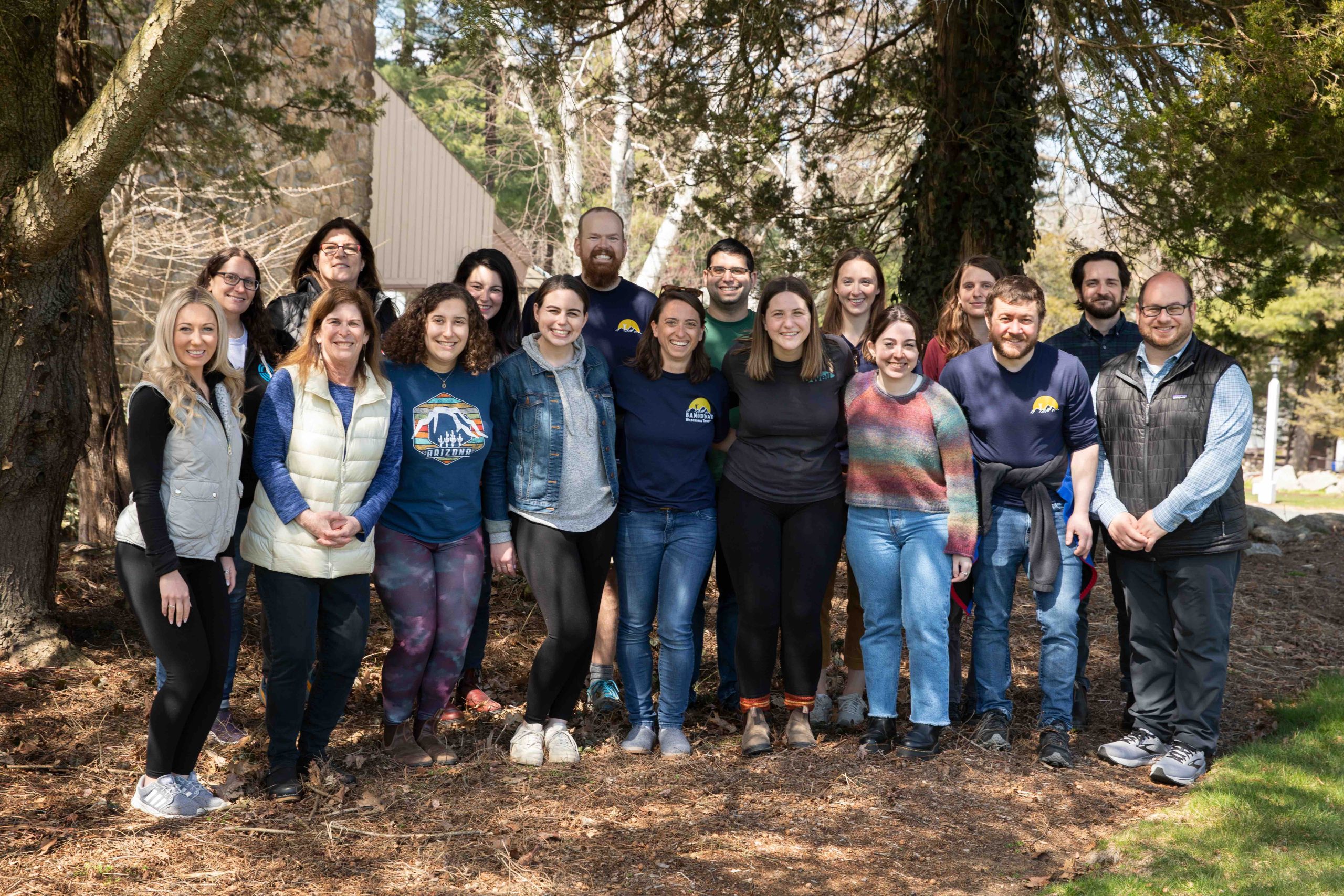
Founded by Jory Hanselman Mayschak in 2016 on the grounds of Ramah in the Rockies, the program began as BaMidbar Wilderness Therapy, the nation’s first Jewish wilderness therapy program for young adults. The new model took participants into the mountains, using the challenges and opportunities of camping and orienteering to support healing and wellness. The wilderness became a classroom, staffed by licensed mental health professionals and informed by clinical practices, Jewish values, and wilderness education.
While supporting Jewish professionals had been part of BaMidbar’s vision, “we didn’t think of it initially as central to our mission,” said Mayschak. But as more and more organizations asked for support, BaMidbar pivoted in 2019 to create staff workshops and training built on their rigorous clinical and experiential framework. (They received a Covenant Signature Grant for this work in 2020.) BaMidbar had just finished their first immersive workshop, a five-day program for 22 Jewish educators, when COVID struck in March 2020.
During the pandemic, BaMidbar continued to evolve its approach, finding ways “to bring the mountaintop into the classroom,” Mayschak explained. They began to partner with organizations like Foundation for Jewish Camp, where they created the Jewish Camp Mental Health and Wellness Internship, and the Combined Jewish Philanthropies of Greater Boston, providing content to the Jewish federation’s burgeoning teen wellness programs.
While most Jewish programming will continue to take place in urban environments, the wilderness model, according to Mayschak, “helps us all be present in our bodies and with our senses, giving us additional tools to manage our stress and rebalance our nervous system.” On top of that, she adds, the BaMidbar approach speaks directly to “the metaphor of journey, and what it means to be in the wilderness as a Jew, moving from one place or experience to another.”
This past summer, a cohort of Boston-area Jewish professionals finally came together for the first revamped MESH-EE program, held in Ashland, Massachusetts.
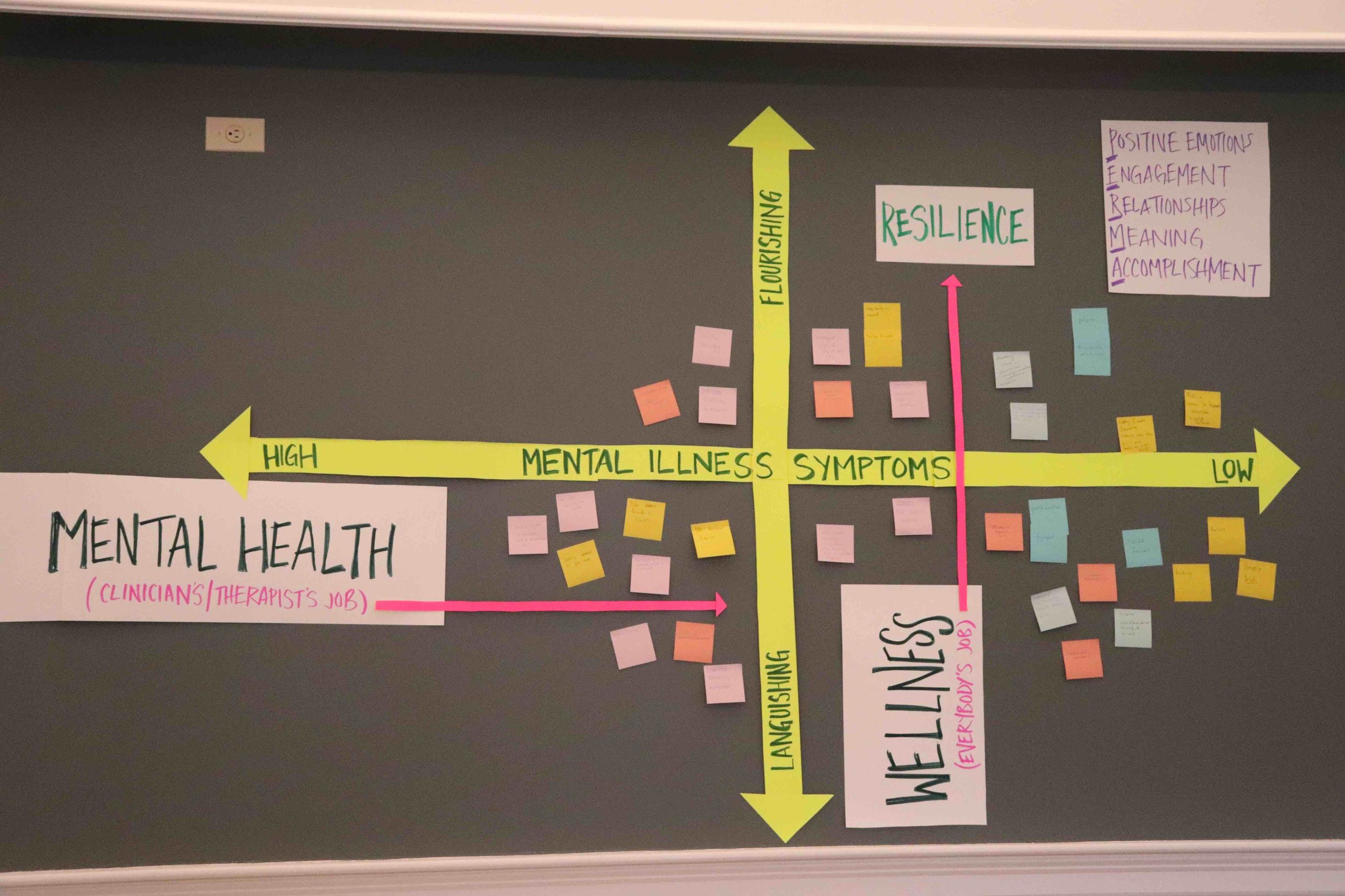
MESH-EE stands for Mental, Emotional, and Social Health for Experiential Educators, and it is designed to help professionals create Jewish educational experiences through a wellness lens. The program balances theory, practical tools, and reflection, and follows four key learning objectives: mental health literacy, experiential education as a wellness facilitation tool, whole-health wellness through a Jewish lens, and educator self-care.
Although MESH-EE doesn’t take place in the wilderness per se, participants spend most of their time outside, leaning into the value of green space, physical collaboration, and even the slowness of nature-time.
Nalanie Haueter, the new Director of Youth and Teen Engagement at Temple Aliyah in Needham, Massachusetts, was part of this summer’s MESH-EE cohort.
“I’ve never been part of a professional development program that so explicitly cares for both the professionals and the people we are working with and care for,” she said.
Among her takeaways is a greater awareness of the limits of her job as well as tools to do more with what she can control. In her previous work with Hillel students, Haueter would “take home the emotional or mental health burdens of the students I worked with,” in part because she was an early touchpoint for newly independent young adults just beginning to understand their emotional limits and challenges.
Through MESH-EE, she now has a better understanding: “I am not a therapist or mental health professional. My job is to create a space where students can come in and be nourished and connect with one another. A place that is conducive to overall physical, emotional, and mental wellness,” she said.
MESH-EE is designed to help Jewish professionals understand this distinction, Mayschak noted, adding that it’s important to know how to spot signs of toxic stress (a term she generally prefers to “trauma”), and when and how to pass the baton to a licensed professional.
Among the explicit Jewish values that drive BaMidbar are simcha, which Mayschak defines as “joy that takes place in community,” and shlemut, or wholeness. Simcha is the kind of experience people have at Jewish summer camp, which is the closest model for joyful experiential learning for many Jews—something Mayschak had seen firsthand at Ramah in the Rockies and other Jewish outdoor experiences.
Shlemut suggests that health must be seen as an ecosystem that requires an understanding of all of its interconnected elements. The value of addressing the larger picture is driving BaMidbar’s interest in exploring Jewish wellness more systematically.
“The future is building mental health capacity into organizations, and doing it holistically and proactively, as opposed to just responding,” Mayschak explained.
Brett Lubarsky agreed. As Director of the Jewish Teen Initiative for Boston’s CJP, where he oversees the federation’s Peer Wellness Fellowship, he attended this summer’s MESH-EE retreat. The youth fellowship is a formal collaboration with BaMidbar, and in 2021, its first year, 22 teens came on board. That success, said Lubarsky, is a sign that young Jews are hungry to learn new wellness tools and “by doing so, to help others build resilience, remove stigmas, and share the things they need to share.”
Lubarsky pointed out that the Hebrew root of bamidbar is dever, or speech. It’s no surprise, then, that BaMidbar’s framework of wellness “helps people find their voice in the wilderness. And when they do, they can write their own narrative of growth and self-discovery.”
By Dan Schifrin, for The Covenant Foundation