
Rabbi Matthew Dreffin
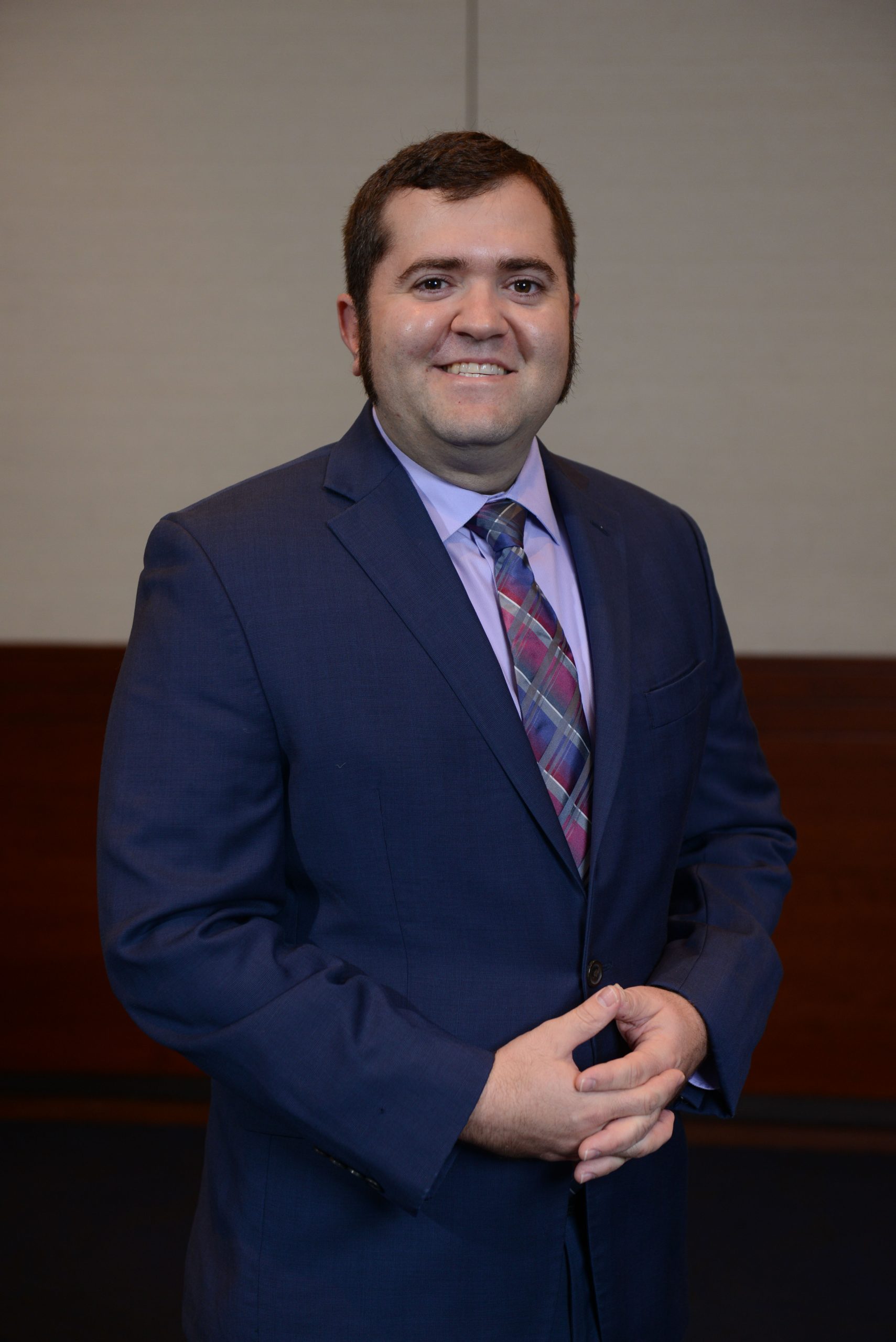
Art has always been part of Rabbi Matthew Dreffin’s path. He dates his interest in art to his grandmother, who was a successful cartoonist and published books. His father was an amateur craftsman who enlisted his son in helping him with projects like stained glass making in their garage. A lay leader and educator in their synagogue, his mother brought Matt to many meetings – the adults would tell Matt he should become a rabbi. But, at first, he went in a different direction.
At Tulane University, Rabbi Dreffin studied Fine Arts, with a concentration in Hot Glass Sculpture. He learned to cast glass and sculpt the molten material at 2200 degrees. He explains that hot glass is a temperamental medium, that things can go wrong and one has to quickly improvise. A guest artist shared advice about glassblowing that has stayed with him, “It’s not what you make, it’s what you can fix.”
After graduation, Dreffin co-managed a glass studio in New Orleans, making and selling handmade glass items. He explains that in the post-Katrina world – referring to the devastating hurricane that hit New Orleans and the surrounding area in 2005 – he began to feel “deeply unfulfilled burning earth resources to make a living.” He recalled having greater impact in his years at Camp Coleman in North Georgia, mentoring kids as a counselor and senior staff member. He was moved by how leaders like Reverend Martin Luther King, Jr. and Congressman John Lewis were inspired by religious commitment to work for social justice and engage in non-violent protests.
“I wanted to right the wrongs of who could move back to New Orleans. I realized I could have much greater impact if I added Rabbi in front of my name when I lent my energies to a cause.”
In 2013, he was ordained from Hebrew Union College-Jewish Institute of Religion in Los Angeles. While a student, his mentors helped him to understand how he could integrate his passion for art into his rabbinate, and figure out how to be a Jewish artist. Rabbi Richard Levy (z”l) encouraged him to find studio space in Los Angeles, and supported his exhibition as a capstone project. Rabbi Dreffin created a gallery, and made works of metal, wood, concrete and stained glass.
“It was a watershed moment. I was looking at contemporary synagogue art and architecture and the architecture of the ancient Temple in Jerusalem, searching for common elements,” he says.
“This is what Jewish art can look like. Taking a piece of tradition and making it fine art, not Judaica, to make it feel sacred, to make you think about the text.”
His works are bold and strong statements. He understands well how light and color reflect off the transparent glass, and the ways all materials create lines and form and meaning.
His first rabbinic position after ordination was an educator with the Goldring/Woldenberg Institute of Southern Jewish Life, where he was able to bring his teaching skills to multiple congregations in 13 states.
“I felt like I was developing curriculum and trying to raise educators to create a great Jewish future, meaning, the people who would save the future,” he says. “But then, I began to wonder if there was more that I could do – I felt the world needs me to save it right now for my kids. So I started looking for positions that allowed me to speak to that.”
Now, he serves as manager of rabbinic education at T’ruah: The Rabbinic Call for Human Rights. Working mostly virtually, he supports clergy in the T’ruah network, trying to help them clarify their views on certain justice issues and strategize to best move their congregations ahead.
“In short, I’m trying to get them to grab hold of their moral authority. I want them to understand that speaking out against mass incarceration in the for-profit prison industrial complex is not political – in the sense that someone might say they can’t be political from the pulpit. Yes, you can’t endorse a candidate but you can say it’s wrong to unfairly charge people, prevent them from calling their parents from jail, or not paying them a living wage because they were arrested and convicted, not necessarily fairly.”
The opening screen on Rabbi Dreffin’s website reads: Creatively educating the world towards a joyous and equitable future.
For Rabbi Dreffin, the making of art can be a spiritual pursuit. When, for example, he’s grinding a piece of metal using a rapidly-spinning disk, he has to focus intensely. He compares to what others might experience through singing. “I can lose myself. Everything else drops away.”
But these days, he doesn’t have much time for his own artwork, as he’s also the primary parent at home, with his wife working 12-hour shifts as a pediatric cardiovascular intensive care unit nurse. His artistic efforts now mostly relate to helping his kids develop art skills — they do a lot of painting on the porch of their Birmingham, Alabama home.
He says that inevitably his art skills are called on, as colleagues frequently ask for help with designing dynamic slides for presentations. His approach is to emphasize images rather than words, so that people are listening to the speaker and not reading the slides.
Rabbi Dreffin is now involved in a project pulling together his interests in art, glass, education and Judaism: He is researching, surveying and analyzing glass art in synagogues around the country, whether stained glass or other glass installations. He also hopes to collect photographs and oral histories about the work and the creators. While books have been written about synagogue architecture and Jewish ritual objects, no comprehensive project has been undertaken involving glass art.
Perhaps, he’ll create a website or a book to share the historical and cultural information, of which little is known. For instance, someone on a tour of Mississippi might go into a Natchez synagogue and express shock at seeing crosses in the stained glass. But he’d want them to know that it’s not a case of the glassmakers sneaking in Christian iconography, but rather the use of the
French symbol, the Fleur-de-lis, was a way of signaling the Jewish community’s connection to the city’s French background.
Is it important to create things that are beautiful?
“It’s important to create things,” he replies.
Rabbi Dreffin adds, “The making of sacred objects is sacred time in and of itself, like taking the time to think through things and then the act of actually making them.”.