
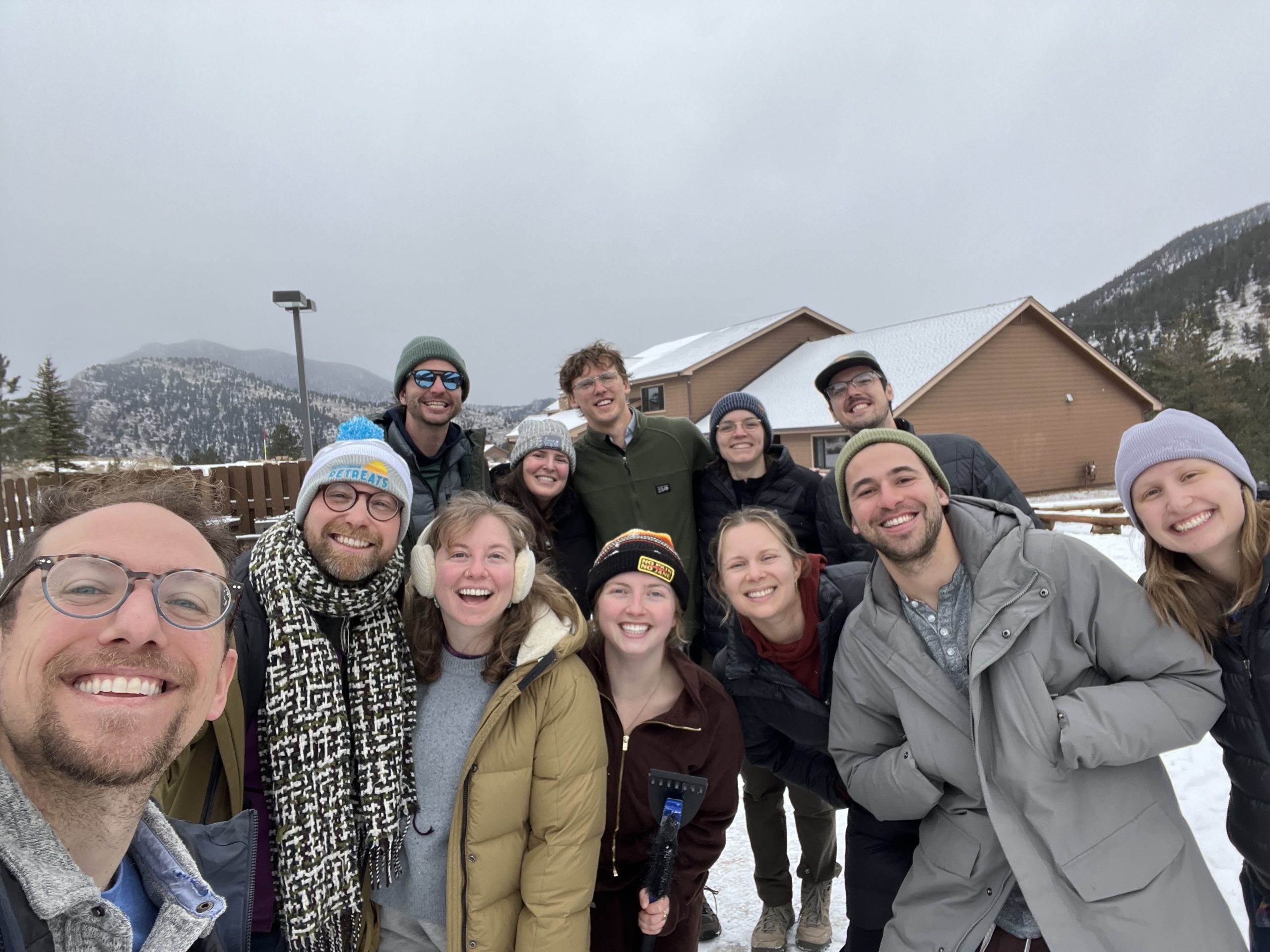
Rabbi Dave Yedid is the founding rabbi of Base Denver, a program of Mem Global. Base Denver is a home-based Jewish community for young adults, which he launched in 2022 with his husband, Daniel. During his rabbinic training, he worked at BaMidbar Therapy, NYU Bronfman Center, and as Cooperberg-Rittmaster Rabbinic Intern at Congregation Beit Simchat Torah. He also trained as a chaplain for caregivers and patients through The New Jewish Home. Dave discovered his passion for immersive and informal Jewish education during his summers on staff at Camp Ramah in the Rockies, where he led backpacking trips, developed lasting curricula and programs, and mentored Jewish youth. Dave earned his Rabbinic Ordination and MA in Jewish Gender and Women’s Studies from The Jewish Theological Seminary, where he was a Wexner Graduate Fellow, and received his BA from Middlebury College.
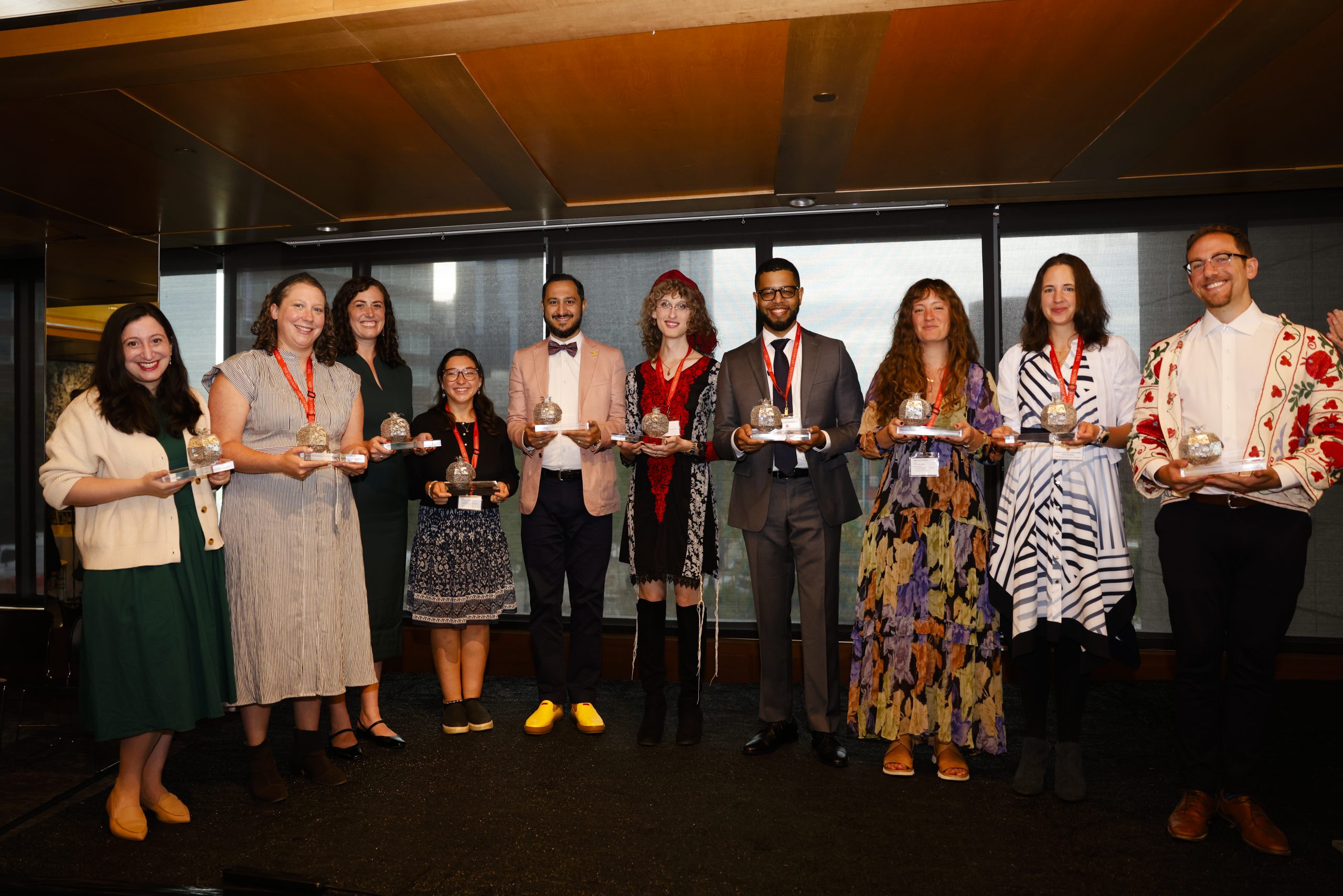
The Covenant Foundation: How has the Pomegranate Prize supported your professional growth this year?
Rabbi Dave Yedid: I am incredibly grateful to the Covenant Foundation for this prize. The funding allowed me to invest in professional coaching, attend an Or HaLev meditation retreat, and participate in a special alumni retreat with the Jewish Studio Project (JSP). I continue to bring JSP-inspired programming back to my own community.
The Covenant Foundation: You and your husband founded Base Denver in 2022. What is your role there, on a day-to-day basis?
DY: My everyday roles at Base include facilitating community learning, running holiday programs, and supporting my community through lifecycle events and pastoral care.
The Covenant Foundation: Can you share some new areas of study or facilitation that you’re bringing back to Base after this Prize year?
DY: Yes! The prize funded my attendance at a “Meeting Grief” facilitation retreat in Carmel, California, and the Beloved Festival in Northampton, Massachusetts. This grief work directly inspired two powerful new programs we offered this year. The programs both focus on grief and creating new rituals that draw wisdom from the Jewish canon while innovating to support people beyond the traditional timeframe of aveilut (mourning).
The Covenant Foundation: Can you give some examples of the rituals you mention?
DY: For Tisha B’Av, we facilitated a two-hour grief circle framed by singing a continuous niggun. The session centered around three distinct layers: personal grief, ancestral/collective Jewish grief, and contemporary global sorrows.
Key rituals included:
- The Shared Garment (Kriyah): We passed around an old t-shirt, inviting each participant to rip a section after speaking. Rooted in the traditional Jewish mourning practice of kriyah, the shirt was shredded by the end of the circle, offering each person, regardless of whether they spoke, a powerful catharsis.
- The Wall of Sorrows: Upon arrival, participants wrote down what they were mourning—ranging from personal losses like miscarriage, to the loss of connection to their Jewish roots, to global issues like species extinction. Displayed together, these notes formed a collective tapestry of shared grief.
The Covenant Foundation: We know you’re also doing pastoral work with mixed-heritage couples. Can you share a bit about that?
DY: Sure. I have been increasingly engaged with Embark, an eight-week cohort learning program for mixed-heritage couples, which was the subject of my Pomegranate Prize essays. We have facilitated four Embark cohorts and are excited for our fifth in 2027. This past July, I traveled to Aspen with a couple I worked with, Juliet and Chris, to speak with funders about expanding this important work. I feel proud to share that Juliet and Chris were recently featured in Mem Global’s 20th-anniversary publications.
The Covenant Foundation: Any other types of community programming that you hosted this past year that you’d like to share about?
DY: In addition to the programs I mentioned above, we also hosted several impactful programs focused on Israel, including co-facilitating concerts with Nava Tehila and hosting the Task Force for Arab Citizens of Israel. I also organized a unique community meal where only Hebrew was spoken—no English allowed!
We have curated and hosted a wide range of programs addressing Israel through cultural, political, and communal lenses:
- In Good Faith Initiative: Co-facilitated with my husband Daniel, two other Denver facilitators, and multiple local organizations, this three-part series brings together Denver Jews across the political spectrum—Zionist, non-Zionist, and anti-Zionist. Through structured storytelling and dialogue, it fosters respectful listening and helps mend deep fractures within the community.
- The Inter-Agency Task Force on Israeli Arab Issues: Hosted representatives who shared their individual narratives, followed by an engaged, 90-minute audience Q&A.
- Nava Tehila Residency: Organized Denver-area appearances for the Jerusalem-based musical prayer collective, including three concerts.
- October 7th Vigil: An ongoing annual space for collective communal processing and remembrance.
- Yom HaZikaron: Hosted a live screening of the joint Israeli-Palestinian Memorial Ceremony organized by the Parents Circle-Families Forum and Combatants for Peace.
- Yom Ha’Atzmaut: Hosted an immersive, Hebrew-language community dinner.
The Covenant Foundation: Can you share how receiving the Pomegranate Prize affected your professional path and goals?
DY: So much of my work as a rabbi and educator happens in my home. While the reach of my work at Base Denver is communal, its impact is embedded in relationships: in the in-between spaces before and after events, in 1:1 coffee meetings, in life cycle events. That makes it deeply private. Having Covenant see this work and select me for the Prize made it feel both more visible and more validated. The professional development I pursued this past year, thanks to Covenant’s investment in my work, has left me feeling bolder and more confident about taking my next steps in my career.
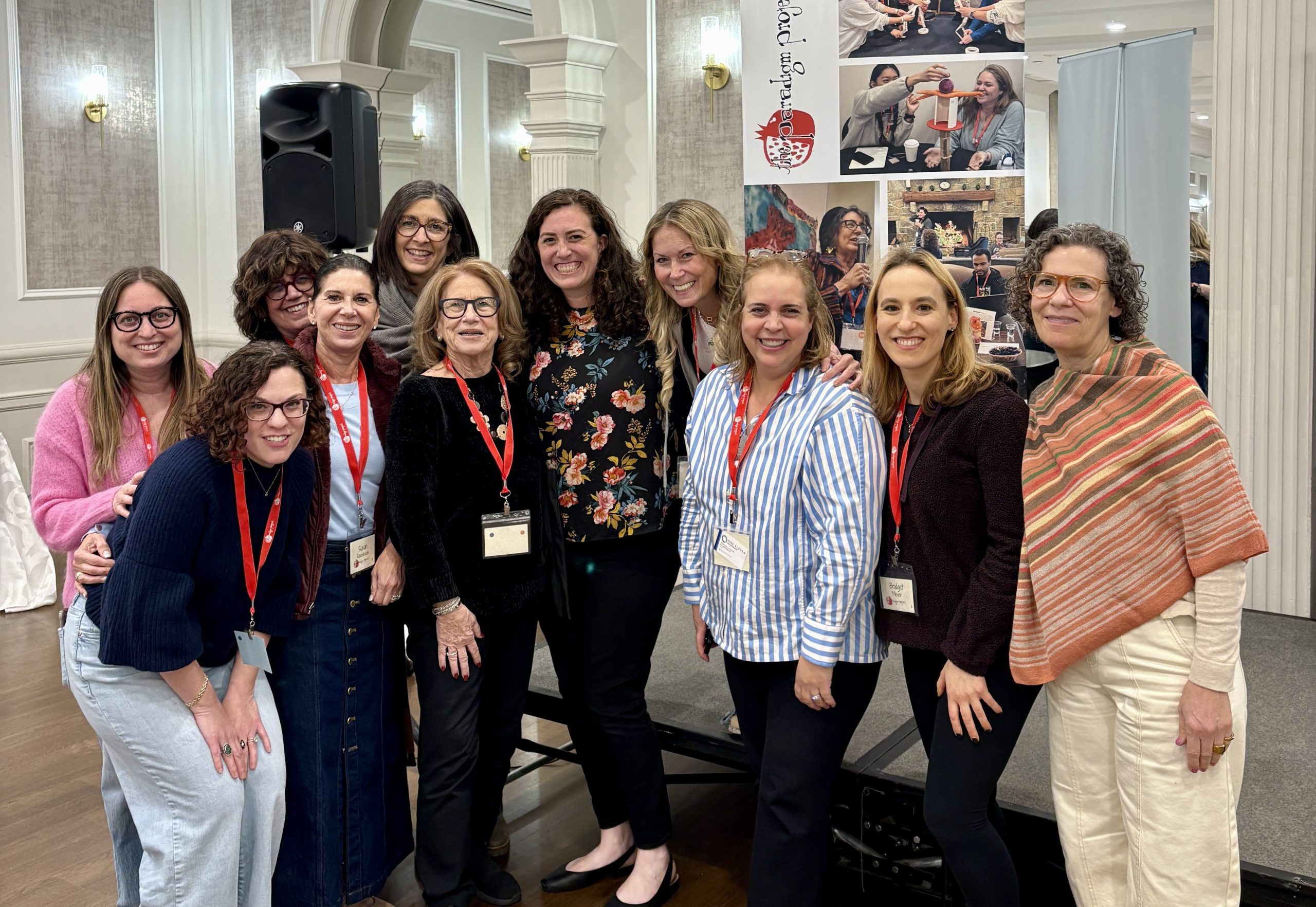
In February of 2026, I joined Covenant Award and Pomegranate Prize alumni at the Jewish Studio Project in Berkeley for a three-day studio intensive led by Rabbi Adina Allen. I loved learning in such a hands-on, immersive way, and having space to get back in touch with our creativity and cultivate it was a rare and precious gift. I was also blown away by the Project Directors’ Retreat last May, where I was surrounded by so many inspiring, dynamic Jewish educators who bring innovation and creativity into their pedagogy and organizations, and I came away with a real understanding of the breadth and depth of the Covenant Foundation’s impact. I feel so lucky to be part of this network and all that it enables. I encourage anyone who feels on the fence to go for it and apply!
Read more from Dave:
Interfaith couples: From observers to active participants in Jewish life | eJewish Philanthropy