
This Hanukkah, as my family and I kindle our lights as close as possible to a Manhattan apartment window, I’ll be thinking of the Singer family of Warsaw, circa 1910, as evoked by Yiddish author Isaac Bashevis Singer (1903 or 1904-1991).
A lightly fictionalized slice of life, “A Hanukkah Eve in Warsaw” appears in his 1984 collection Stories for Children. The first-person narrator is six-year-old Itshe (a diminutive for Isaac), a dreamy redhead with an overprotective mom who won’t let him walk to and from school alone, as the other boys do. The “school” in question is a kheyder, a designated room in the home of the melamed, or teacher. His classmates are the sons of upwardly mobile merchants and businessmen, while young Itshe is the child of a pious, learned, but decidedly small-time neighborhood rabbi—the kind who solemnizes weddings and divorces and pronounces on whether a chicken is kosher. We get to know him and the population he serves in a different volume of memoirs, In My Father’s Court.
Much to the boy’s chagrin, an assistant teacher is usually enlisted to walk him to and from school. On the eve of Hanukkah, though, he asks Itshe to make his way home unaccompanied. The late-afternoon darkness, a sudden snowfall and Itshe’s own self-absorption combine to render the familiar streets foreign. His mind and his feet both wander, leading him to an unfamiliar thoroughfare, where a stranger snatches him out of the path of an oncoming trolley just in time to avoid being hit. After some questions from well-meaning passersby, which he answers with lies unaccountable even to himself, he is identified as the rabbi’s son and escorted back to his family’s apartment building on Krochmalna Street.
But instead of going directly home, Itshe stops off to play with his friend Shosha (to whom an entire novella would eventually be devoted). He fantasizes about running away with her, content just to be in her presence until his mother and sister, worried sick about the missing child, burst in and drag him home. He’s clearly in hot water.
Then, a kind of Hanukkah miracle happens: Itshe’s father receives him with a smile, urging the family to light the menorah together and not allow the holiday to be ruined. They enjoy the kind of cozy Hanukkah evening we know well: wicks burning in olive oil, warm latkes, even a present for the young miscreant. He is given a shiny dreidel and a beautiful prayerbook imported from the Land of Israel. In what is perhaps a sign of times gone by, his sister Hinde Esther, who would become a novelist in her own right, is furious that only her scapegrace brother receives a gift, especially as she has spent all afternoon grating potatoes while he has wandered and cavorted. “The worst dog always gets the best bone,” she observes acidly.
But the story doesn’t end there. Writing six decades after the events he describes, the author recalls the unfolding of the dinnertime conversation between father and son. Itshe fantasizes about going off to Berlin to be educated, returning as a professor, and marrying Shosha. His father mentions that he had an aunt named Shosha; in his worldview, marriage matches are foreordained, so perhaps the boy’s strong feelings for the neighbor are a clue regarding the Divine will, to be revealed over time. The story dramatizes the emotional connection that can take place through storytelling around the family dinner table.
Father and son each has in mind a Big Story, an imagined life’s path for young Itshe to tread as he grows up. Rabbi Singer is focused on the past and the collective story of the Jewish people, its long exile and eventual redemption, while Itshe is focused on the never-ending tale of his own seemingly limitless future. A skeptic who never made peace with traditional belief and never stopped wrestling with his discomfort (sometimes in the form of literal demons), Isaac Bashevis Singer found his place in the development of modern Jewish culture. The only Yiddish author ever to win the Nobel Prize, his work is woven tightly into the fabric of Jewish modernity.
When we read a story like this one aloud, with two or more generations present, it catalyzes our own conversations about hopes and dreams for the future—and connections to the rituals that have been handed down to us from the deep Jewish past. Stories like this one shed their own warmth and light—not because they are ideal but because they are authentic. Isaac Bashevis Singer explores real tensions between siblings and a yawning gap between generations. He reminds us that families are made up of individuals who yearn, suffer, grow, and teach each other—perpetually—who they are. Families educate each other in what it means to be human, and sharing Jewish stories can help catalyze our most searching, open discussions of what it means to live as Jews in the twenty-first century.
This Hanukkah, after the candles are lit and the latkes are eaten, consider reading this story with your family. Below are some prompts for conversation.
- Have you ever wandered off, gotten lost, run away, or gone somewhere you weren’t supposed to? What happened, and how do you look back on that time?
- Think about a time when someone has been kinder to you than you thought you deserved. What about a time when you were kind to someone who didn’t fully deserve it? How did those experiences make you feel?
- What are some of your favorite Hanukkah memories? Which senses do they involve?
- What do you dream of learning someday?
Dr. Miriam Udel is the 2024 Covenant Foundation Jewish Family Education Fellow. She is also the Director of the Tam Institute for Jewish Studies at Emory University where she teaches Yiddish language, literature, and culture.
Miriam is the author of Honey on the Page (NYU Press, October 2020), a collection of nearly fifty Yiddish stories and poems from around the globe, most of them appearing for the first time in English translation. Miriam is also the author of “Never Better!: The Modern Jewish Picaresque” (University of Michigan Press, 2016), winner of the 2017 National Jewish Book Award in Modern Jewish Thought and Experience.
Abstract
Efforts to engage students with difficult issues of United States history have both been intensified and encountered resistance in recent years. In our study, we investigate an initiative that introduced Jewish day school students to the painful history of slavery in the United States. Through an online simulation, the Jewish Court of All Time (JCAT), learners explored the history of slavery, particularly through debating the fate of the controversial Confederate Memorial in Arlington National Cemetery. We explore the affordances and challenges of simulations as opportunities for students to start to develop comfort and expertise in speaking about complex issues such as race. In particular, we illustrate how White students who chose to play Black characters articulated moral outrage about slavery and then reflected on the similarities and differences between themselves and their characters. We conclude with questions for further research.
“JCAT has made me think a lot about racism. It made me think differently because I had to look at things through the eyes of someone who went through racism themselves."
-Jewish Day School Student playing Jackie Robinson
Introduction
Efforts to engage students with difficult issues of U.S. history have both been intensified and encountered resistance in recent years. In our study, we investigate an initiative that introduced Jewish day school students to the painful history of slavery in the United States. Through an online simulation, the Jewish Court of All Time (JCAT),[1] learners explored the history of slavery, particularly through debating the fate of the controversial Confederate Memorial in Arlington National Cemetery.
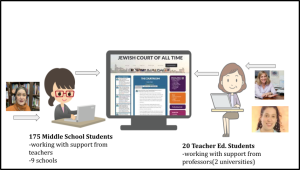
We define simulations as “pedagogically mediated activities used to reflect the dynamism of real-life events, processes, or phenomena, in which students participate as active agents whose actions are consequential to the outcome of the activity” (Wright-Maley, 2015, p. 8). The simulation design empowers students to shape its narrative; students choose how to represent their characters, with whom to converse, and with whom they ally. As two professors of education, we are part of a team who design and facilitate JCAT simulations. We partner with middle school teachers in Jewish day schools, and also train and supervise university students who participate as mentors to middle school students. All simulation interactions occur asynchronously. (See Appendix 1 for overview)
JCAT cases are grounded in a guiding question: “What does it mean to learn from history?” These cases highlight historical content, including Jewish historical elements, to engage learners with timely topics. Ultimately, the simulation provides opportunities for students to make informed decisions regarding current issues. Prior to the simulation, students research their characters and compose authentic character profiles, which they post on the simulation website. Once the simulation begins, students respond to weekly prompts by stepping into the shoes of their characters. Prompts included questions about primary sources and speeches from key characters. The simulation is designed for characters to respond, comment on each other’s answers, and correspond privately within the simulation. [2]
Why is a simulation pedagogy effective for teaching history?
Simulations as a pedagogical tool can be classified as experiential and learner-centered. As Wright-Maley (2018) suggests, the potential of a simulation is long lasting, going beyond the curriculum as “learning that can shape student dispositions, ways of thinking and being, and the manifold skills they use to read and engage with the world” (p. 6). Even though students are aware that decision-making within the game takes place in an imaginative context (Kupperman et al., 2011), they report an increased sense of agency and, in some cases, inspiration to take further action (Rector-Aranda & Raider-Roth, 2015).
Role-playing within a simulation is a vehicle for students to develop perspective-taking, an important civic disposition. By playing characters, they learn to consider other’s point of view-- and in some cases perspectives that differ from their own (Barton & Levstik, 2004). Participation in democracy requires citizens to understand multiple perspectives and to engage with divergent viewpoints. In order to authentically portray another, students must compare their own thoughts on an issue to that of their character, creating palpable tension between themselves and others. Immersive role-playing experiences, especially over an extended period of time, provide opportunities for students to wrestle with multiple factors affecting their characters’ points of view (Rector-Aranda et al., 2017). Lo (2018) describes character roles as opportunities for students to “not necessarily to walk in someone else’s shoes, but at least to try on shoes that they would not ordinarily choose to wear, even if they [ultimately’] choose not to walk in them” (p.332). By including a variety of characters with different points of view, simulations expose students to a wider variety of perspectives than might normally be represented in a class discussion about important issues.
Some critique simulations that include difficult history, such as the Atlantic Slave Trade and the Holocaust. They maintain that these events should not be reenacted because of the potential for psychological harm to those playing both victims and perpetrators (Schuster, 2018; Schweber, 2004). To counter this issue, we made sure to enact the simulation in the present, so that students would reflect back on the past, in order for them to have distance from traumatic events of decades ago.
Characters Selection
We promote simulations where students choose characters they believe can contribute meaningfully to the issues under discussion. Asserting the power of character choice is often the starting point of purposeful JCAT engagement. Characters may draw from historical or contemporary figures in any field, and students choose characters from diverse backgrounds. Recommended approaches for students beginning the character selection process are
(1) deciding whether to portray someone whose perspective aligns with or challenges their own, and,
(2) identifying someone capable of providing insightful commentary on the simulation’s key issues.[3]
While students have the freedom to authentically portray their chosen characters, the simulation maintains a norm of dignified speech, encouraging respectful interactions akin to a courtroom setting. Graduate students, who participate alongside middle schoolers, model this respectful language. This strong code of conduct fosters an environment where students feel empowered to take risks, including portraying characters from diverse backgrounds.
We recognize that some might criticize an educational activity that encourages predominantly White students to represent those of other backgrounds, particularly other races, as an example of cultural appropriation. It might also be seen as a misguided display of White privilege as the majority are not usually targets of racism in public spaces. Nevertheless, we hope to begin to demonstrate the benefits to students of taking on these roles in carefully curated and guided educational experiences. This study explores the question: How do White Jewish students confront the history of slavery and racism in the United States while playing Black characters?
The Confederate Memorial
Figure 1: Moses Ezekiel (1914). The Confederate Memorial. Arlington National Cemetery. Arlington, VA/ USA

(Image credit: Wikimedia Commons, 2013)
Dedicating memorials was a trend in the 1890s through the 1950s when Confederates veterans and their descendants erected monuments honoring the Confederacy (Little, 2021). White Southerners who installed such monuments wishing to honor fallen Confederates also did so in order to rebuild a culture of White supremacy (Blight, 2017). Funded by the Daughters of the American Confederacy, descendants of Confederates promoted a Lost Cause narrative; they argued that the South should have won the war while painting a sanitized picture of slavery, downplaying the subjugation of Black people (Blight, 2024; Shuster, 2018).
The Confederate Memorial at Arlington National Cemetery was dedicated in 1914. It was designed by artist Moses Ezekiel, a Southern Jew who served in the Confederate Army, and its placement in the national cemetery represented reunification between North and South (Herbert, 1914). Recently, as part of the Black Lives Matter movement, and protests against police brutality, many have demonstrated against Confederate monuments, seeing them as both degrading to Black people and reinforcing White supremacy, therefore calling for their removal (Ortiz & Diaz, 2020). At the time of the JCAT simulation, the memorial was still in place although it was removed two years later.[1]
Standing 32 feet tall, the Memorial contained many images; students examined two that represented sanitized visions of enslaved people interacting with their masters. At the memorial’s dedication, Hilary Herbert, a Southern congressman, described these as illustrating the “kindly relations… between the master and the slave” (Herbert, 1914, p. 77). In Figure 2 below, an enslaved woman tearfully holds up a baby to a soldier. In Figure 3, the figure set back from a cluster of soldiers is an enslaved person serving as support staff to Confederate soldiers. He is the only one not holding a rifle.
Moses Ezekiel (1914). The Confederate Memorial. Arlington National Cemetery. Arlington, VA

(Image credit: Joseph Stephen Russell and Aiden Spencer Clark).
Figure 3
Black Body Servant Marching with Confederate Soldiers
Moses Ezekiel (1914). The Confederate Memorial. Arlington National Cemetery. Arlington, VA.

(Image credit: Joseph Steven Russell and Aiden Spencer Clark).
The Research Study[1]
The simulation occurred in 2021 with middle school students playing from nine Jewish day schools throughout the United States for eight weeks. As qualitative researchers, we used textual data derived from students’ posts in the simulation; these included mostly in-character writing and some out-of-character reflection in a designated debriefing platform within JCAT, “The Green Room.” We also conducted focus groups post-simulation.
We focus on students who chose to play Black characters. Out of 126 student characters, 31 represented characters identified as Black and 90 represented characters identified as White, with the remainder identifying as mixed race.[2] According to the teachers, only three students across nine schools self-identified as non-White, indicating that most students portraying Black characters were White-identifying. This dynamic of role-playing is consistent in JCAT; it reflects a tenet of simulation pedagogy where participants assume roles different from their own to experience multiple perspectives.
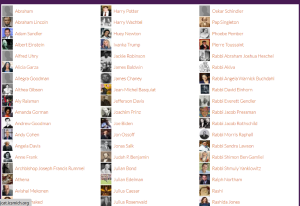
However, the inclusion of White students portraying Black characters became particularly salient and sensitive during discussions about allyship with the Black community in 2021. We acknowledge that our identities as White Jewish researchers limit our perspective. Thus, we engaged in discussion with consultants who are Jews of Color[1], veteran JCAT teachers, and project directors when deciding to maintain the practice of encouraging students to choose characters relevant to the case. We suggested characters for students to play, including Blacks and Jews involved in the Civil War and the civil rights movement, as well as Jews of Color. (See Appendix 2 for a partial list of JCAT characters)
For this exploratory study, we examined the broader group of 31 White students playing Black characters but focus on the comments of three students, those playing Julian Bond, Bishop Desmond Tutu and Sojourner Truth. We considered their work outstanding as they responded consistently and meaningfully to prompts throughout the simulation. Bond made 45 posts, Tutu, 36 and Truth, 43.
Below, we introduce brief biographies of these characters. Notably, Bond, Tutu and Truth did not have Jewish heritage, while the students representing these characters all identified as White and Jewish.
| Julian Bond (1940-2015) | Desmond Tutu (1931-2021) | Sojourner Truth (c.1797-1883) |
| Civil Rights Leader | South African Anglican bishop | Escaped enslavement |
| SNCC | Anti-apartheid leader | Abolitionist |
| Southern Poverty Law Center | Truth and Reconciliation Committee | Activist for rights of the formerly enslaved |
| Georgia state representative and senate | Nobel Peace Prize winner | Women’s rights activist |
| Chair, NAACP |
Findings
We compared students’ in-character posts to their out-of-character reflections to explore how role-playing shaped their engagement with the Memorial. Writing in-character, students criticized the monument as propagandistic. During the out-of-character debriefing, they discussed similarities and differences between their character’s perspectives and their own experiences. These reflections helped them begin to articulate positions they might adapt from the simulation into today's real world.
Critiquing the Memorial
We first present the focus characters’ opinions about the Confederate Memorial through their response to this prompt:
- What do you think this monument means to supporters of the Confederacy and what details make you think that?
- What does it mean to you? (your character)
| Julian Bond (1940-2015) | Desmond Tutu (1931-2021) | Sojourner Truth (c.1797-1883) |
| “The statue demonstrates a false sense of hope and victory as well as anti-abolitionist propaganda for confederacy supporters.He [the artist] made slaves looking ‘happy’ even though they wouldn’t be in those situations.” | “This statue stands as a way of romanticizing the Confederacy and slavery which is deeply disturbing. Even after they lost the war and slavery was abolished they continued to dehumanize black people. That kind of White supremacy and colonization of natives is one of the reasons why Apartheid started in the first place.” | This statue represents to supporters of the Confederacy their victory that did not occur.This shows that they are in denial of…losing the war and they do not want to accept my and other slaves’ freedom.” |
All three characters, a civil rights leader, an anti-Apartheid leader and an enslaved person and abolitionist, sharply criticized the monument. They challenged a “false sense” of a Confederate victory in the Civil War. In particular they critiqued the representation of enslaved people happily interacting with their enslavers. Tutu and Truth further enhanced their critiques with connections to their characters’ lives: Tutu linked his comments about White supremacy to Apartheid in South Africa and Truth directly named an attack on “my and other slaves’ freedom” as the message she took from the monument.
Although some characters acknowledged a point of view that courageous Confederate soldiers deserved to be remembered for their honor and bravery, most participants decided that the memorial should be removed due to its racist message and its potential to cause pain to viewers. The most intense debate centered around whether the memorial should be destroyed or relocated to a museum with added commentary.
Several weeks after their initial posts, the focus characters continued to uphold and deepen their critiques of the monument while explaining their recommendations for its future:
| Julian Bond (1940-2015) | Desmond Tutu (1931-2021) | Sojourner Truth (c.1797-1883) |
| “It should be torn down!!!! This monument is more than just insulting. It’s offensive, disrespectful, and has no good meaning! Slavery was wrong in the first place and this memorial is a final message that has been in one place for too long!..We should be able to come to decisions more often so we can end racism.” | “This memorial should be taken down and displayed in a museum with a plaque explaining the problems. I wouldn't like it to stay up and be in a museum to offend people, but we should keep it up to teach about history. We can't fix history, but we can change the future. If you don't see the misery of the past that slavery caused, we will never learn from those mistakes.” | “The monument should be taken down but put in a museum. It should tell the full story of the war, the debate on the statue’s placement, the placement of slaves in the statue, all of it, the whole truth.” |
For all three characters, the memorial represented the evils of slavery in the United States and in different ways, they framed its removal from Arlington as a step towards a more just society. Bond suggested that slavery is inappropriately memorialized in a statue purportedly dedicated to the heroic acts of Confederate soldiers. He connected slavery then to its legacy of racism in the current day, which he wants to “end.” Tutu and Truth promoted moving the memorial to a museum, a presumably less offensive spot, so that according to Truth, viewers could be exposed to “the whole truth,” and then, in Tutu’s words, might “learn from those mistakes” and “fix” the future. Both Tutu and Truth answer the simulation’s guiding question, “what does it mean to learn from history?”
Authentically composing a character's response to a prompt is challenging because it requires students to envision not only what the character would say but also to align it accurately with the character's biography. For instance, Desmond Tutu, as a leader of the Truth and Reconciliation Committee in South Africa[1] might very well have supported either the recontextualization of the Confederate Memorial in a museum or its destruction. Nevertheless, it seems likely that based on their life experiences,Bond, Tutu and Truth would not have voted to keep the monument intact at Arlington.
Expanding from the focus characters to the full group (31 students playing Black characters and 90 playing White characters), our findings reveal a trend: those playing Black characters demonstrated a significantly higher propensity to express moral outrage towards slavery, in-character. Specifically, 35% of students portraying Black characters expressed such outrage compared to 13% among their peers playing White characters. They made numerous comments expressing horror and dismay that Black people were owned and treated so poorly because of the color of their skin. It seems likely that knowing the biographies of the Black characters contributed to this pattern.
Learning from Debriefing
Debriefing is an important part of any simulation. It is an opportunity for students to reflect on the learning experience, particularly the experience of representing a character. Wright-Maley (2015) names debriefing as a component of “pedagogical mediation,” a crucial element that emphasizes the teacher’s role in ensuring that educational goals embedded in simulation design are actually achieved. We emphasize it as a key vehicle for helping students develop a fuller understanding of how individual perspectives on an issue are shaped to a great extent by life experiences and therefore are different for everyone. During debriefing students can share what they really think about an issue, and such sessions provide students a chance to be heard and authentically share their own perspectives, rather than always “pretending” to be the other person. In JCAT, students are asked online in the “Green Room” and by their teachers in class, to reflect on the experience of playing their character.
We hoped to learn more about how the White students who chose to play Black characters reflected on the similarities and differences between themselves and their characters.
First, we illustrate their responses of the focus characters to a debriefing prompt. Because it was addressed to all students playing characters of all backgrounds, the wording does not explicitly prompt references to identity.
We asked, “Slavery and racism are difficult topics to discuss. What was it like to discuss these topics in and out-of -character?”
| Julian Bond (1940-2015) | Desmond Tutu (1931-2021) | Sojourner Truth (c.1797-1883) |
| “I feel like Julian Bond’s and my opinions would probably be the same. I felt like I could voice my opinions, because it would be the same as Julian Bond. So that was very nice because it did not make it complicated.” | “In character, it was not that hard because my character has been through so many racist experiences, that it is easy to come up with answers.To me personally, it is a lot harder because despite how much I hate racism I feel like I am [not] educated enough on the subject. After all, I am a middle-class White Jew and I have not been through some of the horrible things that other people have.” | “Discussing these topics in character was challenging as my character was enslaved and had to experience slavery first hand while I have just learned about these terrible things in class. It was a little bit hard because when you're playing somebody, you don't want to say something that they wouldn't say or do something that they wouldn't do. It definitely helped with empathy and having to really think how they would think." |
All three students appreciated the challenging life experiences of their characters. The students maintained that their personal perspective on the fate of the monument matched what they imagined their characters would have decided (and indeed, the words they put in their characters’ mouths). However, Tutu and Truth also articulate different life experiences between themselves and their character. The student playing Tutu names his identity: “I am a middle-class White Jew and I have not been through some of the horrible things that other people have” and Truth points out, “discussing these topics in character was challenging as my character was enslaved and had to experience slavery first hand while I have just learned about these terrible things in class.” This level of awareness, that a White identifying person cannot know what it is like to experience racism as a Black person in the United States, is an important distinction.
Looking at the full set of responses to this prompt, we see that some of the students playing White characters also expressed this distinction between those who have experienced racism and those who have not. For example, Kim Kardashian said, “It was interesting to discuss it because it isn’t something that both we (student partners) and Kim K experience. We had to think deeply about our decisions and about what we said.” Other students seemed to be moving towards this conclusion when they expressed concerns about “saying the right thing” when discussing a sensitive topic such as racism.
These examples point to the importance of debriefing in role-playing activities, particularly if a goal is to transfer learning outside the simulation space to civic engagement in the broader society. As with all activities, students experience the simulation at a range of developmental levels- not all portray their characters accurately and not all reflect as deeply on the similarities and differences between their characters and themselves. To realize the significant potential of role-playing, it is crucial for teachers to prompt students to reflect on their in-character comments, acknowledge the discomfort with speaking about topics like race, and continue to help students name different components of their identities and how they intersect.
What did we learn?
Our many years working with JCAT students and teachers have shown us that the immersive role-playing experience, where students speak in the first person in the voices of their characters, offers a more rich, complex exposure to multiple perspectives than “learning about” the perspectives held by others. We also know that students and teachers alike find it difficult to talk about race and appreciate role-playing as a safe venue from which to start to build confidence.
Teaching about race is difficult work that can be emotional and risky. Nevertheless it is imperative for students in Jewish day schools, particularly because they are predominantly White spaces, to have access to learning about the impact of ideas of race and racism historically and in contemporary society. We encourage teachers to create opportunities for role-playing as one entry point to this conversation. Not every White student has to take on the perspective of a Black character, as the students playing Julian Bond, Desmond Tutu and Sojourner Truth have shown, there is value in this endeavor, for both these students and potentially their classmates who are privy to their brainstorming, decision-making and reflecting.
Researching about teaching and learning about race is also sensitive and complex. To begin with, all of the findings here could benefit from further investigation, adding on additional levels of nuance. How does one investigate a student’s sense of racial identity and the impact that identity might have on their engagement with content, without asking invasive personal questions? In what ways do students acknowledge their Jewish identity (or not) when articulating ideas about race?How does one avoid harm to the few people of color in Jewish day schools in the process of trying to understand their experiences? And how does the racial background of the teacher or researcher play into these dynamics?
All of these issues seem quite challenging to resolve, but we hope that we and others will forge ahead with this work. Ignoring difficult history such as slavery and its repercussions, and the range of Jewish engagement with issues of race and racism, is not the answer. We believe that students are equipped with imaginations and learn well when respectfully stepping into the shoes of other people, even when crossing the boundary of skin color. We hold a belief that experience includes both what is lived and hypothetical. Thus having students imagine what it would be like to be a victim of racism can be educational, though it requires a lot of support and sensitivity.
The Haggadah principle of B’chol dor v’dor, in every generation we should see ourselves as if we came out of Egypt has resonance for both Jewish and Black communities and those who share both heritages. Role-playing conversations about the impact of slavery is one way for students to start to engage with this message and to start to translate it to action as they make their way in the world.
Appendix 1: JCAT STAKEHOLDERS
This figure illustrates the collaborative interaction among stakeholders within the simulation. On the left side of the diagram, a classroom teacher sits alongside an icon of a student, representing middle school participants. In the center, the computer screen displays the simulation interface. On the far right side, photographs of two university professors (the authors) are shown with arrows pointing towards a brunette figure, symbolizing their graduate students. Students have many layers of support as they navigate playing their characters because of the input from their teachers, university professors, and graduate students.
Appendix 2: PARTIAL JCAT CHARACTER LIST
Rebecca Shargel
Rebecca Shargel is Professor of Education in the Department of Learning Technologies, Design, and School Library Media in Towson University’s College of Education. She teaches a wide array of courses mostly in the area of educational research. Rebecca also serves as a project director for the Jewish Court of All Time simulation which was funded by the Covenant Foundation. Rebecca’s research interests include facing history through role playing, curricular integration in Jewish day schools, and havruta style text study. In addition, Rebecca is an affiliate faculty member of the Baltimore Hebrew Institute at Towson University.
Meredith Katz
Meredith Katz is a Lecturer and Teacher Educator in the Secondary Education and Youth Services (SEYS) program in social studies education at Queens College (City University of New York). She recently completed twelve years as Clinical Assistant professor of Jewish Education in the William Davidson School of Jewish Education of The Jewish Theological Seminary. Meredith also serves as faculty for the Jewish Court of All Times online simulation program for Jewish day schools, previously funded generously by the Covenant Foundation. Meredith’s current research interests include citizenship education in Jewish schools, particularly as it relates to the teaching of Jewish history and schools’ efforts to engage with issues of diversity. She is completing two studies with colleagues on the perspectives of predominantly white day school parents, faculty and administrators with regard to their efforts to engage the day school community with issues of race and racism. Meredith explores the teaching of controversial issues at both the institutional level of administrative decision-making and in teachers’ work in the classroom.
References
Blight, D. (2017, November 18). Historic context of Confederate monuments [Video]https://www.c-span.org/video/?436091-1/historical-context-civil-war-monuments
Blight, D. (2024, May 31). Lost cause, historical interpretation, United States. Encyclopedia Britannica. https://www.britannica.com/topic/Lost-Cause
Herbert, H. A. (1914). History of Arlington Confederate Monument. United Daughters of the Confederacy. https://archive.org/details/historyofarlingt00herbe/page/n3/mode/2up
Jewish Court of All Time (n.d.), Jewish court of all time log-in page, JCAT. https://jcat.icsmich.org/
Kupperman, J., Fahy, M., Goodman, F., Hapgood, S., Stanzler, J., & Weisserman, G. (2011). It
matters because it’s a game: Serious games and serious players. International Journal of
Learning and Media, 4(2).
http://www.mitpressjournals.org/doi/abs/10.1162/ijlm_a_00056#.VhcvBdFdEdU
Little, B. (2021) How the US Got So Many Confederate Monuments.
How the US Got So Many Confederate Monuments | HISTORY
Lo, J. C. (2018). "Can we do this everyday?" Engaging students in controversial issues through role-play. Social Education, 82(6), 330-335.
Ortiz & Diaz, (2020, June 3). George Floyd protests reignite debate over Confederate statues. The New York Times. https://www.nytimes.com/2020/06/03/us/confederate-statues-george-floyd.html
Rector-Aranda, A., & Raider-Roth, M. (2015). "I finally felt like I had power": Student agency and voice in an online and classroom-based role-play simulation. Research in Learning Technology, 23. https://doi.org/10.3402/rlt.v23.25569
Rector-Aranda, A., Raider-Roth, M., Glaser, N., & Behrman, M. (2017). “I had to live, breathe, and write my character”: Character selection and student engagement in an online role-play simulation. Journal of Jewish Education, 83(4), 280–309. http://dx.doi.org/10.1080/15244113.2017.1378566
Shuster, K. (2018, January 31). Teaching hard history. Southern Poverty Law Center. https://www.splcenter.org/20180131/teaching-hard-history
Schweber, S. (2004). Making sense of the Holocaust. Teachers College Press.
Tutu, D. (2010/2024). Truth and Reconciliation Commission, South Africa.
Encyclopedia Britannica.
https://www.britannica.com/topic/Truth-and-Reconciliation-Commission-South-AfricaU.S. Army (n.d.). Confederate Memorial removal. Arlington National Cemetery. https://www.arlingtoncemetery.mil/About/Confederate-Memorial-Removal
Wright-Maley, C. (2015). Beyond the “Babel problem”: Defining simulations for the social studies. The Journal of Social Studies Research, 39, 63-77.
https://doi.org/10.1016/j.jssr.2014.10.001
Wright-Maley, C. (2018). More like life itself: Simulations of powerful and purposeful social studies. Information Age Publishing.
Footnotes:
[1] The Truth and Reconciliation Committee of South Africa, established in 1995 by the post-Apartheid South African government, was charged “ to help heal the country and bring about a reconciliation of its people by uncovering the truth about human rights violations that had occurred during the period of apartheid.” (Tutu, 2010/2024).
[1] We consulted with Tamara Fish and Sabrina Sojourner from Khazbar, an organization for Jews of Color: www.khazbar.org. It is a managed project of (Bend the Arc: Jewish Action, a Jewish organization that promotes justice.
[1] This study is part of a larger research study on middle school students facing difficult history in a simulation.
[2] Some students played characters in pairs, so the total number of students participating was 175, whereas the number of characters they portrayed is 126. Assignments of racial identity to others is a fraught task; we categorized characters as Black or White based on statements students made in-character.
[1] In December of 2023 the monument was removed as part of the efforts to remove Confederate symbols by the Department of Defense, who mandated all Confederate symbols be removed. Its contents were transported and stored in Virginia (U.S. Army, n.d.).
As the Director of Learning at the Covenant Foundation, I am delighted to introduce the inaugural issue of Reports from the Field, a new Foundation publication. Based on the findings from multi-year evaluations of Covenant Foundation grants, these articles offer compelling portraits of innovative Jewish teaching and learning framed within Jewish education research literature.
In this volume Judith Shapero illustrates “The Power of Intergenerational Initiatives” through the work of IDEAL 18, and explores how one Jewish day school (Brandeis Marin in San Rafael, CA) is “Grappling with Israel Through its Arts.” Joshua Krug uses insights from evaluating BaMidbar’s MESH-EE (Mental, Emotional, and Social Health through Experiential Education) Fellowship to offer new perspectives on “Assessing “Success” in Professional Development.” Meredith Katz and Rebecca Shargel investigate how the Jewish Court of All Time (JCAT) educates about historical racism as “Jewish Students Explore the Confederate Memorial through Role-Play.” Finally, I’ve written an article that explores “The Art of Flourishing” through the work and ideas of artist-educators whose creative approaches to Jewish life and learning are expanding our conception of what is possible in Jewish education.
As you read through this first volume of Reports, we hope you will be impressed by the exciting work being done by colleagues throughout the field, intrigued by the research frameworks that help explain how this work achieves the impact it does, and inspired to apply some of this research to your own work. We look forward to the new findings and insights that will thus be generated and highlighted in future Reports from the Field editions.
--Meredith Woocher, Director of Learning, The Covenant Foundation
By Dr. Judith Shapero
- “My life is complete.”
- “We are bonding.”
- “She is my present, my friend.”
- “My heart feels blessed.”
- “I can’t wait for grandfriend day!”
- “Wow!”
- “This is the light of my life!”
- A weekly tap dance workshop series for elders and 7–8 year-olds, held after school hours.[4]
- Building a bridge together out of blocks. This physically required two pairs of hands to build, and led to discussions about building relationship bridges across the ages.[5]
- Touring the stained-glass windows at the synagogue and then jointly creating their own stained-glass artwork [6]
- Special holiday programs such as Purim crafts,[7] or sushi making in celebration of the lunar new year[8]
- Biweekly visits prior to Passover focused on preparing together for a joint interactive seder. The elders and children crafted an Elijah’s or Miriam’s Cup as well as created a page of a Haggadah together. Then they held an interactive seder together using their jointly made classroom Haggadah and each child/grandfriend’s cup. Parent volunteers attended and added a third generation to the culminating interaction.[9]
- Elders visit the class weekly, bringing from their homes ritual objects related to the week’s Jewish theme, and they explore with the children personal stories about the objects.[10]
- A senior who is an experienced master gardener led a series of hands-on gardening workshops with the children.[11]
- Students are brought weekly to the horticultural room at a seniors’ recreational center that happens to rent space on the same campus as the Temple. Each week, the school’s art teacher sets up learning prompts and the teacher and students invite the elders to join in.[12]
- Photos of the grandfriends are posted in the hallway, so even during the rest of the week, the children can look at and write notes to their grandfriends, and the grandfriend can read those notes when they visit.[13]
- A weekly afterschool chorus program between elders and young students in kindergarten through second-grade.[14]
- Laurieanne, Laurianne M., Sirovich Center Older Adult Member quoted in “EA Intergenerational Programs,” Educational Alliance, New York, NY. March 2024.
These feelings of joy and fulfillment were expressed by children and elders participating in IDEAL18’s intergenerational initiatives. In our communities, many elders and young children experience significant harmful effects of ageism and isolation. IDEAL18[3] trains educators and community leaders to create initiatives that bring these two groups together in ways that create deep, consistent, fulfilling relationships for the benefit of all. These relationships are fostered through intentionally-designed ongoing interactions –- be it tap dancing, gardening, literal bridge building, stained-glassmaking, Haggadah-creating, block playing, sound-making, holiday crafting, cooking, portraiture, and more. This article explores the critical need for such initiatives, their powerful impact, models, and practical strategies for successfully implementing such initiatives in one’s own institution, be it an early childhood center, school, synagogue, seniors’ center, or community center.
The Crisis
Our communities are facing an insidious social and health crisis. Ageism, that is, stereotypes and discrimination relating to the aging process and older adults, is experienced by over 90% of U.S. seniors (Allen et al 2022). Moreover, ageism is strongly associated with poor physical and mental health, including symptoms of depression and aggravated chronic health conditions (ibid., Allen 2016, Hu et al 2021). Ageism “is prevalent, ubiquitous and insidious” (Global Report on Ageism 2021) and has far-reaching consequences for wellbeing and quality of life.
The effects of ageism are magnified by the social segregation that many seniors experience (Hagestand and Uhlenberg 2005). Isolation affects everyone in our technology-infused, busy, siloed society, but often hits seniors the hardest. In the U.S., college-age students often move and stay out of town leading to lack of interactions between the eventual grandchildren and grandparents. Many elders live alone, and, according to one participant, may “wait all week for their kids to call on a Sunday afternoon - that’s all they have” (Paster). Ageism can also be subconsciously internalized and self-directed, leading elders to limit themselves and to think poorly of their own worth (Lamont, Swift, Abrams 2015, Levy 2001, Meisner 2012). Many seniors lack relationships with youngsters that could reignite the seniors’ sense of wonder, self-worth, and purpose.
Young children, too, experience the harms of being isolated from an older generation. With their parents and other adults busy earning a living, taking care of the whole family, and dealing with technology, young children sometimes lack the focused, lengthy, one-on-one attention of an adult with the patience and time to directly listen to and interact with them. Several ECE directors who participated in the IDEAL18 training noticed the emotional effects on their students of the lack of “dedicated time to connect meaningfully with another person”(Bernstein). Older adults often have the time, attention span, and desire to provide children with those connections.
Furthermore, young children who do not have positive, regular interactions with elders are likely to adopt society’s ageist attitudes, to carry them through adulthood, and then direct the harmful stereotypes at themselves as they age (Levy 2003).
As described below, deep intergenerational interactions are a powerful way to combat ageism and isolation for the benefit of participants of all ages and of society as a whole.
Models of meaningful intergenerational programs in action
Laughter, tears of joy, and squeals of delight can be observed as the elders, deemed “grandfriends,” and young children interact and build meaningful relationships. IDEAL18 Executive Director, Diana Ganger, and Director, Sharon Goldman, emphasize that these connections are most impactful only when fostered through regular, ongoing interactions with consistent cohorts of grandfriends and children.
Content for these interactions is exciting and varies, always involving planned, hands-on activities that invite exploration and conversation. During the recent cohort of fellowship training, supported by a Covenant Foundation Signature Grant, IDEAL18 fellows implemented the following as part of their regular interactions:
Structures for these ongoing interactions are diverse and cater to the institutional context. Grandfriends can visit a classroom, children can visit an elder center, or both can meet up in a third space (e.g. a garden or a synagogue social hall.)
Many of us are familiar with standard interactions between a class full of children and a group of elders: perhaps the youngsters sing Hanukkah songs in a nearby nursing home, or a grandparent visits a class to read to the students. Events like these are lovely, but they do not solve the societal crisis of ageism and isolation, because they do not include the interaction and consistency necessary for building relationships. Ongoing, interactive, intergenerational initiatives provide a more effective path. According to Ganger, to make a significant impact, “we don’t build programs, we build relationships.”
Strategies for successfully creating impactful intergenerational initiatives
Many fellows who participated in IDEAL18’s training had the desire to lead intergenerational programs and perhaps had even implemented some, but wanted to learn how to do so in a more impactful, transformational way.
Ganger and Goldman designed a fellowship for training leaders which included several essential elements for creating transformative intergenerational initiatives. The fellows used these elements when planning and leading initiatives in their home institutions, and described their importance and impact.
The first essential step for making real change is realizing that change needs to be made. There are many pressures on an institution’s or person’s time, resources, and attention, and an initiative will fall by the wayside unless its leaders believe in its worth. Ageism is a crisis in our communities, one that is toxic and systemic but often unnoticed.[15]Therefore, one must raise awareness of the prevalence and severity of ageist bias in one’s community, and crucially, in oneself. To accomplish this, the leaders learned about the severe effects of ageism and then shared ideas with their teams. They discussed their own relationships with the elderly in their families and in the community, and they shared stories from elders in the community. During a fellowship training conference, Granger and Sharon used activities such as a face-aging app to have the fellows note their negative reactions to aging and to recognize their own internalized ageism. Fundamental to success is identifying the crisis and motivating the leadership team to want to fix it.
Even once the leadership team is motivated, the leaders must then “fertilize the soil” by changing younger people’s inadvertent hesitations about being with older people. Children as young as preschoolers have already adopted the negative ageist attitudes of society (Levy 2003). If one brings a stranger who is elderly into a classroom without sufficient preparation, the children, through no fault of their own, will feel distant and even scared. They may be frightened by wrinkles, or walkers, or the thought of someone dying. Before the encounters, classroom teachers increased their students’ comfort level and normalized for them the aging process. The teachers included in the classroom library books for children about aging, wrinkles, and life cycle, including dying.[16] Such books were read at circle time and kept as a normal part of the classroom library. The teacher also led age-appropriate guided discussions about these topics, aided by these books. Additionally, intergenerational leaders reported that students’ hesitations were greatly eased when the teachers included mobility devices such as a walker or wheelchair in the kindergarten play/dress-up area, normalizing these devices and, consequently, their users.
Similarly, the seniors should be prepared about what to expect from the children. Young children may come across to elders as rude when the children get distracted or act impulsively. The children may also talk too quickly, be shy, or act in other ways that cause elders to be discouraged. To alleviate this concern, the intergenerational leaders held preparatory meetings with the elders, explaining expected childhood behaviors, and giving tools to the elders to deal with them. The leaders also recommend holding reflection workshops after the intergenerational interactions. According to IDEAL 18 fellow Geula Zamist, the post-program reflection workshops are one of the most impactful elements of her intergenerational initiative. Facilitated by a member of the leadership team, elders share challenges, strategies, and successes. The elders learn to understand the individual children more fully, they adjust their strategies to maximize future success, and motivate each other.
Crucially, as mentioned above, the focus must always be on relationship-building. This requires creating a structure for regular, ongoing interactions between the same groups of children and grandfriends. It also requires purposefully-designed activities that are hands-on, interactive, and invite conversation. To accomplish this, there must also be thoughtful attention to space and materials.
The intergenerational leaders also took to heart other learnings from their training program that made their initiatives successful. For example, they thought big but started small. Their dream may have been to involve multiple cohorts of children and grandfriends, to meet weekly throughout the year, and to start all of it immediately. However, that would likely have led to disappointing results and fizzling of the initiative. Instead, the leaders chose one set of children, and a small group of elders. They piloted an idea, tried a small number of relationship-building programs, and gathered extensive feedback from all those involved. They reflected on the successes and challenges of the initiative and used that to strengthen the initiative going forward. The fellows also created and nurtured a shared leadership team within their organization in order to have partners in implementing these initiatives more effectively and so that the initiatives can live beyond one leader.
The directors and fellows also stressed the importance of documenting and sharing the initiatives. Documentation (in words and in photos) serves not only to deepen the initiative’s impact, but also to broaden it: Through sharing successes of the initiative with the wider community, others are inspired to combat ageism in their own lives and settings. Some fellows found a volunteer or a member of their shared leadership team to take photos and to write down observations and quotations during the program and its reflection. Others write blurbs for institutional newsletters, post on professional or personal social media, reach out to other institutions to share ideas, and contact local media.
Thoughtful planning led to powerful results.
The power of intergenerational initiatives
The impact was significant for all the participants of the relationship-focused intergenerational initiatives – the children, leaders, and elders.
The children expressed feelings of excitement and meaningful connection. For example, they wait all week for “Grandpa Greg day,” they are all eager to sit at the grandfriends’ tables and do activities together, they’ve declared their grandfriend “my new best friend,” they’ve asked that their grandfriend’s favorite song be played, and they’ve enthusiastically shared their experiences with other classrooms and with their own families. The depth of mutual affection can be seen during and between many of the programs. During programs, faces are beaming. Some families make plans for their children to meet up with their grandfriend during school break.
The leaders felt the impact directly as well. One leader realized “how quickly an elder can spiral downward when they do not have connections” and saw first-hand “how important and vivifying it is for them when they do” (Bernstein). Another leader saw the power of the initiative and concluded that more community programs should be by default intergenerational (Herman). The initiatives give the leaders themselves joy, one declaring that “I can see that I am effecting change. Each encounter lifts me up and gives me more meaning and purpose” (Zamist 2024).
The elders likewise expressed joy and fulfillment from their interactions. They stated that the visits were “by far the highlight of my week,” “fill my bucket,” and are “the light of my life.” An elder shared with the children that she takes two buses, using a walker, in order to be with them and that she wouldn’t miss it for anything. An older adult participant in the intergenerational choral program affirms that these initiatives “give us a sense of accomplishment… I could see that I am a vibrant living, contributing member of a much larger group who is aging gracefully… We all need more opportunities like this” (M. Laurianne). Participants in other initiatives were equally enthusiastic, one describing her interactions with the children as “a learning experience [that] allows us to see the wonder through their eyes. (Zamist 2024)”
Furthermore, studies show that these positive feelings lead to increased physical health in older adults (Sargent-Cox 2012). The World Health Organization’s Global Report on Ageism credits intergenerational initiatives for numerous positive outcomes:
Intergenerational contact strategies are among the most effective interventions for reducing ageism against older people…[They] can, for example, lead to improved health and psychosocial well-being, and increased self-esteem, and can reduce distress, decrease loneliness, lead to a greater sense of social connectedness and strengthen intergenerational solidarity. (WHO, 2021)
One Fellow summarizes these intergenerational relationships as “a win for all” (Bernstein).
Conclusions
These findings demonstrate that “we can be changemakers” (Belzer). Ageism and isolation are a crisis in our communities. Change must and can be made through intentionally-designed intergenerational initiatives which greatly benefit all. The need is urgent, and the solution is clear. Intergenerational initiatives can be implemented in a variety of ways, utilizing different structures, personnel, and content, making these initiatives customizable to many different settings. The key is to be aware of the crisis, to plan with intentionality, and to create relationships. With the fundamental in place, these initiatives can transform the lives of seniors and of children, and can significantly improve our communities. One intergenerational fellow concludes, “There is so much negativity going on in our world because connections are absent. Humans are born connectors, and we need connections like these in order to thrive and even just to survive” (Bernstein).
A second revelation is the untapped opportunity to provide such intergenerational programming that is provided by our shared campuses and spaces. Many JCCs and synagogues serve all ages, and schools may have seniors’ facilities sharing their campus, yet the programming and spaces often remain siloed from one another. The above findings demonstrate that it would behoove our communities to take advantage of these proximities and create connections across the generations.
Moreover, the insights gathered from these intergenerational initiatives can serve as a valuable compass for identifying and rectifying other social challenges in our communities. These tools can be applied across demographics, aligning with our desire to create more welcoming communities for all.
Further resources about intergenerational initiatives:
Recommended children’s books that normalize aging: How Old am I: 100 faces from around the world, by JR and Julie Pugeat, Grandfather’s Wrinkles by Kathryn England, The Hello, Goodbye Window by Norton Juster and Chirs Raschka, Mrs. Katz and Tush by Patricia Polacco, Oma’s Quilt by Paulette Bourgeois, The Fall of Freddie the Leaf: A story of life for all ages by Leo Buscaglia, and many more. These and others are listed by Ganger and Goldman at IDEAL18.org/books/
Books for adults: How to Live Forever by Mark Greenberg, This Chair Rocks: A Manifesto Against Ageism by Ashton Applewhite.
Videos of intergenerational initiatives around the world can be found at ideal18.org/research-video/
Coaching, consulting, and practical resources for institutions interested in exploring intergenerational initiatives can be accessed at IDEAL18.org, by contacting IDEAL18’s directors Diana Ganger dganger1818@gmail.com and Sharon Goldman sharon.goldman0613@gmail.com, or by calling 630-390-8229.
Judith Shapero
Judith Shapero is a senior educational leader, consultant, project director, and researcher. Judith has designed and taught Jewish Studies and Jewish Education courses at York University and at the Jewish Theological Seminary of America, and has been Principal, Vice Principal, curriculum developer, teacher, and Department Head at TanenbaumCHAT and other schools in the Toronto area. Judith conducts evaluations of Covenant Foundation Signature grantees and is also the Director of Education at Temple Sinai Congregation of Toronto. Judith coaches many schools in the United States and Canada by leading faculty PD, creating custom curricula, supporting school leaders, and enhancing Jewish studies pedagogy.
Judith has won numerous awards for her contributions. These include the Division of Humanities Excellence in Teaching Award, the Shoshana Kurtz Book Prize, and the Joseph Zbili Memorial Prize in Hebrew from York University; the Gold Solomon Schechter Award for Jewish Family Education from USCJ; and the Charles H. Revson Fellows for Doctoral Studies, the Fannie and Robert Gordis Prize in Bible, and the Dr. Bernard Heller Graduate Fellowship from JTS.
Works Cited
Allen, J. O., Solway, E., Kirch, M., Singer, D., Kullgren, J. T., Moïse, V., & Malani, P. N. (2022). Experiences of Everyday Ageism and the Health of Older US Adults. JAMA Network Open, 5(6). https://doi.org/10.1001/jamanetworkopen.2022.17240
Allen J. O., Ageism as a risk factor for chronic disease. Gerontologist. 2016;56(4):610-614. doi:10.1093/geront/gnu158
Global Report on Ageism, World Health Organization, 2021, https://iris.who.int/bitstream/handle/10665/340208/9789240016866-eng.pdf?sequence=1
Hagestad G., Uhlenberg P. The social separation of old and young: a root of ageism. J Soc Issues. 2005;61(2):343-360. doi:10.1111/j.1540-4560.2005.00409.x
Hu R. X., Luo M, Zhang A., Li L.W., Associations of ageism and health: a systematic review of quantitative observational studies. Res Aging. 2021;43(7-8):311-322. doi:10.1177/0164027520980130
Lamont R.A., Swift HJ, Abrams D. A review and meta-analysis of age-based stereotype threat: negative stereotypes, not facts, do the damage. Psychol Aging. 2015;30(1):180-193. doi:10.1037/a0038586
Levy B.R., Eradication of ageism requires addressing the enemy within. Gerontologist. 2001;41(5):578–9. https://doi.org/10.1093/geront/41.5.578.
Levy B.R., Mind matters: cognitive and physical effects of aging self-stereotypes. J Gerontol B Psychol Sci Soc Sci. 2003;58(4):203-211. doi:10.1093/geronb/58.4.P203
Meisner B.A., A meta-analysis of positive and negative age stereotype priming effects on behavior among older adults. J Gerontol B Psychol Sci Soc Sci. 2012;67(1):13-17. doi:10.1093/geronb/gbr062
Sargent-Cox K.A., Anstey KJ, Luszcz MA. The relationship between change in self-perceptions of aging and physical functioning in older adults. Psychol Aging. 2012;27(3):750-760. doi:10.1037/a0027578
Zamist, Geula, “Impact-Grandfriends.” Congregation Agudath Israel, Caldwell, NJ, March 2024.
Personal Interviews
Multiple interviews were conducted by the author with the fifteen IDEAL18 intergenerational leaders in the springs of 2021, 2022, 2023, and 2024. Learnings from those interviews were analyzed for this article. The following interviewees were quoted directly or had their specific programs mentioned in the article:
Belzer, Stacey. Former Director of Family Engagement, The Jewish Community Center of Greater Kansas City, Overland Park, KS
Bernstein, Jordana. Early Childhood Director, Akiva Yavneh Academy, Dallas, TX
Ganger, Diane. Co-Founder and Executive Director, IDEAL18, Chicago, IL
Goldman, Sharon. Director, IDEAL18, Chicago, IL
Goldstick, Patty. Early Childhood Center Director, Temple Shaaray Tefila, Bedford Corners, NY
Herman, Cory Michael. Artistic Director, The Educational Alliance, New York, NY
Paster, Carol. Preschool Director, Temple Sharey Tefilo-Israel, South Orange, NJ
Rosenberg, Floryn. Site Director, Erika J. Glazer Early Childhood Center, Wilshire Boulevard Temple, Los Angeles, CA
Thiel Prizant, Tamara. Director of Family Engagement and Center for Social Impact. Oshman Family JCC, Palo Alto, CA
Wolf-Spector, Dawn. Director of Youth Education, Congregation Rodef Shalom, Denver, CO
Zamist, Geula. Early Childhood Center Director, Congregation Agudath Israel, Caldwell, NJ.
[1] This article is based on a three-year study conducted by Judith Shapero on behalf of the Covenant Foundation. The study involved multiple in-depth interviews with IDEAL18 Cofounder and Executive Director, Diana Granger, and IDEAL18 Director, Sharon Goldman, as well as with the thirteen fellows who participated in IDEAL18’s Intergenerational Fellowship of 2020-2023. Additionally, I reviewed relevant project files and academic literature. I analyzed the data qualitatively in order to evaluate the impact of the fellowship and to identify learnings worth sharing with the wider field.
[2] IDEAL18: Intentional, Deep Experiences Across Lifecycles. ideal18.org
[4] Herman, Cory Michael. Artistic Director, The Educational Alliance, New York, NY
[5] Goldstick, Patty. Early Childhood Center Director, Temple Shaaray Tefila, Bedford Corners, NY
[6] Ibid.
[7] Paster, Temple Sharey Tefilo-Israel
Wolf-Spector, Dawn. Director of Youth Education, Congregation Rodef Shalom, Denver, CO
[8] Wolf-Spector, Congregation Rodef Shalom
[9] Zamist, Geula. Congregation Agudath Israel, Caldwell, NJ.
[10] Paster, Temple Sharey Tefilo-Israel
[11] Thiel Prizant, Tamara. Director of Family Engagement and Center for Social Impact. Oshman Family JCC, Palo Alto, CA
[12] Rosenberg, Floryn. Site Director, Erika J. Glazer Early Childhood Center, Wilshire Boulevard Temple, Los Angeles, CA
[13] Zamist, Congregation Agudath Israel
[14] Herman, The Educational Alliance
[15] See “The Crisis” section above for more details on the harm of ageism and isolation.
[16] Recommended children’s books that normalize aging: How Old am I: 100 faces from around the world, by JR and Julie Pugeat, Grandfather’s Wrinkles by Kathryn England, The Hello, Goodbye Window by Norton Juster and Chirs Raschka, Mrs. Katz and Tushby Patricia Polacco, Oma’s Quilt by Paulette Bourgeois, The Fall of Freddie the Leaf: A story of life for all ages by Leo Buscaglia, and many more. These and others are listed by Ganger and Goldman at IDEAL18.org/books/
Judith Shapero is a senior educational leader, consultant, project director, and researcher. Judith has designed and taught Jewish Studies and Jewish Education courses at York University and at the Jewish Theological Seminary of America, and has been Principal, Vice Principal, curriculum developer, teacher, and Department Head at TanenbaumCHAT and other schools in the Toronto area. Judith conducts evaluations of Covenant Foundation Signature grantees and is also the Director of Education at Temple Sinai Congregation of Toronto. Judith coaches many schools in the United States and Canada by leading faculty PD, creating custom curricula, supporting school leaders, and enhancing Jewish studies pedagogy.
Judith has won numerous awards for her contributions. These include the Division of Humanities Excellence in Teaching Award, the Shoshana Kurtz Book Prize, and the Joseph Zbili Memorial Prize in Hebrew from York University; the Gold Solomon Schechter Award for Jewish Family Education from USCJ; and the Charles H. Revson Fellows for Doctoral Studies, the Fannie and Robert Gordis Prize in Bible, and the Dr. Bernard Heller Graduate Fellowship from JTS.
By Dr. Judith Shapero
Introduction
“How do we educate school-age children to feel a sense of attachment to Israel and an appreciation for its extraordinary existence and accomplishments while at the same time help them cultivate their ability to think and dialogue critically and constructively about Israel’s government and its policies?” (Sandel 2018). Thus asked the leadership of Brandeis Marin Jewish day school in California, articulating a challenge facing Jewish educational institutions across the world -- now more than ever. The school responded to this profound need by developing a distinctive model for Israel education, one that uses Israeli arts and culture to invite sophisticated exploration of complex issues. For the sake of sharing insights with the field, this article analyzes how the school implemented such an approach, and how it can lead to a school’s fulfilling its vision of simultaneously connecting with Israel, fostering curiosity, grappling with challenges, promoting dialogue, and honoring multiple perspectives.
Context in the Field of Israel Education
The importance and challenges of teaching about Israel[1] existed long before October 7, 2023, but October 7th and its aftermath have magnified the urgency. Many Jewish students and adults have felt a seismic shift in their relationship with Israel, feeling pressure to withdraw into uniform-thinking circles and/or struggling with uncomfortable perspectives. Even before October 7th, many Jewish Day Schools in North America had the desire to teach their students about Israel in a way that both fosters a connection with the country and honestly explores its complexities.[2] This desire aligns with several scholars who have advocated for an approach that both is “accurate” and “foster[s] a sense of belonging” (Troy, 2023).
However, educators face significant challenges when trying to create such a program (Pomson and Deitcher, 2010; Zakai, 2011; Zakai, 2014). Many fear that exploring critiques about Israel may turn students against the country. They are concerned that “the goals of critical thinking and love [of Israel] could potentially work at cross-purposes” (Zakai, 2011, p. 245) and that introducing complexity “may alienate students” (Grant and Kopelowitz, 2012, p. 64). Others worry that mentioning controversial issues will disturb the school community which has conflicting views about Israel. Schools, therefore, may adopt a practice of “constructive ambiguity” (Pomson and Deitcher, 2010, p. 67) where they avoid discussing sensitive topics in the hopes of minimizing conflict. The schools instead focus on creating an emotional attachment to Israel through purely positive experiences, at the expense of instruction toward fostering skills and understanding.
Despite these well-meaning efforts at inculcating a connection to Israel, doing so in a vacuum, that is, while avoiding dealing with Israel’s complexities, can backfire. There are “dangers of teaching a whitewashed or mythic Israel.” (Zakai, 2014, p. 312). Students inevitably become aware, from sources outside of school, about complexities such as the interplay with the Palestinian narrative, leading students to believe that their own education is incomplete. They attribute bias to their teachers and mistrust their information (Pomson, 2012). Lacking nuance and dismissive of their own education, students may distance themselves from Israel, undermining the very goals that their day school educators had hoped for. As Grant explains, “If we focus only on the inspirational side, we run the risk of indoctrination on one extreme and alienation on the other” (2008).
Not only can an honest grappling with the complexities lessen alienation, but it may even lead to a more comfortable and more confident relationship with Israel (Reingold, 2022, and see the summary of ‘the complexity hypothesis’ in Sinclair et al., 2013), though others have argued that complexity and attachment are not related in this way (Hassenfeld, 2023). In addition to these possible benefits, teaching the complexities of Israel has inherent value in that accurate and honest knowledge is gained - a presumed goal of any educational endeavor.
In recent years, many Jewish educators have expressed a desire to teach Israel in an honest, positive, and exploratory manner. However, as Zakai points out, awareness is only the first step; what is needed is a “clear pathway” (2014, p. 310) and effective tools for practical implementation.
One school that has answered this call is Brandeis Marin, a kindergarten through eighth-grade independent Jewish Day School in San Rafael, California. Educators at Brandeis Marin have created and implemented a program that offers a distinct model for engagement with Israel in all its beauty and complexities. Brandeis Marin created a multi-faceted approach to achieve this openness and connection. One main facet is its use of Israeli arts and culture to invite sophisticated exploration of nuanced issues.
This idea of Israel “inspiration through the arts” was proposed by Gringras (2006) who suggested that Israeli popular arts can serve as “our most valuable educational resource” that can both “engage us in our guts” and “challeng[e] our thinking.” He continues that “Israeli arts bring us inside the dance, inside the passionate wrestling over the soul of this country, in such a way as to touch us deeply and infuse us with energy for the struggle.” Encounters with Israeli art were also a key component of the Davidson School of JTS’s semester in Israel program for training emerging Israel educators (Backenroth and Sinclair, 2013). The arts approach enables students to engage with authentic sources directly. This openness is especially important given the extent to which students crave honesty and resist the bias they perceive (Pomson 2012).
Brandeis Marin’s Israeli arts and culture approach invites students to embrace questioning, nuance, meaning, and connection. This study will examine the school’s arts exploration program as a model for addressing the challenges of meaningful Israel education.
About Brandeis Marin
Brandeis Marin is a kindergarten through eighth-grade independent, co-ed Jewish Day school located in San Rafael, California. It serves a community that is diverse religiously, culturally, politically, and socio-economically. According to the admissions director, approximately 25% of its students come from households where all the adults identify as Jewish, 65% from a Jewish/mixed-faith household, and about 10% are from other faiths (Welner 2023). There is great variation in practice even for those families that do identify as Jewish. The community is also varied in its political views, though leans heavily liberal/left (Pomson and Wertheimer, 2022).
The school’s mission statement emphasizes collaboration, questioning, project-based learning, diverse perspectives, and critical thinking in all subject areas. Within that context, the focus of its Jewish studies program is on “challeng[ing] students to ask good questions, value multiple perspectives and wrestle with ethical questions while nurturing their spirit to experience moments of awe in life.” Connecting to Israel is also a part of this mission, in that the school aims to “foster a sense of connection to the people and land of Israel as a source of spiritual and cultural inspiration” (Brandeis Marin, Our Mission). Head of School Peg Sandel emphasizes that “we are both pro-Israel and pro-critical thinking” (Sandel 2022) which, in their school, go hand in hand.
Methodology
This study on the Israel engagement program at Brandeis Marin was initiated as a documentation of a Covenant Foundation Signature Grant (Shapero, 2022). To provide a comprehensive analysis of the program for this academic article, I conducted a second and third round of data collection, which included: multiple in-depth interviews with critical school and program leaders, teachers, students, and participants; a review of school documentation such as internal curriculum documents, multiple years of grant proposals, and diverse school learning materials; and an extensive review of relevant academic literature. Qualitative data analysis was performed to extract essential insights for the field of Jewish education.
The Israeli Arts and Culture Program: Overview and Goals
Educators at Brandeis Marin have created a program that offers a distinct and effective model for Israel engagement. Their approach aligns with school’s overall goals of inviting questioning and critical thinking as well as the school’s commitment to Israel.[3] According to Peg Sandel, Head of School, a primary aim of its Israel education is to show that one does not need to choose between the “extreme ends of support and criticism,” but rather, one can “grappl[e] with some of the hard stuff” while still feeling connected and “excited.” This goal includes, but is not limited to, wanting “to arrive at a sense of attachment to the state of Israel that includes the perspectives and stories of Palestinians” (Sandel 2022) and includes also other complicated issues in Israel and around the world. She aims to teach that being pro-Israel and pro-questioning are compatible.
The school has designed an Israeli arts and culture program that provides a positive and authentic way for students to enter into mature dialogue on complex topics. Across grades and subjects, Brandeis Marin uses exploration of contemporary Israeli arts and culture as a path for students to develop a meaningful, personal relationship with Israel that simultaneously fosters questioning and connection. In this article, I describe the program’s method and impact for the sake of sharing its learnings with the field.
The Israeli Arts and Culture Program: Content and Method
The Israel arts and culture curriculum is dispersed across several grades and subject areas: It is constituted foremost as a weekly, full-year eighth-grade course entitled “Israel Art and Culture” and is also a key aspect of the school’s eighth-grade Israel trip. Additionally, it is embedded in various grades from kindergarten upward in specific units, integrated across subjects. Each area will be expanded upon below. Art and culture include digital media, sculptures, poetry, paintings, street art, performance, music, and more.
The Israel Art and Culture 8th-grade course: The most intensive experience with this approach is in the eighth-grade course specifically dedicated to Israeli arts and culture. This year-long, weekly course was developed by the school’s long-time art and Jewish studies teacher, Lisa Levy. In the course, students are exposed to multimedia art[4] on a variety of Israeli topics and use those to grapple, explore, and connect with Israel. For example, students were presented with a photograph by an Israeli artist depicting a man experiencing homelessness pushing a shopping cart with his son lying on top of the bags (See Figure A1). Similarly, as part of a unit on Israel’s national anthem, Hatikvah, students study not only the lyrics and music, but also visual art related to it. One illustration by Israeli artist Rutu Modan depicts a group of Israeli schoolchildren wearing blue and white singing the anthem, with one student with her mouth firmly closed.[5]
In each case, students use a school-designed “PaRDeS method” to personally react to and interpret the piece of art without knowing anything about the artwork’s creator or context. Adapted from classic Jewish textual interpretation, PaRDeS involves exploring a piece of art on four different levels. On the ‘pshat/surface’ level, students simply observe and describe the art. At the ‘remez/hint’ level, students zoom out to come up with any questions they feel the pshat hints at. On the ‘drash/inferencing’ level, the students look again at their pshatobservations through the lens of their questions and see what possible answers or meaning they can infer. Finally, at the ‘sod/hidden’ level, students use their imaginations to try to uncover deeper underlying meaning or the story the art is trying to tell.
Only after they have approached the piece of art directly through these four levels, are the students exposed to information about the artwork. In the case of the photo described above, students are informed of the title (“Abraham and Isaac”), the identity of the artist (photographer Adi Nes, who identifies as gay and Mizrahi), and the year of publication. Using their own interpretation plus this context allowed students to delve deeply, exploring issues such as the impact of sexual orientation and homelessness on youth in society. In the case of the Hatikvah illustration, students use the PaRDeS method and explore why some Israelis might or might not feel included in Hatikvah’s lyrics - such as those of various religions for whom Israel may or may not be part of their “nefesh yehudi /Jewish soul.”
In each case, the students’ final reflection is “What did I learn about Israel by exploring this piece of art?” (Levy 2022). As a bonus, sometimes the school has been able to arrange for the students to have direct communication with the artists themselves to ask them any questions.
The 8th-grade Israel trip: During the Israeli Art and Culture course, the students also prepare to encounter Israeli street art during their eighth-grade Israel trip. Each student is assigned an Israeli street artist to explore deeply - their messages, background, and signature styles (such as the use of red string, or bandages, or certain characters. See Figures A2, A3, and A4). This project in and of itself allows the students to connect with Israel and explore complex issues. Then the students present to one another, thereby learning about multiple artists. Finally, during the trip, students look out for street art designed by artists they had learned about in the course.
The students are also invited to add their own personally-created stickers to the street art, a common practice of camaraderie among street artists. This sticker project is in collaboration with the middle school math teacher with whom the students design images according to mathematical principles and then create the stickers in the school’s Maker Lab. In subsequent years, the bus may return to the same spots, and students see not only the original artist’s stickers, but the previous years’ students’ stickers as well (see Figure A5), creating a Talmudic-like dialogue across the years. In this way, the students are invited into the conversation with the artists, with Israel, and amongst themselves. Additionally, the Israel trip includes two days of a Palestinian tour educator accompanying the Israeli tour educator, as part of the school’s efforts to teach a dual narrative and multiple perspectives. The school’s educators want students to hear voices from many communities in Israel that reflect the diversity of the country.
Israel through the arts is incorporated into other grades and subjects as well. For example, in fourth grade, students study maps and artistic representations of both California and Israel as part of their geography unit. The depictions are analyzed and interpreted in order to understand different perspectives on the regions and to invite conversation about borders, identity, and land (see Figure A6). The third-grade general studies unit about families uses photos of Israeli families of diverse structures, genders, religions, races, and ethnicities. While the unit is not exclusively about Israel, it makes young students aware of and normalizes the diversity that exists in Israeli society.
The use of Israeli art and culture is not ad hoc but is part of a coherent curriculum map. The school has identified for each grade its Israel themes and enduring understandings, aligned with both the overall grade-level theme as well as the spiraled Israel education curriculum. For example, in third grade, the grade-wide theme is “Community,” and the Israel theme is “Place: Communities, Cities, Towns, Villages, Kibbutzim, Moshavim, and Neighborhoods.” In fourth grade, the grade-wide theme is “Perspective,” and the Israel theme is “Place: Different perspectives through maps and borders” (Grantee Semi-Annual Report, January 2021). Furthermore, the themes are expanded into enduring understandings, such as, in fourth grade: “Different maps present different perspectives on Israel which can highlight or obscure the complexity of issues and diversity of perspectives present there” (Grantee Semi-Annual Report, July 2021). The project leaders and teachers have created an Israel education scope and sequence from kindergarten through eighth grade, building on itself and integrated with grade-wide themes.
The Israeli Arts and Culture Program: Impact
Using Israeli art and culture as the doorway to Israel engagement provides a safe atmosphere for deep questioning, curiosity, and critical thinking. It respects diverse perspectives and invites conversation. It serves as a tool to implement the theory of “teaching toward ambivalence” which “entails presenting and accepting that a wide range of views, understandings, and relationships with Israel are possible in American Jewish life” (Grant, 2023). It also creates a sophisticated and warm connection without preaching dogma, a connection that, the school hopes, will last far beyond graduation.
Preliminary evidence of such a post-graduation impact has already been seen. For example, alumni of Brandeis Marin had different attitudes toward Israel depending on whether or not the alumni had graduated just before or just after the new Israel curriculum was implemented: When the school held a reunion in November 2024, several of its alumni who had graduated in the years just prior to the school’s implementation of its new multivalent Israel approach declined the invitation. Many of these students stated that they “don’t feel Brandeis taught [them] nuance or presented the Palestinian side” and that they “are struggling and are feeling anti-Zionist” (Sandel 2024). They stated that in light of what they learned about Israel since graduation, they feel uncomfortable associating with their alma mater or any Zionist institution. In contrast, the graduates who had participated in the new Israel curriculum were more likely to attend the reunion and did not express anti-Israel sentiments even after the school inquired (ibid).[6]
Furthermore, when the head of school checked in with recent graduates, most of whom attend non-Jewish high schools, she found out that many of them were “leaning into these difficult issues - whether by supporting Israel, leading dialogue groups on their campuses between Zionists and anti-Zionists, and being ‘loud and proud’ Jews” (Sandel 2024). For example, one student taught a total of 38 fifteen-minute lessons - one for each class in her entire high school - explaining current events in Israel and Gaza (Sandel 2024). Another graduate heads the Jewish club at his high school, creating “belonging spaces” for Jewish students and leading discussions with Jews and non-Jews about Israel-related issues (Shaked 2024).
These results align with broader research described in the Context section above which concludes that “if we focus only on the inspirational side, we run the risk of … alienation” (Grant, 2008) and that modelling the welcoming of multiple perspectives may lead to a more comfortable and confident relationship with Israel (Reingold 2022).
A Brandeis Marin graduate of 2020 confirms the personal impact of learning about Israel through modern, varied Israeli arts: “Seeing all of this contemporary art from artists entirely different from one another,” has taught him “a powerful message about the strength that Israel has and the innovative, diverse people Israel is made up of” (Shaked 2024). The program also strengthened his personal connection to the land by allowing him to feel that “Israel is not just a place full of distant, biblical history, but one that students on the other side of the globe can relate to” (ibid).
The curricular focus on arts and openness also magnifies the impact of the 8th-grade Israel trip. According to its participants, it is not unusual for the tour bus to erupt in squeals when students recognize a familiar artist through their signature style. This enthusiasm can last after graduation: One mother of two alumni (Welner 2023) described how on a recent family trip to Israel, her children were thrilled to recognize the street art and stickers of artists they had studied years earlier in school. They took selfies and excitedly texted the photos to their former teacher and classmates.
The school’s emphasis on warmly inviting questioning and critical thinking as part of its conversation about Israel is also recognized by the faculty. For example, a general studies teacher who participated in a faculty workshop on the topic was impressed and pleased to see that the critical thinking skills he encourages in his science classes were being applied to the topic of Israel as well (Seymour 2023). Participants in the faculty preparation for the Israel education program report that they learned how to enhance understanding on the topic, respect diversity, grapple positively with uncertainty, and have a safe dialogue on the issues related to Israel and beyond.
The school’s open exploration of diverse Israeli arts and culture supports its broader goal of modeling meaningful dialogue across differences for any difficult topic even beyond Israel. The school has applied its learnings from its Israel education to “leaning into other vital and hot topics such as nonbinary gender expression, the use of AI in education, and the Israeli judicial reforms controversy” (Sandel 2024). Likewise, graduate Shaked (2024) feels equipped “to be willing to have discourse on any topic with people who may or may not agree with [him]” and looks forward to continuing to do so when he attends college next year.
Graduates credit their experience in the school’s Israel education program with giving them the tools moving forward. Sandel explains that recent graduates explicitly “pointed back to their time here at the school and to our curriculum and to our approach, as having given them the confidence and nuance” (2024) to grapple and connect with Israel and to welcome uncertainty and dialogue. Recent graduate Shaked concurs that “Brandeis Marin is the reason I’ve been so forward in my Jewish role in my community and have been trying hard to not ignore conversations about the conflict around Israel. I feel that responsibility and that I’ve gained the skills that Brandeis taught me” (2024).
The Israeli Arts and Culture Program: Analysis of Impact
What qualities of exploring Israel through Israeli arts and culture might lead to this impact? For one, interacting with Israeli artists connects students with contemporary Israelis. Graduate Shaked describes that, due to the street-artist project, “I was emailing back and forth with my artist which was really neat, and my classmate got to meet up with her artist in Israel” (Shaked 2024). Shaked continues that he “would learn what people were thinking about in Israel.” Moreover, the approach feels authentic and immediate because it deals with primary sources.
In other words, having students directly interact with Israelis and primary sources created by Israelis invites students to feel camaraderie and trust, and to be insiders within the Israeli conversation.
The arts approach further fosters openness and connection by having students freely explore the cryptic art. Artwork invites curiosity and questioning because the messaging is open to interpretation. Students are not expected to provide the ‘right’ answer. Rather, they practice the skills of curiosity, multivalence, and developing their own opinions.
The arts program also models a simultaneously warm and critical thinking about Israel by providing examples of diverse Israeli artists’ and their varied perspectives on Israel. Students see and feel that multiple perspectives and questioning is encouraged and is a welcome part of connecting with Israel. In this way, open exploration of arts and culture provides an accessible, gratifying path to sophisticated exploration of challenging, complex issues.
This exploration at Brandeis Marin is designed to lead to what Grant and Kopelowitz have called “mature love,” a connection that is deep and that “can endure even in the face of … imperfection” (2012). The program’s focus on Israeli arts and culture neither avoids hard topics, nor lectures about them. Rather, it invites students to question, interact with, care for, and explore. Art can be a fertile ground for fostering nuanced connection because of its immediacy, its connection with real people (the artists), its provocativeness, its emotional pull, its excitement, its invitation to questioning, and its openness to a multiplicity of interpretations.
Conclusions
Brandeis Marin provides a model for addressing several obstacles that often face schools trying to implement meaningful Israel engagement programs. “In a lot of school communities, especially those where there is not a uniformity of thinking, there is a fear: Teachers and leaders feel ‘I don’t want to teach these hot-button, polarizing, supercharged issues because someone is going to disagree with what it is being taught, or how it is being taught’” (Sandel 2024). Indeed, if handled incorrectly, such a result may occur. However, if the hard topics are avoided or glossed over, this may lead to alienation, undermining the school’s very goals. Without creating an educational agenda that can “contain both commitment and critique” we are in danger of presenting our students with an “either-or choice” (Sinclair, 2013 p. 3), teaching our students that they must abandon one or the other. “To try to reduce it to a binary, to an either or, is to really sell ourselves short” (Sandel 2024). Brandeis Marin acknowledges and addresses these potential tensions by creating a “safe space” (Welner 2023) for questions and diverse perspectives. It communicates explicitly, both through its articulated vision statements and through its planned experiences, that complexity and lingering questions are a welcome and even essential part of caring for Israel.
While there has been some recognition in the field of the need to teach both ‘connection’ and ‘critical thinking’ about Israel, the two aspects are sometimes still taught separately, implying that they still conflict.[7] To solve this challenge, Brandeis Marin provides a practical curricular model for demonstrating that the two goals not only can be pursued simultaneously, but, in fact, are one and the same: It is precisely through consistently honest learning about the real, complex, vibrant Israel – in an Israeli arts-based, exploratory, and authentic way – that real and deep affection can be fostered.
The Brandeis Marin Israel education program is still a work in progress and its educators emphasize that they hope to continue learning how to further enhance the achievement of their Israel engagement goals. They have already made tweaks to the program described above and it remains in a constant state of evolution. They plan to continue devoting time and resources to faculty collaboration, mission-aligned curriculum writing, and reflection, demonstrating that intentionality, dedicated resources, and a growth mindset are additional important factors in creating meaningful Israel education.
The Brandeis Marin approach shows how an Israel engagement program can be designed in alignment with a school’s vision of connecting with Israel, fostering curiosity, supporting diversity, and grappling with challenges. It teaches that questioning and living with ideas in tension are a welcome part of the conversation of caring about Israel. It models that critical thinking and feelings of attachment are not in opposition; rather, through open and honest dialogue and through well-designed interaction with Israeli-arts-based, authentic, diverse, and invigorating sources, both critical thinking and mature connections are revealed as identical and are thereby enhanced simultaneously.
Judith Shapero
Judith Shapero is a senior educational leader, consultant, project director, and researcher. Judith has designed and taught Jewish Studies and Jewish Education courses at York University and at the Jewish Theological Seminary of America, and has been Principal, Vice Principal, curriculum developer, teacher, and Department Head at TanenbaumCHAT and other schools in the Toronto area. Judith conducts evaluations of Covenant Foundation Signature grantees and is also the Director of Education at Temple Sinai Congregation of Toronto. Judith coaches many schools in the United States and Canada by leading faculty PD, creating custom curricula, supporting school leaders, and enhancing Jewish studies pedagogy.
Judith has won numerous awards for her contributions. These include the Division of Humanities Excellence in Teaching Award, the Shoshana Kurtz Book Prize, and the Joseph Zbili Memorial Prize in Hebrew from York University; the Gold Solomon Schechter Award for Jewish Family Education from USCJ; and the Charles H. Revson Fellows for Doctoral Studies, the Fannie and Robert Gordis Prize in Bible, and the Dr. Bernard Heller Graduate Fellowship from JTS.
References
Ariel, Y., Gringras R, Moskovitz-Kalman, E. (2011) Moving beyond hugging and wrestling. Contact, 14(1), 10.
https://steinhardtfoundation.org/wp-content/uploads/2018/05/contact_autumn_2011.pdf
Backenroth, O. and Sinclair, A. Reveling and Unraveling in the Face of Israel's Complexity. EJewish Philanthropy, 29 Aug. 2013, https://ejewishphilanthropy.com/reveling-and-unraveling-in-the-face-of-israels-complexity/.
Bandaid, A. (2015) High Roller [Street art], Tel Aviv, Israel. https://www.dedebandaid.com/bandaids-2
Brandeis Marin. Our Mission. https://www.brandeismarin.org/about/our-mission
Darian, A. (2013), The Jerusalem Map. [Ceramic, street art] Jerusalem. Photographed by Lisa Levy.
Davis, B. and Alexander, H. (2023). Israel education: A philosophical analysis, Journal of Jewish Education, 89:1, 6-33, DOI: 10.1080/15244113.2023.2169213
Gelfman, M. (2015). Healing scars, [Street art]. Tel Aviv, Israel. https://www.mayagelfman.com/
Grant, L. (2008). Sacred vision; complex reality: Navigating tensions in Israel education. Jewish Educational Leadership, 7(1), 2-22.
Grant L. and Kopelowitz, E. (2012). Israel education matters: A 21st century paradigm for Jewish education. Center for Jewish Peoplehood Education.
Grant, L. (2023). Formative Tensions: Old-New Paradigms in Israel Education, Journal of Jewish Education, 89:1, 46-52, DOI: 10.1080/15244113.2023.2169500
Gringras, R. (2006). Wrestling and hugging: Alternative paradigms for the Diaspora-Israel relationship. Paper written for Makom, Israel Engagement Network. www. makomisrael. net.
Hassenfeld, J. (2023). What's love got to do with it: Reevaluating attachment as the goal of Israel education, Journal of Jewish Education, 89:1, 75-81, DOI: 10.1080/15244113.2023.2169514
Kiss, J. (formerly Jonathan Kis-lev) (2014). The Peace Kids, [street art]. Tel Aviv, Israel. Photographed by Lisa Levy.
Levy, L. (2020). Brandeis Marin student sticker art, [photograph]. Tel Aviv, Israel.
Levy, L. Founding teacher of Israel through the arts, Brandeis Marin. Personal interviews. March 2, 2022, Feb. 10, 2023.
Modan, R. (2007). [Illustration]. New York Times. https://www.nytimes.com/2007/06/18/opinion/18lebor.html
Nes, A. (2004). Abraham and Isaac [Photograph]. http://www.adines.com/content/biblical/Abraham&Isaac.htm
PaRDeS Art Analysis. Internal curricular document. Brandeis Marin.
Pomson, A. (2012). Beyond the B-Word: Listening to high school students talk about Israel. In L. Grant & E. Kopelowitz (Eds.), Israel education matters: A 21st century paradigm for Jewish education. (pp. 92-102). Center for Jewish Peoplehood Education.
Pomson, A. and Deitcher, H. (2010). Day school Israel education in the age of Birthright, Journal of Jewish Education, 76(1), 52-73.
Pomson, A. and Wertheimer, J. (2022). Inside Jewish day schools: Leadership, learning, and community. Brandeis University Press.
Pomson, A., Wertheimer, J., & Hacohen-Wolf, H. (2014). Hearts and minds: Israel in North American Jewish day schools. New York, NY: AVI CHAI
Reingold, M. Secondary Students’ Evolving Relationships and Connections with Israel. The Social Studies, vol. 113, no. 2, Mar. 2022, pp. 53–67.
Sandel, P. (2018). Tiferet Project Covenant Foundation Grant Proposal. Brandeis Marin.
Sandel, P. Head of School, Brandeis Marin. Personal interviews. Nov. 10, 2022. Feb. 9, 2023, May 7, 2024.
Semi-Annual Report to the Covenant Foundation. (January 2021) Brandeis Marin.
Semi-Annual Report to the Covenant Foundation. (July 2021) Brandeis Marin.
Seymour, R. Science teacher, Brandeis Marin. Personal interview. Feb. 24, 2023.
Shaked, Ari. 2020 student graduate, Brandeis Marin. Personal interview. May 17, 2024.
Shapero, J. (2022) Brandeis Marin Israel Education Project Documentation. Covenant Foundation.
Sinclair, A. (2013). Loving the real Israel: An educational agenda for liberal Zionism. Ben Yehuda Press.
Sinclair, A., Solmsen, B., & C. Goldwater. (2013). The Israel educator: An Inquiry into the Preparation and Capacities of Effective Israel Educators. The Consortium of Applied Studies in Jewish Education. https://www.casje.org/sites/default/files/docs/the-israel-educator.pdf
Stavsky, S. Jewish studies teacher and Israel trip coordinator, Brandeis Marin. Personal interview. Jan. 21, 2023.
Steinberger, M. Dean of Hebrew and Jewish Studies, Brandeis Marin. Personal interview. Feb. 3, 2023.
Troy, G. (2023) Identity Zionism as a Mature Zionist Approach to Israel Education, Journal of Jewish Education, 89:1, 67-74, DOI: 10.1080/15244113.2023.2174316
Welner, P. Admissions Director and mother of alumni, Brandeis Marin. Personal interview. Jan. 31, 2023.
Zakai, S. (2011). Values in tension: Israel education at a U.S. Jewish day school. Journal of Jewish Education, 77(3), 239-265.
Zakai, S. (2014) My heart is in the East and I am in the West: Enduring questions of Israel education in North America.” Journal of Jewish Education, 80:287-318.
Zakai, S. (2023) The Philosophies of Israel Education, Journal of Jewish Education, 89:1, 1-5, DOI: 10.1080/15244113.2023.2174738
Appendix
Works of Israeli art described in the article
Figure A1. Adi Nes’ photograph Abraham and Isaac (2004).
Figure A2. Maya Gelfman’s, Healing scars street art (2015), Tel Aviv.
Figure A3. Dede Bandaid’s High Roller street art, (2015) Tel Aviv.
Figure A4. Jon Kiss’s The Peace Kids street art, (2014), Tel Aviv, Israel. Depiction of the cartoon characters Srulik and Handala, representing Israeli and Palestinian national identity, respectively.
Figure A5. Photo of street art “stickering” showing a Brandeis Marin student-created sticker (bottom) from the school’s Israel trip in 2017 with a new added student sticker from 2020 (top). Photographed by Lisa Levy.
Figure A6. The Jerusalem Map, a modern recreation of the 16th century Bunting Clover Leaf Map of the world with Jerusalem at its center. Created by Jerusalem artist Arman Darian in ceramic, 2013, Jerusalem. Photograph by Lisa Levy.
[1] Readers interested in various theories of Israel education are encouraged to consult the Journal of Jewish Education’s March 2023 special issue on The Philosophies of Israel Education.
[2] For a discussion and critique of the term “complexity” in Israel education, see Hassenfeld, 2023 and Davis and Alexander, 2023
[3] One of the school’s core pillars is that its “Jewish studies curriculum challenges students to ask good questions, value multiple perspectives and wrestle with ethical questions while nurturing their spirit to experience moments of awe in life. Our community fosters a sense of connection to the people and land of Israel as a source of spiritual and cultural inspiration” (Brandeis Marin, Our Mission).
[4] See Appendix for images of the Israeli art described.
[5] This illustration can be found in its original context at Modan, R. (2007). [Illustration]. New York Times. https://www.nytimes.com/2007/06/18/opinion/18lebor.html
[6] These results are anecdotal and have not established causation. A quantitative longitudinal study would need to be conducted in order to confirm the trend and establish causation. Nonetheless, the students responding in contrasting ways to the reunion invitation had graduated only a a couple years apart from each other, leading to the possibility that their different experiences of Israel education was one factor in their different approaches to Zionism.
[7] Some educators have suggested that in younger grades, we teach simple love, then in older grades or in the later stages of education we introduce the ‘real’ complex Israel, or that perhaps we alternate lessons that aim for one goal or the other (described and critiqued in Sinclair, 2013 and Zakai, 2014). Likewise, Gringras has lamented that his model of “hugging and wrestling” (Ariel, Gringras, and Moskovitz-Kalman, 2011) has been misapplied in this way, as if we can deal with only one of the two approaches at any specific time, activity, or even institution. This separated, even if ultimately inclusive, curriculum may still accidentally convey to our students that the two goals of critique and connection remain in conflict and that a choice must be made between them.
Judith Shapero
Judith Shapero is a senior educational leader, consultant, project director, and researcher. Judith has designed and taught Jewish Studies and Jewish Education courses at York University and at the Jewish Theological Seminary of America, and has been Principal, Vice Principal, curriculum developer, teacher, and Department Head at TanenbaumCHAT and other schools in the Toronto area. Judith conducts evaluations of Covenant Foundation Signature grantees and is also the Director of Education at Temple Sinai Congregation of Toronto. Judith coaches many schools in the United States and Canada by leading faculty PD, creating custom curricula, supporting school leaders, and enhancing Jewish studies pedagogy.
Judith has won numerous awards for her contributions. These include the Division of Humanities Excellence in Teaching Award, the Shoshana Kurtz Book Prize, and the Joseph Zbili Memorial Prize in Hebrew from York University; the Gold Solomon Schechter Award for Jewish Family Education from USCJ; and the Charles H. Revson Fellows for Doctoral Studies, the Fannie and Robert Gordis Prize in Bible, and the Dr. Bernard Heller Graduate Fellowship from JTS.
Introduction
“I have a whole new perspective on what is important in [visiting] Israel. We may not get to see as much as past trips, but we will nurture mental health.”
The above quote from a Jewish educator illustrates how professional development can have meaningful and multi-layered impacts, even if these impacts are not immediately demonstrated through programmatic or organizational change. This educator’s shift in perspective grew out of her experience in the BaMidbar MESH-EE (Mental, Emotional, and Social Health through Experiential Education) Fellowship. Supported by a Covenant Foundation Signature Grant, BaMidbar’s MESH-EE provides Jewish experiential educators with knowledge and skills to promote teen and young adult mental health and wellness, recognize mental health challenges in the youth they work with and intervene when necessary, practicing self-care, and create an overall organizational culture that facilitates and supports mental well-being. In addition, MESH-EE offers tools and resources for integrating Jewish ritual and tradition into educational programming that bolsters social, emotional, and spiritual health. While BaMidbar’s MESH-EE training certainly encourages participants to implement specific mental health best practices into their educational work and settings, equally, if not more, important is that participants leave with new awareness and understanding of the critical need to center mental health and wellness within Jewish education. As BaMidbar leadership explained in their initial project proposal, “Mental illness, trauma, and addiction are as common in the Jewish community as in the rest of society. Educators are oftentimes the first line of defense for their students and are uniquely situated to create positive environments where not only learning, but also mental health, can flourish.”
Evaluating “Success” in Professional Development
The evaluation of professional development programs often focuses on what participants do with their learning experience and how these actions create visible changes within their organizations. Whether knowingly or not, such assessment frameworks draw upon a classic model developed in 1959 by Donald Kirkpatrick, a professor at the University of Wisconsin. The Kirkpatrick Model, as it has come to be known, identifies four levels of impact achieved by professional training (as he called it). The first level is “reaction,” defined as “the degree to which participants find the training favorable, engaging, and relevant to their jobs.” The second level is “learning,” or “the degree to which participants acquire the intended knowledge, skills, attitude, confidence, and commitment based on their participation in the training.” Third is “behavior,” or “the degree to which participants apply what they learned during training when they are back on the job.” And the final and highest level is “results,” or “the degree to which targeted organizational outcomes occur as a result of the training initiative and subsequent support and accountability package.” (Kirkpatrick, 1959). While it is natural that professional development program providers and participants would wish to see program-inspired “results” within the participants’ organizations, the danger of this hierarchical model is that it suggests that the levels below “results” are only valuable as steps towards a more advanced goal. In particular, it defines the complex and rich experience of professional “learning” – and the process of internal cognitive, social, and emotional growth it requires – as subordinate to “results,” and therefore insufficient as evidence that the professional development has been effective or successful.
This article will argue precisely the opposite, using the experiences of BaMidbar’s MESH-EE participants as testimony. Although at the time of data collection (which took place during the year following each program cohort) most MESH-EE participants had not yet created new organizational programs or demonstrated their learning in tangible ways, they overwhelmingly valued the experience and described meaningful shifts in awareness, perspectives, and professional goals regarding supporting mental health and wellness for Jewish learners. They expressed their desire and intention to integrate their learnings from MESH-EE into the ongoing practice and culture of their organizations, with many noting that they were already sharing learnings with colleagues and students. All of these are significant effects of professional development that reflect current and likely future impacts for individual participants and those they interact with, the organizations they work within, and the learners who will benefit from their new understandings of what is possible within Jewish education.
The data used in this article were drawn from the research conducted as part of the evaluation of the BaMidbar MESH-EE Covenant Grant. Data-gathering activities included: interviews with MESH-EE personnel and review of MESH-EE materials; surveys fielded to the 2021, 2022, and 2023 MESH-EE cohorts; and interviews with sixteen members of MESH-EE cohorts that captured participants’ reflections concerning experiences with MESH-EE, learning outcomes, and corresponding shifts in practices or attitudes in their work.
What do BaMidbar’s MESH-EE Participants Learn?
Expanded (or reinforced) knowledge and skills
As intended by BaMidbar, MESH-EE participants gained knowledge and tools to help them better understand and recognize mental health challenges and promote healthy social-emotional development for the teens and young adults they work with. This included:
details about how the brain works and is impacted by stress; strategies and protocols for responding to and supporting young people as well as other professionals who support young people; and the importance of self-care for themselves and their charges, as well as tools for putting self-care into practice. They were also introduced to new vocabulary for discussing difficult issues and subject matter, such as depression and suicide. MESH-EE normalized the feelings and experiences of people who struggle with mental health by presenting them through scientific frameworks and emphasizing the broader social contexts that lead to individuals flourishing or languishing. Even though many participants had familiarity with some or much of the MESH-EE content, and/or found it to be fairly intuitive, they still appreciated the reinforcement it offered. In the words of one, it “solidified things to be thinking about, how to put events together, why we do what we do, what teens need, and how to be aware of their changing needs.”
Deepened understanding of and empathy for learners and colleagues
In designing the MESH-EE experience, BaMidbar is intentional in not just what participants learn, but how they learn. Even in its early years when the program had to move online due to Covid, it was still able to model effective experiential and immersive education. Participants learned and explored through games and activities including building paper airplanes to better understand resilience factors, building together as a group with wood planks, and creating their own stress responses by holding active mouse traps. As one participant explained, this pedagogy helped them to “think like the learner” in the moment and to reflect afterwards on “what might education look and feel like for the learner?” Another noted that this approach facilitated “being vulnerable with my youth so that they feel safer being vulnerable with me.” A third highlighted that the learning provided “tools to be a better listener and deepen my ability to be empathetic.” The experiential nature of the learning deepened participants’ connections to the material, to each other, and to colleagues and learners in their organizations. One described how after MESH-EE she was able to advise an educator she supervised who was struggling with a student’s behavior by putting themselves in the mindset of both parties. She reported asking her supervisee, “Have you checked in with [the student]? Have they always behaved this way? Is this new behavior? … Maybe, just sit down with them privately in a safe and nonthreatening place, and maybe that’ll help you figure out why they are acting up.” After the conversation, the colleague reported that the conversation “changed the tenor of the interaction with the student going forward.”
New perspectives regarding the goals and possibilities of Jewish Education
As illustrated by this article’s opening quote, many participants leave their MESH-EE experience not only with an expanded knowledge base and toolkit, but with new visions for how they might center mental health within the goals of Jewish education and how their organization can work to enact those goals. The Israel educator who now seeks to “nurture mental health” on Israel trips is planning what that might look like practically, “We need to do a ‘soft landing’ in Israel for the first 48 hours. We also need our mindfulness to be at a time in the day – not first thing in the morning! – when the teens can appreciate it and see the value.” Campus-based professionals similarly reflected on how MESH-EE had helped them see that supporting mental health as a deliberate strategy would both serve students in need and enhance their overall organizational mission. One Hillel professional shared, “I will be using these learnings to help train my staff and student interns on how they can maximize their one-on-ones with students to identify how students are flourishing or languishing and markers where Hillel might be able to assist with any bit of their overall wellness.” Another hopes “to think about ways to integrate wellness into overall strategy of engagement and programming, as opposed to stand-alone programs.”
Congregational School educators also shared how they sought to apply their MESH-EE learning more broadly within their educational settings. In the words of one, “I want everything we do [to be] framed within the context of wellness.” Another intends to “work with teachers to focus on asking on how they are as a whole rather than just ‘how are you feeling.’” Summer camp staff especially valued the learning they gained from MESH-EE given their uniquely immersive educational roles and settings. As one explained, “living together over the summer is an intimate environment where social dynamics and a change of environment may exacerbate poor mental health. My role as counselor is to keep the campers safe, which includes recognizing and healing from mental health struggles.”
For all these Jewish educators across a variety of settings and roles, their learning and experience in BaMidbar’s MESH-EE enabled them to see their professional workplace as an evolving learning community and themselves as advocates for a different approach to work that is both more professional and more human. Far from being mutually exclusive – as they are sometimes framed – the experiences and testimonies of MESH-EE participants suggest that these two qualities are deeply intertwined.
Implications for the Field
The multi-faceted learning experiences of MESH-EE participants, and the ways in which they are able to envision and articulate how this learning will shape their work and goals moving forward, highlight the importance of not moving too quickly through Kirkpatrick’s hierarchy of assessment, lest these meaningful impacts be overlooked. Rather than simply focusing on behavior- and results-oriented questions as the sole measures of success for professional development, evaluators and researchers should also explore changes in how participants think about the goals of Jewish education, the missions of their organizations, and the alignment of the organizations’ practices with these missions. Effective professional learning and development also has internal impacts for individuals that may be even harder to measure, but are critical to try to surface: changes in how they perceive their own professional self-identity and goals, and these new perceptions affect their relationship to their career paths, organizations, professional communities, and overall health and wellbeing (which as the field has learned, cannot be separated from professional efficacy).
Given the sense of need and urgency that propels so many Jewish education programs and organizations, it is understandable that leaders, organizations, and funders (including The Covenant Foundation) are eager to see investments translated into tangible and measurable “results” – new programs, growing enrollments, more engaged learners, etc. However, we must also remember that such systemic impacts emanate from the minds, hearts, and souls of individual educators who devote themselves to creating change for their communities. If this pathway to change at times seems too time-consuming or meandering, proceeding as it does through the lives and experiences of each individual, we can remember words attributed to Rabbi Yisrael Salanter, founder of the Musar (Jewish ethics) movement in 19th Century Lithuania:
When I was a young man, I wanted to change the world. I found it difficult to change the world, so I tried to change my nation. When I found I couldn't change the nation, I began to focus on my town. I couldn't change the town, so, as an older man, I tried to change my family. Now, as an old man, I realize that the only thing I can change is myself. And suddenly I realized that if, long ago, I had changed myself, I could have made an impact on my family. My family could have made an impact on our town. The town's impact could have changed the nation, and I could indeed have changed the world.
Dr. Meredith Woocher
Meredith Woocher, PhD is the Director of Learning at The Covenant Foundation
Joshua Krug
Dr. Joshua Krug inquires into contemporary Jewish Education and Society and teaches Jewish Studies to diverse audiences. He seeks to empower people to experience Jewish texts and contexts as powerful resources as he strives to build sacred community. Joshua is the Sommerfreund Visiting Professor of Jewish Studies at the Hochschule für Jüdische Studien in Heidelberg, Germany. Joshua facilitated teen and adult learning and meaning-making in the Bay Area, Los Angeles, New York, and Jerusalem. He has served as a school leader with Kehillah, a board member with NRJE, a Jewish Studies teacher with Milken Community High School, a Madrich with KIVUNIM, a retreat planner with Moishe House, an educator with Kevah, a researcher with Yale, and a facilitator with Opening Doors.
Sources:
Kirkpatrick, D. L. (1959). Techniques for Evaluating Training Programs. Journal of the American Society of Trainings Directors, 13, 21-26.
A class of preschoolers is enraptured by an immersive retelling of the Passover story through song and interactive props, such as finger puppets of feet walking across a table of sand. Campers sitting around a table begin a project by selecting one of the materials before them and explaining why it represents them, before using the paints and brushes and delicate paper and scraps of colorful fabric to make beautiful art. High school students study one of August Wilson’s plays with actors who have performed it and discuss the lessons of the American Black experience for a Jewish day school. Audience members grapple with antisemitism through a retelling of The Merchant of Venice that blends scenes from the original with representations of contemporary events. A class of Jewish education graduate students piece together broken pottery using the Japanese art of kintsugi and reflect on how their creations symbolize resilience and healing.
These scenes offer examples of how the growing use of the arts and creativity in Jewish learning settings has enriched and expanded our understanding of the practice and goals of Jewish education. In various ways they guide participants in exploring fundamental questions about what it means to be human – How do I see myself? What communities do I belong to? What do I care about, fear, hope to change in the world? Over the past twenty years, assumptions about the goals and purpose of Jewish education have undergone a significant paradigm shift, which one Jewish leader characterized as a movement “from Continuity to Renaissance and Renewal to Jewish Thriving.” (Bryfman, 2018) In other words, for many within the field the core purpose of Jewish learning has moved from “keeping Jews Jewish” to helping learners live fuller human lives along multiple dimensions. As this new understanding has taken root, the arts have emerged alongside more traditional Jewish sources and experiences as uniquely effective facilitators of human flourishing, resilience, empowerment, and connection.
The Covenant Foundation anticipated this shift by championing and supporting the arts since its inception in 1991. Over the past fifteen years the Foundation has deepened both its commitment to the arts as well as its understanding of the profound role and impact of “artist-educators.” Research conducted in 2012 found that during Covenant’s first 20 years, about 15% of grants were awarded in the category of “arts and culture.” From 2013-2023, this category had grown to 40% of grants, becoming one of the largest segments of the Foundation’s giving. More recently the Covenant Foundation has also utilized its thought leadership platforms –speakers, convenings, and publications – to highlight innovative scholars and authors whose work has uncovered new understandings of how art and creativity can touch and transform everything from the neurons within our brains to the future of the Jewish people.
The 2022 annual gathering of Covenant grantees featured the acclaimed science writer Annie Murphy Paul, who shared the revolutionary insight she explores in her book The Extended Mind: The Power of Thinking Outside the Brain. As Paul explained, the more we can tap into resources and experiences outside of our own minds, the more creative and expansive our thinking and problem-solving can become. This creativity emerges from “the feelings and movements of our bodies; the physical spaces in which we learn and work; and the other minds with which we interact—our classmates, colleagues, teachers, supervisors, friends… When we reach outside [the brain] with intention and skill, our thinking can be transformed. It can become as dynamic as our bodies, as airy as our spaces, as rich as our relationships—as capacious as the whole wide world.” (Paul, 2021, Preface) Although Paul does not exhort us to “reach outside the brain” through the arts alone (thinking with our bodies includes walking or gesturing, thinking with relationships can happen through discussion or even sustained eye contact) some of the most powerful examples she cites are forms of artistic expression. While all bodily movement spurs our brains to creative thinking, moving in synchrony with other people – such as through dance – also deepens interpersonal understanding and connection: “[When] others are making motions similar to our own, we’re able to interpret and predict their actions more easily…We learn from them more readily. We communicate with them more fluidly. And we pursue shared goals with them effectively.” (Paul, 2021, p. 217) Whenever we “think with peers” through social interaction we awaken neural networks that expand our mental capacity, but this is particularly true when our communication with peers is in the form of storytelling. Paul explains that this is because the way our brains process narratives means that we don’t simply listen to stories, but mentally place ourselves within them:
When we listen to a story, our brains experience the action as if it were happening to us. Brain-scanning studies show that when we hear about characters emoting, the emotional areas of our brains become active; when we hear about characters moving vigorously, the motor regions of our brains are roused…Because stories by their nature feature human actors carrying out observable actions, our brains generate a mental movie of the events—an imaginary film strip that doesn’t unfurl when we’re reading a set of facts or instructions. Such simulations offer a kind of practice by proxy; the experiences we hear about in stories didn’t happen to us, but thanks to the mental dress rehearsal we conduct as we listen, we’ll be better prepared when they do. (Paul, 2021, p. 206)
In 2023, the Covenant Foundation hosted Susan Magsamen, co-author (with Ivy Ross) of Your Brain on Art: How the Arts Transform Us, a fascinating overview of the burgeoning field of “neuroarts.” Magsamen and Ross explain how the captivating nature of artistic experiences makes them uniquely powerful conduits for learning, literally encoding their meanings into us at the deepest neurological levels. Art creates “enriched environments” of sensory stimuli that stimulate neuroplasticity and saliency within our brains: “Synapses can fire together, meaning communicate, but it takes something special for them to wire together, meaning fuse into a connection… It’s in the chemical soup of neurochemicals that strong synaptic connections are made, and that reflects the “saliency” of an experience… Something that is salient is important to us either practically or emotionally; it’s what stands out.” (Magsamen and Ross, 2023, p. 25-26) The more stimulating and attention-capturing an environment is, the more likely our minds will identify our experience as something salient, worth engaging with and remembering. As Ross and Magsamen write, “Arts and aesthetic experiences emerge as major conduits for greater saliency. So, arts and aesthetics can quite literally rewire your brain. They are a secret sauce that helps build new synaptic connections.” (Magsamen and Ross, 2023, p. 27)
Having captured and directed our attention to what is most salient, art then helps us process and attach meaning to the experience. Within our brains is the Default Mode Network (DMN), an area of the prefrontal and parietal lobes that is most active when we are tuned inward to our reflections, memories, and daydreams. The DMN is thought to be the primary brain area that identifies patterns and assigns meaning to the stimuli our brains are constantly processing. Because of the high salience they generate, artistic and aesthetic experiences are particularly potent for activating our DMN, as the authors learned from cognitive neuroscientist Ed Vessel:
“A big part of what happens when you interact with a piece of artwork, or when you find something aesthetically pleasing, is that there is an aha! moment where you feel like you’ve seen the world in a new way,” Ed explains. “Or, as a maker of art, you’ve been able to look at a problem in a new way because art has enabled you to express things that you couldn’t before,’ he says. This meaning-making is happening in your DMN. Your DMN, then, is the neural container that lets you process when a work of art, a piece of music or a certain landscape in nature matters to you.” (Magsamen and Ross, 2023, p. 36)
The DMN’s meaning-making – forged from sensory stimuli and shaped by the context of our broader cultures and past experiences – is what makes aesthetic experiences so transformative, even (or perhaps especially) when the emotions they produce are difficult ones:
The arts and aesthetics encompass far more than just beauty. They offer emotional connection to the full range of human experience. “The arts can be more than just sugar on the tongue,” Anjan [Chatterjee, founder of University of Pennsylvania’s Center for Neuroaesthetics] says. “In art, when there’s something challenging, which can also be uncomfortable, this discomfort, if we’re willing to engage with it, offers the possibility of some change, some transformation. That can also be a powerful aesthetic experience.” The arts, in this way, become vehicles to connect with ideas and concepts that are difficult and uncomfortable otherwise. (Magsamen and Ross, 2023 p. 32-33)
Miriam Heller Stern, Director of the School of Education at Hebrew Union College and Scholar in Residence at The Covenant Foundation, has spent years exploring the role of creativity in Jewish life, including how creativity has helped the Jewish people navigate that which is “difficult and uncomfortable” on a communal scale. In “Jewish Creative Sensibilities: Framing a New Aspiration for Jewish Education,” Stern argued that educating for knowledge is no longer adequate in times of great uncertainty about the future. Rather, educators today must learn how to educate for a “creative society” in which “participants know how to develop, discern, and leverage knowledge for the good of humanity and the world… people are prepared to collaborate and generate inventive and useful responses to the challenges of the times, [and] …ready to confront the problems of their day with imagination, empathy, and courage.” (Stern, 2019, p. 429)
Stern develops this idea further in her forthcoming article, “Jewish Creativity: An Essential Aspiration for Jewish Education,” explaining that creativity must become a central goal of Jewish education because it has always been and will continue to be essential for Jewish survival: “Creativity has, through the centuries, been a Jewish strategy for adaptation, transformation, and reconstruction…Jews have responded creatively to social forces and generated new ideas and culture over millennia. Creative thinking can be employed for cultural preservation and forging new pathways forward in the face of obstacles and threats.” (Stern, 2024, p. 3) Lest educators or learners view a perceived lack of artistic talent as a barrier to being creative, Stern proposes an expansive definition that offers vast opportunities for Jewish creativity: the generation of “chidushim…novel ideas, original interpretations, new twists on old customs, ‘yes…and’ responses large and small. These ideas have sparked Jewish adaptation and survival throughout Jewish history.” (Stern, 2024, p.11) Stern identifies the four “facets of Jewish creativity” that spark chidushim: interpreting, curating, making, and collaborating. As she writes, while these generative processes happen frequently within typical “artistic” settings, they are by no means confined to them: “[These] habits of mind and practices…are regularly developed in art studios and music rooms, in galleries and film production, in laboratories, maker spaces and garages. And yet, they are not specific to any setting: they are transferable to classrooms, living rooms, kitchens, outdoor spaces, and workplaces.” (Stern, 2024, p.15) In a beautiful passage, Stern describes our engagement with creativity as a way for humans to echo the divine power that created and sustains our world, and to remind ourselves that divinity and order remain present even when chaos threatens to overtake it:
We might think of creativity as human beings’ process of renewing creation itself, in our world today. This can be thought of as the work of mind and heart in charting a path of sensemaking through senselessness, striving to bring unity to a fragmented and chaotic world. It is also the creative work of putting ideas into action, especially as a response to the brokenness humans themselves have caused. These human activities bring the Divine into the world by creating meaning and order, whether the subject matter is math or metaphysics. (Stern, 2024, p. 7)
These scholars’ insights help explain how engaging with the arts and creativity supports our development and flourishing, both as Jews and as humans. This paper will share multiple examples of how Jewish artist-educators are achieving this through their work, and in doing so reshaping and expanding the field of Jewish education. These portraits are drawn primarily from interviews conducted with the artists and program participants, with additional information from Covenant Foundation internal documents such as grant proposals and reports. Through creative acts including visual arts, storytelling, song, and theater, these artists and those they work with have been able to deepen their understanding of and connections to the things that shape our humanity: our inner selves, our Jewish communities past and present, and the broader society and culture within which we navigate our lives.
Knowing and Growing the Self
As Miriam Heller Stern noted in an interview, meaningful Jewish education should not be about building a particular kind of “Jewish identity,” but rather helping Jews understand their full identities as humans:
Jewish education is about strengthening Jewish identity – another way of expressing those outcomes in Jewish education is that it’s about developing metacognition and self-awareness as a Jewish person. And that means that I don't necessarily need to separate out what's Jewish about it, but just focus on: who am I? What do I care about? How am I navigating challenge, complexity, optimism, failure, love, loss, etc.?
Rabbi Adina Allen founded the Jewish Studio Project to help learners answer these critical questions through a unique synthesis of hevruta (paired study of Jewish texts), creative art-making, and reflective “witness writing” to surface insights and emotions leading to self-discovery. In a personal essay shared with The Covenant Foundation, she described her initial inspiration for and experience with bringing these two seemingly disparate methodologies together to create a powerful resource for learning and introspection:
I grew up in the studio. As a child, paintbrush and pen were given to me as tools for self-reflection and spiritual connection. I was taught that creativity is everyone’s birthright and that we all possess inherent creativity simply by being human. The expressive arts have been a pathway for me to learn about myself, process challenges, and connect to God. In rabbinical school, I began to experiment with combining hevruta learning with tools I had inherited from the field of art therapy. As I led colleagues and friends through these experiences, I began to see how the two approaches enhanced one another. Together, they offer a new way into the religious experience - one that welcomes all parts of who we are, opens a space for new and diverse voices, and allows for a deep and generative encounter between ancient tradition and the human soul.
In an interview, Allen elaborated on how the Jewish Studio Process – and art-making in general – facilitates self-discovery by activating mental and spiritual capacities that exist beyond the rational mind:
Our tagline is, “Have you made art about it yet?” The pedagogy behind that is that each of us have a source of wisdom, each of us have answers that exist within us, and art-making is a way to discover that deep knowing that is there within all of us. I think Karl Jung said, “Often the hands can solve a mystery that the mind has struggled with in vain.” When we are making art, something comes through us that we didn't know was there. And the witness writing process that we do afterwards is a way to make that knowing legible to the mind in a way that's profound.
Ilana Jaffe-Lewis, an educator and trained facilitator of the Jewish Studio Process who has led JSP workshops in a range of settings, recalled a powerful example of one participant’s ability to uncover and express intense emotions within the “sacred container” of the shared creative process the group had experienced together:
I remember during a Mother's Day program that I led for Jewish Studio Project, folks were sharing and some people were a bit emotional. One mother shared, and you could hear the anger in her voice reading the witness that she had written about the weight of motherhood and how messy it was. Everyone was just like, “Yeah, I feel that way too.” It was a very powerful moment of witnessing this mother's anger and frustration in this sacred container. And it wasn't bad. It was okay that she felt angry and no one fixed it, and it was just witnessed. That in itself was sacred and important for all of us.
As Jaffe-Lewis explained, once people are willing to open themselves to creativity and artistic expression, it becomes easier to acknowledge and face other truths about oneself: “There's a vulnerability that you already are engaging with when you are being creative. Once that layer is stripped away, there's all this stuff there that comes out of you. Because you're producing something and it is of you and through you, you are one step closer to understanding yourself better.”
Even when writing and language is not part of the process, art can be a critical tool for self-knowledge through engaging the “whole self” in multi-sensory experiences. Jon Adam Ross, founder of the InHEIRitance Project – a theater company that works with multi-faith communities to develop collaborative theater projects inspired by biblical texts – explained in an interview how the physicality of theater and movement-based art expands the boundaries of what is considered a “text,” thus allowing more people to engage in and learn from “text study,”
Because theater contains all the different modalities, it really taps into multiple intelligences. Some people learn by sitting and reading text, but the idea that that is text study and dancing to the words or to the images or to the ideas isn't text study is [nonsense]. That’s just preserving access for people who happen to have an intellectual affinity for sitting down and reading words on a piece of paper, as opposed to auditory learners or kinetic learners. Art contains so many different entry points for people.
Author, teacher, and artist Ariel Burger similarly reflected on an expanded definition of “text” and “Torah” that encompasses wisdom gained through our emotions and senses as well as our intellect:
Art calls forth more and more of ourselves as whole human beings, so that we're not just learning from our heads, but we're learning from our hearts, our guts, our hands, our feet. I like to ask learners, “What do you call the intuitive reaction you have to a Jewish text, whether positive or negative, resonance or dissonance? We call that Torah.” The unfolding of your encounter with the text, that’s part of Torah.
Shira Kline – co-founder and spiritual leader of Lab/Shul, an arts-based spiritual community in New York City – described how art and music create “embodied” ritual and educational experiences that engage and reach different parts of the self, depending on whether language is part of the experience:
An element that is important about these educational programs in their art forms is the embodiment of them. They call the whole body to presence. We use tons of music, and we pay close attention to when is a song in English, therefore in your mother tongue that you'll be comprehending and singing with us, vs. when is it okay to let the beautiful poetry of Hebrew float in the air and be the incantation that creates the space. So, there's a lot of care taken to how we use text and when does it need to be translated and when does the translation take the form of musicality and movement instead of comprehension of the words?
Connecting with Jewish Community, Past and Present
While understanding and valuing oneself is a critical first step for a meaningful life, we can only live a full life through our relationships with people, communities, and cultures. The arts are a powerful way to for individual learners to connect with Jewish texts, ideas, history, and traditions – not for the purpose of simply preserving these components of Judaism, but because they offer precious resources for understanding and enriching our own lives. Alica Jo Rabins is a musician, performer, poet, and songwriter who created “Girls in Trouble,” a collection of albums “about the complicated lives of women in Torah [that] mines the complex and fascinating stories of Biblical women, exploring the hidden places where their lives overlap with our own.” Rabins recounted how she was first inspired to explore these characters through song as a graduate student at the Jewish Theological Seminary focusing on the stories of women in the Torah: “My advisor noticed that I was uncharacteristically procrastinating on writing my thesis and asked what was going on. I explained to him that these women had really come to life for me, but to write about them in a thesis that I suspected not many people would read felt like I would be trapping them again in paper.” The advisor wisely suggested that Rabins should use her musical talent to bring the characters to life through song instead. Through her recordings, live performances, and curricula developed to guide educators in teaching her songs, Rabins has shared her musical interpretations with an ever-expanding audience, including many who might never otherwise have been exposed to these texts:
[Girls in Trouble] has the express goal of using the power of art to breathe life into myths and stories and traditions that for many – especially if, like me, they didn’t grow up with a Jewish background – can be hidden behind a veneer of archaic language or customs. I mean, it's a 3000-year-old scroll that we're reading! But as all Jewish educators and scholars and lovers of Torah know, when you can take the leap through that veneer of archaic-ness, it's so alive and so relevant and so personally relatable.
In extolling the power of art to make ancient texts come alive for modern audiences, Rabins emphasized that her core goal as an artist and educator is not simply transmitting and preserving Jewish tradition, but rather helping people understand and connect with the Jewish past in order to better cope with the challenges and complexities of the present:
I've always been interested in the ancient and the contemporary and where they meet. I've always found it very comforting and helpful to contextualize my own experience and what society is going through today, which can feel so unprecedented. It really helps to widen the lens and think, “Wow, this is just what it is to be human. This is not the first time this has happened.” Our ancestors have passed through these times and survived, and now it's our turn to do that and to make sense of it. I'm grateful for these stories that we have in our tradition – it's a wealth of information and legend and support and advice and commiseration about how complicated it is to be human. So, to me as an artist, it feels like a privilege to interact with that and weave that into my work.
Similarly, for Aaron Henne, Artistic Director of theatre dybbuk in Los Angeles, challenging eras and events in Jewish history become valuable lenses for interpreting and engaging with Jewish life and culture today. Henne explains that “theatre dybbuk’s work operates from the belief that exploring Jewish history’s complexities opens a door to greater understanding of oneself and society, resulting in deeper connection to one’s own communities and traditions, as well as to the betterment of the world.” Theater dybbuk’s performances – which blend drama, music, poetry and dance – take as their “point of departure” a Jewish mythical or historical document or setting. These have included: Exagoge, the first recorded Jewish play from the 2nd Century B.C.E.; the midrash of Lillith, Adam’s first partner before Eve; the Protocols of the Elders of Zion; and a 16th Century Italian Kabbalistic text about descending into Gehenna. Henne described how the last of these, which generated the performance “hell prepared: a ritual exorcism inspired by kabbalistic principles,” became a lens for exploring issues of power and marginalization:
Part of our process was to discuss questions of how marginalized groups in our own society operate. Because if you're living in the Venice Ghetto at that time period, what does that mean for how you process your relationship to the dominant culture? So, the idea of the descent into Gehenna became an attempt to exorcise the dominant culture. Which raises the question of, can you actually exorcise the dominant culture? That’s what we were exploring.
Henne further noted that the “artistic” and “educational” dimensions of theatre dybbuk’s work are inherently intertwined, as it is the encounter with stirring and thought-provoking artistic experiences that makes people more open to engaging with challenging ideas and facts in both the past and the present:
I think that one without the other, the history and the creative work, would not have the same impact. You put the two together and there's the excitement of being entertained and provoked and informed simultaneously. The fluid interaction between the two also helps us hear that every creative text existed in and was created at a certain time and shaped by historical forces. That helps us hear our own time in a new way, that the things we're creating are in dialogue with every force around us, maybe in overt and maybe in unconscious, unexamined ways.
Peter Berg, a rabbi in Atlanta who brought theatre dybbuk to his congregation as artists/scholars-in-residence, shared how this process unfolded through the performance of “Breaking Protocols.” This theater dybbuk performance interprets “The Protocols of the Elders of Zion” through the style of vaudeville, a deliberately jarring juxtaposition. As Berg described, this unsettling contrast led the audience on a journey from shock to acceptance to insight:
They did a play based on the Protocols that used a vaudeville setup to have us understand the absurdity of what happened. At first, people were just shocked because it was like when you saw “The Producers” for the first time and were like, what is this? And then you start to realize that the absurdity of vaudeville helps us understand the absurdity of what happened in our own history. It just shows you the power of theater for conveying a message that you could not necessarily convey in a classroom or in a lecture.
While Rabins and Henne create artistic works primarily aimed at adults, the arts can be especially powerful for making Jewish history and culture come alive for children. Producer and educator Jonathan Shmidt Chapman is a pioneer in using the methodologies of Sensory Theater and Theater for Young Audiences to immerse children and families in Jewish stories and rituals. After decades of working in secular theater spaces, Chapman brought his training to the Jewish world when he developed Aggadah Adventures – a series of multi-sensory, immersive performances based in Jewish stories for young children and their families – at Congregation Beit Simchat Torah in New York City. As Chapman explained, this form of theater can be a truly transportive experience that dissolves the boundaries between audience and actor, self and story:
Immersive sensory theater allows us to feel a part of a story, to lose ourselves even more fully as an active participant in an aesthetic experience or in a world so that we're changed in some way. We've gone somewhere that the art has allowed us to travel and either put ourselves in the shoes of someone else or traveled to a different world. I believe that that kind of engagement is transformational.
When the Covid-19 pandemic forced the congregation and performances to close, Chapman brought his ideas online by creating “K’ilu Kits,” resource kits for families to create their own theatrical experiences about Jewish holidays, including music, easy-to-make props, and step by step instructions for involving children in the immersive production. Chapman titled the kits “K’ilu” to reflect the edict we recite each year at the Passover Seder (itself a form of immersive, sensory theater) that every generation should view itself as having participated in the exodus from Egypt:
K’ilu as a framing for me is really powerful, how it’s embedded in the way that we think about Passover, that we're supposed to experience the story k’ilu, as if, we were there ourselves. So how do we apply that ethos to all Jewish engagement? To think about, not that it's something that happened to people a long time ago, but that our stories are still active, that we are a part of them, that we are experiencing them, that they hold meaning in our lives today. I think theater can do that and can activate Jewish content to make relevance and meaning and make kids feel a part of the tradition of our stories.
Not only does theater help us imagine ourselves in another place and time, it places us within other people’s stories in such a way that those stories become our own, bridging the distance between our lived experiences and those of others:
Theater allows us to lose ourselves in someone else's story, to make the other personal. I've heard throughout my career the idea that theater is a greenhouse for empathy, that it provides a container for us to have that window to see someone else's experience and the mirror to reflect back to us what is true about ourselves.
Encountering Other Cultures with Empathy and Understanding
The challenges of the past year have underscored that Jews live within and must navigate broader cultural contexts, and that Jewish communities are strengthened – not threatened – by developing empathy for and understanding of these other communities and cultures. Lonnie Firestone, founder of Exploring Black Narratives, partners with Jewish day schools to teach curricular units on acclaimed dramatic works by Black playwrights. The units are team taught by Firestone, classroom teachers, other educators who identify as Jewish and Black, and Black artists who have been involved in productions of the plays. As Firestone noted in an interview, this pedagogical approach creates “an expansiveness in the kinds of people who are leading classroom discussions and the way we delve into it before we even open act one, scene one. By having teachers who have the ability to come to the material from multiple vantage points, we're able to discuss the literature in ways that feel deeply human, multifaceted, and never monolithic.”
Regarding the choice to build her curriculum around drama specifically, rather than a broader range of Black authors and literature, Firestone explained why theater is the artform most likely to engender empathy and understanding:
I think theater is the most profound way that we can arrive at deeper understandings of ourselves, of other people, and of groups that differ from our own. The reason is that theater is the storytelling form that relies most on the spoken word. Theater is nothing without dialogue. Whereas other storytelling forms incorporate dialogue while using other methods – interior monologues, or visuals – as either equal or primary forms of narrative. With theater dialogue is our method of communication, and it is therefore the storytelling form that most succinctly and beautifully and perceptively gets us to a place of understanding how people think and talk and communicate. If we want to understand how people of different backgrounds think about the world and reflect on their experiences, theater is the art form that really gets us there.
As an example of this, Firestone recounted exploring the play “Fires in the Mirror” by Anna DeVere Smith with a 10th grade class in a New York City Jewish day school. Rather than begin by discussing the historical event on which the play is based – the 1991 Crown Heights riot – Firestone and her co-teachers instead focused on how DeVere Smith uses her talent for embodying characters to make events vivid and alive:
We weren't sidestepping the conflict, but our way in was to focus on the artistry of how a performer like Anna DeVere Smith performs over thirty roles – Black men, White women, the brother of Yankle Rosenbaum, the Hasidic man who was killed – portraying people who differ so visibly from herself, from her own identity as a 50-year-old Black woman. She does it by truly hearing their modes of communication in her interviews and embodying them to the place of a full immersion in a person. We started from that perspective of artistry, and then asked the students to embody a person in their life. By the time we got to what happened over three days in Crown Heights in 1991, the students were fully immersed in what it's like to think, feel, and use the gesticulations and speech of another human, what it means to begin to have a sense of embodying a different lens on the world, a different perspective.
The units conclude with the students’ reflective writing as they respond to an open-ended prompt (“What are you contemplating?”) with whatever has moved them intellectually and emotionally. Following their encounter with “Fires in the Mirror” and study of DeVere Smith’s immersive approach to character, the students shared reflections on whether and how individuals and communities can connect across cultural divides: “I am contemplating how we think of other people and how we have no idea what it’s like to be in their shoes or have their life. I have a wider perspective now;” “I'm thinking about how different cultures can learn so much about each other and can work it out when their cultures conflict;” “I’m left thinking about empathy found around us and whether the current nature of our society is one that nurtures it or one that neglects it;” “I’m contemplating and thinking about my own biases and trying to learn how to not be biased toward certain groups.”
The In[HEIR]itance Project, founded by Jon Adam Ross, also taps into the power of theater to develop cross-cultural empathy and connections. The company engages local community members of multiple faiths and backgrounds in a months-long process that involves text study with artists and clergy, writing workshops to generate the play’s script, and community events where local artists and audiences respond to the source material. The process is designed to engage members of diverse faiths and cultures in delving into the shared histories and experiences that generate mutual responsibility for their shared community. Often these shared histories and experiences are painful ones for the community, and the act of creating theater together becomes a pathway to dialogue and healing. Ross described how this process played out in two cities that were navigating recent communal traumas:
Three months after the massacre at Mother Emanuel Church, we were commissioned to develop a play for the first anniversary, working with the Jewish and Black communities. The civic conversation that was happening in the wake of the shooting was around systemic favoritism. So, the inherited text that we chose was Rebecca, who practices parental favoritism. The play took place inside Rebecca's womb with a black actor and a white actor. It was about Charleston as the mother, and when did she play favorites among her children? Over a thousand people were involved in creating that play.
In Kansas City there had been the shooting at the JCC a few years ago, and then two Indian men were killed by someone who thought they were Muslim and was targeting Muslims, so there we brought together the Jewish and Muslim communities to explore the story of Sarah and Hagar. There was an imam and rabbi whose mosque and synagogue were one mile apart who had never met each other, and they met for the first time on stage.
Ross emphasized that while these and other plays have garnered large audiences and are widely acclaimed, the true value of The In[HEIR]itance Project is in the process, not the product. As community members of diverse backgrounds and views create a dramatic work together, former strangers become fellow travelers in a shared journey:
I think if you go see Schindler's List and you're an anti-Semite, you could leave Schindler's List and still be an anti-Semite. But I think if you were invited to spend nine months writing a play about the Holocaust with your neighbors, at the end of the play, you still process, you might be an anti-Semite, but now you know your neighbor's name, where they shop for groceries, what their kids' names are and where they go to school, and it changes your relationship with them. It’s that participatory artistic process where you are collaborating with your neighbor that builds those relationships.
This ability of collaborative artmaking to develop mutual understanding among diverse community members was experienced by one Minneapolis participant in “The Abraham Play,” which reinterprets Abraham’s story as that of a Wall Street stockbroker wrestling with the legacy left for him by his recently deceased father:
The arts are singularly effective because they bring together different components of an individual’s life like nothing else does – it’s an integrative process. The Abraham play did that in a remarkable way. [Jon Adam Ross] brought together the most unexpected set of materials – the stories he used were mostly coming from people who live in the community. Putting together a sociologist, a high school teacher, and a journalist…that was a theatrical mind that made these juxtapositions. That’s what grabbed this audience and shook them out of their dispositions. They met a version of Abraham for the first time in that play. (Horowitz 2018, p. 10)
Ariel Burger has also explored how the arts – in particular visual art and storytelling – can help develop our empathy and connections across cultures and give people tools to work towards social change. He has engaged in this work through Illuminated Jewish Stories – an adult learning program that used Hasidic stories and art-making to explore themes of otherness, belonging, and civic responsibility – and currently at The Witness Institute, in which emerging leaders (of all faiths and backgrounds) study the work of Elie Wiesel and its enduring relevance for moral development and ethical activism. Burger described how his awareness of the connection between storytelling and social change deepened when he realized how the personal stories of those he was teaching intersected with the pressing political issues around them:
The real evolution [in Illuminated Jewish Stories] happened because of the political developments and climate in the US and around the world. As people were sharing their personal stories, it was clear that those stories had a kind of political relevance and depth. So, I made shift to focus more on storytelling and doing workshops on storytelling for social change. Unearthing people’s family stories revealed hidden diversities in the room, and there was a lot of resonance and connection with current issues around immigration policy and refugees.
Burger singles out midrash as a particular mode of layered storytelling – authenticating a text while at the same time reinterpreting it, thus holding two truths in tension – that can offer a model for how to navigate complex challenges in the world that defy simple answers:
Midrash is the act of saying, I'm not going to pretend the text isn't there, or that the text is saying something that it's not saying. I have honesty and humility in front of the text, and at the same time I have the daring and chutzpah to say, the way we're reading this text is not going to work for our time. We have to find a new way of interpreting. I think that's one of the things we can offer learners is that we have a formula for balancing humility and daring, which they can bring to other contexts, for example, challenging institutional power or systemic problems in the world.
While The Witness Institute is not solely for Jewish participants, the curriculum and pedagogy of the core program, a 15-month fellowship for emerging leaders, is shaped by Burger’s deep immersion in and love for Jewish learning, text, and artistic expression. Each session begins with a fellow-led “tisch,” a gathering filled with music and community bonding (from the Yiddish for “table,” a Hasidic tisch is a joyous Shabbat gathering at the Rebbe’s table). As Burger explained, leading off each session with music and dance and art creates a foundation for the kind of challenging introspection and interpersonal dialogue necessary for moral growth and leadership:
Each session starts with a tisch that the fellows run. It has to have song, it has to have blessings, and it has to have some kind of embodied activity. There's a lot of music and dancing, and sharing artistic work. We're finding that that's the place where people can notice their own blocks or their own growth in areas like compassion or reflection. Or exploring, “What’s an idea that I'm holding onto too tightly or a conflict that I'm not engaging in well with someone in my life, particularly around politics or ideology?” I think there’s more and more evidence the arts can shift and move and facilitate those processes in a way that words cannot.
Building a Field of Artist-Educators
The shared vision of the artist-educators spotlighted here is that creativity and the arts will become fully integrated into Jewish education as a way for learners to understand themselves and the world and connect with their community and history. Jonathan Shmidt Chapman leads trainings for those with backgrounds in either Jewish education or theater to develop expertise in arts-based family engagement and sensory theater for young audiences. Chapman explained, “My dream is to seed more people creating at this intersection of theater and Jewish family engagement so that we have more content that's being created in new and interesting ways and more pipelines that can keep generating it across the landscape. When you experience something new, maybe it inspires you to then go create something, and that's how a field gets built.” This was the trajectory for one early childhood educator who experienced Chapman’s artistry and then felt both inspired and empowered to recreate it in her own teaching:
When I saw Jonathan's work for the first time, it was like light bulbs went off in my head: this is exactly the best way for our kids to learn. The beauty of his design is that it’s so exciting and accessible that you feel like you can do it too. Your home, your classroom is already a place of magical Jewishness, and he helps unlock it. It's the magic of a sheet's not a sheet. It's the ocean. It's the sea parting. When Moses had to go on a long journey, he literally just had all the kids walk their fingers across a long journey. I'm like, Yes! everyone has fingers they can use. Got it, let's go. Let's go across the sand together. I can't necessarily transform every classroom into a completely immersive experience every single time, but I'm feeling that it's so possible to do it a little bit at a time and little glimmers at a time.
Adina Allen has led multiple cohorts of Creative Facilitator Training for educators and professionals looking to bring the Jewish Studio Process to their communities. As Allen shared, it’s especially meaningful when people become deeply engaged in the JSP “who feel like their creative self and their Jewish self – they're both really important but have been completely bifurcated and separated – to see them realize, ‘Oh my God, I can be both things in the same place, and those things really do speak to and inform one another in a way that I never had a space to explore.’” These Trainings also help those who more confident in their Jewish knowledge than their artistic abilities discover how to unleash their creativity and, in doing so, become more skilled and empowered as educators, as one participant described:
I’m the Education Director at a Jewish camp, and this summer I decided to do a visual art project with the kids that’s JSP-inspired. Before [the Creative Facilitator Training], not only would I never have tried that, I never would have been able to even conceptualize the possibility of doing it. I would have thought, “I wish I could hire an artist who could do this,” not realizing that I could be that artist. And that, as an adult learner, is an incredibly empowering thing.
In early 2020, Miriam Heller Stern launched Beit HaYotzer–The Creativity Braintrust at HUC-JIR’s School of Education. In the project’s initial proposal to The Covenant Foundation, Stern articulated Beit HaYotzer’s mission of “seeding and nourishing a cultural change in the field…to prioritize and establish Jewish creativity as an essential tool and aim of Jewish education.” The two primary vehicles for working towards this goal would be a “creativity brain trust of artist-scholars who meet regularly to provide mutual support and strategy for one another’s projects and strengthen their own work as mid-career trailblazers,” and opportunities for these artist-scholars to “teach in a Teaching and Learning Laboratory, nestled within the coursework and extra-curricular immersive learning experiences in the HUC-JIR’s graduate programs in Jewish education and teaching.” (Stern, 2022)
The initiative has not only succeeded in achieving these original goals, but sparked “Yotzer Or,” a student-led group created to provide HUC-JIR students with ongoing opportunities to bring the arts into their graduate learning experience. Members of Yotzer Or gather regularly for enriching workshops that blend Jewish learning, artmaking, and fellowship. The broader aim of the group is to continue Beit HaYotzer’s campaign to integrate creativity and the arts more thoroughly into HUC-JIR’s curriculum within all its schools and departments. Allison Lester wrote in an article recounting the founding and initial year of Yotzer Or (2023), “The notion that art-making is merely recreational is being challenged. [Yotzer Or’s founders] see the integration of creativity and self-expression into the educational environment as paramount.” (p. 17) In an interview, Miriam Heller Stern reflected on her vision for how programs like Beit HaYotzer and Yotzer Or could be the first steps towards the next paradigm shift in Jewish education:
The next frontier is to create a network of artists and educators who have a shared love of creative process and creating a field of educators who are interested in fully integrating these approaches to how we think, how we interpret, and what we create in Jewish life. …I would love to see more arts integration into Jewish learning spaces that is intentional about collaboration, reflection, self-awareness, metacognition sense-making, interpretation, being accountable and responsible and caring…That is, I think, what needs to happen next in order for more people to learn how to do the work, and then ultimately for Judaism itself to be transformed through this kind of teaching and learning.
In the post October 7, 2023 era, the need for Jewish learning with art and creativity at the center feels more relevant and pressing than ever. At a time when the phrase “ein milim” (“there are no words”) is often heard in response to the pain that has been suffered since October 7, the ability of art to help us express what we cannot otherwise is especially compelling. Jon Adam Ross reflected on how The In[HEIR]itance Project’s methodology helps people to approach difficult topics by allowing them to step outside of themselves and their roles in other parts of their lives: “Art creates a platform for people to have conversations about issues that they couldn't do over the checkout line or at a school board meeting. Art gives you permission because you're not having the conversation as yourself, but having a conversation as an artist, as a collaborator, as a co-creator.” Even creative experiences that don’t directly address difficult and painful subjects (such as those for younger children and families) can offer much needed comfort and hope in these times, building resilience and reminding people of the joy at the center of Jewish life and culture. As Shira Kline of Lab/Shul reminds us, the greatest power of art is allowing us to envision a world which does not yet exist, but which we hope someday will, “The experimentation and risk taking that creative play invites us into, this is the radical imagination that Jewish learning asks of us, the radical work of imagining the world to come that we want to live in.”
Meredith Woocher, PhD is the Director of Learning at The Covenant Foundation
References
Bryfman, D. (2016). When You’re Happy and You Know It – The True Purpose of Jewish Education. eJewishPhilanthropy.com. Retrieved from https://ejewishphilanthropy.com/when-youre-happy-and-you-know-it-the-true-purpose-of-jewish-education/
Horowitz, I. (2018) Education Through Participation: A Case Study Of The In[HEIR]itance Project. Submitted to The Covenant Foundation.
Lester, A. (2023) Yotzer Or: Educators Creating Light at HUC-JIR. Unpublished paper.
Magsamen, S. and Ross, I. (2023) Your Brain on Art: How the Arts Transform Us. New York, Random House.
Paul, A. M. (2021). The Extended Mind: The Power of Thinking Outside The Brain. Boston, Houghton Mifflin Harcourt.
Stern, M.H. (2019). Jewish Creative Sensibilities: Framing a New Aspiration for Jewish Education. Journal of Jewish Education, 85:4, 429-446
Stern, M.H. (2022). Beit HaYotzer Summative Report. Submitted to The Covenant Foundation.
Stern, M.H. (2024). Jewish Creativity: An Essential Aspiration for Jewish Education. Forthcoming.
Dear friends,
Lately, the term “universe of obligation” has been reverberating in my mind. Coined by sociologist Helen Fein and most often used when studying the Holocaust and other genocides, the term has gained ever more relevance in recent months. At its root, the term refers to those within our social circle to whom we are responsible; those who deserve protection. Whom do we choose to help, and who do we rely on, to help us?
If we are fortunate, that universe ripples out far beyond our nuclear family--it includes friends, colleagues, people in our neighborhoods and at our schools—and our compatriots and ancestral families. At the Foundation, we often talk about the Covenant family or the Covenant network. Being a part of that means we have an obligation to you, and in turn, you have obligations to one another.
But there’s more. What about those who aren’t an arm’s length—or an email—away? What about our friends and family abroad? The Jewish community at large? And people anywhere across the globe, who may be suffering and need our protection?
In this annual issue of Sight Line, we introduce you to the new Covenant grantees. As you read through these interviews, you will identify courageous attempts by each to expand their "universe of obligation."
Take, for example, our grantees at Adamah, who are addressing the very real anxiety that Jewish teens and young adults are experiencing about our climate and its rapid deterioration. Adamah educators are working to create a curriculum that will help those young people grapple with their emotions and apply Jewish wisdom to it. Through the organization Divorce and Discovery, educators are gathering Jews affected by divorce to provide spiritual support. Keshet is reaching out to educators at institutions in the southwest, to provide resources, trainings and cohort-building, adding new communities that were previously underserved, to our universe of obligation.
Rabbi Andrew Ergas, the project director for the Hebrew at the Center grant, talks in his interview about his favorite Hebrew word: “L’hithaber”-- to befriend and be connected. How lucky are we, to be connected to one another.
As you read through this issue, perhaps you will be inspired to consider how you might expand your own universe of obligation, and in so doing, play a part in bringing about a more peaceful and empathetic world.
B’Shalom,
Joni