If you ask 10 teachers what the most important element is in creating a successful learning environment for students, you’re likely to get 10 different answers. But if you look closely at the list of potential answers—establishing trust, building confidence, creating community—you’ll likely note that they all hinge on one crucial idea: establishing positive relationships.
This is a central tenet of educational pedagogy that spans the field and applies not only to religious school settings or early childhood models, but also to the college campus and faculty lounge. What’s more, strong relationships can both bolster a learning environment, and also help build a new one, where there wasn’t one before.
David Silver, the Director of Education for the City of Oakland, California, knows something about this.
“Building relationships with my students and their families,” Silver said, in response to a question about how he stays motivated in his work, “that’s what inspires me. I’m still in touch with many of my former students; I visited the extended families of 15 of my students in Mexico, I invite students to my house on holidays. Through relationships, my students and their families come to understand that my heart is in my work, that I care.”
As the former CEO of College Track, a national organization that works to “empower students from underserved communities to graduate from college,” and the founding principal at Think College Now, a public elementary school in the Oakland Unified School District, Silver has spent a lot of time learning about the struggles of the families whose children he works with, and figuring out a way to bridge his experience with that of a demographic where only 1 in 20 will graduate high school eligible to attend a University of California school.
“I started my teaching career with Teach for America, and was placed in a bilingual 2nd grade classroom at Bunche Elementary School in Compton,” Silver explained. “While there, I quickly realized how many opportunities I had that my students didn’t. I needed to figure out why.”
While at Bunche, Silver had the idea to hold a college information workshop for his students—the 2nd graders—and their families. “It was amazing,” he said. “I had these kids come to the workshop and say, ‘Wow. I had no idea I could go to college.’ Their families didn’t know about the financial aid available to them. There was a real disconnect between their knowledge and the information available.”
Silver dug in. He took his young students to UC Berkeley and showed them the campus. “They couldn’t believe there were kids that looked like them at Berkeley,” he said.
When Silver ultimately left the classroom and became the program director of Teach for America, he suddenly had the vantage point of overseeing 100 schools, and he began to understand how it was schools in the same demographic had wildly varied success rates.
“The difference is in the leadership,” he explained. To be frank, not enough schools were committed to changing the statistics.
So Silver capitalized on the relationships he’d built and began organizing within the community. He brought together five community members, four parents, one student, and five educators and he asked them what they thought about “creating a school with the goal of sending every student there to college.”
They started by meeting in families’ backyards, and the going was initially rough. “In our first year, a bunch of our teachers quit—we had high expectations and we couldn’t pay them enough. I was worried. I said to one of our involved family members, ‘it was good run but this isn’t going to last.’ And she said to me, ‘David, we’ve got your back.’”
Because of the strong bonds Silver established with committed partners in his community, within 8 years Think College Now went from a rate of 8% of students performing at grade level to over 60% at grade level in reading and over 80% at grade level in math.
Silver ran the Think College Now School for eight years. And just over a year and a half ago, the first class of kids from the school graduated from high school. Out of 39, 31 were college bound, quite a remarkable turnaround from the 1 in 20 statistic he’d learned all those years before.
“Having high expectations and a belief that all kids can learn is essential,” Silver noted. This is not easy to do. But it’s so important to focus on people, to be humble and have perspective.”
After spending eight years at Think College Now, Silver saw that his students and families needed support to get to and through college; it was then that he decided to make the transition to College Track, a national non-profit whose mission is to empower students from underserved communities to graduate from college. He led the organization through significant growth – from serving 900 students to more than 2000 including expansion to Colorado, Sacramento and Los Angeles; and raising the four-year college acceptance and matriculation rates to 94% and 89% respectively.
Then the office of Oakland Mayor Libby Schaaf came calling last year, and Silver it was once again time to make a move so that he could affect more change. He realized that by working at the government level, he’d have the opportunity to reach tens of thousands of kids in Oakland and make sure they had the opportunity to complete college. He jumped at the chance. Now, as Director of Education for the city, his top objectives are carrying out the vision of the Oakland Promise, which launched at the end of January.
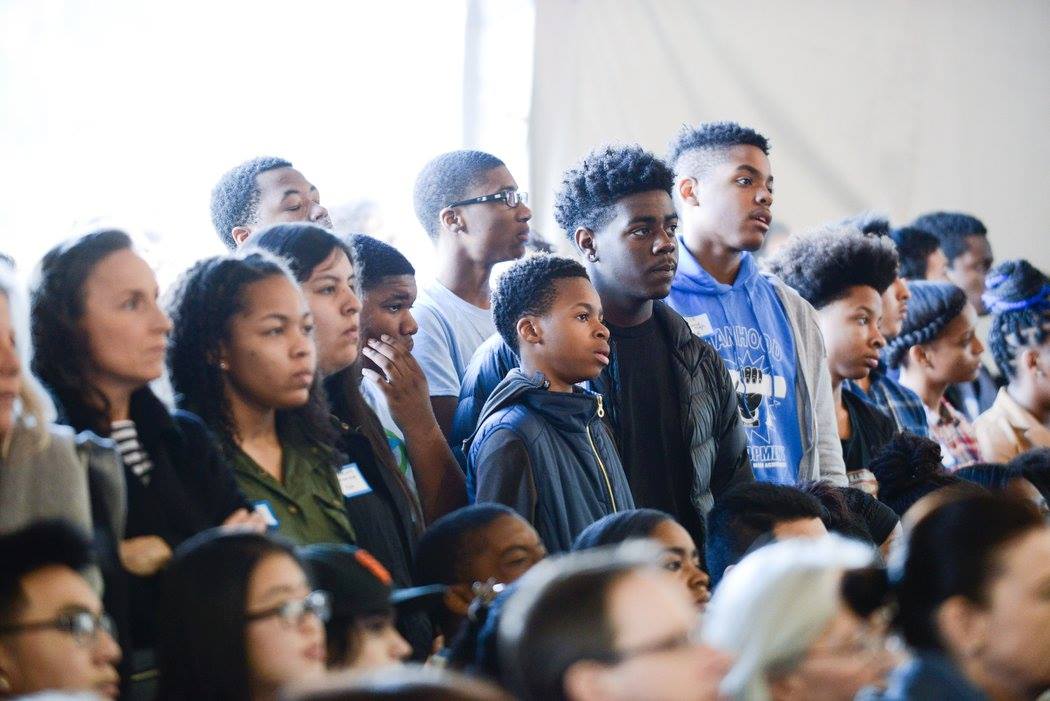
Through a partnership with over 100 community-based organizations and 400 individuals as champions, the school district, and Office of the Mayor, the Oakland Promise is a “Cradle-to-Career strategy” to support Oakland students with the skills and resources they’ll need to complete college and be successful in the career of their choice.
As Silver explains it, the Oakland Promise puts forth a variety of ambitious efforts, including college savings accounts from birth and at kindergarten, financial incentives, mentoring, scholarships and much more. It’s a tremendous undertaking, but he’s up to the task.
“I’m not necessarily the guy who sits in an office and comes up with the strategic plan,” Silver attested. I’m the guy who goes to the microphone and motivates people. I value my ability to build inclusive relationships with people from all backgrounds; I’m the guy who dances around with excited kids and who shakes hands with every parent.”
“I respect them and they know that,” he said.



The past twenty-five years have been a time of change and innovation within Jewish life and education in North America unlike any period that preceded it. As The Covenant Foundation celebrates its own 25th anniversary, it is using this milestone to reflect upon the major trends that have shaped this quarter century of Jewish learning and engagement. Future articles in this series will explore how Jewish education has been transformed within multiple domains – including congregations, day schools, early-childhood programs, camps and other experiential settings, and the online world – and the Foundation’s role in sparking and encouraging these transformations.
As an introduction to this retrospective series, this piece will look back at the beginning of this twenty-five-year era to understand the environment out of which The Covenant Foundation arose, the challenges facing Jewish education at the time, and the goals and strategies the Foundation embraced as a response to those challenges.
To tell this story, interviews were conducted with a selection of practitioners who could offer insight into the history and achievements of The Covenant Foundation and the broader field. They include: Executive Director of The Covenant Foundation and Foundation Board member Harlene Appelman, founding Board members Betsy Katz, Martha Minow, and Jonathan Woocher, Covenant Award recipients and leading educators Barbara Rosenblit and Jo Kay, and national Jewish communal leader John Ruskay.
“Education’s Time Had Come.”
The period of the late 1980’s and early 1990’s, when The Covenant Foundation was planned and launched, was a turning point for the field of Jewish education. For most Jewish communal institutions at that time, the “peoplehood” issues that had gained strength in the 1960’s and 1970’s were the primary focus and mission.
John Ruskay, CEO Emeritus of UJA-Federation of New York, recalled, “For those of us who were involved in Jewish education in the late 1970’s and early to mid-1980s, this was a somewhat lonely time. Understandably, the major focus of the community was on the continued challenge of supporting the then-young state of Israel, fighting anti-Semitism, saving Soviet Jewry, commemorating the Holocaust, and other such concerns. Jewish education, therefore, was further down on the agenda of the greater Jewish community. Indeed, there was good work going on, but it was not a high communal priority.”
However, as time progressed these core issues that had engaged and energized the Jewish community began to be less central to the Jewish communal ethos. Dr. Betsy Katz, Adult Educator and Former North American Director of the Florence Melton School, explained, “It seemed as if whole segments of the community were shifting away from crises and toward more constructive methods with which to strengthen the Jewish community. Education’s time had come.”
It was at this moment that a grass-roots movement for innovation and change in Jewish education began bubbling beneath the surface, laying the foundation for more mainstream institutions to catch up. As early as the late 60’s and 70’s, a new focus on Jewish learning and more serious Jewish content was emerging in the Jewish community, explained Dr. Jonathan Woocher, Senior Fellow at Lipman Kanfer Foundation for Living Torah. “Some of it was propelled by alumni of Camp Ramah and other Youth Movements, including Habonim and Young Judaea. Some of it was just the natural reaction to suburbanization and Jewish life of the ‘50’s and ‘60’s and picking up on some of the counterculture themes in the general society. In the mid-1970’s you also had the emergence of a grass-roots endeavor, which was the start of CAJE [Conference of Alternatives in Jewish Education]. As CAJE took root and began to grow, people began to pay more attention to the idea of innovation in Jewish education.”
This renewed attention to Jewish education led to further transformative developments in the field, including the founding of JESNA, the Jewish Education Service of North America, in 1981. Two major philanthropists, Bill Berman and Mort Mandel, were among the first to focus on Jewish education, championing the cause and drawing attention to it.
Further, in 1990, two publications were disseminated that had a tremendous impact on the field and the outlook of communal leaders across the country. The Commission on Jewish Education in North America published a report titled “A Time to Act,” which called upon the Jewish community to recognize that American Judaism was facing a “crisis of major proportions” as large numbers of Jews had “lost interest in Jewish values, ideals, and behavior.” The report also stated that there were many Jews who “no longer believe[d]” that Judaism had a role to play in their “search for personal fulfillment and communality.” The call to action that the report issued was clear: “The responsibility for developing Jewish identity and instilling a commitment to Judaism for this population now rests primarily with education.”
The issues highlighted by that seminal report were also reflected by the 1990 National Jewish Population Survey, which generated a cross-communal conversation focused on new possibilities in Jewish education. As Harlene Appelman, Executive Director of The Covenant Foundation recalled, “These two developments galvanized a broad contingent of Jewish leadership and a wider swath of Jewish institutions to focus on Jewish education and its potential role in strengthening and sustaining American Judaism.”
During this same time, cousins and philanthropists Susan Crown and Barbara Goodman Manilow, founders of The Covenant Foundation, discovered their common inspiration in identifying and supporting the type of Jewish education they wished they had experienced as students. In response to that mutual commitment, they conceived of a national strategy to highlight and reward excellent Jewish teachers and innovative and forward-thinking education initiatives, in an attempt to improve Jewish education in North America.
“This was a time when people were defining Jewish identity in different ways,” Betsy Dolgin Katz said. “It wasn’t just religious behavior that made you a Jew. There were cultural Jews, ‘just Jewish’ Jews, Israelis living in America; the texture of the American Jewish community was different, and The Covenant Foundation was open to that diversity. This openness was part of a field-wide awakening to the potential Jewish education beheld.”
“Where Jewish Education Really Takes Place”
The Covenant Foundation was launched in 1991 (formally structured as a partnership between the Crown Family and the Jewish Education Service of North America), and quickly solidified its core mission of identifying and celebrating innovation and excellence in Jewish education. As Martha Minow, Morgan and Helen Chu Dean and Professor of Law at Harvard Law School recalled, “the creation of the Foundation reflected a very thoughtful understanding that other communities had created ways to honor great teaching and great innovation, and it had not happened in Jewish education, at least not across all of the different forms of Jewish education. So it was an exciting opportunity to honor excellence that takes many different forms. We very quickly came up with the two basic strategies, which were to give awards to individual educators and to give grants to institutions.”
“What made the Covenant Foundation unique was its core vision and strategy--and this is to Susan and Barbara’s credit,” Jonathan Woocher recalled. “They wanted to have open nominations for the Awards and an open grant process, so that the people at the grass roots of Jewish education would really be able to benefit from the Foundation. That was very different from the approach that other philanthropies had taken. So the notion of innovation and excellence was coupled with the importance of giving voice to the people on the front lines of the field. Susan and Barbara along with the founding board agreed that the best way to improve Jewish Education was to identify and nurture extraordinary ideas and talent.”
The Covenant Awards were initially the more widely known of the Foundation’s two signature programs, which was in keeping with their goal of promoting and publicizing achievements by outstanding educators. Barbara Rosenblit, a Covenant Award recipient and Humanities and Bible Teacher at The Weber School in Atlanta, recalled how receiving an Award was both an honor and a motivator to continue reaching new heights in her own career:
“I’ve been asked what it meant to me to receive a Covenant Award. I think once they put that crown on your head, you think, OK, now I’ve got to live up to this. It inspires you to be the teacher they think you are. And that’s been wonderful in my own life. My personal gratitude to Covenant is that it’s given me that visibility, but it also said, now you have to perform. This wasn’t a lifetime award – it’s a ‘life-ahead’ award,” she said.
The impact that honoring Jewish educators made on the field extended far beyond the individual Award recipients. As Jo Kay, Covenant Award recipient and former Director of the School of Education at Hebrew Union College-Jewish Institute for Religion, explained, “By creating the Covenant Awards, the prestige of the entire field was elevated.” Similarly, John Ruskay added that “by recognizing Jewish educators, The Covenant Foundation has helped the field as a whole remember and honor where education really takes place.”
“The Covenant Awards were a clear recognition that front-line educators - teachers in classrooms, principals, youth workers, etc. – are critical,” Ruskay said. “I have always said, my best job was as principal of a Hebrew School. Decades later people still come up to me and say, ‘You changed my life.’ That happens in the classroom. That happens in the youth group. That happens in summer camp. And the Covenant Foundation has sought to highlight that by focusing on front-line educators, recognizing excellence, and providing a substantive award, not just a token award. It serves the purpose of highlighting where Jewish education really takes place. It doesn’t take place in think tanks. It doesn’t take place in national bodies, or denominational organizations. All those things can be very important in providing support. But the real, critical work takes place right where students, young and old, meet educators and walk into an environment, which is either inspiring or mediocre.”
“Bringing the Peripheral into Focus”
The Covenant Grants were similarly groundbreaking, both in the kinds of projects that were supported and the process through which they were chosen. As mentioned above, inviting institutions around the country to submit promising ideas was (and still is) a rare philanthropic approach. As Harlene Appelman explained, “The thing that’s always been most unique about the Foundation is that we accept proposals over the transom from anywhere and anyone. We have never veered from the process we put in place at the beginning – it’s extremely important to us. And that’s what led to the tagline, ‘A platform for dreams and a breath of optimism,’ because you can’t be optimistic if you don’t believe that you can have a dream.” Barbara Rosenblit echoed the idea that the Covenant grant process reflects openness and optimism: “One of the things I really like about Covenant is their willingness to support small visions that offer large promise. You don’t feel like you have to be the biggest engine in the room to get their attention.”
Even more significantly, from its start The Covenant Foundation defined the concept of “Jewish education” broadly and creatively. Harlene Appelman reflected on the Foundation’s early funding: “Even in the early years, the Foundation highlighted disciplines and areas that implied an incredibly forward-thinking perspective on the field – ecology, arts, technology, early childhood, family education, special education – and the concentration on these areas has carried through. The parts of the field that were in the peripheral vision of Jewish education, the Foundation brought into focus. And that’s still our goal.”
The inaugural cohort of grants (awarded in 1991) included three supporting new educational technologies, one in the nascent area of Jewish ecology, one focused on outreach to intermarried families, and one to train avocational teachers in a small, Midwestern Jewish community. The following year the Foundation funded initiatives in special education, family education, museum education and advanced Talmud study for women. Soon after the Foundation awarded grants to artists such as Elizabeth Swados and Shari Lewis, further broadening its definition of where and how Jewish learning could take place. While such domains are now deeply integrated into the field of Jewish education, at the time those areas weren’t necessarily on the communal radar.
“Conversations we were having at The Covenant Foundation twenty-five years ago about education taking place outside of formal settings are now the mainstream, everywhere,” noted Martha Minow.
Creating a “First-Class Profession”
As a number of interviewees emphasized, the overall impact of The Covenant Foundation is greater than the individual professionals and organizations it has invested in over twenty-five years. The cumulative effect of the Foundation’s support and work has been to raise the professional standards of Jewish education and bring new energy and excitement to the field as a whole.
“Covenant has changed the outlook on Jewish education,” Barbara Rosenblit said. “Back before Covenant was first started, I often felt that Jewish educators were kind of running in place. It felt as if Jewish education was a second-class profession. Now, Jewish education is something which is lauded, and worthy, a discipline that celebrates cutting-edge thinking.”
Jo Kay echoed this idea. “Both before and during the 1990’s, the issue was: how do you recruit people to the field of Jewish education, and how do you keep them in the field, once they’re there?” she reflected. “In the past, it was very hard, there were so many areas that needed attention-- reputation, salary—in both Jewish and general education. It may not be perfect now, but there are so many more talented and passionate young educators being drawn to careers in Jewish education, and the Covenant Foundation has much to do with that trend, by encouraging creative thinking, utilizing up to the moment methodologies and helping nourish educators by elevating their profile and investing in their development, helping Jewish educators to grow and be the best that they can be.”
As the Foundation has grown and evolved, it has continued reinventing the ways in which it supports and nurtures the field of Jewish education. Martha Minow framed this approach using former Chairman of the Board Eli Evans’ words: “Eli Evans’ conception of ‘elegant grant-making’ is now embedded in Covenant’s DNA,” she said. “This includes the notions of building relationships among grantees, establishing cohorts that support one another and understanding that this network can encourage other educators into the field, who might otherwise have gone in a different direction.” This is further illustrated by the Pomegranate Prize, which the Foundation established in 2011 to honor emerging Jewish educational leaders who have been in the field for ten or fewer years.
“The Covenant Foundation is creating a literature of success,” Betsy Dolgin Katz added. “By setting high standards, and reaching the broader educational community through networking and discourse, the Foundation is raising expectations of what Jewish education should be and can be.”
When a tree falls in Michigan, does it impact on the eco-system? In the case of Mandell "Bill" Berman, leader, philanthropist and mentor—a towering tree in our lively eco-system of Jewish education, the answer is yes. Our landscape has been diminished.
Many of us know of Bill’s many accomplishments and contributions: his vision for JESNA, The Berman Database and The Berman Policy Archive.

Many of us know that Bill was a visionary and a risk taker. He never walked away from the investments he made, and he invested not just his money but his soul, too.
Personally, Bill’s investment in me made all the difference in my career. Early in my professional life, when Jewish Experiences for Families was my focus, Bill became my partner. He said to me, "Don't bring me the successes. Those are for sure. Bring me the challenges and the failures, and together, we'll make them right."
That was Bill in a nutshell, encapsulated in the idea that “together, we'll make it right.” He was a lover of Jews and the Jewish people, of Israel, of Congregation Shaarey Zedek in Detroit, a lover of applying data to make clear decisions, a dreamer of a brighter future, a philanthropist and community organizer who believed that professionals were his partners and assets to the community.
This prescient Talmudic tale describes Bill’s essence best:
One day Honi was journeying on the road and he saw a man planting a carob tree. He asked, "How long does it take [for this tree] to bear fruit?" The man replied: "Seventy years." Honi then further asked him: "Are you certain that you will live another seventy years?" The man replied: "I found [already grown] carob trees in the world; as my forefathers planted those for me so I too plant these for my children."
I was fortunate to know Bill for as long as I did (36 years--double chai). He was my mentor, teacher and very dear friend. I will miss our conversations, our shared dreams and our phone calls, just to check in.
I hope my work will continue to make him proud.
Harlene Appelman,
Executive Director
The Covenant Foundation
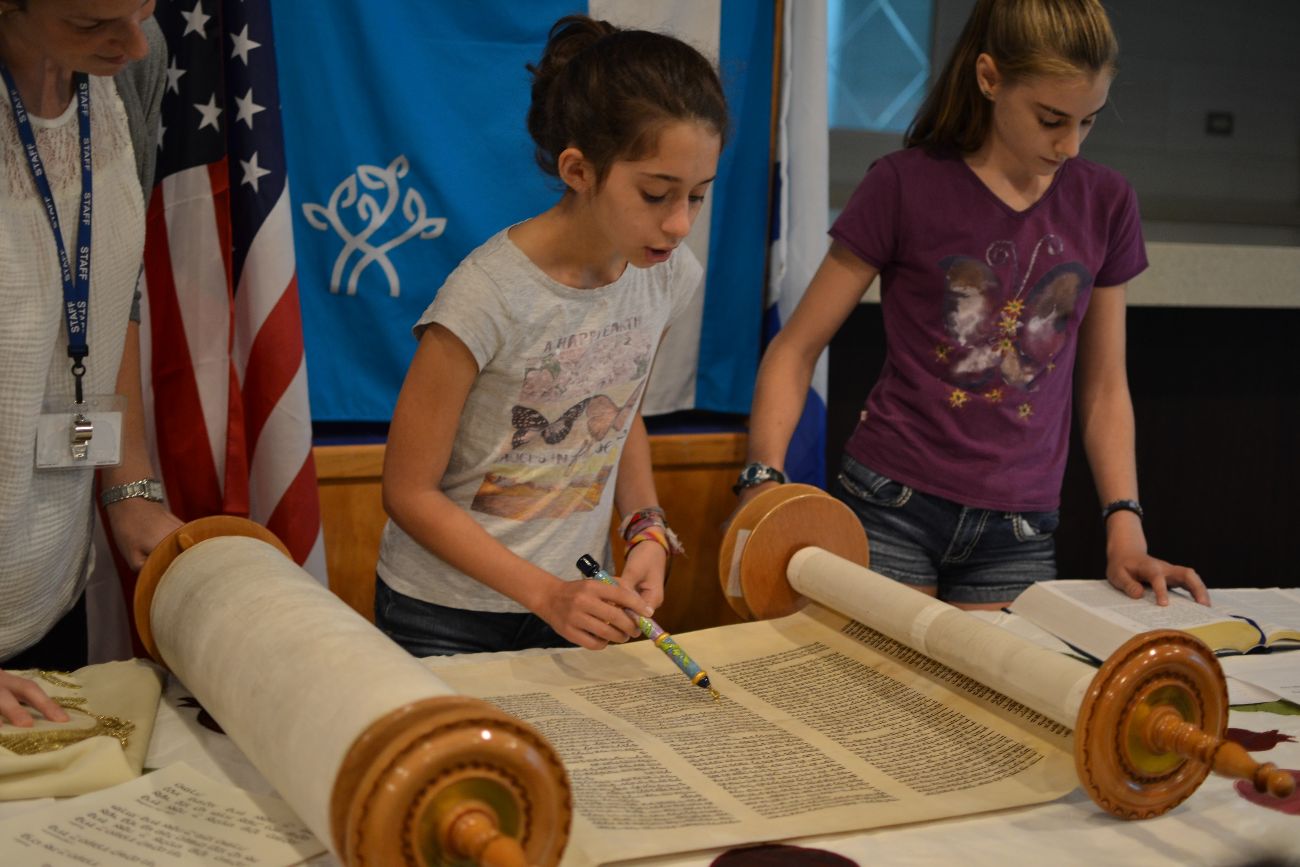
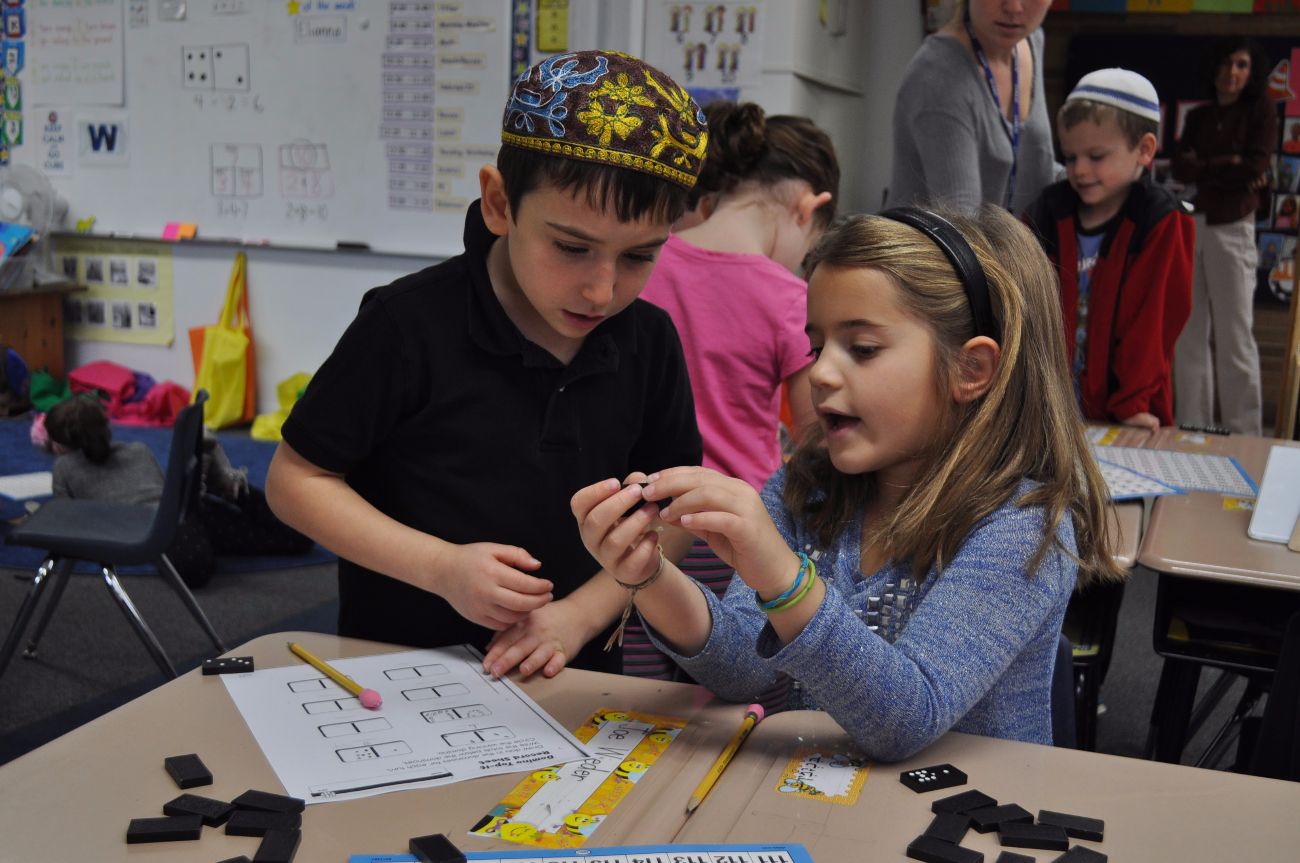
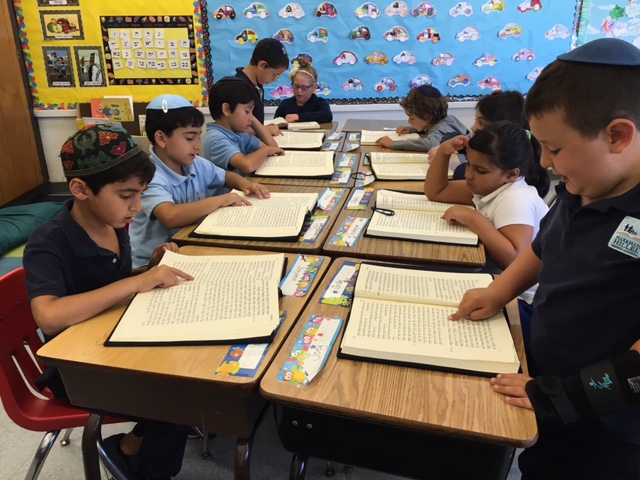
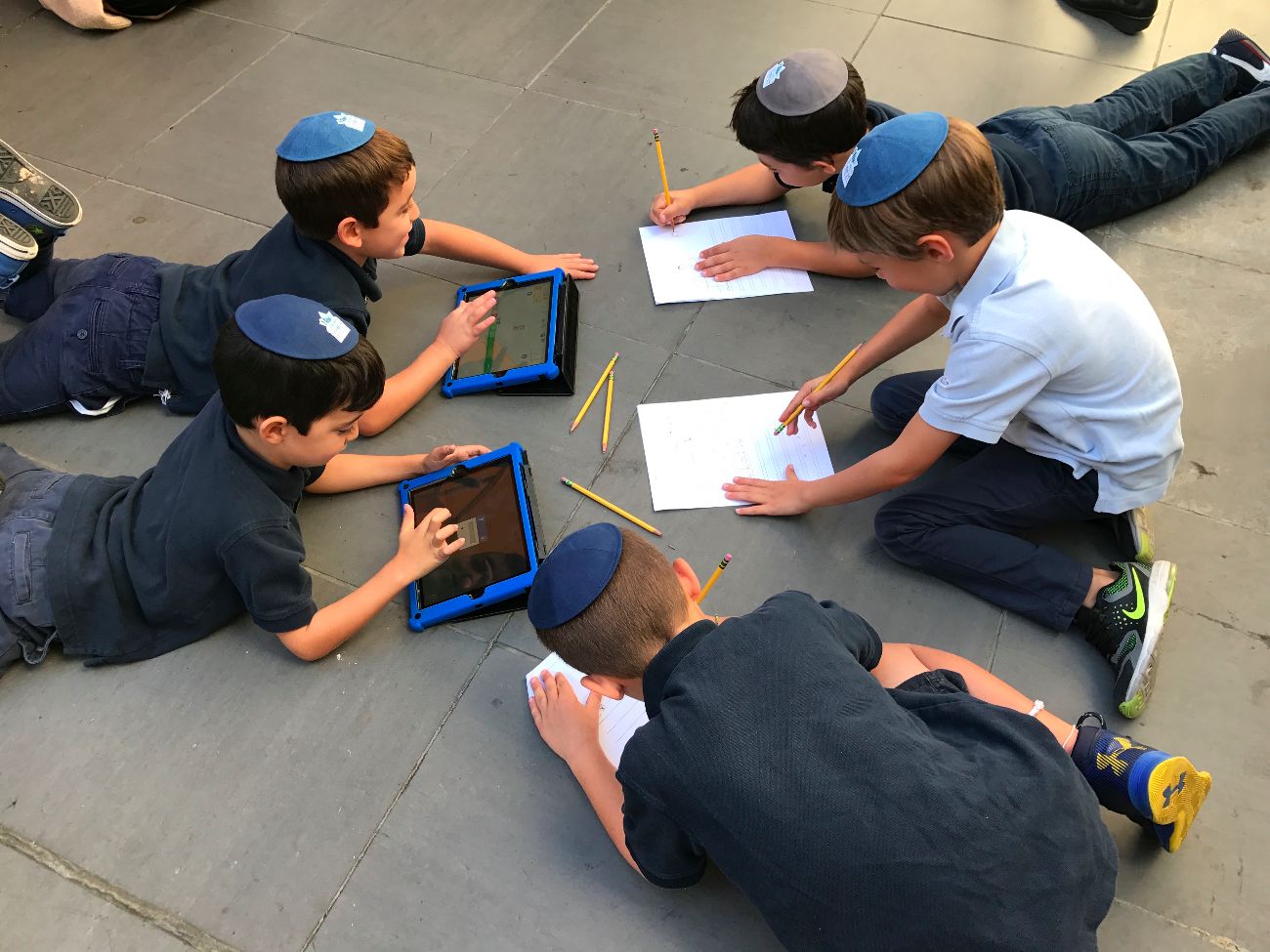
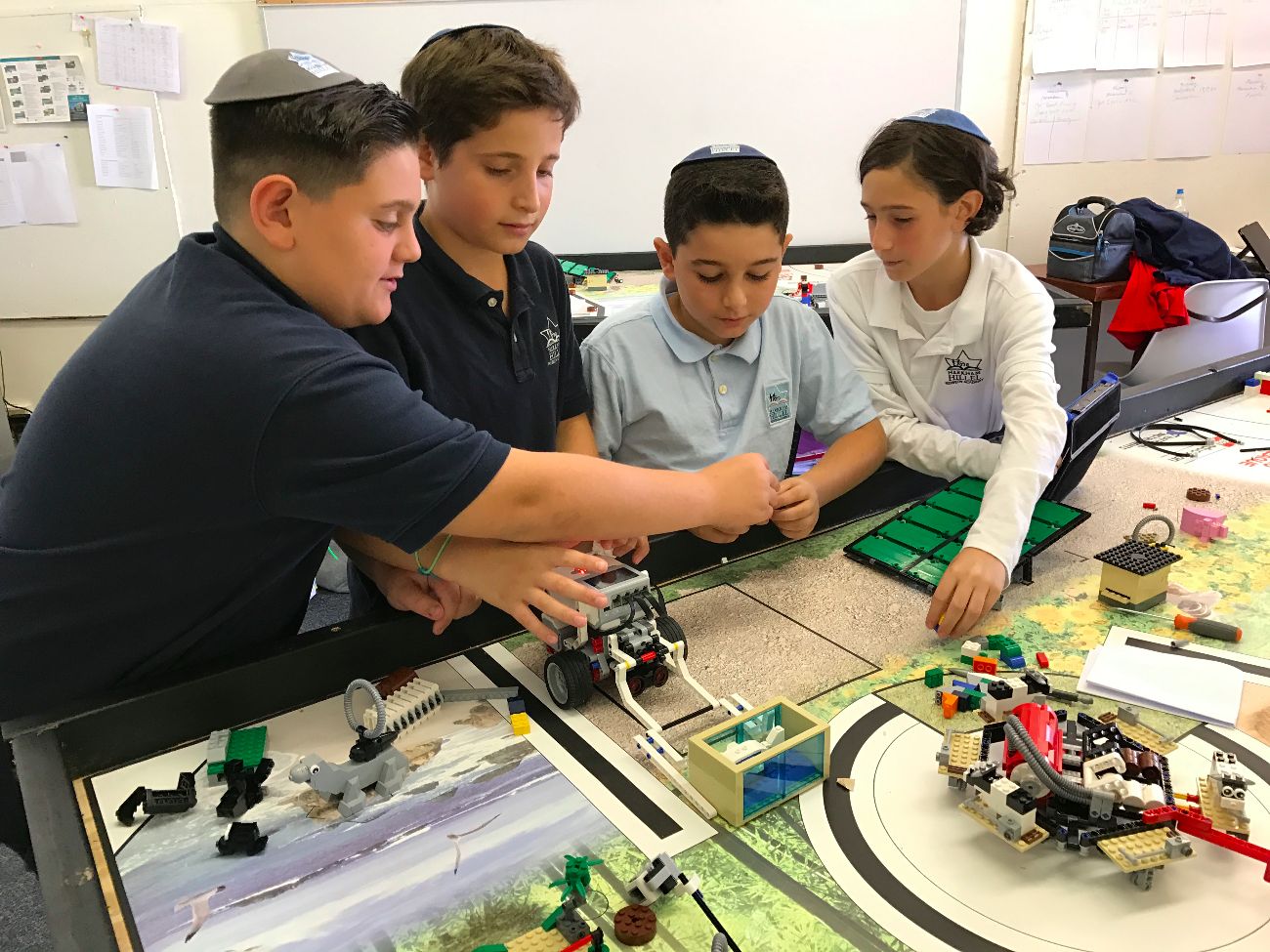
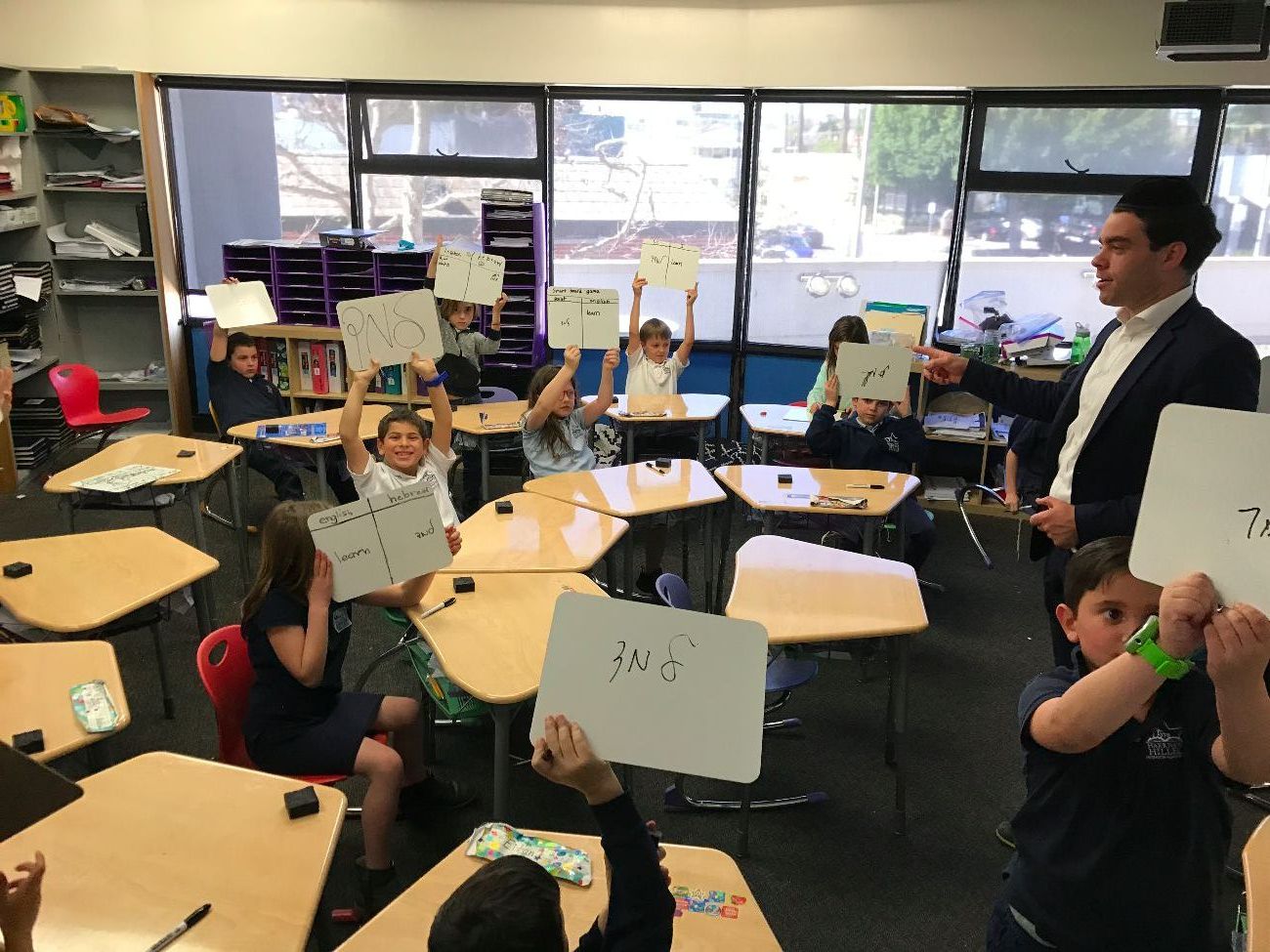
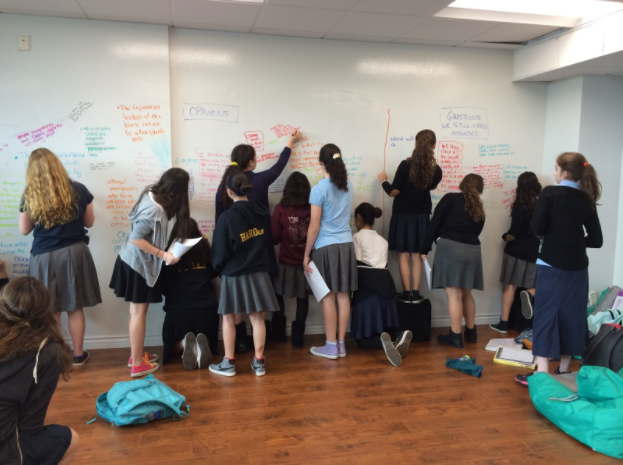
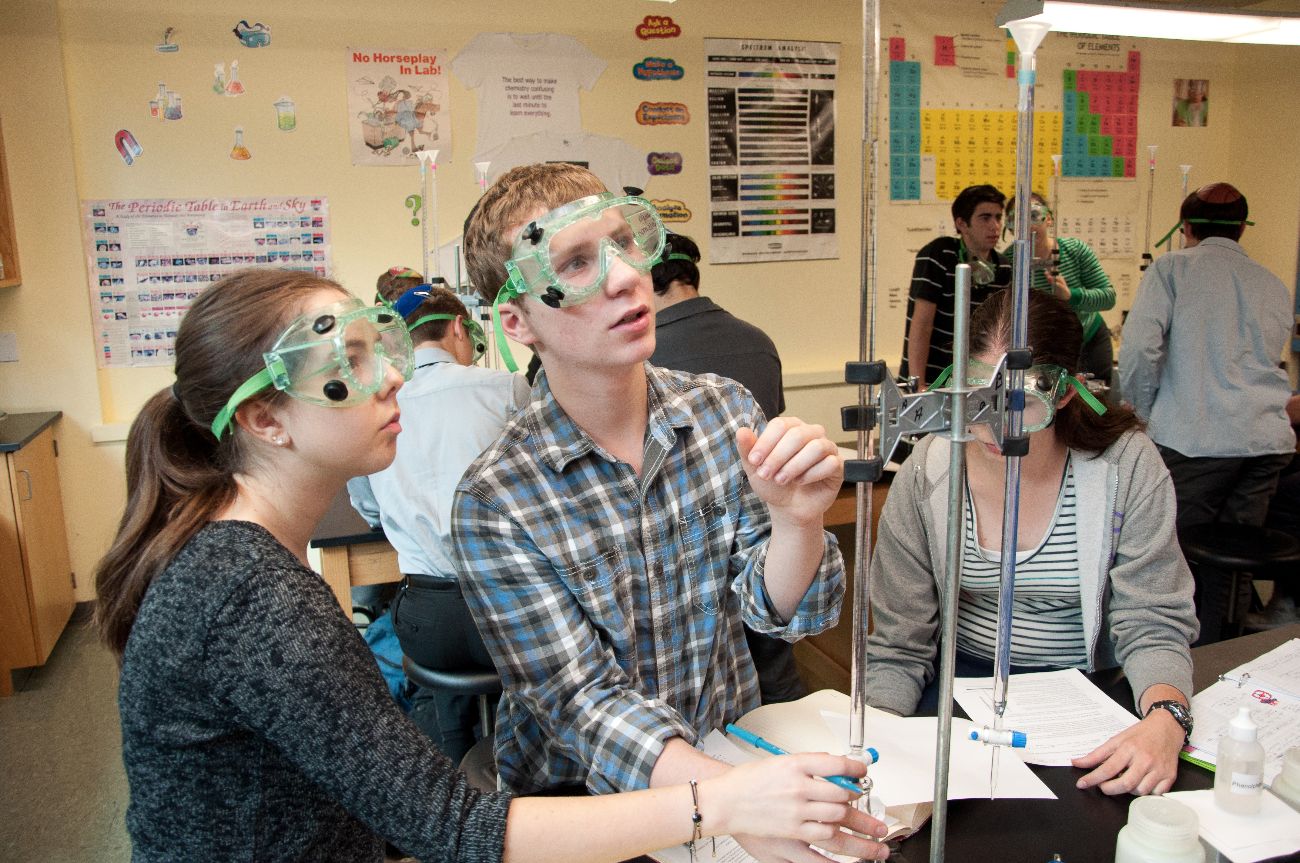
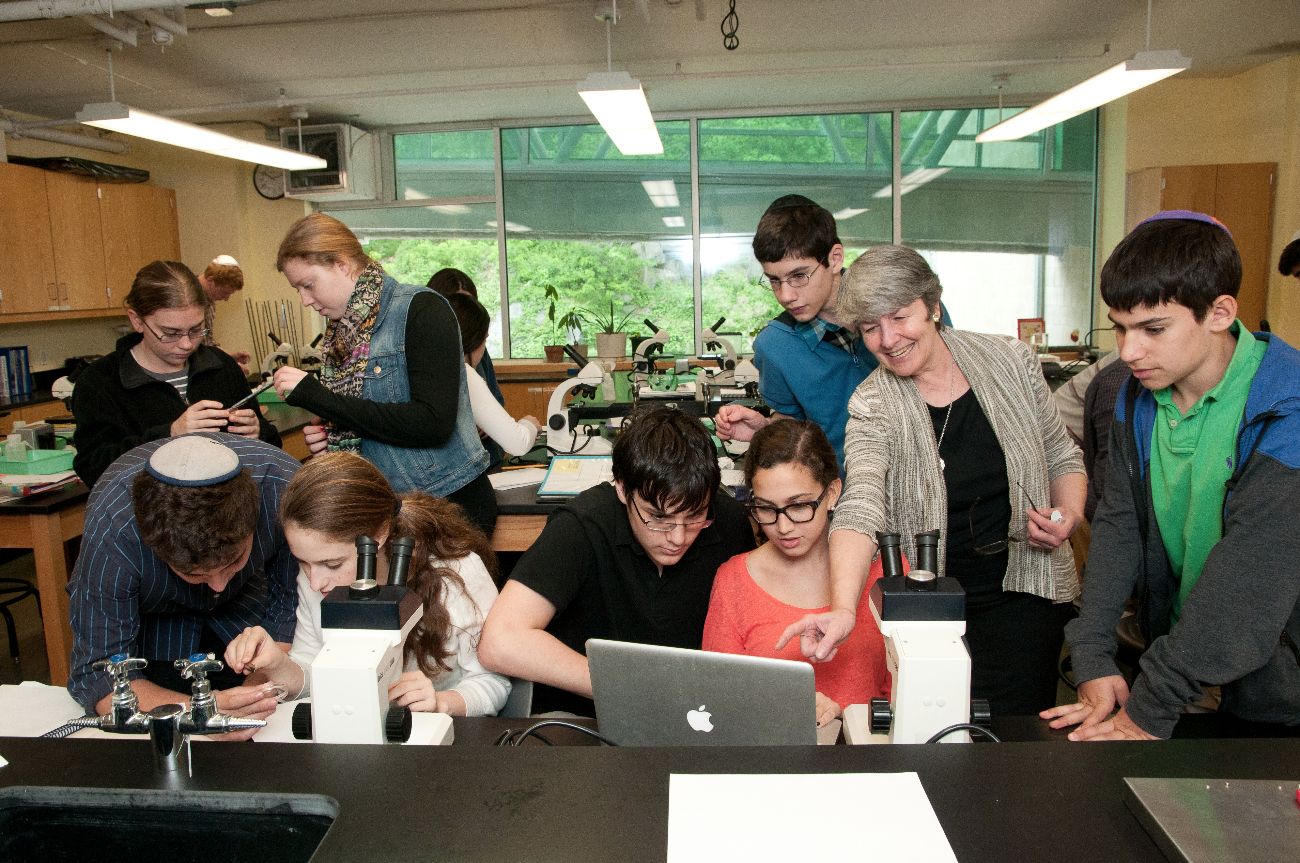
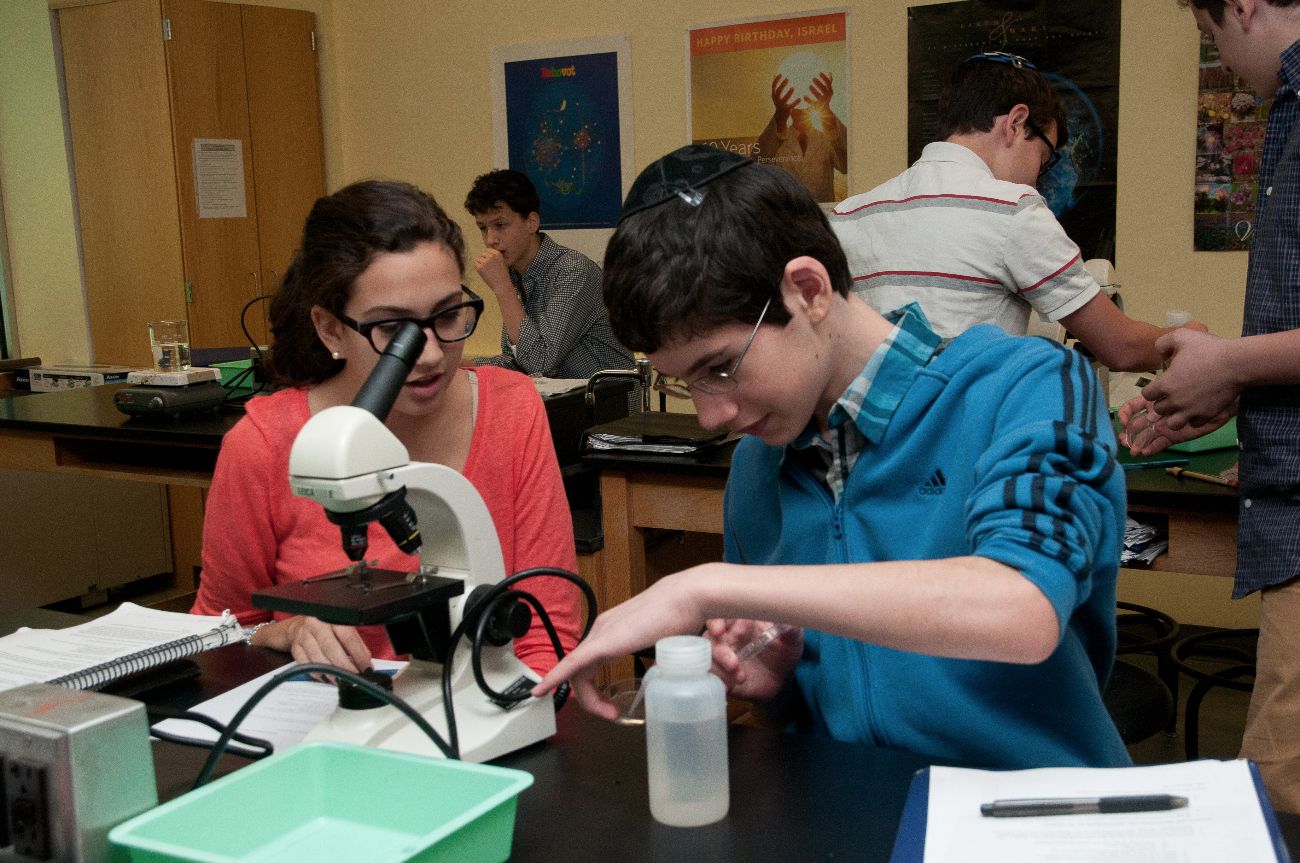
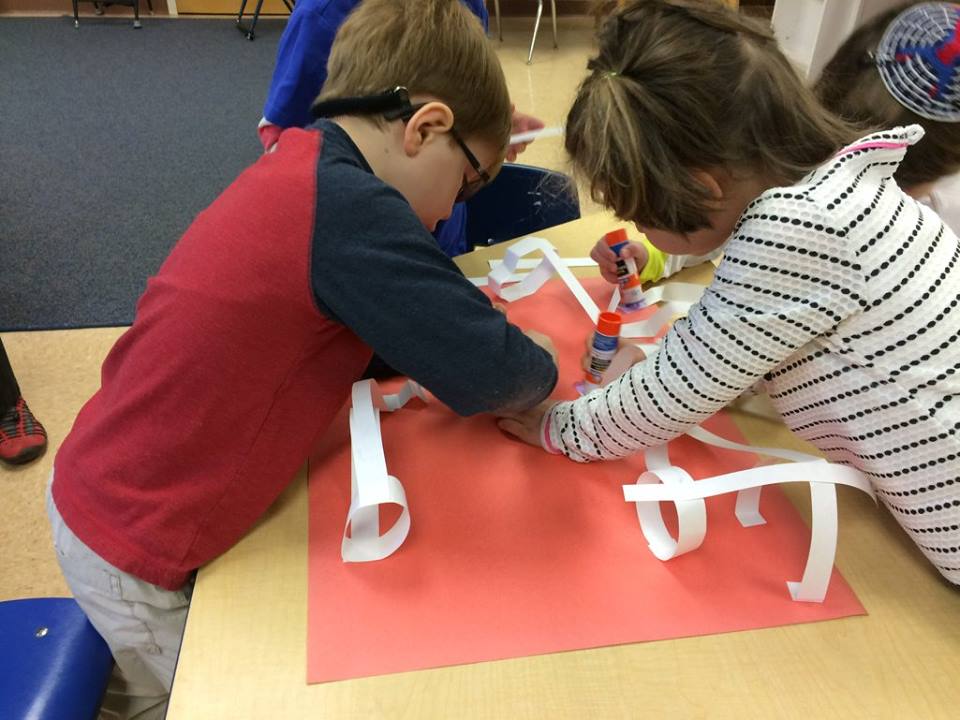
From chemistry labs to softball fields to kindergarten classrooms and beyond, Jewish learning in the day school setting takes myriad shapes and forms, bridges theory with practice and reflects our traditions across grade and curricula. We’d love to feature a postcard from your school. Send it to us with a sentence about how Jewish learning informs your school community: info@covenantfn.org

Bringing Jewish educators together from across different contexts-- this is something that Dr. Jen Glaser, Co-Director of the Israel Center for Philosophy in Education, feels strongly about. With the support of a Covenant Signature Grant, this conviction has been central to her work over the past 5 years in North America, developing the Engaging Texts Network.
“When I first started doing this work,” she explained, “I was told that it would be difficult to have synagogue educators and day school educators learning together, in the same room, especially when studying Jewish texts, because goals, backgrounds and contexts were seen to be too disparate. But I was sure that actually, that line of thinking was wrong. I knew we could bring them together.”
Glaser believes that the pedagogies of engagement that form the basis of professional development in philosophical inquiry are enriching for everybody, regardless of the space in which they teach.
“We’ve found that educators love being together across the different modes of learning, different fields,” she said.
And that variety doesn’t just concern educational spaces, but also, streams of Judaism. So in practice, Glaser explained, “PI” professional development programs can successfully enrich a teen educator from the reform movement, alongside a teacher from a Conservative day school and an early childhood educator from Chabad.
“Bringing people together from such disparate places on the religious and educational spectrum may seem counterintuitive to some, but it works,” Glaser said.
Perhaps it’s the philosophy behind the philosophy, so to speak, that makes this kind of cross-pollination professional development, succeed. As Glaser explained, this kind of philosophical inquiry implies “a combination of rigorous exploration of meaning with community building and reflection on students’ own lives. The students themselves take control of their learning, and wrestle with texts together as a group, not just as individuals. They ask each other questions and push one another on their responses.”
The same is true when PI is employed in a professional development setting.
“PI aims to instill both empowerment and deep content knowledge, with the goal of helping kids see themselves as part of the ongoing Jewish conversation,” Glaser emphasized, “and ultimately, this contributes to the development of a strong Jewish identity.” And these goals are as relevant for adult educators as they are for kids.
This summer, Glaser will run two philosophical inquiry professional development training seminars-- on opposite coasts. First, she’ll be in at Hebrew College in Newton, MA, from July 17-20, for the Hebrew College Summer Workshop: Philosophy for Children (P4C), which will focus on getting educators initiated into the practice of building communities of philosophical inquiry.
With Hebrew College as the “hub,” and lots of prior local events and demonstrations popping up to get educators in the region interested in how PI fits into Jewish education, Glaser is hoping that the Hebrew College training will appeal to a broad spectrum of educators.
“The ideal participant of these trainings isn’t just a classroom educator,” Glaser said. “These sessions could be of interest to administrators, Directors of life-long learning, family educators, and in the last few years, we have had increasing interest from clergy, too, because dealing with texts and thinking about how to make texts relevant, is something rabbis do all the time. In fact, we’ve found that our workshops which prepare educators to delve into the philosophical dimensions of experience really helps to expand their repertoire.”
The Hebrew College seminar is a truly immersive experience, Glaser said, which is central to her approach to professional development.
As educators know, professional development takes myriad forms. “In some schools,” Glaser offered, “the mode of PD happening might be one where a trainer goes into a classroom and works with the teacher for a few sessions, or conducts PD out of class spread out over a long period of time.”
“What we do is different,” she continued, “in that we are taking educators out of their regular professional environment, and immersing them in a sustained experience over a stretch of time.”
Based on Vygotsky’s Constructivist Theory, our approach immerses educators in a practice with the opportunity to reflect on that practice with other educators, in order to become more sophisticated about it. The Hebrew College seminar is built so that the four days of learning aren’t four independent days. Rather, each day builds on the next, utilizing what was mastered along the way, from one day to the next.
In many ways, the evolution of Glaser’s work is a meta example of the pedagogy she teaches.
“When I first began doing this work and applied for a grant from The Covenant Foundation,” she said, “I was working with individual educators at the Jewish Education Center of Cleveland, to train them in a method that they could then bring into their classrooms.” But ultimately, Glaser continued, there was a bigger idea brewing. What would happen if those educators could then develop competencies in teaching this to others? What if they took it, and introduced their colleagues to this approach?
“We set the project up as a ‘proof text,’ or a model of what this kind of teaching might look like, where educators within a network could steep themselves enough within the practice and the theory to then develop a ‘hub’ of professional development in their own city.”
And that’s the motivating idea behind the trainings that Glaser will lead this summer. “We want to help cultivate a community of practitioners who can engage with one another,” she explained. For example, one of educators from Berkeley will be coming to help lead the seminar at Hebrew College. “There’s a lot of modeling that happens in any professional development setting where philosophical inquiry is being taught,” she added. “We always deconstruct, we always translate what is being taught into practical pedagogical tools. The goal is not just a sending educators away with ‘big ideas,’ but also, practical ways that they can operationalize this method in their own classrooms.”
In Berkeley, with her colleagues at Studio 70 and Edah, Glaser will lead workshops on Aug 2 and 3 and then several days later, the workshops resume on the 10th and 11th. While the immersive experience is still central to Glaser’s goals on the west coast, the training model looks slightly different there this summer to accommodate for the New CAJE conference, which happens on the days in between.
Glaser will be running workshops at New CAJE, too, or, as she calls them, “little pockets of professional development,” on topics like bringing an inquiry-based approach to text into conversation with project-based learning and Design Thinking, a new development that’s emerged over the past year in Glaser’s work.
For instance, Glaser explained, if educators are teaching about Israel, in addition to a deep dive into related texts, an integrated curriculum would ask that learners also consider the concept of place and ask questions like ‘what makes a place a home?’ By looking at preconceived notions about familiar ideas, and making connections between those old notions and new discoveries, texts that are then introduced will be all the more enriching for the nuance they bring. In this way, philosophical inquiry enhances and complements many of the current trends in education that look for ways to integration learning across disciplines.
“When this project began,” Glaser said, “it was much more about dealing with an approach of PI with text, but now, in response to what educators have expressed, the focus of our trainings is shifting and we’re excited to explore themes and topics that are current in classrooms right now.”
“In this way, we can truly isolate those concepts that are so rich for exploration,” she said.
“Alone we can do so little, together we can do so much": An old adage by Helen Keller, but one that might also serve to define the central motivation of the Shinui Network.
Established in 2012 with a Signature Grant from The Covenant Foundation, Shinui was built on the premise that innovation in part-time Jewish education is essential, and that by drawing together those who are already working toward that goal and creating a network, Shinui could offer educators an opportunity to connect and support each other.
“What sparked the idea for Shinui,” explained Anna Marx, Shinui’s Project Director, “is the acknowledgement that we’re all doing this—so, couldn’t we have a greater impact on the field if we worked together and supported one another?”
By “this,” Marx is referring to the work being done behind the scenes in myriad part-time Jewish educational contexts to revive, update, refresh and renew part-time Jewish learning. “We recognize that the needs of each community involved in our network are different,” she added, “but there’s so much that we can learn from one another, and we can help each other on the journey.”
Made up of 10 community agencies (located in Boston, Chicago, Cleveland, Detroit, Houston, Los Angeles, New York, Philadelphia, San Francisco and Toronto), each Shinui Network member is a chosen a professional who, as some part of their portfolio, works on congregational education in their community.
“The roles of our network members are unique,” Marx emphasizes, “because while most are educators by training, their job is to support other educators—which means they aren’t necessarily the ones working directly with other families.” Marx pointed this out to highlight the essential nature of the “support” piece of the Network.
“For our agency representatives,” she said, “Shinui offers a unique opportunity to talk to others who are in a similar role. While they are highly connected educational professionals, they are not directly providing education to families themselves. Rather, these are the professionals who understand the real and urgent issues their local educators face today and design professional learning and other services to support them throughout the year.”
That unique and very connected Jewish professional who represents his or her community amongst the Shinui network agencies is called a “manche” or a “coach,” in Shinui parlance. The manche is the person on the ground in Houston or Toronto or Philadelphia, who works with local congregations and organizations, helping to bring innovation to local Jewish programming. That person then communicates back to the Network to share ideas and challenges-- and garner support.
“Ultimately, our initiative is helping people to learn from one another,” Marx said. “Early on, we worked on this concept of give/get. We asked ourselves, ‘What can organizations give to one another and what can they get from one another?”
“What we uncovered,” she continued, “is that the network is most helpful when each manche brings to the table their own unique and geographically-inflected perspective. Because their cities each have distinct cultures and Jewish communities, the outside perspective they gain by talking to others—essentially comparing notes--provides an invaluable viewpoint that they might not have otherwise.”
Professional Development takes on myriad forms and there are many spokes in the wheel, so to speak, to make the process move forward. Bringing people together is a crucial spoke, and cultivating a network that’s actually productive, is another.
What’s more, PD doesn’t just happen in a vacuum where a trainer and a trainee, meet. Rather, sometimes the trainer and the trainee switch roles, blend knowledge, wrestle with difference and lean on one another for support.
“There’s a lot of modeling that goes on,” Marx added.
Some of that modeling is now occurring through a new partnership with The William Davidson Graduate School of Education at The Jewish Theological Seminary.
“Dr. Bill Robinson approached us not long after he became Dean of the Davidson School,” Marx shared. “He knew that we represented many agencies who were already working on innovating Jewish educational programming and at JTS, through The ReFrame program, the same kind of work was occurring. This was an opportunity for our organizations to support and impact each other.”
To date, the Davidson School has brought the manchim together for two facilitated retreats, where they shared theories of change from their own communities and worked toward identifying a shared outcome for part-time Jewish education together.
“The partnership with the Davidson School offered us an important opportunity to work together to reflect on the individual approaches of our partner agencies and to begin to think forward about the impact we might make as a North American network. Our time together at these two retreats confirmed our assumption from the early formation of the network: we are stronger together,” Marx said.
Ultimately, Marx emphasizes, this work matters, plain and simple.
“It matters that the kids who receive some or all of their Jewish education from a congregational program – or any part-time program - have a really good experience,” she said. “It matters that they feel good, that they learn deeply and then carry with them a positive story that will guide them later in their lives.”
“Too often, we get discouraged, we want to wash our hands of the problem,” she added. “Achieving such lofty goals in just a few hours a week is hard, and we have high expectations.”
“But it matters,” she said. “Our kids matter.”
BIMA, the Brandeis Institute for Music and Art is a precollege program hosted at Brandeis University. While high school students who spend a summer in the BIMA program focus on a craft in their “major,” they also “minor” in an area that’s decidedly beyond their comfort zone.
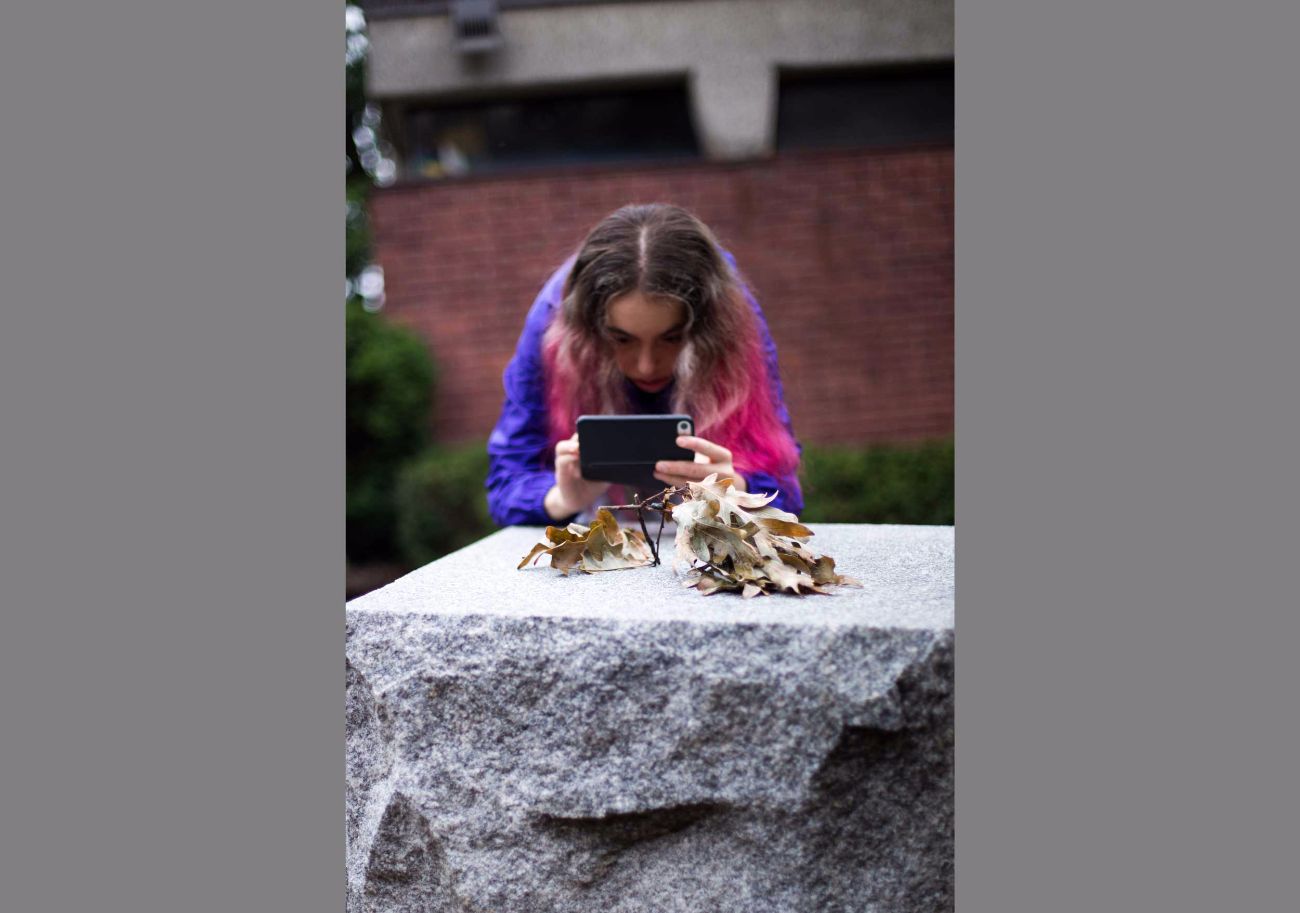
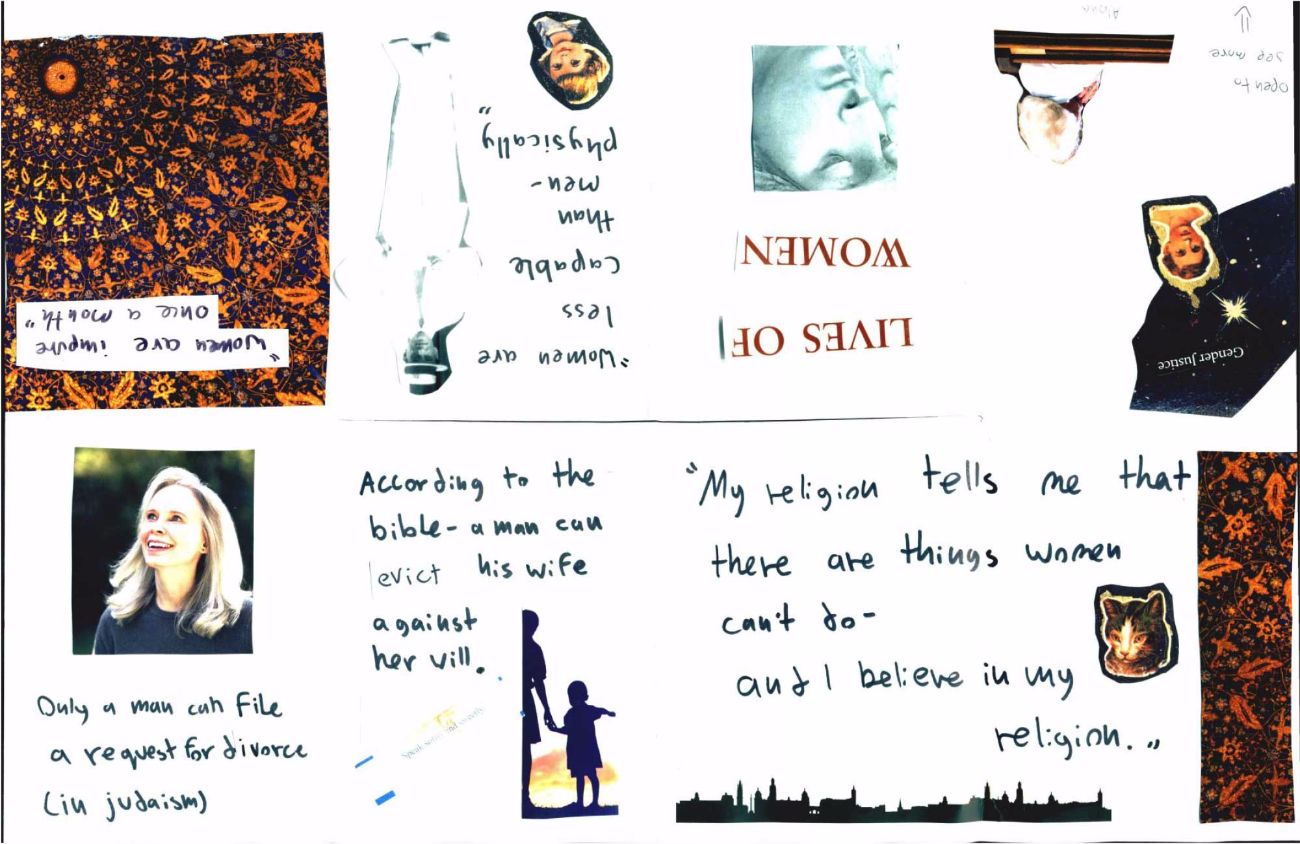

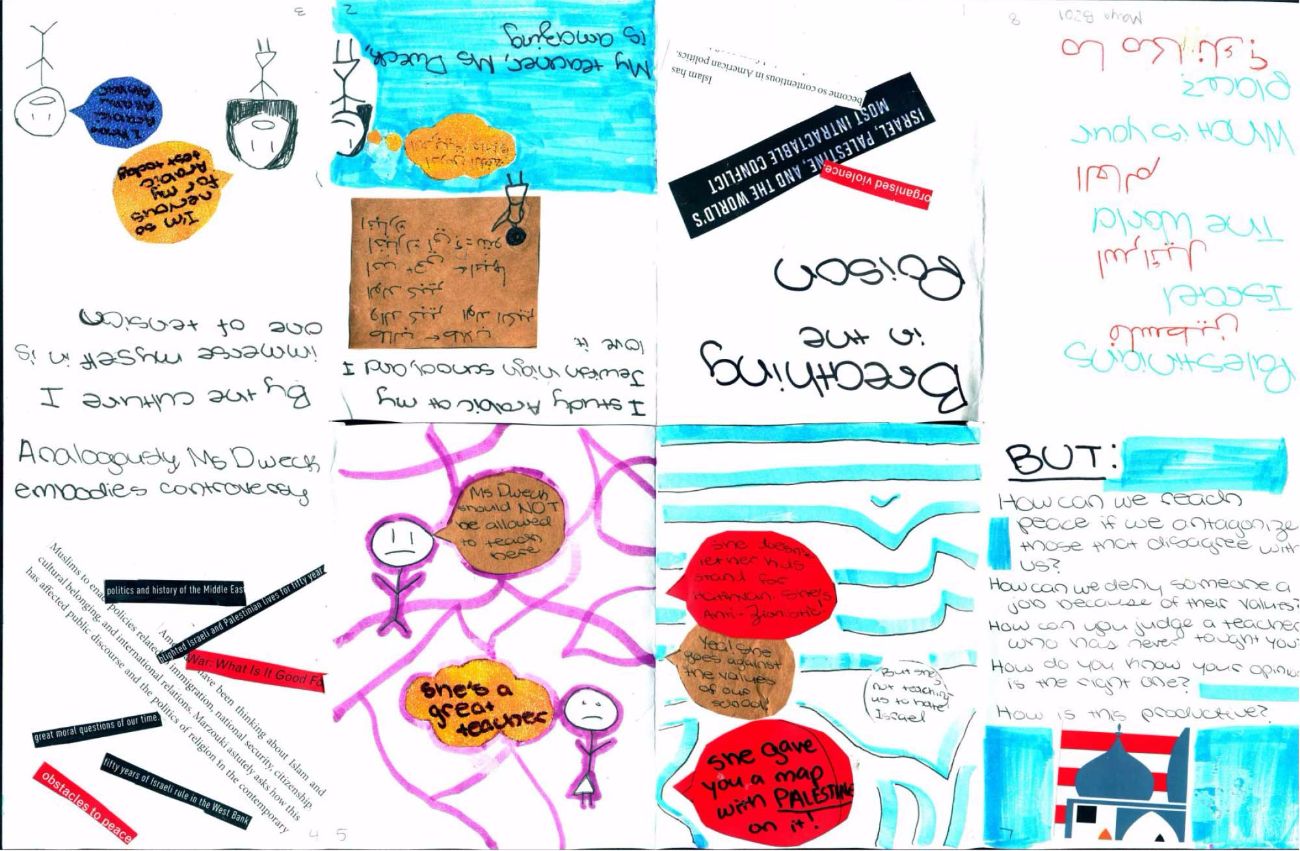
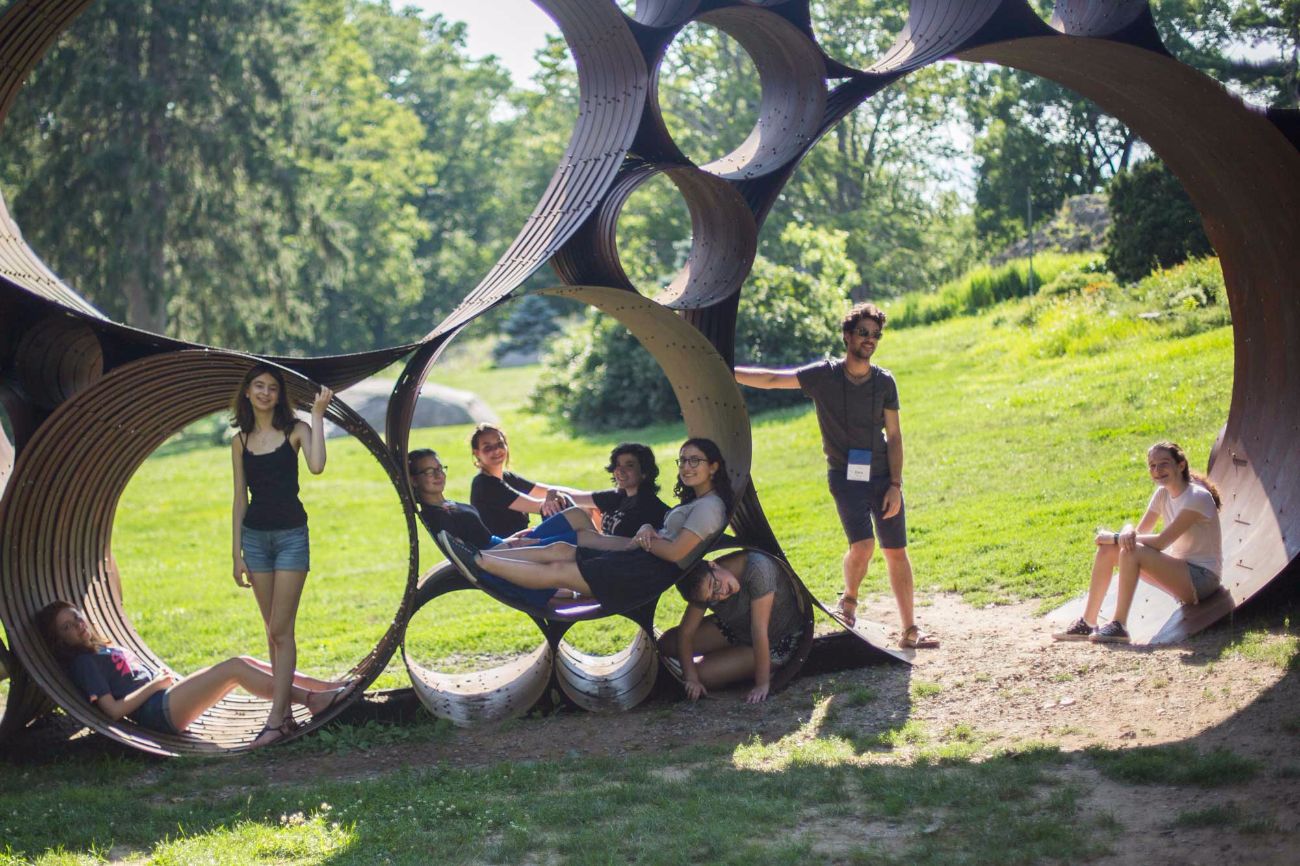
According Tirtzah Bassel, the artistic director of BIMA and a visual artist living and working in Brooklyn, NY, the idea of BIMA’s Artists Beit Midrash is that “as artists, we can use art as a dynamic and vibrant tool for exploring Jewish themes and identity.”
Every summer, BIMA educators come up with a theme that the students are then encouraged to explore through different artistic mediums. This summer, students looked at text from the Book of Jonah, through sculpture, ‘zine-making, theater and more.
“As I thought about themes that might resonate with teenagers in the story of Jonah, one thing that stood out was the theme of what it means to take responsibility, to make a promise and then go back on your word,” explained Zoe Penina Baker, an artist who taught a ‘zine-making course in the ABM this summer. “Jonah doesn’t really have an emotional capacity for task he was given, which is often what happens with teenagers; teens face new things all the time and aren’t necessarily prepared for the consequences.”
To begin, Zoe had her students create a logo for Jonah as part of a lesson about branding. “I talked to them about how brands like Nike and FedEx, which have such iconic images, and have become engrained in our lives. For Jonah, you automatically think ‘whale,’ or ‘fish,’ but I wanted them to subvert that idea and rather, think about how something so huge as a whale could be your fears, your conscience, the weight of a task you’ve been putting off, or it could be your college essays! I tried to have my students think about what scares them, and what responsibilities they have that they can’t run away from.”
Her ‘zine making workshop used only a cut-and-paste technique; she didn’t allow her students to use computers at all. “I taught my students layout and graphic design and DIY print media. Every day I had a student asking if they could print something out online, but I insisted that they use what they had.”
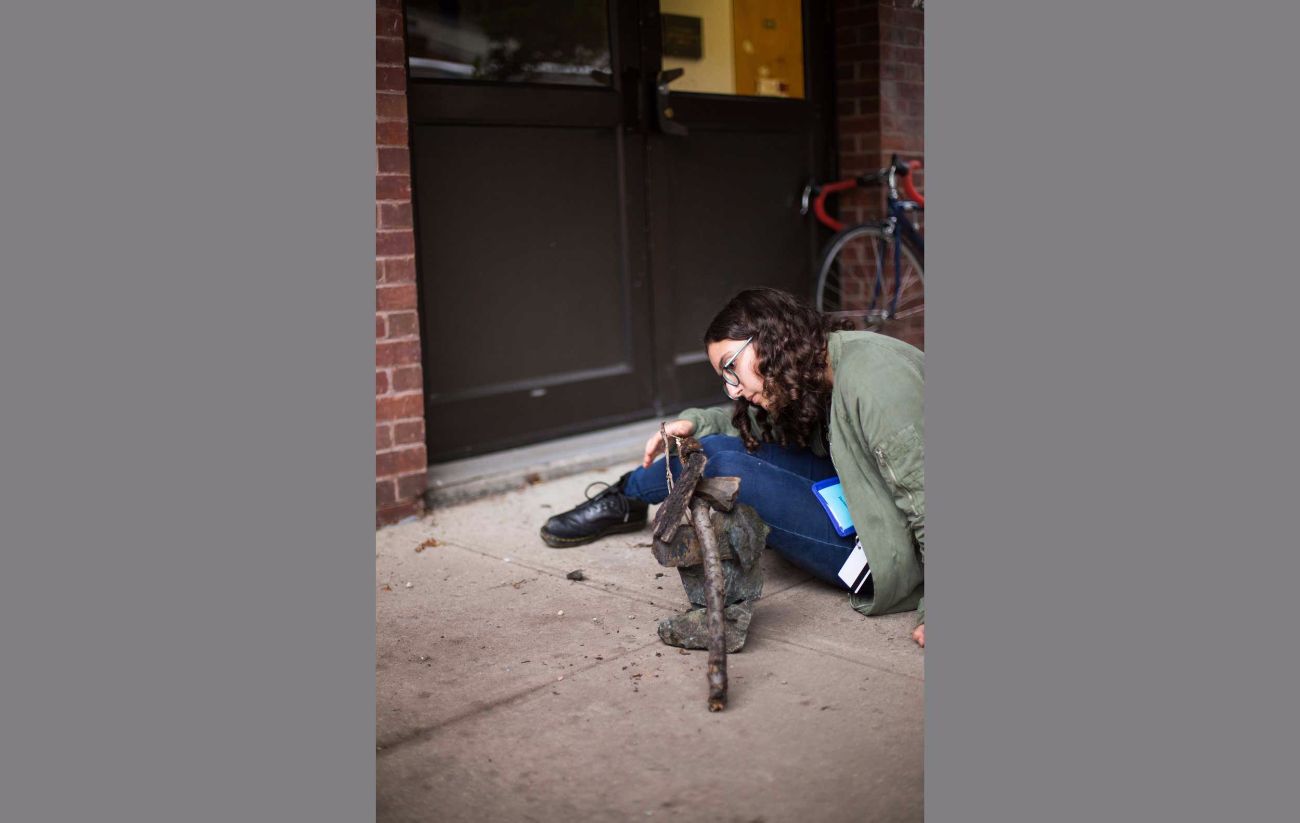
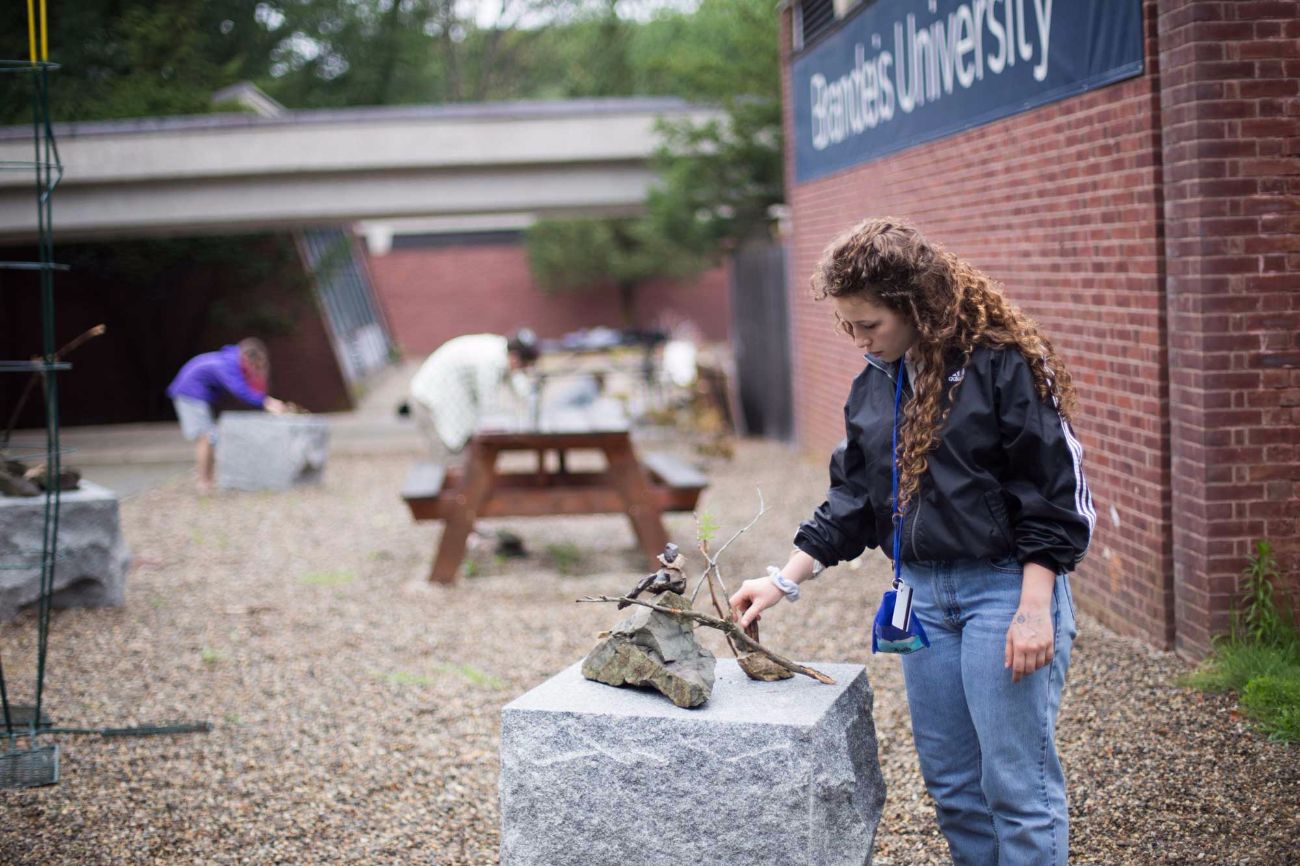
Like it was for Zoe’s students, in Ezra Benus’s sculpture course this summer, found objects and a back-to-basics approach were central to his students’ learning and creation. Using materials like plain cardboard, wood strips, rocks, sticks and other items found in nature, students made several different sculptures during the length of his course.
A visual artist based in New York City, Ezra had his group read the Jonah text first, and then focus on themes they saw emerging in the text. “Inside outside, positive and negative space, structure building, ephemerality, balance, these are all core elements of sculpture making and are necessary to understanding art—but also ideas that we were able to extrapolate by reading Jonah,” Ezra said.
In fact, he explained, ideas of ephemerality “inspired a lot of what we did. The teenagers in my course seemed to really relate to the idea that nothing lasts, and that giving up control is a way to gain control.”
“I had them bring their art back to their personal lives and to explore those ideas. To think about their identity and their struggles and to look at how their own stories mirrored what was happening in the text. In this way, they were engaged in a dialogue with the text, through a variety of different media,” he said.
Learn more about BIMA, here.
When we think of Los Angeles, we think of art. After all, who doesn’t know of the iconic Hollywood sign in L.A.’s Hollywood Hills? Who hasn’t heard of the great film studios and the storied venues where musicians, visual artists, vocalists, dancers and so many others come to take a chance on their dreams?
Think of Los Angeles again. Only this time use a Jewish lens. Now, you probably envision a community rich in its Jewish practice, culture and diversity, third only to New York and Chicago in terms of Jewish population; and a world-class center of Jewish education, to boot.
With so many of L.A.’s Jewish artists working as part-time teachers in synagogue religious schools, leading choruses, helping tutor b’nai mitzvot or offering art classes to senior citizens, Miriam Heller Stern, Dean of American Jewish University’s Graduate Center of Education, began asking questions:
What if instead of standing on the margins of Jewish education, artists took center stage?
Why not connect the artists who are Jewish, with religious school curriculum?
What if arts could become the conduit through which Jewish Education is taught?
“What’s unique about the L.A. Jewish community is that it’s a very creative community. Lots of Jewish artists come here to pursue their careers in performing arts, visual arts, music or film. Over time, I started encountering many people who were working in the field of the arts and dabbling in Jewish education. They’d give theater workshops or do week-long residencies at a camp. But that’s what they were doing on the side. As Jewish educators, they operated in a marginal space. But they were offering a rich way of engaging with Jewish content; I thought maybe I could merge my professional passion for the arts with Jewish education.”
The result? Dream Lab.

Initially funded by a Covenant Foundation Ignition Grant in 2014 to convene a think tank and then later supported by an L.A. Jewish Federation grant to launch a teaching fellowship, Dream Lab is a strategic initiative aimed at infusing the field of Jewish education with creativity.
With a year-long teaching fellowship at the Graduate Center for Jewish Education at American Jewish University at its core, Dream Lab exists for professional artists and creatives who wish to deepen and expand their practice as Jewish educators. Last October, 30 creative practitioners from Northern and Southern California convened to talk about creative practice as educators and meet with Dream Lab’s seven fellows.
And now, just two years since its inception, Dream Lab has received another grant from the Covenant Foundation, which will allow Jewish artists and educators across the disciplines to develop and share new teaching methodologies and provide each other with valuable professional feedback and support.
“By mobilizing diverse Jewish talent,” said Stern, “our aim is to provide a meeting ground for a new movement toward creative Jewish education, grounded in research and theory from the disciplines of art education, philosophy, psychology and curriculum development.”
In September of 2015, seven artists began the first year-long Dream Lab fellowship. Their goal “is to explore how to redefine the form and function of a Jewish education as a facilitator of creativity, interpretation and personal Jewish expression.”
Learning from the collective pedagogies of the different guest teaching artists, the seven fellows have since been studying how to implement the fusion of greater creativity, artistry and expression into Jewish education. During their monthly meetings, they study Jewish texts and ideas and discuss pedagogical assessments and human development with the goal of “incubating new creative methodologies of facilitating learning through creative processes,” Stern explained.
She describes Dream Lab as part “pedagogy test kitchen” and part “Inside the Actor’s Studio” in which the Dream Lab Fellows will learn to teach Judaics through the arts.
“What we call teaching artists, they themselves call `creative practitioners,’” said Stern. “We are expanding the definition of artist to include film makers, theater makers, writers, musicians and others. We’re playing with terminology in the field that’s useful to bring like-minded people together.”
The Dream Lab is an opportunity, said Stern, to redefine a vision of teaching Judaics through the arts.
“Our goal,” she said, “is to make the case, through our experiments, for bringing the arts to center stage in Jewish education.

Dream Lab Fellows will then co-create classroom lesson plans, courses and curricula with AJU educators to implement programs at supplementary schools, day schools, youth groups and camps.
Stern worked closely with Aaron Henne, the Artistic Director of theatre dybbuk, a Los Angeles area arts and education company whose work brings a focus to Jewish folklore, rituals and history. Henne is also one of Dream Lab’s seven fellows. He said that Dream Lab’s intent is to expand the footprint of Jewish arts as a vehicle of Jewish education.
“When people hear of arts education, they often think of it as siloed or separate from other topics,” he said. “The Dream Lab’s idea is that art modalities can be used to expose other topics. In this case, it’s Jewish learning. And it’s towards this goal of using art to teach Jewish education that Miriam envisioned.”
Stern added that the “dream” of Dream Lab was that Jewish creatives (as she calls them) have much to offer. “We should take their potential contribution as a serious opportunity to revitalize Jewish life against the landscape of a particularly creative moment in secular culture,” she added.
“There are a lot of Jewish artists who have great intentions about what they want to contribute to the Jewish world through education,” said Stern. “But they don’t know how to articulate their desired outcomes. They don’t know how to describe it and measure it, but they know what it looks like. This is our purpose, to help weave the arts into the agenda of Jewish education. We want artists to develop sophisticated students who can let their biggest questions about Judaism speak through dance, music and art.”
“Dream Lab also attempts to address the sense of profound isolation that many artists experience as freelancers in Jewish education,” Stern said. “Through Dream Lab, we cultivate a professional guild for creatives who want to deepen the impact of their educational work. When you put a group of genius artists together, that’s where you see the magic.”
With so many options of places to bring kids for a little entertainment, how does one choose?
Checking priorities is one way—are you looking for something educational? Something inclusive? Creatively engaging? An experience in diversity that also encourages play?
If the answer is yes to any of those questions, and you happen to find yourself in southern California, then you need look no further than the Zimmer Children’s Museum.
As Esther Netter, CEO of the Zimmer explains, “in this space we’re conscious of how people interact with one another, and we’re aware that our audience is everybody. We’re focused on programming that teaches mitzvot bein adam l’chavero, and we see these behavioral obligations as really aspirational.”
How can one be a mensch? That’s a guideline for all Zimmer programs.
The Zimmer, now in existence 24 years, started as a tiny 600 square foot space with model sukkot fashioned out of PVC, foam core and canvas. Now, it’s the only children’s museum in LA and has expanded to 10,000 square feet. Over 82,000 visitors come to the Zimmer each year.
“We started with limited hours and our mission was originally 100% focused on Jewish families,” Netter said. “But I realized quickly that this space was going to have to offer something to everyone.” Netter described how during that first week of operation, she watched as a couple without a child walked through the museum doors. After speaking with them, she understood they were an interfaith couple and she listened as the Jewish partner turned to the non-Jewish partner, while looking at a cork wall painted to look like the kotel, and said, “See? This is the wall in Jerusalem that I was telling you about. This is why I want to go on our honeymoon to Israel.”
Netter explained that as she observed this moment during the Zimmer’s early days, she realized that every educational decision the Museum made needed to consider inclusivity, and not make assumptions about who the visitor would be—or how much knowledge he or she had.
“How do we fashion a space that’s intergenerational, that allows the ultra orthodox and the non-Jewish visitor alike, to visit and feel comfortable?” she mused.
As the Museum evolved, so did this consideration of environment, a central aspect of the education that happens there. As Netter sees it, what matters is not just the topic of any particular Museum program, but also, the space in which that program occurs.
And while it hasn’t been a straight path toward creating just the type of space that would accommodate the myriad of visitors who come through The Zimmer’s doors each day, it’s certainly been a thoughtful one.
“In this evolution,” Netter said, “We have seen visitors coming to us from every community, of every skin color, in every family cohort combination. We do not look homogeneous, which I think is reflective of the Jewish community and the community at large. The Zimmer is like Abraham’s tent, but with the flaps turned up.”
Through those flaps walk families who are registered for bilingual Spanish-English sing-along classes called “Pequenos Rocqueros,” Toddler Town classes taught in Farsi, Japanese, French and Spanish, and so many other kinds of offerings that the Zimmer calendar offers a veritable rainbow of cultural options for every type of visitor.
Netter’s ideas about the kind of open space that the Zimmer serves to provide in its Los Angeles community are certainly reflective of the inclusivity so many Jewish educators are focused on in their professional spaces as well.
“We’re part of an amazing tradition that has so much in common with other traditions,” she said, “and it’s through finding those places and spaces of commonality that we can support all different kinds of families.”
To this end, and because of their deep commitment to notions of tikkun olam, Netter and her colleagues decided to take their educational approach and create similar experiences for older youth, in places that weren’t location-bound.
The result is youTHink, an innovative education program that offers a community of diverse upper elementary through high school students throughout the Los Angeles area the opportunity to engage with art and nurture their critical thinking and literacy skills, while also working within the larger community to bring about social change. youTHink programs range from lessons brought into Title 1 LA public schools, professional development opportunities for teachers, leadership and community projects beyond the classroom walls, and much more.
“The youTHink programs and community follow from the kind of space we create in the museum,” Netter explained. “In the Zimmer, young kids pretend to be rescuers, fire fighters and super heroes, in our youth development programming, older youth practice being advocates, builders, and leaders and rescuers. Little kids pretend, big kids, practice.”
youTHink programming also focuses on helping young people develop their “voice,” on teaching how we listen respectfully to others, on modeling how to civilly share opinions, and listening to someone with whom one might disagree. They do this by bringing youTHink educators and facilitators into the classroom during the school day, and by providing community service and civic engagement programming after school and on weekends.
“Students learn that there’s a relationship dance and a community dance, and when you learn the steps of the dance, your interactions with others become seamless, and influence how you think about yourself, your place within your family, your school community, your broader community, and the world,” Netter added.
There are different levels of youTHink engagement, too. There’s what happens at the school level, when youTHink educators and facilitators are brought in as special guests, but then there’s also community service and civic engagement programming on weekends and during school vacations.
“Helping us lead, facilitate and model all of our core values off-campus is a cohort of 40 middle and high school student leaders,” Netter explained. “They are our youTHink ambassadors.” This number will increase to 75 next year.
One might wonder how the work of a children’s museum founded in the Jewish community intersects with the needs of an average Southern California public school. But as Netter explains it, the notion of paying attention to how we interact with one another, and standards of civil and dignified behavior, knows no racial or ethnic boundaries.
“Most of us spend our time surrounded by people who are just like us. But it’s so important to bring ourselves, our students and our own kids into situations—central and public spaces—where we can bump shoulders with and interact with people who are different, who have different experiences.
“This is about being open and not being stuck, about accepting challenges that exist within our own philosophies and community, about rejecting the idea that there’s someone who’s in and someone who’s out, and instead, recognizing that society is constantly changing, and we need to figure out how to make our institutions relevant, and adjust to the times. This will fortify and strengthen us all.”
At the start of Tu B’Shvat last month, staff members at Jewish Family Service of Seattle (JFS) got an email that was meant to give them some pause, and generate a bigger conversation.
“In Judaism, a righteous person is often compared to a tree. The deep roots, life-giving fruit, oxygen, shade … are metaphors for the power of a good person in this world,” it said.
The email was a slight but illuminating slice of JFS’s Project Kavod(Dignity), a Covenant Foundation-supported program that is purposefully recharging – if not igniting - connections to the organization’s Jewish-values driven mission all the way from the boardroom to the mailroom, and from volunteers to clients.
Broadly, Project Kavod is creating an alternative educational and organizational space for JFS officers, employees, volunteers and other stakeholders to discuss religious, philosophical and cultural concepts and texts with each other, within and across all levels of the JFS structure, and to create a shared language and consciousness.
The initiative, JFS officials said, is born of modern day realities in which Jewish organizations encounter an increasingly diverse community, and levels of Jewish affiliation and observance in flux.
“The biggest challenge that I faced when I was hired was explaining the ‘J’ in JFS,” said Rabbi Will Berkovitz, CEO of JFS Seattle, “and determining what it looks like to run this organization in a secular world. One piece of how we address that is education, particularly of Jewish values.”
The initiative launched last year under the direction of Beth Huppin, a nationally known Jewish educator and 2010 Covenant Award recipient for excellence in the field.
Flashback to Hanukkah last year. Several hours before the holiday began, dozens of Seattle-area families gathered to pack bags of food to deliver to elderly, homebound and indigent neighbors.
But it was much more than a chesed moment. Among the crates of canned goods and packaged grains, Huppin led a discussion among children and adults about the “why” of it all and how to incorporate the spirit of light and giving throughout the year - and not just during the holiday itself.
“Hanukkah isn’t the only time to think about giving to other people,” she said. “What would happen if every night or every week you put a can of food in a bag? Then it turns into a habit and the miracle of light can last throughout the year. It’s the drip, drip, drip that can make a big difference to ourselves and to others that we help and support.”
Parents said it was beyond useful to them and their children to hear and absorb the Jewish take on preparing food packages.
“We try to make volunteering a regular part of our family life,” said Lisa Lotus of Seattle, who was designing and personalizing holiday cards along with her five-year-old daughter, Maeve. “As Beth is teaching us, this is a Jewish value that can and should guide us in life as Jews.”
“It is important that this be infused into the DNA of this agency, for people to process what they are doing within a Jewish framework, and to shift and reshape the culture of the organization in such a way,” Rabbi Berkovitz said. “In Project Kavod, we have a structure to have this critical conversation.”
While the initiative by necessity includes such moments as brown-bag lunch events and holiday-themed discussions, it is also playing out in more unique, widespread and generative ways both internally and externally as this more purposeful Jewish-values framework expands and takes hold.
The imprint of Project Kavod is present, for example, on the agency’s work on domestic violence and hunger, and is informing its efforts on substance abuse and refugee resettlement in the Seattle area.
And this month, board members, staff and volunteers are participating in a series of seminars examining the theme of Jewish obligation, most specifically to the sick, the needy and newly arriving refugees.
At its core, Huppin said, Project Kavod is making Jewish mindfulness central as it plays out in expected and unexpected ways.
“For any organization to stay true to its values, it’s important to talk about and explore them,” she said. “Project Kavod is a formal recognition of the importance of this. From a funding perspective, the choice shouldn’t be this or the food bank. But there has to be more thinking about what we do and why we do it. We have to rise above the weeds sometimes before we go back into them with more purpose and clarity.”
As one of the most predominant and longstanding social service agencies in northwest Washington State, JFS is positioned well to be an example to other Jewish organizations of reconnection to values through purposeful education, and officials said as much.
“This is a highly replicable model, ” Rabbi Berkovitz said. “It would be wise for others to start thinking about what Jewish education can look like and embed it into the wiring of their agencies. We are not just talking about classes here. We are moving Jewish education from the margins and into the soul of this place. We are swimming in Talmud here.”