Searching for a part-time Jewish education program for their two young daughters some years ago, Elizabeth Lenhard and her husband knew that they wanted their kids to find being Jewish a joyful experience. “Community and identity - is fun and joyful,” Lenhard said.
The Lenhards chose to enroll their two children – one now in second grade and the other in fifth – in Jewish Kids Groups, an Atlanta-based afterschool Jewish education program.
Key buzzwords jump from its website - “a reimagined, reinvented, and ridiculously cool Hebrew school” - appealing to a generation of parents seeking to instill Jewish identity and knowledge of Hebrew in fun, creative and inviting environments early in their children’s lives.
Forty kindergarteners through fifth graders attend Jewish Kids Groups on weekday afternoons this school year, and 150 children from pre-school age to seventh grade attend on Sunday mornings. When the program began in 2011, attendance stood at just 20 students.
Its approach and growth over the last several years mirrors a still nascent, yet hard-to-ignore trend on this end of the Jewish educational spectrum.

Programs such as these are neither day schools nor synagogue-run Hebrew or religious schools. They are a different option offering Hebrew language and Jewish cultural immersion for children during afterschool hours. And, they are proving to be increasingly attractive to parents desiring learning environments and approaches that are stimulating, innovative and experiential.
Nitzan, a network of programs committed to renewing Jewish learning after school, has emerged to tie geographically dispersed programs together, strengthen them through shared resources and connections, and advocate for what is now considered by many as a growing niche within Jewish education. The Covenant Foundation supported the creation of Nitzan with a Signature grant in 2014.
More than 900 children are enrolled in 10 such alternative Jewish afterschool programs in the Nitzan network, the organization reports. The numbers, at once modest but impressive considering the relative newness of programs, reveal unmistakable 21stcentury realities.
Generation X and Millennial parents are by their very nature more innovation-savvy and disruptive-friendly, open to new educational approaches and venues. And many are juggling households with two working parents and complex schedules so afterschool care coupled with quality Jewish content is a winning proposition for those wanting and needing both.
“Many of our parents haven’t done any Jewish ritual or practice in a decade or more,” said Beverly Socher-Lerner, Founding Director of the Makom Community in Philadelphia, which opened with four students just two years ago, and begins this year with about 30. “They come to us and find a version of Jewish life that embraces their need for child care and Jewish connection. We are striking a chord with people.”
Such accounts of startling growth in such a short time span are commonplace among directors and educators at independent Jewish afterschool programs across the country.
Edah, in Berkeley, CA, is enrolling more than 50 kids from pre-school age through fifth grade this year, a 25 percent surge from last year and a tenfold increase since it opened in 2010. At MoEd, in the DC-metro area, 50 children are participating this year, nearly triple the number since the program began in 2012. And at Sulam in Brookline, MA, enrollment has grown eightfold to 25 students in five years.
“Before these programs emerged, there were afterschool programs and there were Jewish learning programs, but they hadn’t been merged,” said Dr. Rena Dorph, who co-founded Edah. “The innovation and uniqueness here is the synergy of aftercare with enrichment opportunities in Jewish and Hebrew learning. It is one-stop shopping for busy families.
“As with all innovations, we all wonder why we didn’t have this earlier. We are fusing things together in a way that no one saw before. This is how this feels.”
For sure, there is an entrepreneurial nature driving the establishment of programs such as these. Directors use words such as “pioneering” and “start-up” when describing the programs and organizations that they are generating and occupying. Often created beyond the traditional Jewish establishment, some of those who envisioned them did so around their kitchen tables and even contemplated turning their garages into afterschool learning spaces.
Enter Nitzan. The national network of alternative supplementary programs had an organic birth, as creators around the country found each other often through chance or word of mouth or social media. Through the network, educators are supporting each other, sharing best practices, building sustainability models, growing the field and earning it early recognition on the Jewish communal landscape.
“It is difficult to work in a community to change a status quo that people are holding onto,” said Dorph, who co-founded Nitzan in 2012. “The journey was more painful than I anticipated. The group of us trying to pioneer in this area – creating hybrid, innovative spaces - was really in need of a community of moral and practical support and recognition.”
Despite their relative successes so far, those creating and seeking to expand this space in Jewish education are not immune to stumbling, illuminating of course the risks of any start-up.
Bayit Afterschool opened in Evanston, IL, in 2013 with eight children for three afternoons a week. Last year, the program enrolled 30 kids and offered five afternoons of programming.
Yet despite that enormous growth and communal interest, the program is not reopening for the current school year largely due to financial sustainability issues and an inability to find a suitable organizational home for its programming in order to reduce costs.
“We were able to set up a funding model for the program based on tuition and grants, but what we ultimately couldn’t cover was the overhead of being a independent organization,” said Megan Roth Abraham, Bayit’s Founder.
“Yes, we are a great program and yes, we did wonderful things and reached our objectives of outreach and engagement. We may have been ahead of our time though, from the standpoint of realistic financial sustainability. But the market is definitely out there for the program that we provided. There is a hunger for this.”
In fact, Nitzan members are learning from each other’s failures as much each other’s successes.
“In the innovation sector, we are envisioning and imagining,” said Rabbi Joshua Fenton, Executive Director of both Edah and Studio 70, a Jewish learning laboratory that houses Edah and Nitzan. “That takes chutzpah and risk-taking and is just plain scary. So to know that you are not alone in doing so, and can learn from others is just huge.”
Now that Nitzan is established, and affiliated programs are getting a toehold in their communities, Rabbi Fenton is focused on strategies to maintain and grow the sustainability of the programs and the larger movement. These include strategies for partnerships, metric-driven benchmarks for success, advocacy for the model, and training a corps of educators to work within this niche of Jewish education.
The common denominator among those involved on the local and national levels is a belief that this new model of afterschool Jewish education is addressing a critical communal need and must be nurtured.
“We are the people of the book because we support Jewish education starting at the very youngest of ages,” said Rabbi Lila Kagedan, Founder of Sulam and Network Coordinator for Nitzan. “This isn’t the only option for parents, but it is a very good option, so it is critical that it be supported and strengthened.”
For many synagogue school directors, finding the right staff is an ever-present issue. While there are always motivated college students, rabbinical students, grad students, synagogue members and former teachers who willingly fill religious school classrooms with energy and creativity, the reality is that a supplementary school staff is often in-flux. Rabbinical students are ordained, grad students find internships, college students graduate. What’s more, pedagogies don’t always align, and resources vary by great measure.
The question of how to best outfit synagogue school classrooms with educators who have the time and resources to build an engaging and meaningful learning experience for students in an afternoon setting is definitely not new. Scores of articles and papers have been written, committees have convened, networks have formed and disbanded as they tussle over the question of the most effective models. And, what works for one place won’t necessarily work for another.

There’s no right answer, that’s for certain. But there are lots of creative thinkers out there who are trying to address the question of effective teaching models by, in some cases, employing full time educators on the religious school faculty, and in others, training day school students to enter into the synagogue school classroom.
Below are condensed and compiled reflections from education directors at two New York-area synagogues where full-time educators are employed, as well as thoughts from a student teacher and administrator at The Weber School in Atlanta, where 10th-12th grade students have the option to teach in local area synagogue school programs.
Larchmont Temple Religious School, Larchmont Temple, Westchester County
At Larchmont Temple in Westchester County, New York, Rabbi Eve Rudin is the Director of Family Education, Youth and Families and has one full-time educator on her religious school staff. Before she arrived to assume her role a year ago, the budget for a full-time educator had already been passed and Rabbi Rudin undertook the search for someone to join their religious school team. That person wound up being Ted Dreier, a graduate of Hebrew Union College-Jewish Institute for Religion, who has dual Masters Degrees in Jewish Education and Non Profit management.
One big difference that Rabbi Rudin notes since bringing Ted onto her staff, is an end to what she calls the “crosstown bus syndrome,” namely, the tendency of religious school teachers to figure out what they’ll teach that day during the time it takes to ride the bus across town from home to the synagogue.
Ted is in the classroom for up to four hours a week, and also creates large grade-wide group programming, teaches a high school elective, works on curriculum development (he just revamped the 5th grade curriculum so that it’s now inquiry-based), and works with the high school madrichim.
“Having someone on staff who speaks the language of Jewish education is very helpful,” Rudin said. “We talk about measurable outcomes, evaluation, learning goals, understanding by design, and whole-person learning,” she added.
Next up: drawing curricular maps and making lesson planning more intentional for all of Larchmont Temple’s educators.
To learn more about Larchmont Temple’s school, click here:
Lese Center for Living Judaism, Central Synagogue, Manhattan
“From my perspective, it’s an amazing blessing to have full time teachers because we can integrate them into every aspect of the synagogue and community,” said Rabbi Rebecca Rosenthal, Director of Youth and Family Education at Central Synagogue, where there are 6 full-time educators on staff.
“When students come to synagogue for Shabbat services, they see the same teachers from their classrooms, from their youth groups, and in this way, they form significant relationships with their teachers. This relationship between students and teachers is a crucial factor and an amazing gift,” she said.
This summer, Rosenthal and her education staff were trained in Project Based Learning and will move toward a curriculum that covers just 3 topics a year in great depth. “Our teachers will be focused on helping students engage with Judaism in a way that’s relevant to their lives in the 21st century, and form bonds with one another,” Rosenthal said.
On the day-to-day level, the educators at Central Synagogue undertake what most would think of as traditional professional development, work on classroom management, differentiated instruction, and of course, lots of programming to figure out what will actually be taught in the classroom. Educators also meet with clergy on a regular basis.
Rosenthal knows that resources are a major challenge for many synagogues across the country and that Central is in a unique position. What’s more, what works in one place won’t necessarily work in another, given the cultural differences that vary from congregation to congregation.
“People on the ground need real step-by-step support for making change,” she said.
To learn more about the Lese Center for Living Judaism at Central Synagogue, school, click here.
The Weber Teaching Fellows Program, The Weber School, Atlanta
Last spring, The Weber School in Atlanta launched The Weber Teaching Fellows program, a signature program that convenes a cohort of 10th, 11th and 12th grade to be placed in teaching positions, as counselors, and youth group leaders in local community programs, including local synagogue religious schools, camps, youth groups, and preschool programs. The cohort also participates in a teaching practicum facilitated by a member of the Weber faculty, and benefits from the input of guest speakers and teachers. The practicum supports the students in their work, provides study of content (related to their areas of instruction and programming) as well as pedagogy, classroom management and child development.
Zac, a rising Weber senior, spent the 2015-2016 academic year student teaching third grade students at his home synagogue, Congregation Bnai Torah in Sandy Springs, GA.
“The students knew I was madrich, and knew I was in high school, still a student, and probably closer to their age than their teacher was, and I think that gave them the comfort level to ask me questions that they might not have felt comfortable asking their teacher,” Zac reflected. “I’ve been going to this synagogue for eight years and I’ve been in Hebrew Day School since first grade. I didn’t know a lot about supplementary school before I started teaching, but from the first day, I knew I wanted to try and make school as fun as possible for my students.”
Zac explained that he knows lots of families drop out of religious school after the Bar Mitzvah year, and it’s important to him that he helps keep kids engaged, and keeps them coming back to synagogue. In fact, Zac was so moved by his desire to help a younger generation of students that he approached Weber Head of School Rabbi Ed Harwitz, to ask him to formalize a teacher-training program at Weber—a conversation that ultimately spurned the creation of the Fellows program.
“This year, I want to try and bring the “Weber setting” to kids at the synagogue,” Zac said. When asked what the “Weber setting” implied, Zac explained that at Weber, teachers and students communicate a lot. “We don’t just sit in class and take notes,” he said. “When we learn about Tanah, we have a real conversation, where everyone participates and asks questions.”
“A big benefit to the community,” said Rabbi Ed Harwitz, “is that synagogues can count on our students to be receiving professional direction in terms of content and pedagogy.”
In their practicum, Weber Teaching Fellows undertake an in-depth text study of Jon Saphier’s The Skillful Teacher, and focus on topics including pacing and techniques and strategy for keeping student attention in the classroom. As they work through these instructions, they develop a portfolio with reflection and artifacts from their placements. The culminating project is the development of their own educational philosophy.
“What synagogues need today are dynamic teachers who will undertake their curriculum in an entirely new way, bring content knowledge, take on an adult role, but also, not be tied to an out of date notion of what Hebrew school is,” Harwitz said.
“Our students are young and engaged and excited, and this is a great opportunity for a brand new model of staffing with lots of potential.”
If you’ve been following the conversation about Jewish supplementary education over the last 10 years, or, if you’ve just been clicking through this edition of Sight Line, you know that there’s been a sea change in the landscape of offerings. While synagogue programs continue to thrive in many places—employing full time educators and undertaking training in some of the most innovative pedagogies coming out of the educational world (think: project-based learning, etc.)—there’s also been a significant movement toward independently-operated afterschool programs. And, a common characteristic of many of those programs that exist outside the synagogue is a bigger focus on modern Hebrew language acquisition and development.
There are a host of reasons why a parent might choose to emphasize modern Hebrew language study over the study of Hebrew through prayer. “Many parents are highly motivated by the notion of their kids learning two, if not three foreign languages, both for the benefits of brain development that it affords as well as helping their children develop into global citizens” explains Dr. Rena Dorph, Co-Founder of Nitzan—a national network for renewing Jewish learning after school—and of Edah—a full-service Jewish afterschool program in Berkeley, California. Further, many parents seeking such programs, like those affiliated with the Nitzan Network, are also looking for a multi-denominational approach to Jewish learning. As Dorph, who is also the Interim Director of the University of California- Berkeley’s Lawrence Hall of Science, explained, “Hebrew language is not only an anchor point and gateway to religious practice, but it is also a unifying experience across various ways of expressing Judaism.”
Dorph quickly realized that if Edah and other Nitzan programs were going to undertake Hebrew language study in a way that was complicit with their general pedagogy—which builds on kids’ interests, utilizes project-based learning and the best of Reggio and Montessori philosophies, and her own professional background in effective science learning which utilizes multiple modalities when studying a topic—doing, talking, reading, and writing—then she was going to have to actually develop those materials she was looking for, herself.
It was at that point, almost a year ago, that Harlene Appelman, Executive Director of the Covenant Foundation, suggested that Rena connect with David Behrman, President of Behrman House publishers, to begin brainstorming ways to create the materials themselves.
Fast forward about a year, and now, Dorph and Behrman have completed a prospectus for a Hebrew Language Leveled Reader Series, intended to support programs like Edah and those affiliated with Nitzan to implement their “innovative new approach to learning Hebrew in part-time Jewish education programs.” As the prospectus offers, the team—Studio 70 (the organizational home of Edah and Nitzan) and Behrman House Publishers—intends to “develop a series of early-reader books and associated digital materials, including mobile apps that will provide high-interest texts in Hebrew for North American readers ages 6–11.”
The idea is to truly engage early readers in topics that are of “high-level” interest to them, such that reading becomes an interesting activity, not just an assignment. The hope is that if the student identifies topics that engage her, she will more eagerly choose to spend time read about that topic in Hebrew—a very different driver than reading material which is assigned without thought given to what might actually peak a child’s curiosity. The multiple series’ they have planned include high interest and familiar topics such as holidays, activities (e.g. sports, camping, trips), interpersonal relationships and daily activities. Their content choices within each reading proficiency level (low, medium, high) will also be guided by the American Council on the Teaching of Foreign Languages’ (ACTFL) standards for language proficiency.
“Family engagement is pretty critical for us,” Dorph said. “But a fair number of the parents in our programs don’t have the Hebrew skills to help their kids with reading comprehension in Hebrew, at home.” To that end, this program would support parents to read with the child, and if they need support, they are empowered and enabled to learn alongside their kids.
The materials, designed for kids aged K-5, will likely consist of a variety of short full-color Hebrew books in a “child-friendly trim size,” and potentially a dozen digital products (including tablet-based e-books or apps) which will use the “story and art of the physical books while also creating an interactive, repeatable experience.” Another important element of the digital versions of the books will be a “read-aloud” function, which will offer just-in-time support when a child or parent with emerging Hebrew reading facility is reading the book.
While the primary audience intended are those children currently enrolled in Nitzan-affiliated programs, secondary audiences could include other settings where people want to support the learning of Hebrew language (e.g. Hebrew charter schools, some day schools, North American religious schools, and families seeking individual Hebrew enrichment via book and app purchases).
“This program is modular,” Behrman added, “so teachers could use pieces of it, without having to adopt the whole thing. That’s really important when considering the possibilities of the series’ uses in a congregation where there are varying amounts of classroom time.”
Rooted within this program is collective knowledge that comes not only from the secular world of education but the general ideas about how people best learn. “We asked ourselves, ‘what are the best learning theories, and the best approaches that we might design?” Dorph said. “Understanding how kids learn, in general (and learn language, more specifically) and how parents and educators participate in that learning process has been key to the choices we’ve made in the design of these materials.”
Now that the prospectus is out, Dorph, Behrman and their colleagues are seeking seed funding which will enable them to develop a proof of concept that they will vet and test within the larger community. In the meantime though, Dorph is hoping to change the perception of what’s possible in an after-school setting.
“For parents that want to engage and have not known how,” Dorph added, “or not known what to ask for, I’d like them to know that engaging with Hebrew language with their kids isn’t as far out of reach as they might think. This series of reading materials, we hope, will show families that there are lots of different possibilities for participating in Hebrew language and Jewish learning.”
Throughout his life and career, Eli N. Evans has made a habit of tackling challenges with a trademark blend of confidence and grace. His effectual method is three-fold and direct: First, identify excellent change-makers with an intimate knowledge of the problems that need tackling. Second, ask them to identify the aspects of those challenges that need attention and invite them to develop innovative solutions for doing so. Third, give them the resources and confidence to “go forth, and go for it,” as Evans put it recently when he sat down for a conversation reflecting back on his proudest career accomplishments.
“I really learned early to take it big,” Evans noted, as he contemplated pivotal career moments. “Whenever I faced a situation where I was unsure of what we were supposed to do next, taking it big was always my answer.”
"Eli’s lifelong dedication to Jewish education and Jewish continuity is legend. The Covenant Foundation today reflects his insights, creativity, gift for relationships and vision.”
Read Covenant of Dreams: Foreword, by Eli N. Evans
* * *
Born and raised in Durham, North Carolina, Evans’ roots in the south run deep. His father, Emanuel J. Evans, was Durham’s first Jewish mayor. His mother, Sara Nachamson Evans, was a prominent local, regional and national leader of Hadassah. Together, Evans’s parents helped create, support and raise funds for the Judaic Studies Department at Duke University and the University of North Carolina, Chapel Hill, where Evans would eventually become the first Jewish student body president.
Following his graduation from UNC, Evans joined the United States Navy and completed a tour of duty in the Far East. He then attended Yale Law School and served in The White House as a speechwriter for President Lyndon B. Johnson.
In 1968, Evans joined the Carnegie Corporation of New York as a Senior Program Officer. One of the country’s premier education foundations, Carnegie took a vested interest in the inequitable circumstances that existed at the time for black law students in the south. When Foundation president John W. Gardner asked Evans to travel to the region and investigate, Evans had his first opportunity to put the approach of “taking it big” into action by ultimately developing what remains one of his most treasured professional achievements: the Earl Warren Legal Training Program, an unprecedented collaboration among foundations and law schools aimed at expanding the pool of black southern lawyers.
“We understood that if one could increase the number of black lawyers, one could make a significant contribution to the future of the country,” Evans said, recalling the Corporation’s investment. Sure enough, five years after the Training Program’s launch, nearly 300 black students had graduated from law schools in the South, with hundreds more in the pipeline.
Evans remained at Carnegie for ten years and then moved on to become the founding president of The Charles H. Revson Foundation. Over the course of his 25 remarkable years at Revson, he helped launch numerous creative ventures including the PBS Series Heritage: Civilization and the Jews, and Bill Moyers’s Genesis: A Living Conversation.
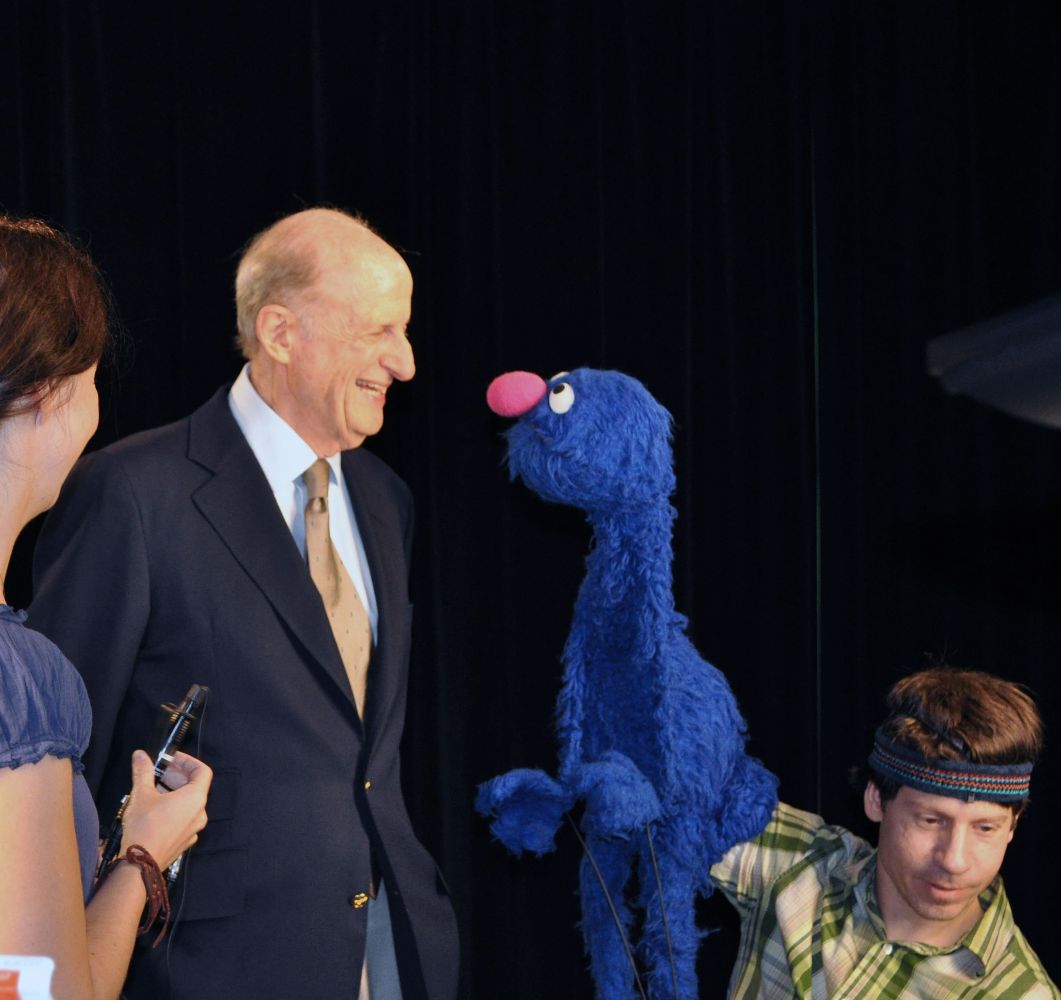
Evans also helped launch Rechov Sumsum, the Israeli version of Sesame Street, and Shalom Sesame, its American adaptation.
“Talking muppets that could speak directly to children through their television sets…another big idea,” recalls Evans, with a smile.
During this time, Evans was also extraordinarily prolific, and developed a niche chronicling Jewish American southern history. The author of three books, The Provincials: A Personal History of Jews in the South; The Lonely Days Were Sundays: Reflections of a Jewish Southerner, and Judah P. Benjamin: The Jewish Confederate, Evans's literary accomplishments were so impressive that he inspired the Israeli diplomat and scholar Abba Eban to declare, "The Jews of the South have found their poet laureate."
***
With big-picture thinking and a noted ability to inspire confidence in others, Eli N. Evans assumed the role of Board Chair of The Covenant Foundation in 1994, succeeding Robert Adler, the Foundation’s first Board Chairman.
The Covenant Foundation, the brainchild of Susan Crown, daughter of Lester Crown, and Barbara Goodman Manilow, daughter of Charles (Corky) Goodman, was borne of the cousins’ mutual desire to create and sustain engaging Jewish education.
“They conceived a national strategy of trying to do something positive to reward great Jewish teachers and improve Jewish education in America,” Evans said, reflecting back on the early days. “They concluded that even though the field of Jewish education was suffering from financial constraints and institutional limitations [at the time], the Jewish community was bursting with exciting ideas that could bring about dramatic change.”
In its earliest days, Covenant functioned mainly via a ground-up approach, soliciting nominations and proposals from the field of Jewish education instead of ordering up plans from the offices in New York.
“We wanted to hear what people are interested in, what was keeping them up at night,” Evans noted, reflecting on the unusual process of prospecting for talent. “We were not saying, ‘Here’s what you should do.’ Rather, we were saying, ‘What’s going on out there? We wanted to know.”
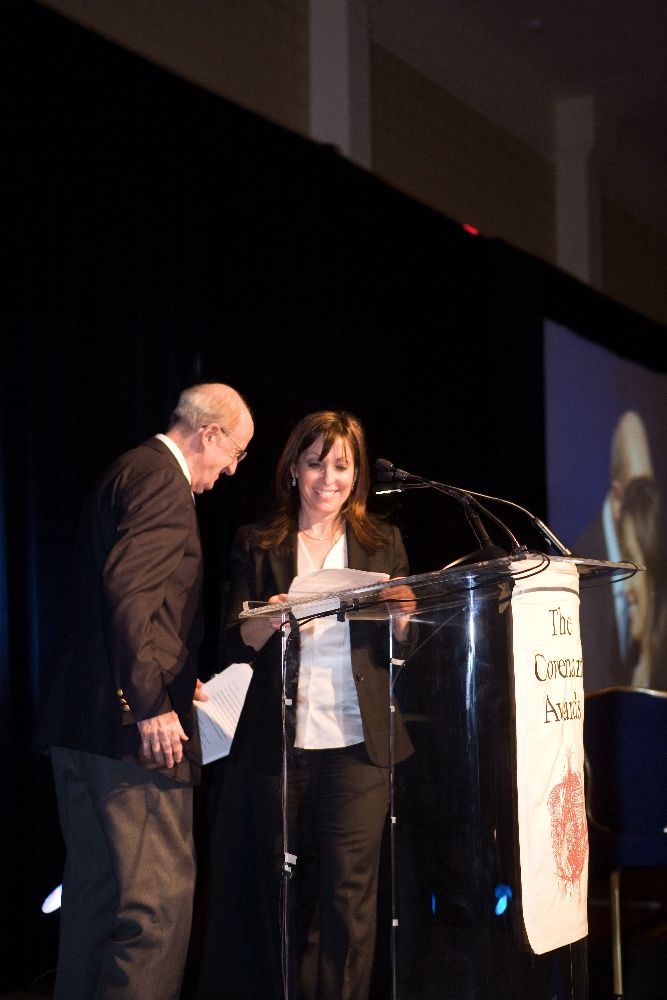
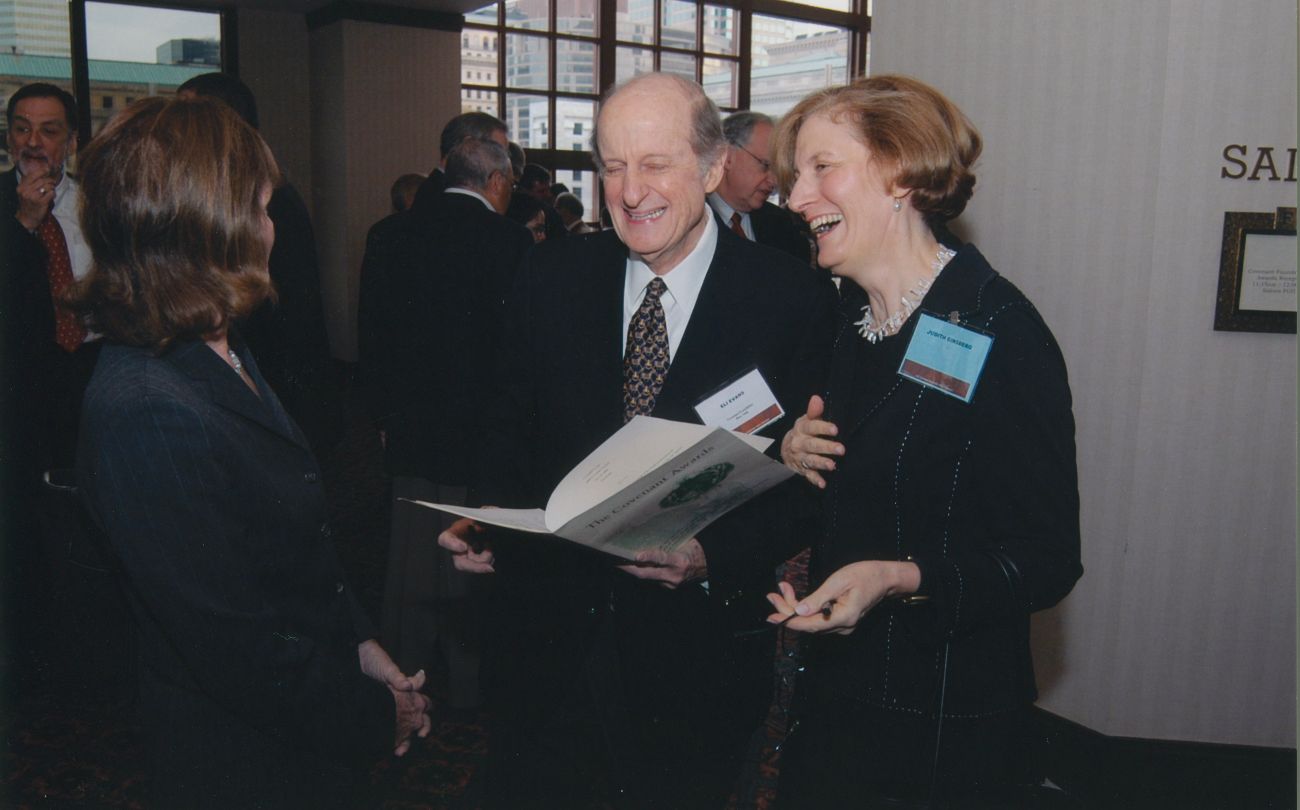
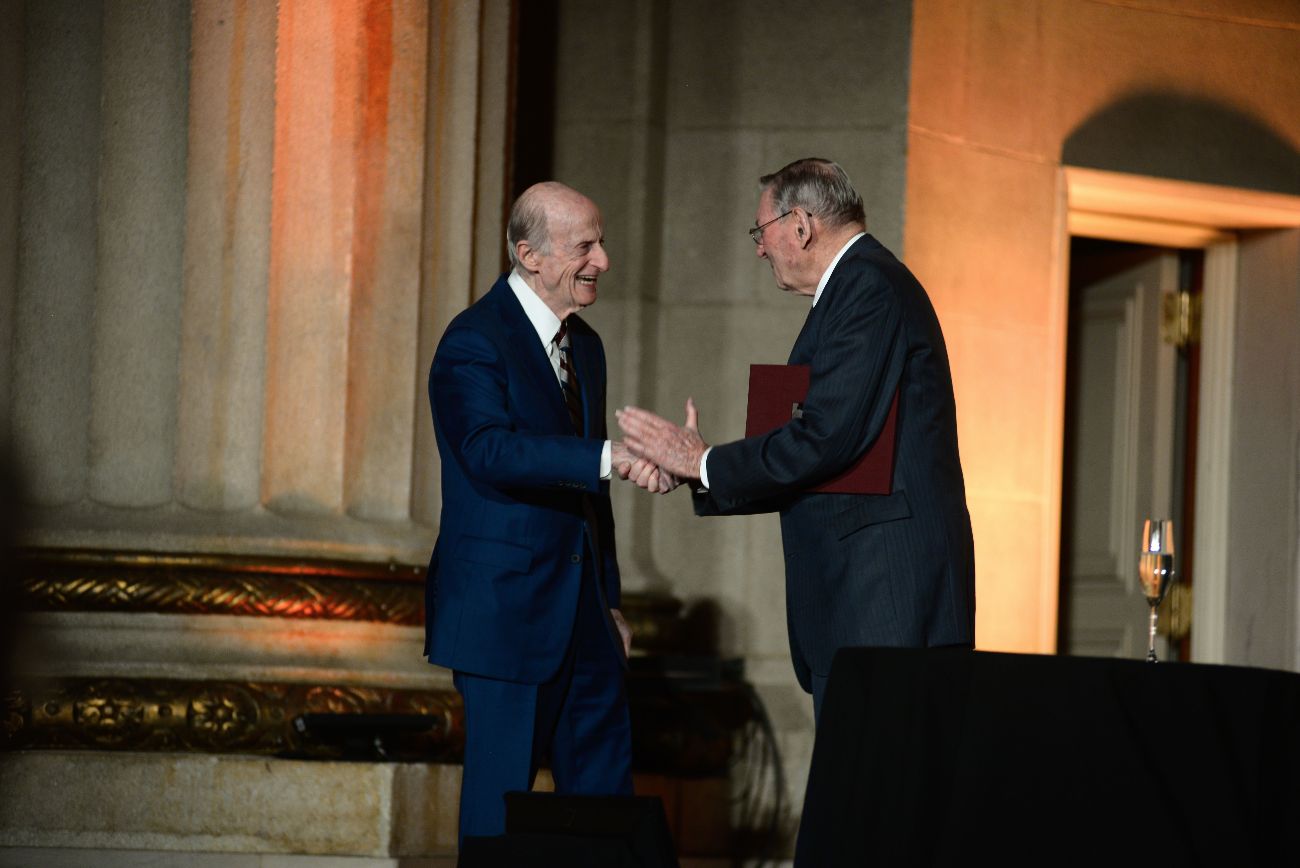
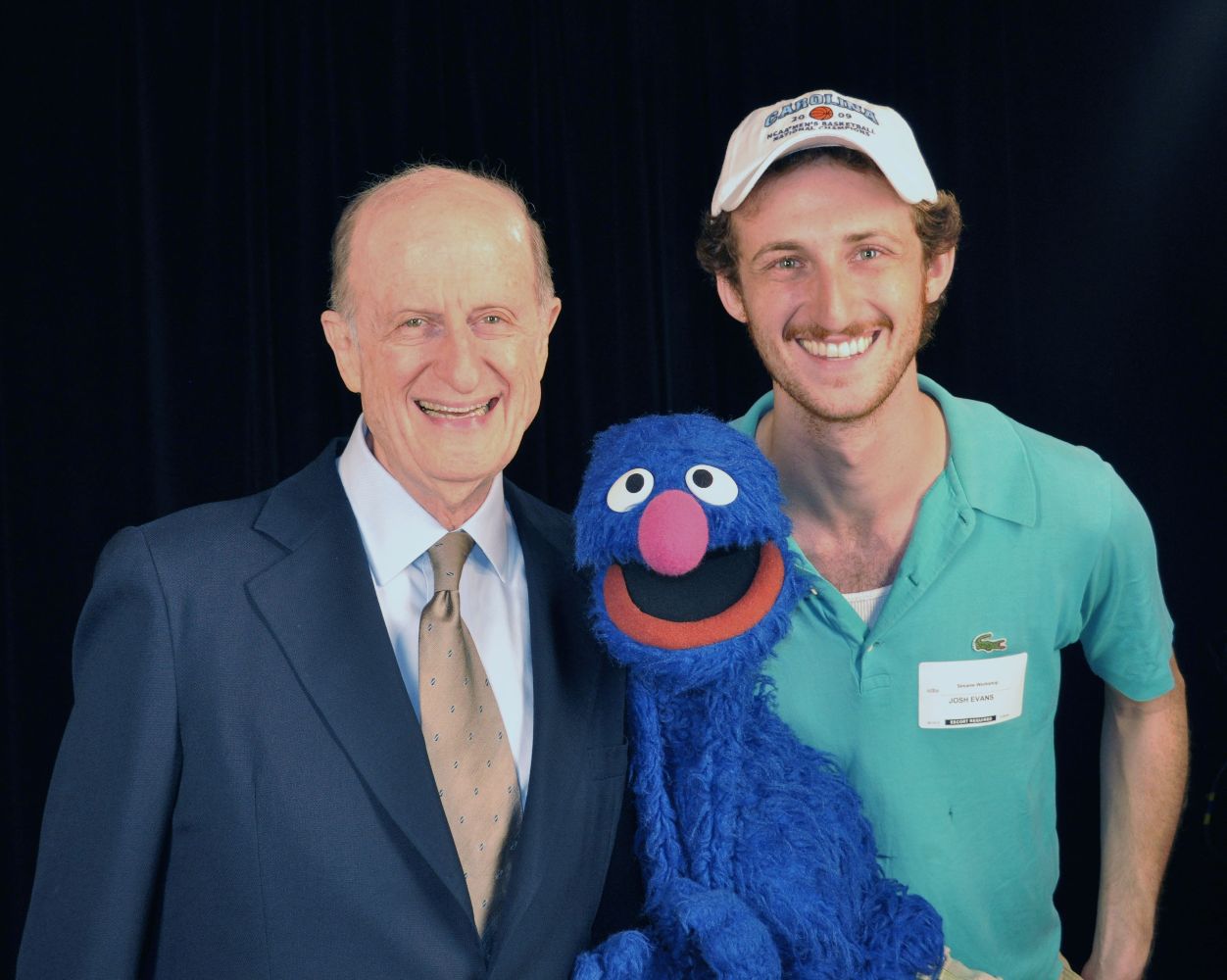
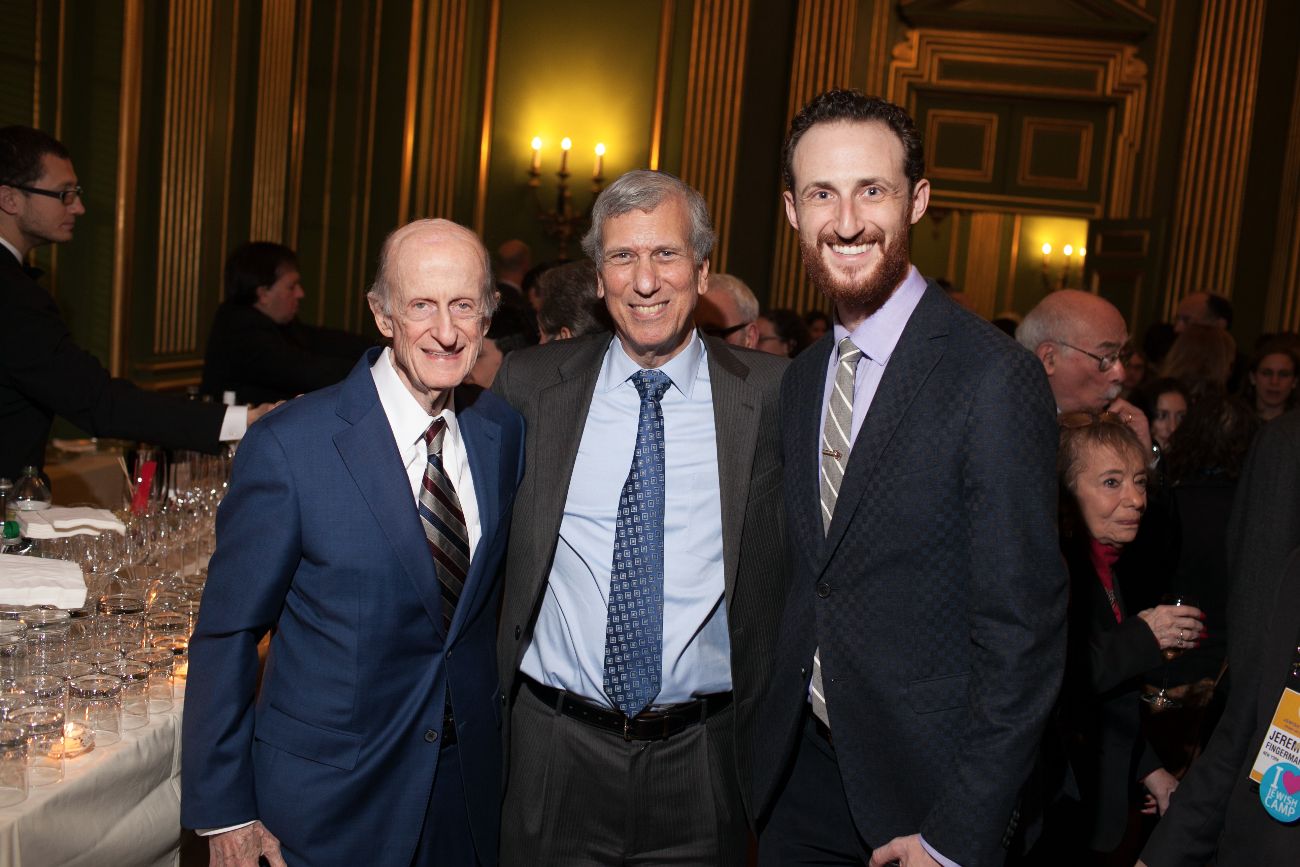
During his 22-year tenure as Chairman of the Board of The Covenant Foundation, Evans helped envision a program of grants and awards that became the backbone of the Foundation and one that is fundamental to its success and the esteem it has garnered.
Board members credit Evans for helping steer the foundation amid shifting seas, as the world of philanthropy, the priorities of Jewish philanthropists, and the nature of education itself have evolved.
Considering the impact that the cohort of Covenant Award recipients had on Jewish education in 2009, Evans wrote, “Over the past eighteen years, 54 educators have received a gift that can be measured in more than dollars-the gift of recognition of their achievements and their aspirations. In turn, these educators have given back enormously to Jewish education.”
“The institutions they have enriched, the programs they have initiated, and the influence they have had on others have each been enhanced by being brought into the orbit of the Covenant Foundation. In ways small and large each has helped to make a Jewish renaissance imaginable,” he wrote.
In many ways, the same may be said of Evans’s own contributions both to The Covenant Foundation and to the project of Jewish education, writ large.
At the 2016 Covenant Awards Dinner and 25th Anniversary Celebration, Lester Crown, Chairman of Henry Crown and Company, honored Evans for his chairmanship and dedication to The Covenant Foundation.
“Early on, our aspirations were to elevate talented educators, transform their ideas into practice, honor institutions, and support nascent and promising programming,” Mr. Crown said.
“Eli’s lifelong dedication to Jewish education and Jewish continuity is legend,” he continued. “The Foundation today reflects his insights, creativity, gift for relationships and vision. He gently but effectively pursued a vision of pluralism, ensuring that the best of Jewish education can be celebrated and supported regardless of denomination, location, or scale.”
Evans will remain a member of The Covenant Foundation Board of Directors when Cheryl Finkel, a 1999 Covenant Award recipient, assumes the role of Board Chair this month. He will serve as Chair Emeritus.
A Covenant Award recipient and seasoned practitioner, Cheryl R. Finkel has been invested in the field of Jewish education for over 30 years. As the Head of the Epstein School in Atlanta, Cheryl invigorated the Jewish community by growing enrollment at the school from 80 students at her arrival, to over 600 students over the course of her tenure there. Deeply committed to the professional development of her faculty and staff, Cheryl took the experience acquired through her 20 years of leadership at Epstein and shared it with over a hundred new Day School leaders as a member of the Jewish Day School Leadership Institute at the Jewish Theological Seminary. Cheryl also served as a Senior Consultant at Partnership for Excellence in Jewish Education, where she provided management coaching to over 175 schools. Now, after ten years as a Covenant Foundation Board Member, Cheryl’s dedication to Jewish education enters yet another significant phase, as she assumes the role of incoming Chair of the Covenant Foundation Board of Directors.
Last month, we spent time talking with Cheryl about what she’s learned over the course of her career about strong leadership, her hopes for the future of The Covenant Foundation, and it means to be “meshuga la’davar.”

Cheryl Finkel and 2016 Covenant Award recipients
In an essay you wrote for the Covenant of Dreams publication, you describe being influenced by the notion that sometimes, one must step up to a challenge, even if one doesn’t necessarily know how they might accomplish or complete that challenge. How this has notion affected your leadership?
In that essay, I talk about having a small town Jewish background that inspired in me a willingness to take on Jewish assignments that I didn’t really know how to do. I still believe that it’s so important for leaders to be “nachshonim,” to be “initiators.”
To that end, I’ve learned that as a leader, it’s important to be humble. Leaders can’t possibly embody everything that a team or a school or an organization needs. Instead, I’ve learned to be smart about engaging those who do things better than I can, to recognize talent, and to bring that talent onto my team. Jewish education—and education, writ large—has so many content areas, no one could ever master them all. Instead, we should be realistic about managing what we don’t know, and not be afraid to ask questions.
How did that play out, in a personal sense for you, as a Jewish educator?
For 20 years, I studied in the Judaic Studies department at Emory University to make up for the deficit that I felt I had in textual knowledge. Growing up in the mountain town of Asheville, before it was a truly cosmopolitan city, we knew how much we didn’tknow, and we weren’t ashamed to admit it. So I made a commitment to continuous study and improvement. And I’d like to think that that’s really what I brought to my school leadership experience and to my role as a mentor and consultant today. To let what we don’t know inspire instead of shame us, and to always be willing to ask questions, because that’s what drives learning.
How did that notion of asking questions and always being open to new ideas and learning affect your work as Head of School at Epstein?
I had this idea that school should never be the same, year to year. Each fall, when students arrived at school, I wanted their experience to be different, and to be even better than the year before. This translated into a total commitment to everyone’s growth—the students and the teachers. I wanted to ensure that all of my staff was growing annually, in knowledge and capability. After studying at the Harvard School of Education, I had a clear idea of what excellence in the classroom looked like and I was driven to create that level of excellence at Epstein. When translated into a practical sense, this meant that if a teacher wanted to go off and learn something, I supported them, whether or not it was immediately obvious how that study might benefit their particular class. I trusted that if the teacher were intellectually stimulated, that engagement would benefit their students. If someone wanted to go study Chinese art or woodcarving, I would say ‘go study it!’ I wanted my teachers to go out and observe other classrooms and other school spaces. I wasn’t looking for them to come back and say ‘we’re great, we’re doing everything right.’ Rather, I wanted them to come back and say ‘here’s an idea—something we’re not already doing… how can we do this in our school?’
This is a notion that has truly been exemplified through my participation on the Board at Covenant. The board has always had a clear mission: great work is happening in Jewish spaces across the country, but there’s no rigid stamp on what makes a Jewish educator. You can be an animator or an actor or a musician—what’s important is the type of thinking you’re doing, not your job title. And so we’ve remained flexible, we’ve listened to people’s passions. Perhaps they’re making animated films but they’re also making Jewish connections with other artists working on Jewish content in their area. We are listening to what Jewish educators are telling us about what matters, now--not the other way around. It’s crucial that we maintain this level of flexibility and allow practitioners to lead us to the appropriate content, because moment to moment, content will and should change.
Of course, there’s a core principle, and that is to support excellent Jewish education. But we want to hear what people are trying out, what’s working, what’s getting them excited. We want to help encourage those passions. Ultimately, as the head of school and also as the Chair of The Covenant Foundation Board, I think it’s incredibly important to be a generalist. To not become tooattached to any one mode of thinking, but rather, to stay in touch with art and camping and digital learning and professional development and early childhood trends and social justice and supplementary school models and whatever the culture is bringing to the fore at any given moment. We must stay open to it and open to those who can educate and inform us.

Cheryl Finkel with Renee Crown
What was one of the biggest challenges you faced as a Head of School?
The reality for me 20 years ago and I know from my work mentoring Day School leaders today that this is still true: parents are coming to their schools with a wide array of needs and they have so many options, so many different methods they could apply, to instill a strong sense of Jewish identity in their children. Whichever setting you work in, the ability to create excitement in a truly engaging and supportive environment is paramount.
Excitement can’t be faked. You need people working on your team who are truly meshuga ladavar, or, “crazy about the method” which is to say, crazy about Hebrew language study, or Torah study, or informal education—but bottom line: passionate about Jewish learning.
To that end, I don’t see Jewish education as an either-or proposition. There’s no binary here, as in, camp is fun and school is boring. Rather, both school AND camp can (and should) be fun and intellectually challenging! When kids are fully engaged and motivated, they are happy and learning is integrated and seamless. Any educator would agree, regardless of the generation in which they might have taught: development in learning should be joyful.

Cheryl Finkel on Purim at The Epstein School in Atlanta.
What would you like to add about assuming the role at Board Chair?
Observing Eli Evans lead the Board of the Covenant Foundation during his two-decade-plus tenure has been the most amazing education for me --and I think for all of us --on the board. From Eli, I learned how to run a meeting—I thought I knew how until I met him. His tone was welcoming and encouraging, he always provided the 30,000-foot view, offering analysis on where we were going, on what our choices meant for the community. Eli kept an eye and ear toward whether we were reaching the geography we wanted to reach, the content we wanted to affect, the people we thought crucial to highlight and support. Eli modeled a crisp and inviting leadership, a fine balance between fearlessness and humility. From Eli I learned that it’s now my job to connect people, to bring voices in so that we may glean from them and allow them to influence how we support Jewish education. I look forward to partnering with our outstanding professionals at Covenant in prospecting for and engaging fresh ideas, and to always serving as a curious, open and dedicated guide in the field of Jewish education.
* * *
What is the power of teaching?
This was the question Hanan Harchol began from when creating the animation, “My Teacher,” the most recent entry in Jewish Food for Thought, a collection of animated shorts that teach Jewish ethics to adults and teens using thought provoking and funny conversations between animated versions of Hanan and his Israeli parents.
Hanan, an animator and a New York City Public School teacher, has many answers to the question. His teacher, whom he honors in this animation, instilled confidence in him, focused on his talents so that he could see himself clearly, gave him space to create, never made him feel ashamed. She supported him, nurtured him. She stepped aside when it was time for him to move on and move forward. In short, Hanan’s teacher did what every excellent teacher does: she empowered him.
And now, 20 years later, Hanan has taken the lessons he learned from his most treasured teacher and is empowering students of his own. At the High School of Art and Design on the East Side of Manhattan, he teaches a film production course, where—to date—his students have been awarded over $95,000 in prizes for their films.
“When you see a group of students being acknowledged for the hard work they’ve put into creating something,” Hanan said, “you realize what your essential role is, as their teacher: to help them recognize and build upon their own abilities.”
“To me, this is so closely related to Jewish wisdom,” Hanan continued. “In Judaism, there’s a teaching by Rabbi Nachman that tells us to focus on the light inside of every human being. When you focus on the light in a person, they focus on it as well and the light begins to grow. In teaching, when you help a student see their light, their potential, it begins to grow. This wisdom has shaped my philosophy as a teacher: focus on the parts inside a student that are fantastic. Then, the student will begin to see that within him or herself.”
When Hanan joined the faculty of his school in 2009, he was charged with writing his film/video course curriculum from scratch. The school is a Career and Technical Education (CTE) high school, where students pick an industry-standard art major which they study over three years in addition to their regular academic courses. Operating within the guidelines set by his school, industry, and New York State CTE standards, he ensured that the course met all objectives coincident to project-based learning and other necessary theoretical concepts.

Hanan Harchol and students
At the end of the three-year course, students must take a film editing exam given by Adobe Systems, the computer software company. So far, there’s been a 100% passing rate for Hanan’s students, despite the fact that many of his students struggle in other courses, like Math and English. Hanan credits this success rate to the Jewish concept of na'aseh v’nishmah, first do, and then learn.
“Everything is hands-on,” Hanan explained. “Every six weeks, my students produce a short film from beginning to end, in small groups, with individual edits. Their first draft films are often problematic, but every six weeks they repeat the process from beginning to end, reinforcing what they’ve learned, while building on their technical and theoretical knowledge from film to film; learning by doing.”
Pedagogues might call this “kinesthetic” learning, Hanan noted. Learning in this way, he added, means students are apt to retain the knowledge they’ve acquired much more intensely—the theories aren’t esoteric ideas floating around in space, rather, they’re ideas that are attached to actions, to a project, to something that is created. They do, and they learn.
Hanan is quick to note that this propitious synchronicity he has experienced, between his study of Jewish ethics and his public school teaching career, wasn’t immediately evident. On the contrary, he shared, the first two or three years of teaching were extremely difficult, and he considered quitting many times.
“So many urban schools across the country, struggle to hold on to teachers, who often stay a year or two, and then quit,” Hanan explained. “In fact, around 50% of public school teachers leave the profession within 5 years.”
Hanan added that often the problem is that teachers are not given the proper training to reach students who might come from challenging backgrounds. A new teacher may know how to teach the subject at hand, but they don’t necessarily know how to engage and motivate students who might come into the class with reading levels that are well below their grade level, challenging socioeconomic and/or family situations, or other circumstances that put the students at a disadvantage and create an environment that can be overwhelming for a new teacher.
“One of the things that has allowed me stay in teaching and persevere, is that I’ve tried to use Jewish values and wisdom to help me re-focus and re-channel my energies, Hanan said. “Jewish teachings have actually made me a better teacher for my students,” he added.
“In my first year of teaching, I spent a great deal of time considering leaving the teaching profession. It was too hard. But ultimately, instead of fighting my students and insisting on winning every battle,” he said, “I needed to learn to stand in their shoes. I needed to shift the focus away from me, not take things as personally, and learn to make it about the student and his/her experience and reality.”
“It’s a learning experience,” he continued. “I have to keep reminding myself that I was fortunate to grow up where I did, in a home and environment where I had everything I needed and all the necessary support. I needed to find a way to connect with students who in many cases had a reality very different from mine. And I found the answer rooted in 1,000 years of Jewish wisdom, in Jewish ethical teachings on judging others in a favorable light, loving kindness, and most importantly, humility.”
This struggle to retain great teachers in challenging learning environments is not new. Across the board in the field of education, teachers are routinely overlooked, underpaid, and underprepared for the challenges they face in the classroom. To that end, Hanan is now in the process of raising money to shoot a live-action feature-length film, a dramatic scripted piece, which he hopes will raise awareness about the challenges teachers face. The film will focus on the life of a New York City public school teacher; all of the events depicted in the film are based on events that happened in Hanan’s first five years of teaching and the students featured are Hanan’s former students who have come back to participate in the project. He explained that Jewish teachings aren’t necessarily articulated directly in this film, and yet, and he considers this in many ways to be the most Jewish film he’s made yet.

Hanan Harchol and students at presentation of ABC Disney Film Award, where they won first, third and sixth place.
“What connects me to the wisdom and values of our ancient tradition is how those teachings can be applied so readily to every day life,” Hanan said.” “To help us live more meaningful and impactful lives. Living Jewish values for me, means trying to remind myself that every interaction with another human being, is an opportunity to improve my relationship with other people and improve myself. How am I treating others? How can I use my gifts, my blessings, to most effectively become a blessing in otherpeople’s lives?”
“Being a teacher is very much like being a parent,” he continued. “You give, and you give, and you give, and paradoxically, through all of that struggle, you receive the greatest gift.”
For many of us, growing up and studying Jewish texts--the torah, prophets, psalms and other writings--meant memorizing them, or at least, learning small parts by heart. Perhaps, you studied your bat mitzvah torah portion by playing and rewinding a cassette tape that your synagogue’s cantor prepared for you. Perhaps, if you attended a Jewish Day School, you had a blue machberetnotebook, the kind that opened from right to left, into which you painstakingly copied--with a number two pencil--verses from a mishnah tract you were learning in class. Perhaps, after taking notes and studying and memorizing, you took a multiple-choice exam. And perhaps, to this day, you remember little from that class, or that parsha, tractate or psalm.
While there’s inherent value in the traditional forms of studying texts, perhaps you also wish you had engaged with those sacred texts in a different way.
“When you look at something very closely, you gain an awareness,” explains Ilana Benson, Head of Education at the Yeshiva University Museum. “Students are used to reading Jewish texts in school and wondering what they’ll be asked to recall for a test,” she continues. “But when they step back and look at a piece of text with a fresh perspective, [especially] after looking at art, there’s a carry-over effect--an openness, no preconceptions. Whatever they notice matters, simply because they noticed it.”
It is this kind of “noticing” that drives “Re-Imagining Jewish Education through Art,” a Yeshiva University Museum initiative that uses the arts and critical inquiry--by adapting practices of the Lincoln Center Institute--to encourage students in Jewish schools to find new ways to think about and engage with Jewish texts--ways that go far beyond the machberet and the number two pencil.
Initially launched as a pilot program for the 2011 school year and funded by a 2012 Covenant Foundation Signature grant, “Re-Imagining” was conceived of and is directed by Gabriel Goldstein, an independent curator who worked at YUM for twenty years. Along with Ilana Benson, Goldstein is now envisioning how the program might be rolled out beyond the New York area. “We have two teachers from the Ida Crown School in Chicago who will be participating in our 2015 summer workshop, and we’re looking to replicate this model in a variety of settings,” Goldstein shared. “We want to take it on the road, and present the project across the country.”
Undoubtedly, students everywhere could benefit from the power inherent in entering into an experience with a sacred text. And while one might wonder if a non-traditional approach to encountering Jewish texts--asking students to write text messages to God before they study psalms, for example--makes students and educators working in traditional Jewish school environments slightly uncomfortable, that doesn’t seem to be the case at all. “We’re a team that’s committed to a traditional study of text, and the range of schools that we work with is very broad; non-denominational schools, single-sex schools, co-ed schools--all kinds of schools are looking to build text engagement in their classes and highlight the power of the text on all of its levels,” says Goldstein.
So what does this engagement look like? And how does this process occur? “The basic methodology of the Lincoln Center Institute is that before you encounter a work of art, you go through a creative process that mirrors or parallels one aspect of what went into making that art,” explains Ilana Benson. “Maybe you use the same medium, the same colors; you create something first, so that you can better understand how the artist created his work. When you employ this technique, there’s an inevitable “AHA!” moment. Suddenly, students are no longer coming at the art as outsiders. Now, they’re insiders, too.”
In an attempt to bring students “inside,” Benson described how one teacher involved in the project who was beginning a lesson on the prophet Jeremiah spent time asking her students to think about elements of the prophet’s humanity. Where was Jeremiah coming from? How might he have felt, bearing the burden of delivering messages of destruction to his people? Then, this teacher had students look at stones--turn them over in their hands, feel their weight, and think about how each of us is, in some way, like a stone. The students then discussed Jeremiah’s feelings of isolation and despondency, and took that experience to the text, undoubtedly facing it with a far broader perspective, perhaps even a compassion, that might not have been there before.
“There’s a gamut of experiences that one has when encountering an object,” offers Zachary Paul Levine, a curator at the Jewish Historical Society in Washington, D.C. who participated in a one-day LCI training for teachers and educators when he worked at YUM in 2012 and credits the experience with making him a better teacher. “In this very short time, just eight hours,” Levine says, I began to re-evaluate my approach to thinking about the use of objects as teaching tools. I became much more conscious of the perspective of visitors to a museum, of taking my voice out of their experience. I learned to hold back and not just discuss what a visitor saw, but also, what looking at art makes a visitor feel.”
But sometimes, deep familiarity breeds the opposite of feeling, and it takes a re-immersion in a text or prayer or experience, for one to see it’s meaning. To this end, one of the project’s teaching artists decided to ask students at all of the participating schools to reconsider the ashrei, a prayer that’s traditionally recited three times daily, and one that’s most often memorized, if only because of its alphabetical composition. “In this activity, before we examined the ashrei, we took words from the prayer and put them up on the walls all over the room,” Benson recalled. “Then we asked students to compose their own poem on the theme of “home,” using ten words or so from the prayer. What they came up with was staggeringly beautiful.”
It’s probably safe to assume that once those students returned to the ashrei prayer, either later that day, or the next morning during their school tefillah service, their experience of reciting it, changed. Maybe they thought of the lesson that day, or of their poem, or of art and the nature of praise-filled verse. Maybe they just stopped and thought, for a moment, about the great wide world, and their place in it. Whatever the connection, whatever the association, just like that, a student’s mind has been re-engaged, and hopefully, a student’s relationship with his religion, his culture and his people, strengthened anew.
By Adina Kay-Gross, for The Covenant Foundation
In this video, Jody Hirsh, Director of Judaic Education at the JCC in Milwaukee, talks about how arts are the best education. “They are immediate,” Hirsh says. “You can experience a work of art, and it can strengthen your identity.”
By creating a Jewish Artists’ Lab, artists in the Jewish community of the upper Midwest region have a space in which to study and discuss Jewish text to inform their artistic creations, as well as participate in a parallel Artists-in-Resident program. “Experiencing a work of art helps create meaning in one’s life,” Hirsh says.
Rabbi Yigal Sklarin, a Talmud and Jewish History teacher at The Ramaz Upper School in Manhattan and a recent Pomegranate Prize award recipient, claims he doesn’t know anything about art. “I’m not an art person,” he says, “but I’ve come to appreciate many aspects of the arts,” he continues.
It would be hard not to, considering how much time Rabbi Sklarin spends in museums and galleries during the course of a school year, as the Director of Ramaz’s Integrated Studies program. “My job is to find curricular connections to cultural places in Manhattan,” he explains. “I try and provide our students with context so that their curriculum becomes relevant to them.”
Clearly, this is no easy feat, given how hard it is to keep the attention of any group of high school students—pulled as they are in every direction by the demands of academics and social life. And yet, Sklarin is unendingly enthusiastic about his work. “First of all, taking students to galleries and museums broadens their understanding of what they are learning in their classes, and doing this in tandem with another educator adds to the experience. If I take a group of students to see an exhibit of illuminated manuscripts, and an art teacher comes as well, the art teacher will talk to the students about the aesthetic aspects of the work, but as a Judaic studies teacher, I talk to them about totally different elements of the work. This kind of dialogue can be very powerful and really broadens horizons for our students.”
In his experience, Sklarin has found that the Metropolitan Museum of Art, which is conveniently located just a few blocks from the Ramaz campus in Manhattan, regularly displays Jewish texts in their Medieval wing. “Just before Pesach, we try and bring our students to see the illuminated haggadah that has been on display at the Met for the past four years,” he shares. By poring over the extravagantly illustrated texts, students are able to consider how “Jewish art fits within a broader secular context,” Sklarin attests. And what’s more, by noting and learning about the similarities between a Christian medieval text and a Jewish one, students are better able to appreciate that when it comes to the art of that time period, Jewish culture often borrowed from surrounding cultures.
“It’s very interesting for kids to see this, and to consider just how Jews were integrated and influenced by their non-Jewish neighbors, even with their most sacred texts,” Sklarin says. “They usually think of rabbinic culture as very separatist, but these pieces of art show how that’s not true. Opportunities to get up close and observe the similarities—like when they go and see a Venetian Torah crown on display that’s situated in a room full of secular Venetian art—show students that one culture often borrows from another and there’s something beautiful about that.”
This year, Sklarin and a colleague from the history department piloted an interdisciplinary class focused on the topic of “the spaces we inhabit.” Specifically, they designed a curriculum that highlighted how both Judaism and general studies would analyze various topics in relation to space, including sacred spaces, private and public spaces, and even inner space. To begin, the class visited Temple Emanuel, a grand synagogue structure located on 5th Avenue and built in the mid 1800’s. “I think, if the Beit Hamikdash was rebuilt today, it would look like Temple Emanuel,” says Sklarin, only half kidding. “If you really look at the design of that building, it’s totally art deco, yet many of its features, including the vaulted ceilings and stained glass windows were inspired by Christian architecture.” In addition to trips to museums and galleries, Sklarin and his colleague invited other experts from outside of the school, including a cultural anthropologist and a city planner to come and talk with students.
Bringing in outside experts further buttresses the curriculum, Sklarin says. So when the Met hosted an exhibit about Assyria, Sklarin brought a class there, and invited Professor Shalom Holtz, an Assyriologist at Yeshiva University, to come and gave a presentation in order to help prepare and contextualize the students’ visit. The students in turn, were able to look at art and use the art to learn about Tanach. “The kids thought this was amazing,” Sklarin shares excitedly. “They sit in class and learn about the Philistines, and then they go and see art that depicts the Philistines, and suddenly, what is essentially a theoretical book—the Torah—becomes historically attuned to them. “Looking at the way art is created, whether it’s the way letters are formed on parchment, or the different depictions of Torah scrolls, gives students tools with which to view history and the world, in a different way,” he says.
New York City offers thousands of opportunities to engage with visual art, and Sklarin is doing his best to expose his students to as many relevant exhibits as possible. “Last year, we took our 10th grade class to see the Chagall exhibit at the Jewish Museum,” he says, because in 10th grade they study the 19th and 20th centuries in European history, the times in which Chagall lived and those that were depicted in his art. Thanks to our interdisciplinary approach, I get to teach them about some of the Jewish iconography depicted in the paintings, and their art teacher discussed his style and use of color and technique.”
When the 12th grade went to visit the Neue Gallery, students learning about the Holocaust were able to put that study into context as they saw an exhibit on Jewish art stolen by the Nazis. “Museums present you with something real and tangible, and allow you to move away from theory, which helps students engage,” Sklarin says.
Throughout his animated discussion of the ways Ramaz has integrated art into the curriculum for high school students, Sklarin repeatedly argues that he is not an “art person.” And yet, on a visit to see a 15th century illuminated Italian manuscript of Maimonides’ Mishneh Torah, on display at the Met, Sklarin found himself teaching to a room full of not just his own Ramaz students, but a group of general museum-goers as well.
“This was my seventh or eighth time visiting the exhibit, and I had a whole spiel prepared,” he says, laughing. “Eventually, I turned the students’ attention to certain objects in the case alongside the manuscript including an octagonal box and asked them why they thought this box was placed in the same case as the manuscript… I told the students that the curators at the Met never explain anything—they expect you to know the entire manuscript inside and out to understand why they place things are they do.”
At this point, Sklarin saw two women in the back of the room laughing, and realized that they were, in fact, the exhibit curators. “It was very embarrassing,” he chuckles. But they urged him to go on, and he did, explaining to the students why he thought the placement was as such. “On a different page of the text, there is a representation of the Beit Hamikash, in the same octagonal style,” Sklarin explains. “So that was the connection.” Then he looked to the curators for confirmation that his hypothesis was correct. They were emphatically nodding their heads, impressed that Sklarin had cracked their code, so familiar was he with all of the pages of this text, not just the one being shown in the museum.
“That was very cool,” Sklarin admits. “Very cool indeed.”
By Adina Kay-Gross, for The Covenant Foundation
“Who owns Jewish life?” asks Karina Zilberman, Director of 92Y Shababa Network, Founder of the Shababa Approach and a 2012 Covenant Award Recipient.
Zilberman answers her own question. “Nobody and everybody,” she says. “No one person is the owner of the success of a program. Rather, if something resonates, we should share it, and share it in a way that inspires people to go and make it their own.”
Zilberman is referring to the success of Shababa, a brand of intergenerational Jewish family experiences she created for 92Y community, within the Bronfman Center for Jewish Life. What began in 2007 as a few children and their caregivers sitting on the floor with Zilberman in 92Y lobby on Friday mornings has evolved into multiple programs drawing hundreds of participants each week. With puppets Coco the Sloth, Bubby Bracha and Todah at the helm, and with music that’s catchy not just to toddler ears but adult ears as well, Zilberman and now along with her colleague Rebecca Schoffer, the newly-appointed Director of Jewish Family Engagement, have sustained an openhearted joyous atmosphere of Jewish celebration, each and every week.
Reflecting back on the success of Shababa and the newly-formed Shababa Network, which trains educators, clergy and lay leaders across the country to bring Shababa-like experiences to their institutions, Zilberman considers the alternatives.
“You know,” she shares, “we could have franchised it. We could have said, here are the songs, the CDs, the puppets, and it’s all in a box, follow these instructions.” But she explains that her team at 92Y decided to go another way, because they don’t believe that handing the program over in a box would have been sustainable.
“I don’t want to be a leader who only motivates others. If you want to help communities build a habit, then you need to inspire, motivate, and transform leaders.”
“I think that 92Y understood that we needed to make a shift,” she continues, thinking back on the early days of Shababa. “Instead of just listing a course in our beautiful catalogue, we needed to also meet people where they were at. When I started, I just wanted to make myself available. I had nothing to lose. So I sat in the hallway, and I tried to draw people in. If you make yourself available, you open yourself up to hearing what people want. But if you have an agenda in your head for what “should” happen, that will come across clearly and stymie the natural process.” she adds.
From sitting in the lobby to co-leading programs including Shababa Fridays and Saturdays, Shaboomers singing groups with seniors, Shababa Sparks clubs with older kids, Shababa Pajama Havdalah, High Holiday Family services, Shabbat picnics, dinners, and so much more, Zilberman has come to understand that the secret to success is knowing why you do what you do.
“There’s a Ted talk by Simon Sinek,” she shares. “He wrote a book called Start with Why in which he explains that the most important thing is to understand why you, yourself, are engaged in the work you’re doing. Not to focus only on the programmatic aspect of things, but to be very present in the actual doing of the work.”
So what is the “why” for Karina Zilberman? “I believe that if a professional is connected to why they do what they do, they will be connected to their beliefs,” she explains. “And it is in those beliefs where magic resides. And when an educator or a rabbi or a cantor is connected with that magic, they become enchanters.”
“I was enchanted by 92Y when I came here,” she continues. “I was enchanted by the spirit of this place and I really wanted to contribute.”
Contribute she has, and then some. All of the Shababa groups are vibrant, living, breathing communities, which avail so much more to their participants than solely the programmatic aspects of Shabbat celebrations. For the Shababa Mamas, a vocal ensemble of 24 women who sing together at venues including hospitals and shelters, the gathering has provided emotional support in times of sickness, new friendships and shared interests.
“There is a Shababa Mama who joined our group ‘just to sing,’” Zilberman shares. “She told me she didn’t want any new friends, just a place where she could sing. I told her of course, she was welcome. And then, at some point, she became very ill. And this group was her primary support. We laugh about it now—she says, ‘I never understood the power of community until now. I have a lot of friends, but the way the Mamas took care of me was a true communal embrace.’” This same Mama has now found herself at the center of the Shababa Mama activities, co-writing with some other Mamas all the lyrics for their original songs.
“You know, in a way, the experience of singing together, looking into each other’s eyes, breaking down the walls that exist between people, is reminiscent of the Martin Buber idea of the I-Thou,” Zilberman reflects. “There’s the ‘You’ and there’s the ‘Me,’ but if we look at the space in between us as fertile ground, and it’s cared for by us both, then we can build a bridge across it.”
Sometimes, those crossing the bridge toward community might never have expected to find themselves on the other side at all, like the 80-100 nannies who show up with the kids for Shababa Fridays. “The nannies are a huge part of our family,” Zilberman says. “We wouldn’t be able to reach the heights and energy of Shababa without them, without their sense of spirituality.”
Zilberman and Schoffer think of the nannies as shlichot mishpachot, or family emissaries, to the Shababa mission of family experience. “Parents have told us that they come home on a Friday afternoon, and there’s a challah baking in the oven, and the kids and the nannies are singing Shababa songs together. And then the nannies tell us that they bring the Shababa songs with them to church on Sunday.”
Beverly Greenfield, Director of Media and Public Relations, adds that this kind of acceptance is built into the gestalt of 92Y. “This is a place where people may encounter Jewish culture in a way that’s very unusual, very joyous and open,” she says.
Open is a key term here. In fact, Zilberman is fond of saying that through Shababa, they are no longer just a Y that is open ON Shabbat, but rather, they are open FOR Shabbat. And they are accessible to everyone, as the Shababa experiences are free —an executive decision made several years back which has lowered the barrier of entry and allowed Shababa to attract and maintain such a large and devoted presence.
Interestingly, however, retention isn’t a concern for Zilberman and her team. “92Y doesn’t have agenda of forced retention,” Zilberman asserts. “And this is what’s so completely freeing about what we do. Rather than focusing on how we would keep people coming week after week, we focus on what happens in each individual session…and retention becomes organic.”
“Shababa inspires within people the urge to figure out what their individual journey is, whatever that might look like,” adds Schoffer. “There’s no prescribed next step…and the recipe is that there isn’t a pre-determined recipe.” Rather, she adds, Shababa is a live organism, always shifting and changing. “You never know what a group might need on a given day,” she says, but we try to listen to people, and improvise, and meet them wherever they are.”
Improvisation and being comfortable with the creative chaos and messiness of running a large event with lots of kids is something Zilberman spends time talking about in the Shababa network, a community development platform created with the assistance of a Covenant Foundation Signature Grant in 2014.
With an annual summit, one-on-one consultations, webinars, a personalized toolkit (including puppets, tutorial videos, educational toys, a guidebook and more) members of the network provides educators and their organizations with an opportunity to share ideas, best practices and strategies for community engagement, all informed by the Shababa approach.
While the network is still new—they launched the pilot in 2014—its success may already be counted by the outcomes thusfar.
“One of our partners in the network is a cantor at a synagogue in Florida,” Zilberman shares. “She chose to incorporate her puppet into a conversation she had with a family who were in the process of converting their children. She reframed her approach to the conversion process through what she’s learned by being part of the Shababa network. Did I tell her to do that?” Zilberman asks rhetorically, “No, but through the network she found the tools she needed, as well as the freedom to use those tools as she saw fit.”
From synagogue boards that are reconfiguring the way they approach board meetings, to Upper West Side day schools that are revamping their morning t’fillot, members of the Shababa network are taking the raw materials of this philosophy and making it their own, which is exactly as Shababa intends. (The Shababa Network is now accepting applications for its next cohort; the forms are online and the deadline is August 10th.)
“I trust them before they trust me,” Zilberman says, paraphrasing the idea of another big-name thinker, the Silicon Valley marketing executive Guy Kawasaki. “Trust your community, give them the approach, and see what happens…default to ‘yes.’”
And don’t forget the follow up. “Part of the approach,” Zilberman is quick to add, “is the follow up. This might happen at a coffee shop, after the program, or it might happen when you’re having breakfast with someone the next day. Shababa doesn’t start or end when the program starts and ends. Shababa involves knowing people’s names, and maintaining relationships with them. If we were limiting our work to the moment when we are scheduled to be with the group, and not considering all of the time outside of that moment, we would be creating a programmatic mind that is wearing the costume of a community, but isn’t really fostering a true community.”
In an original song called “Hineni,” Zilberman sings, “There is nothing more important to do. There is nothing more important than being here with you.” When boiling down all of the rich ingredients that go into the Shababa Approach, being present is perhaps its most relevant. To this end, Zilberman talks about how, thanks to the intergenerational nature of all Shababa events, she’s careful to mitigate the language she uses so that it’s very clear for the little ones, but also resonates with grownups.
“We announce at every Shababa event, ‘if you’re new here, and you think you’re here for a kids’ program, you’re in the wrong place. This program isn’t just for kids. It’s for everyone.” This way, Zilberman says, the grownups know that when it’s time to jump up and down, they should jump up and down too. And when the kids are singing, they should be able to turn around, and see the adults singing along as well.
“We expect everyone to be present and in the moment,” she says, smiling. “That’s the Shababa way.”